Raul Delapena Setiawan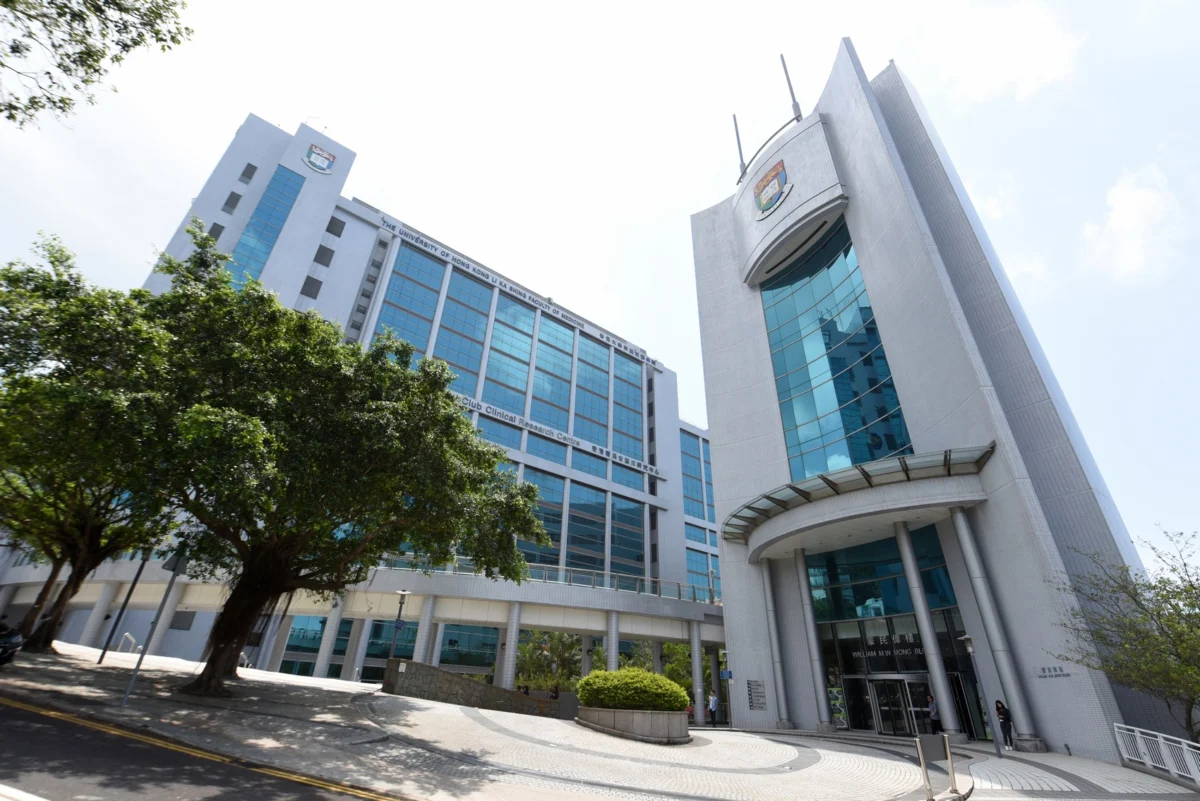
The University of Hong Kong’s (HKU) Li Ka Shing Faculty of Medicine has issued a statement clarifying its recent revision of admission prerequisites, specifically the change from requiring "Cantonese proficiency" to "Chinese proficiency" for its Bachelor of Medicine and Bachelor of Surgery programmes. The faculty asserts that this adjustment was not designed to exclude any particular group of applicants and aims instead to foster a more comprehensive assessment of candidates’ overall capabilities from diverse backgrounds.
Evolving Language Requirements Amidst Growing Diversity
The shift, which came to light earlier this week through local media reports and updates to the medical school’s official website, involved a subtle but significant alteration in the wording of its admission criteria. Previously, prospective students for the rigorous six-year programmes were expected to possess "a good working knowledge" of Cantonese. This requirement has now been broadened to encompass "Chinese proficiency."

However, the faculty has stressed that this change does not signify a relaxation of its admission standards. Instead, the revised language aims to be more inclusive, acknowledging that applicants may come from various linguistic backgrounds within the broader Chinese-speaking sphere. In an accompanying Frequently Asked Questions (FAQ) section on its website, the faculty explicitly states that candidates must be fluent in either Cantonese or Mandarin. Crucially, it also reaffirms that successful matriculants will be expected to develop "effective Cantonese skills" during their tenure at the university.
Cantonese as an Indispensable Tool for Patient Care
The faculty’s clarification, disseminated via email to Hong Kong Free Press (HKFP) on Wednesday, directly addressed potential concerns that the policy change might permit the use of Mandarin in lieu of Cantonese during clinical placements, particularly in public hospitals. The statement unequivocally asserted that this is not the case.
"Because graduates will serve Hong Kong residents in the future, strong Cantonese proficiency forms an essential foundation for clinical training and medical services," the email stated. This underscores the faculty’s commitment to ensuring that its graduates are fully equipped to communicate effectively with the local patient population. The institution plans to provide language support for students admitted with less developed Cantonese skills, aiming to bridge any linguistic gaps and ensure a smooth transition into clinical practice.

The English language requirement for admission remains unchanged, as the majority of classes within the faculty are conducted in English, reflecting Hong Kong’s status as an international hub and the global nature of medical research and practice.
Broader Context: Hong Kong’s Medical Education Landscape
HKU is one of the two established medical schools in Hong Kong, the other being the Chinese University of Hong Kong (CUHK). The territory’s medical education landscape is set to expand further with the government’s approval for the Hong Kong University of Science and Technology (HKUST) to establish a third medical school. This new institution is slated to admit its first cohort of students in 2028, a development that signals a growing commitment to increasing the supply of medical professionals in the region.
The addition of HKUST’s medical school is expected to foster greater competition and potentially introduce innovative approaches to medical training. However, it also raises questions about the long-term implications for the healthcare system, including the distribution of resources and the continued demand for highly skilled practitioners fluent in the local dialects.

Analysis of Implications: Inclusivity vs. Pragmatism
The decision by HKU’s medical school to broaden its language requirements can be viewed through several lenses. On one hand, it reflects a pragmatic approach to admitting a more diverse student body, recognizing that proficiency in Mandarin does not diminish an individual’s potential to become a competent physician. Hong Kong’s evolving demographic and increasing influx of residents from mainland China necessitate a more flexible approach to language in higher education.
On the other hand, the emphasis on developing "effective Cantonese skills" once admitted highlights the unique sociolinguistic realities of Hong Kong. Cantonese remains the primary vernacular for a significant portion of the population and is deeply embedded in the city’s cultural identity. For medical professionals, the ability to connect with patients on a personal level, which often transcends formal language proficiency, is paramount. The faculty’s commitment to providing language support demonstrates an understanding of this crucial aspect of patient care.
The revised policy appears to strike a balance between embracing diversity and maintaining the practical necessities of medical practice in Hong Kong. By ensuring that all graduates ultimately achieve strong Cantonese proficiency, the faculty aims to uphold the quality of patient care and the student experience. This approach acknowledges that while admission criteria can be adapted to attract a wider pool of talent, the core requirements for serving the Hong Kong community must be met.

Supporting Data and Background
Hong Kong’s population, as of mid-2023 estimates, stands at approximately 7.3 million. While Cantonese remains the dominant spoken language, Mandarin has seen a significant increase in usage and recognition over the past two decades, particularly with the growing number of immigrants and business ties with mainland China. According to the 2021 Census and Statistics Department, while over 88% of the population reported Cantonese as their usual spoken language, Mandarin was reported by over 13%. This growing linguistic diversity underscores the need for institutions like HKU to adapt their policies.
The demand for medical professionals in Hong Kong has been a long-standing concern. An aging population and a desire for enhanced healthcare services have consistently placed pressure on the existing medical workforce. The establishment of a third medical school is a direct response to these pressures, aiming to increase the annual intake of medical graduates by several hundred over the next decade. This expansion is expected to alleviate some of the strain on the public healthcare system, which often faces challenges with doctor-patient ratios and waiting times.
Official Responses and Future Outlook

The statement from the Li Ka Shing Faculty of Medicine is the primary official response to date regarding the admission policy change. The proactive clarification aims to preempt misunderstandings and reaffirm the faculty’s commitment to its educational mission. While no formal statements have been issued by other universities or governmental bodies specifically on this HKU policy, the broader context of increasing diversity and the expansion of medical education suggests a general trend towards more inclusive yet contextually relevant admission practices in Hong Kong’s higher education sector.
The future outlook for medical education in Hong Kong is one of growth and adaptation. The introduction of a new medical school and the adjustments made by existing institutions to their admission criteria signal a dynamic environment. The success of these initiatives will ultimately be measured by the quality of graduates produced and their ability to meet the evolving healthcare needs of Hong Kong’s diverse population. The focus on ensuring effective communication skills, particularly in Cantonese, remains a critical factor in the successful integration of future doctors into the local healthcare system. The faculty’s commitment to providing support for students in developing these skills is a key component of this strategy, ensuring that linguistic diversity at the point of entry does not translate into a deficit in patient care upon graduation.


 Siti Muinah
 Lina Irawan