Reynand Wu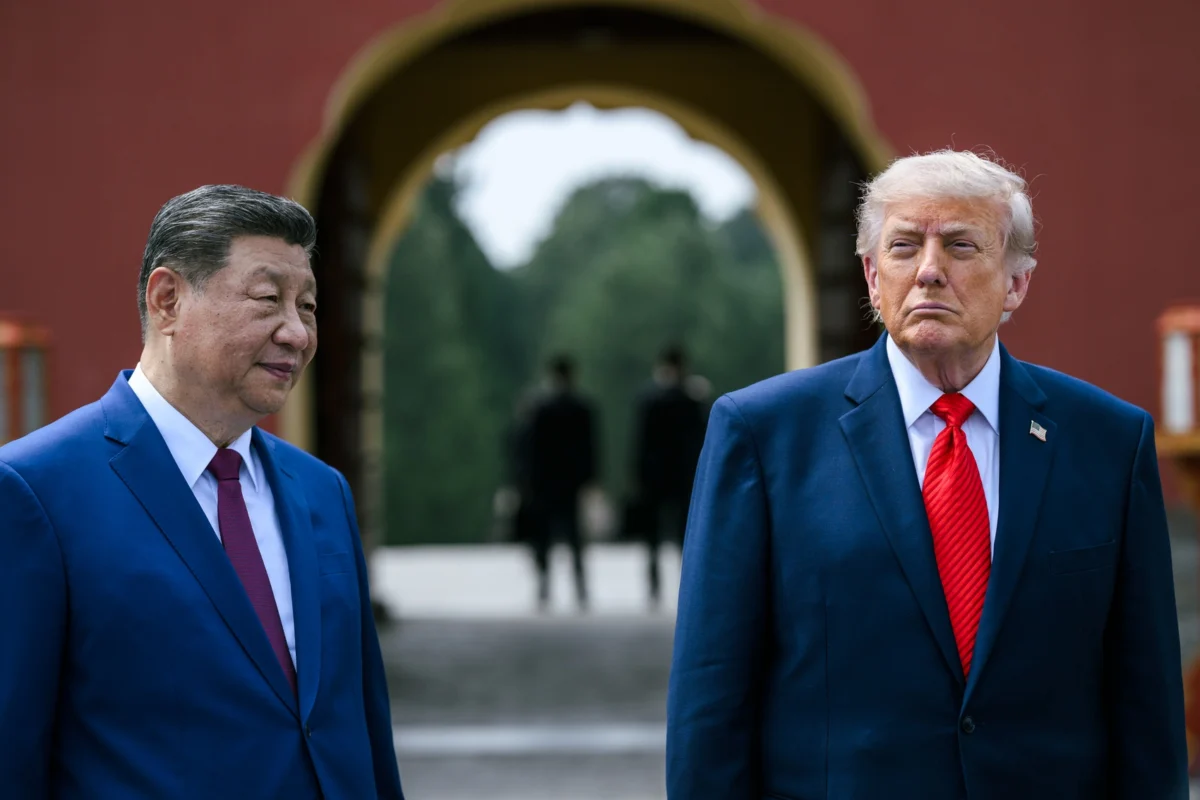
Washington D.C. – The Trump administration is facing escalating pressure to formulate a decisive response to the rapidly growing influence of Chinese artificial intelligence models, which are increasingly favored by companies worldwide for their cost-effectiveness, even if they are perceived as less powerful than their pricier American counterparts from industry leaders like Anthropic and OpenAI. This burgeoning technological rivalry, often dubbed the "AI Cold War," reached a critical juncture this week following the release of Kimi K3 by Chinese startup Moonshot, a development that White House officials allege was made possible through illicit means, specifically the "distillation" of proprietary American AI capabilities.
The Escalating AI Rivalry: Context and Stakes
The competition for global dominance in artificial intelligence has become a defining characteristic of 21st-century geopolitical and economic strategy. Both the United States and China view AI as a critical technology underpinning future economic growth, national security, and military superiority. The global AI market, valued at approximately $200 billion in 2023, is projected to surge to over $2 trillion by 2030, underscoring the immense stakes involved. For years, American firms like OpenAI and Anthropic have been at the forefront of large language model (LLM) development, pushing boundaries in model size, sophistication, and raw computational power. Their flagship models, such as OpenAI’s GPT series and Anthropic’s Claude, have set industry benchmarks, but often come with substantial licensing fees and require significant computational resources, making them expensive to operate and customize.
Conversely, Chinese AI companies, benefiting from substantial government backing, a vast domestic market, and a strategic focus on applied AI, have been making significant strides. While often starting behind in foundational model research, they have demonstrated remarkable agility in developing competitive, often more affordable, and sometimes open-source, alternatives. The rise of models like Moonshot’s Kimi K3, alongside offerings from other Chinese firms such such as DeepSeek and MiniMax, signifies a pivotal shift, presenting a viable and attractive option for businesses, particularly startups and those in emerging markets, seeking AI solutions without the premium cost or vendor lock-in associated with the dominant US platforms.

This economic preference for Chinese models presents a multifaceted challenge to the US. Beyond the immediate commercial implications, there are profound national security concerns regarding data sovereignty, algorithmic integrity, and the potential for a foreign power to gain a strategic advantage in a foundational technology. The current administration, under President Donald Trump, has consistently advocated for protecting American technological leadership and intellectual property, setting the stage for a robust, and potentially confrontational, policy response.
The "Distillation" Controversy: Technical and Ethical Dimensions
At the heart of the current dispute lies the technical process known as "distillation." In machine learning, distillation is a technique where a smaller, simpler model (the "student") is trained to reproduce the behavior or outputs of a larger, more complex model (the "teacher"). This process is often used legitimately within companies to create more efficient, faster, or cheaper versions of their own powerful models for deployment in resource-constrained environments or for specific applications. It involves feeding the student model data and the corresponding outputs generated by the teacher model, effectively transferring the "knowledge" without needing to replicate the teacher’s immense computational architecture or training data.
However, the method enters a legal and ethical grey area, and potentially becomes illicit, when a company uses a proprietary model developed by another entity as the "teacher" without authorization. White House officials and US AI firms argue that Chinese companies are engaging in "industrial-scale distillation," effectively reverse-engineering the capabilities of advanced American models like Anthropic’s Claude by systematically querying them and using their responses to train their own student models. This, they contend, constitutes a form of intellectual property theft, as it allows Chinese firms to bypass years of expensive research and development, substantial capital investment, and the unique data sets that form the core competitive advantage of US AI giants.
Sarah Heck, Anthropic’s head of public policy, recently articulated this concern on X, stating unequivocally that illicit distillation "is IP theft and industrial espionage" and poses "a national challenge that creates serious national security risks for the United States and democratic allies." This sentiment reflects a growing alarm within the US tech sector and government that such practices undermine fair competition and could erode America’s technological edge.

Allegations and Official Responses from Washington
The release of Moonshot’s Kimi K3 model served as a catalyst for a heightened response from Washington. On Wednesday, Michael Kratsios, Director of the White House Office of Science and Technology Policy, publicly decried the alleged practice of distillation, singling out Moonshot. Kratsios’s remarks underscored the administration’s belief that these activities are not merely a commercial grievance but a matter of national security, directly impacting the intellectual capital and innovative capacity of the United States.
Adding to the administration’s strong stance, Treasury Secretary Scott Bessent this week openly threatened sanctions against China, indicating a significant escalation in the US’s approach. Reports from outlets like The Information suggest that the US is also seriously considering broader measures, including a potential ban or severe curbs on foreign-made open-source models that are suspected of being built through distillation. This prospective policy shift could have far-reaching implications for the global AI ecosystem, potentially fragmenting the market and forcing companies to choose between US-approved and other models.
Earlier in the year, Anthropic had already taken proactive steps to address these concerns, sending detailed letters to US lawmakers. These communications formally accused several Chinese firms, including Moonshot, DeepSeek, and MiniMax, of engaging in "industrial-scale distillation" of its proprietary Claude models. These letters provided technical evidence and outlined the potential economic and security ramifications of such practices, urging Congress to consider legislative or regulatory actions.
The Investigation into Chip Sanctions Violations

Beyond the allegations of intellectual property theft, the White House has also raised concerns about potential circumvention of US export curbs on powerful AI chips. Michael Kratsios specifically suggested that Moonshot might have skirted these restrictions, which are primarily aimed at preventing China from acquiring advanced computing hardware essential for training sophisticated AI models. These curbs, largely targeting Nvidia’s cutting-edge graphics processing units (GPUs), were implemented to slow China’s progress in AI and advanced computing, thereby maintaining a technological gap.
The Commerce Department’s Bureau of Industry and Security (BIS) has confirmed that it is formally investigating Chinese firms, including Moonshot, regarding their procurement and use of these restricted chips. A spokesperson for BIS informed The Information that the investigation is active and aims to ascertain whether any violations of the export control regulations have occurred. If proven, such circumvention would represent a significant breach of US national security policy, likely triggering further retaliatory measures and intensifying the tech conflict. The implications of such findings could range from expanded entity listings and more stringent export controls to direct sanctions on companies found to be in violation.
Industry Reactions: Divided Opinions on Open Source
The proposed US response, particularly the potential ban or curbs on foreign-made open-source models, has sparked a vigorous debate within the American tech industry itself. While US AI giants like Anthropic and OpenAI advocate for protecting their proprietary models, a significant segment of the startup community and various tech thought leaders argue against such restrictions, viewing them as counterproductive.
Open-source, or open-weight, models are highly valued by startups and smaller companies because they offer lower costs and allow programmers to access and customize the underlying source code. This flexibility is crucial for innovation, enabling entrepreneurs to build novel applications without being beholden to the often rigid and expensive APIs (Application Programming Interfaces) of proprietary models from Anthropic, OpenAI, or Google. For many, open-source models foster a more competitive and dynamic ecosystem.

Bill Gurley, a prominent former venture capitalist, penned an opinion piece in The Washington Post, arguing against the proposed restrictions. He wrote, "Lobbyists are urging Washington to treat open-model AI as a security threat. In fact, it is something more familiar: proper competition that should be welcomed." Gurley’s argument resonates with many in the venture capital and startup communities who believe that restricting access to foreign open-source models would stifle innovation in the US, disadvantage American startups, and ultimately consolidate power among the few incumbent AI giants.
This sentiment was formally conveyed to the Trump administration by a coalition of 179 startups. In a letter from the "Little Tech Association" on Wednesday, they urged the White House to reconsider any outright ban or strict curbs on foreign-made models. The letter warned, "Denying American startups access to models available abroad would stifle competition, entrench incumbents, and function as a tax on intelligence." This illustrates a deep-seated fear that protectionist measures, while ostensibly aimed at China, could inadvertently harm the very American innovation ecosystem they seek to protect.
The Stakes for US AI Giants and Startups
Critics of limiting open-source models often suggest that the push for such restrictions by OpenAI and Anthropic is, in part, a strategic move to eliminate emerging rival technologies. Both AI giants are reportedly facing immense financial pressure as they prepare for anticipated Initial Public Offerings (IPOs) in the coming months. Wall Street analysts and potential investors are scrutinizing their business performance more closely than ever, making profitability and market dominance paramount. The emergence of high-quality, cost-effective Chinese alternatives, particularly those leveraging distillation techniques, could pose a significant threat to their revenue streams and long-term valuation prospects.
David Sacks, the White House’s former chief on AI policy and a figure who retains influence with the president, publicly dismissed the alarm, stating on X, "The Kimi Panic needs to stop." Sacks, known for his advocacy of a light-touch regulatory approach, further asserted, "President Trump’s light-touch regulatory approach is working… As long as we don’t sabotage ourselves with unnecessary rules, the US will continue to win." His view aligns with those who believe that excessive regulation could stifle American innovation more than it would curb Chinese advancements.

Further complicating the debate, Jensen Huang, the influential CEO of Nvidia, whose company manufactures the essential AI chips for both proprietary and open-source models globally, weighed in firmly in favor of allowing American companies to use Chinese AI models. Speaking to Axios, Huang stated that American companies should "absolutely" be allowed to leverage these models, adding, "These Chinese models are excellent. Open source models that are excellent should be used." Huang’s perspective is particularly significant given Nvidia’s pivotal role in the AI supply chain; his company benefits from the widespread adoption of AI technologies, regardless of their origin, and restrictive policies could potentially harm his company’s global market.
Geopolitical Chessboard: Broader US-China Tech Tensions
This latest skirmish over AI distillation is not an isolated incident but rather a new front in the broader US-China technological rivalry that has been escalating for years. From the trade wars initiated by the Trump administration to the ongoing competition in 5G technology, semiconductors, and quantum computing, both nations are locked in a struggle for technological supremacy. The US has repeatedly accused China of intellectual property theft across various sectors, while China maintains that its technological advancements are the result of indigenous innovation and significant investment in research and development.
The potential for sanctions or outright bans on foreign AI models, alongside intensified investigations into chip export violations, signals a deepening of this tech cold war. Such actions could lead to further economic decoupling, create fragmented global technology standards, and force other nations to align with either the US or Chinese technological ecosystems. The long-term implications could include higher costs for businesses, slower global innovation, and increased geopolitical instability.
Future Outlook and Policy Challenges

The Trump administration now faces a complex policy challenge. It must balance the imperative to protect American intellectual property and national security with the need to foster domestic innovation and maintain a competitive global market. An overly restrictive approach, while addressing immediate concerns about IP theft, risks alienating American startups, stifling the open-source community, and potentially ceding leadership in specific AI applications where Chinese models might excel.
Conversely, a lenient approach could embolden illicit practices, undermine the business models of US AI pioneers, and potentially allow foreign adversaries to gain a strategic technological edge. The precise definition of "illicit distillation" in a legal framework, the enforceability of such regulations across international borders, and the potential for retaliatory measures from China all present significant hurdles.
As the debate rages, the global AI landscape stands at a crossroads. The decisions made in Washington in the coming months will not only shape the future of artificial intelligence development in the United States but will also send ripple effects across the entire international technology community, potentially redefining the dynamics of global innovation and competition for decades to come. The challenge for policymakers is to craft a strategy that safeguards American interests without inadvertently handicapping its own technological future.

 Sagoh
Sagoh
 Asro
Asro