Azzam Bilal Chamdy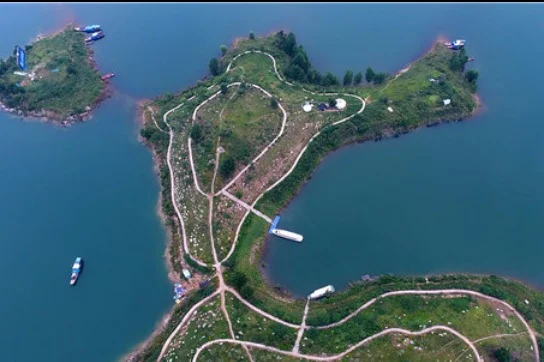
Tuesday marked the third operational anniversary of the central route of China’s monumental South-to-North Water Diversion Project (SNWDP), a colossal infrastructure endeavor designed to rebalance the nation’s vastly uneven water resources. This ambitious scheme, which channels water from the water-rich south to the arid northern plains via three distinct routes, has already delivered more than 10 billion cubic meters of vital water to North China through its central artery, profoundly impacting the lives of over 53 million people. Beyond merely addressing water scarcity, the project has inadvertently become a catalyst for profound environmental improvements and the emergence of green economies in its water-supplying regions, demonstrating a complex interplay between engineering, ecology, and socio-economic development.
A Nation’s Thirst: The Genesis of a Grand Vision
China’s geographical reality presents a stark paradox: over 80% of its water resources are concentrated south of the Yangtze River, while its northern regions, particularly the North China Plain, suffer from chronic water scarcity. This imbalance has historically constrained agricultural output, industrial development, and urban expansion in the North, which is home to a significant portion of the country’s population and its political and economic heartland. The idea of diverting southern waters northward was first conceived by Chairman Mao Zedong in the 1950s, famously stating, "The south has plenty of water, the north lacks it. If possible, borrow some water." This visionary, albeit daunting, concept slowly gained momentum over decades, evolving through extensive feasibility studies and planning under subsequent leaderships.
The South-to-North Water Diversion Project officially commenced construction in 2002, emerging as one of the most ambitious hydrological engineering feats in human history. It comprises three main routes: the Eastern, Central, and Western lines. The Eastern route, largely utilizing and upgrading the ancient Grand Canal, began operations in 2013, primarily supplying water to Shandong and Jiangsu provinces. The Western route, still in its planning and conceptual stages, is intended to divert water from the upper reaches of the Yangtze River to the Yellow River basin. However, it is the Central route that holds particular strategic significance, directly supplying the nation’s capital, Beijing, and the crucial port city of Tianjin, along with major cities and agricultural areas in Henan and Hebei provinces.
The Central Route: A Lifeline for the North
The central route’s journey begins at the Danjiangkou Reservoir, located at the confluence of the Hanjiang and Danjiang rivers on the border of Hubei and Henan provinces. From there, an intricate network of canals, tunnels, and aqueducts stretches over 1,400 kilometers, traversing four provinces before reaching its northern terminals. Construction of this route officially began in 2003, involving monumental engineering challenges, including crossing the Yellow River via an inverted siphon and constructing extensive concrete-lined canals to minimize seepage and evaporation. On December 12, 2014, the central route officially began supplying water, marking a pivotal moment in China’s water security strategy.
Over its three years of operation, the central route has consistently delivered high-quality water, transforming the water supply landscape of North China. The cumulative volume of over 10 billion cubic meters has been instrumental in alleviating severe water stress in major urban centers. Beijing, for instance, now receives over 70% of its municipal water supply from the SNWDP, significantly reducing its reliance on local groundwater sources. Tianjin, similarly, has seen its primary water supply shift dramatically to the southern waters. Beyond urban consumption, the diverted water has replenished depleted groundwater tables, improved ecological flows in rivers and wetlands, and supported agricultural irrigation, contributing to food security and ecological restoration in the receiving areas.
Prior to the SNWDP, many northern cities faced critical water shortages, leading to excessive groundwater extraction and subsequent land subsidence. The arrival of southern water has not only secured urban water supplies but also facilitated the closure of numerous groundwater wells, allowing natural aquifers to slowly recover. This has had a measurable positive impact on local ecosystems and the long-term sustainability of water resources in the North.
Ecological Transformation and Green Industries in Source Regions
While the primary objective of the SNWDP is water transfer, a profound and perhaps unanticipated consequence has been the ecological and economic transformation of the water source regions. The provinces of Henan, Hubei, and Shaanxi, home to the Danjiangkou Reservoir and the initial stretches of the diversion canals, have been subject to stringent environmental protection measures to ensure the purity of the water flowing northward. These measures, often involving the closure of polluting factories, restrictions on industrial development, and massive reforestation efforts, initially posed economic challenges for local communities. However, they have ultimately spurred a paradigm shift towards "green development."
Local governments, supported by central policies, have actively promoted sustainable industries that align with environmental preservation. Eco-tourism has flourished, capitalizing on the now pristine landscapes, improved air quality, and abundant wildlife. Areas around the Danjiangkou Reservoir, once facing the dilemmas of industrialization versus conservation, have rebranded themselves as ecological havens, attracting domestic and international visitors seeking natural beauty and tranquility. This has led to the development of hotels, guesthouses, restaurants, and related services, creating a new wave of employment opportunities.
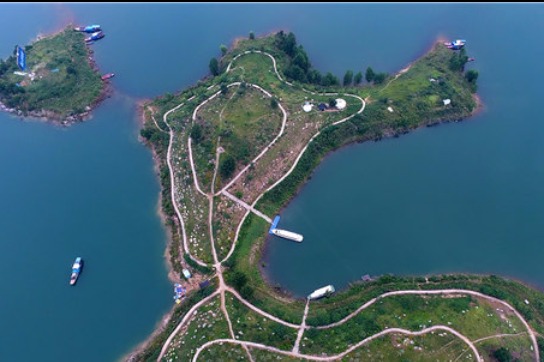
Furthermore, ecological agriculture has emerged as a significant economic driver. With the emphasis on maintaining water quality, farmers in these regions have shifted away from conventional, chemical-intensive farming practices towards organic and high-value ecological agriculture. This includes cultivating specialty crops, developing sustainable aquaculture, and promoting organic produce, which fetches higher prices in urban markets. This transition not only safeguards water quality but also provides farmers with better economic returns and enhances the reputation of local agricultural products. The government has incentivized these shifts through subsidies, technical assistance, and market access programs, fostering a symbiotic relationship between environmental protection and economic prosperity.
A Personal Testament: Xia Qinghua’s Journey Home
The human impact of this green transformation is perhaps best exemplified by stories like that of Xia Qinghua, a 43-year-old resident of Chenjiawan, a village nestled within Hubei’s Shiyan city, one of the crucial water source areas. For 12 years, Xia had been part of the vast internal migration phenomenon in China, working in a small toy factory in Shenzhen, Guangdong province, over a thousand kilometers from his home. Like millions of others, he sought better economic prospects in the bustling coastal cities, enduring long hours and the emotional toll of separation from his family. He earned a respectable income, often exceeding 5,000 yuan (approximately $756) a month, but his life in Shenzhen was marked by loneliness and a deep yearning for home.
Xia’s desire to return was constant, but the lack of viable employment opportunities in his poverty-stricken hometown had always been a formidable barrier. In 2011, he attempted to establish a transportation business in Chenjiawan, investing 50,000 yuan in a small truck. However, the venture failed, leaving him 20,000 yuan in debt and forcing a reluctant return to Shenzhen. For years, his family reunions were limited to the annual Spring Festival holiday, each departure a tearful ordeal for him, his wife, and his daughter. He vividly recalls the poignant farewell on the fifth day of the Lunar New Year in 2013, a moment etched in his memory by the shared tears and reluctance to part.
The situation, however, began to change dramatically after 2014, coinciding with the operational launch of the central route and the intensification of environmental protection efforts in the region. The cleaner environment, a direct result of these efforts, began to attract "green" investments. Hubei Beidouxing Eco-agriculture and Forestry Co, a company focused on sustainable agriculture, recognized the potential of the area’s revitalized ecology and began investing, creating new job opportunities.
"Great improvements have happened to the environment in my hometown," Xia recounts with visible pride. "When I left at age 17, I had never seen an egret. Now, there are birds everywhere. They are beautiful." This observation is more than just anecdotal; the return of sensitive species like egrets is a scientific indicator of improved water quality and ecosystem health, a testament to the success of the environmental initiatives.
In June, Xia Qinghua finally realized his long-held dream, returning to Chenjiawan to take up a position in the warehouse of a Hubei Beidouxing farm. While his monthly salary of approximately 2,000 yuan is significantly less than what he earned in Shenzhen, the intangible benefits far outweigh the financial difference. He is now close to his family, able to provide daily care for his 70-year-old father, who is unwell, and participate fully in family life. Furthermore, he supplements his income by leasing 0.5 hectares of his farmland to Hubei Beidouxing, generating an additional 4,000 yuan annually. This diversified income stream, coupled with the profound improvement in his quality of life and family well-being, underscores the transformative power of the green economy fostered by the SNWDP. His story is a powerful illustration of how national-level infrastructure projects, when coupled with sustainable development strategies, can bring about tangible improvements at the individual and community levels, reversing the tide of rural-urban migration for some.
Broader Impact and Future Outlook
The third anniversary of the central route’s operation provides an opportune moment to reflect on its broader implications. Beyond water transfer and economic shifts, the project has fostered a deeper understanding of inter-regional interdependence within China. The prosperity and development of the North are now inextricably linked to the environmental stewardship of the South, necessitating unprecedented levels of cooperation and resource management between provinces.
However, the project is not without its challenges. Maintaining the high quality of transferred water over such vast distances requires continuous vigilance and investment in pollution control in the source regions and along the entire canal system. The sheer scale of the project also entails immense operational costs, including maintenance, monitoring, and pumping stations. Furthermore, as climate change impacts precipitation patterns, ensuring the long-term sustainability and reliability of the water supply from the south will remain a critical concern.
Official responses from the Ministry of Water Resources and the South-to-North Water Diversion Project Commission consistently highlight the project’s strategic success in enhancing water security, promoting ecological restoration, and fostering green development. They emphasize the commitment to stringent water quality standards and the ongoing efforts to optimize water allocation and management. Experts in environmental policy also point to the SNWDP as a significant case study in balancing large-scale engineering with ecological preservation, albeit with ongoing debates about the full spectrum of its environmental and social costs and benefits.
Looking ahead, the SNWDP is expected to continue playing a pivotal role in China’s development strategy. Plans include further optimizing the operational efficiency of the existing routes and cautiously advancing the conceptual framework for the Western route, which would address water scarcity in even higher-altitude, more challenging terrains. The lessons learned from the central route, particularly regarding the unexpected but welcome rise of green economies in source regions, will likely inform future large-scale infrastructure projects in China and potentially inspire similar endeavors globally. The journey of the South-to-North Water Diversion Project, encapsulated by the statistics of billions of cubic meters and millions of beneficiaries, and personal narratives like Xia Qinghua’s, continues to unfold as a testament to human ingenuity and the evolving relationship between development and environmental stewardship in a rapidly modernizing nation.


 Sagoh
Sagoh
 Asro
Asro