Dwi Wanna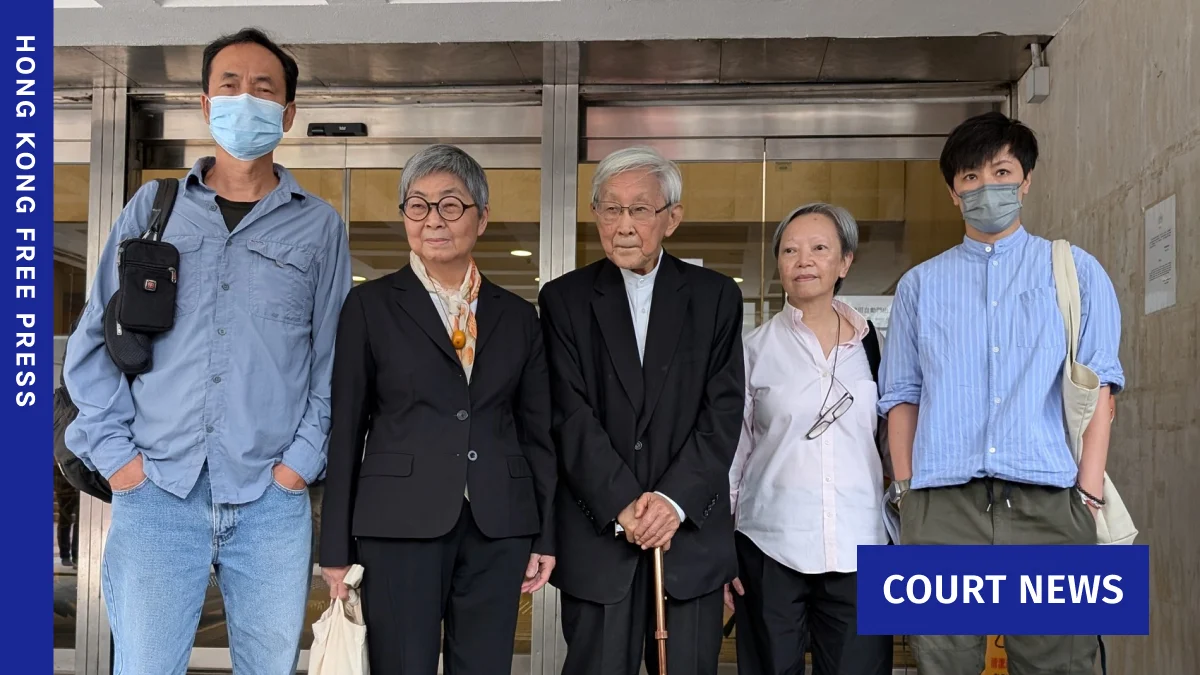
A significant legal battle concerning the interpretation of Hong Kong’s Societies Ordinance has concluded, at least for now, with the Court of Appeal upholding the convictions of Cardinal Joseph Zen Ze-kiun and four other prominent figures. The ruling confirmed their guilt for failing to properly register the now-defunct 612 Humanitarian Relief Fund, which provided crucial support to individuals impacted by the 2019 pro-democracy protests and subsequent unrest. This decision has far-reaching implications for freedom of association and civil society activities in the city.
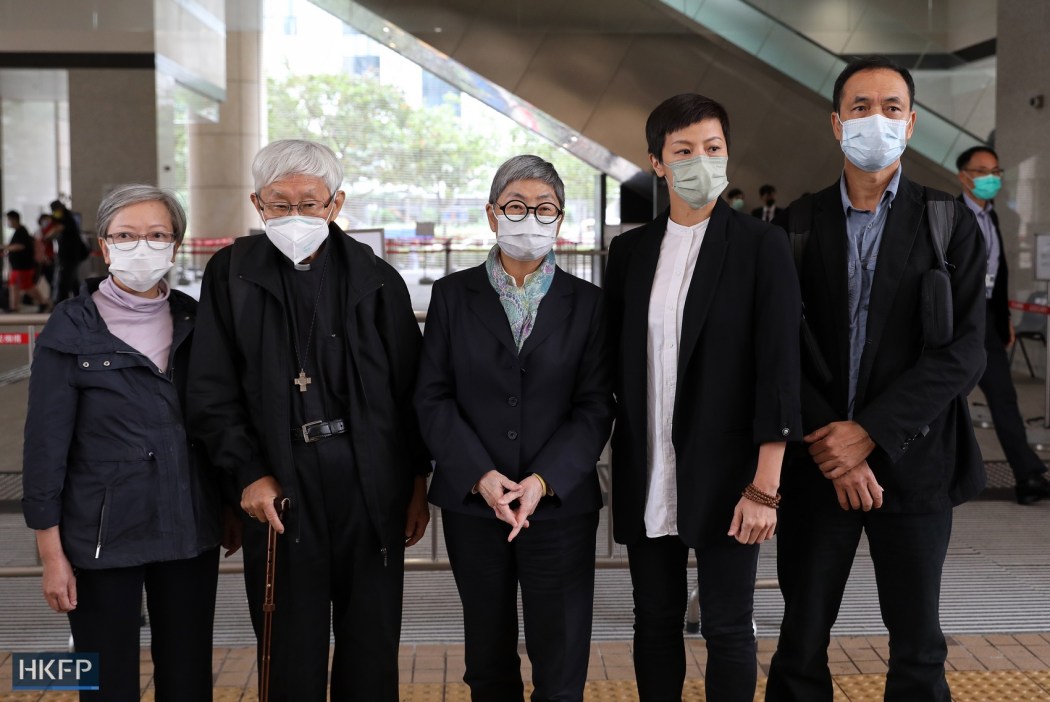
The five appellants – Cardinal Zen, barrister and former lawmaker Margaret Ng, former lawmaker Cyd Ho Sau-lan, scholar Hui Po-keung, and singer-activist Denise Ho Wan-chi – were trustees of the 612 Humanitarian Relief Fund. Established in June 2019, the fund aimed to offer financial assistance to protesters who were arrested, injured, or otherwise affected by the widespread demonstrations against the now-withdrawn extradition bill. The fund officially announced its dissolution in August 2021, after operating for over two years.

The Genesis of the Case and Legal Arguments
The legal proceedings originated from a conviction in November 2022, when the West Kowloon Magistrates’ Courts found the five guilty of contravening the Societies Ordinance. Specifically, they were charged with failing to register the fund as a society within one month of its establishment, a requirement under the ordinance. This marked the first prosecution of such an offence under the law, highlighting its potential application to a broad range of organizations. Each appellant was subsequently fined HK$4,000.
The defence team, however, contested the conviction, presenting a two-pronged argument. Firstly, they contended that the 612 Fund was established as a charitable trust, not a society, and therefore was not subject to the Societies Ordinance. Secondly, they argued that the lower court’s interpretation of the ordinance implied an overly broad definition of "society," suggesting that nearly any group engaging in collective activities would be compelled to register. This, they argued, constituted an infringement on the fundamental freedom of association, a cornerstone of civil liberties.

The appeal, launched by the five pro-democracy figures, sought to overturn the initial verdict. Their legal challenge centered on the interpretation of the Societies Ordinance and whether the nature of the 612 Fund’s operations aligned with the legal definition of a "society" that requires registration.
The Court of Appeal’s Decision and Reasoning
In a judgment delivered on Thursday, the Court of Appeal, comprising Chief Judge of the High Court Jeremy Poon and two other judges, unanimously dismissed the appeal. The judges found that the 612 Fund indeed functioned as a society and was therefore obligated to either register under the Societies Ordinance or obtain an exemption.

Chief Judge Jeremy Poon articulated the court’s reasoning, stating, "We find that the appellants had all along intended to use the Fund as a vehicle to appeal for, collect and apply public donations for the purpose of supporting the 2019 protests." He emphasized that the fund was "more than ‘a mere sum of moneys held by the appellants on trust.’"
The court’s judgment further elaborated on the operational aspects of the fund. It concluded that the five trustees had managed and conducted the fund’s affairs "like a management committee or governing body" under an agreed-upon trust deed. This structured approach to fundraising, collection, and distribution of donations led the judges to determine that in their capacity as office-bearers managing these activities, they were acting as office-bearers of a society, irrespective of their roles as trustees.
"In so conducting the affairs of the Fund, they were its office-bearers as a society, quite apart from their role [as] trustees," the judgment stated, underscoring the distinction between their fiduciary duties as trustees and their operational roles in managing the fund.
Broader Implications for Civil Society
The ruling has significant implications for the landscape of civil society in Hong Kong. The Societies Ordinance, enacted in 1949, requires any "society" – defined broadly as a club, company, partnership, or association of 10 or more people, however constituted, which, by reason of the mode of its formation or its purpose or in any other respect, is a society – to be registered with the police or seek an exemption. Failure to comply can result in penalties.
The defence’s concern, as articulated by Margaret Ng, is that the Court of Appeal’s interpretation could cast a wide net, potentially subjecting numerous informal groups and community initiatives to the strictures of the Societies Ordinance. "This case is not only about the 612 fund – rather, it concerns the Societies Ordinance," Ng told reporters following the judgment. "If whenever a group of people come together to do something it becomes a society that must apply for registration or an exemption with the police, this would have a huge impact on Hong Kong civil society."

This sentiment is echoed by many observers who fear that the ruling could create a chilling effect on grassroots organizing and public advocacy, making it more difficult for citizens to band together for charitable, social, or political purposes without facing potential legal scrutiny. The potential for increased administrative burdens and the risk of prosecution could deter individuals from participating in or establishing new organizations.
Timeline of Events
- June 2019: The 612 Humanitarian Relief Fund is established to support protesters affected by the anti-extradition bill demonstrations.
- August 2021: The fund announces its dissolution.
- May 2022: Cardinal Zen and the other four trustees are arrested on suspicion of colluding with foreign forces under the national security law. No charges are laid for this arrest.
- November 2022: Cardinal Zen and five others (including a sixth individual not part of the current appeal) are convicted by the West Kowloon Magistrates’ Courts for failing to register the 612 Fund as a society. They are each fined HK$4,000.
- April 2024: Cardinal Zen and four other appellants file their appeal against the conviction.
- [Date of Article Publication, e.g., September 3, 2026]: The Court of Appeal dismisses the appeal, upholding the convictions.
The 2019 Protests: A Context of Dissent

The case is inextricably linked to the massive pro-democracy protests that swept Hong Kong in 2019. These demonstrations, initially triggered by a proposed extradition bill that would have allowed criminal suspects to be sent to mainland China, rapidly evolved into a broader movement demanding greater democratic freedoms and accountability. Key demands included universal suffrage, an independent inquiry into police conduct, amnesty for arrested protesters, and a halt to the characterization of protests as "riots."
The protests, which saw millions take to the streets, were met with increasingly forceful responses from the Hong Kong police. The ensuing unrest, sometimes involving clashes between protesters and law enforcement, led to thousands of arrests. Organizations like the 612 Humanitarian Relief Fund emerged as vital support networks for those facing legal repercussions, medical treatment, or other forms of hardship as a result of their participation in the movement.
Future Legal Avenues and Continued Activism

Despite the setback at the Court of Appeal, the appellants have indicated their intention to pursue further legal recourse. Margaret Ng confirmed that the five will seek to take their case to the highest court in Hong Kong, the Court of Final Appeal. This suggests that the legal interpretation of the Societies Ordinance and its impact on civil society will remain a subject of intense scrutiny.
The legal battle over the 612 Fund is not merely a procedural matter; it represents a critical juncture in the ongoing debate about the space for civil society and freedom of expression in Hong Kong under its evolving political landscape. The outcome of any further appeals will undoubtedly be closely watched by legal experts, human rights advocates, and citizens alike, as it could set a precedent for how collective action and charitable endeavors are regulated in the city.
The continued pursuit of legal challenges by figures such as Cardinal Zen and Margaret Ng underscores their commitment to defending what they perceive as fundamental rights and freedoms. Their actions highlight the persistent tension between governmental regulations and the rights of individuals and groups to associate and express themselves freely. The broader implications of this case extend beyond the specific individuals involved, touching upon the very nature of civic engagement and the future of Hong Kong’s civil society.

 Siti Muinah
 Lina Irawan