Raul Delapena Setiawan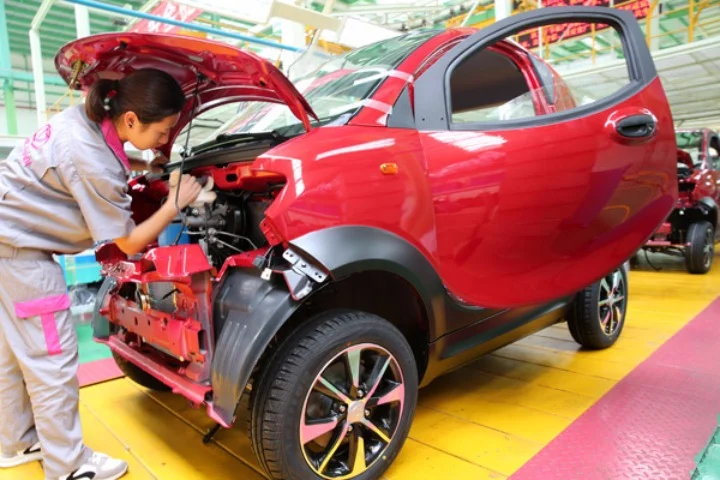
China’s vast automotive market, a global powerhouse for vehicle sales, registered a significantly moderated growth rate in November 2017, with total vehicle sales climbing a meager 0.7 percent year-on-year to reach 2.96 million units, according to data released by the China Association of Automobile Manufacturers (CAAM) on Monday. This figure underscored a broader deceleration trend observed throughout the year, marking a distinct shift from the robust double-digit expansion that had characterized the market in previous periods. The cumulative sales for the first eleven months of 2017 stood at 25.85 million units, representing a 3.6 percent increase from the same period a year prior. While seemingly respectable in a global context, this growth rate starkly contrasted with the 14.5 percent year-on-year growth recorded for January to November 2016, indicating a substantial slowdown of 10.5 percentage points.
Xu Haidong, an assistant to CAAM’s secretary-general, confirmed that the organization’s initial projection of 5 percent overall sales growth for 2017 would not be met. He stated that the year-end growth figure was now "definitely fall to below 4 percent," reflecting the challenging market dynamics. This recalibration by a leading industry body signaled a new era for China’s automotive sector, moving away from the high-octane growth phases towards a more mature, albeit still expanding, market. The primary drivers behind this cooling trend were identified as the gradual phasing out of a crucial purchase tax discount and broader macroeconomic conditions influencing consumer spending, as China continued its pivot towards a consumption-driven economy.
The Broader Economic Context and Government’s Strategic Vision
China’s automotive market expansion over the past two decades has been intricately linked to the nation’s rapid economic growth and urbanization. From surpassing the United States as the world’s largest auto market in 2009, China’s vehicle sales have consistently contributed significantly to its GDP. However, by 2017, the country was in the midst of a structural economic transformation, shifting from an investment-led and export-oriented model to one driven by domestic consumption and high-quality growth. This transition implied a more stable, albeit slower, growth trajectory for many sectors, including automotive.
The government’s broader economic policies at the time emphasized supply-side structural reform, environmental protection, and technological innovation. These objectives directly impacted the automotive sector. On one hand, efforts to manage credit growth and reduce industrial overcapacity could temper consumer spending on big-ticket items like cars. On the other, the push for cleaner air and industrial upgrading provided an unparalleled impetus for the development and adoption of New Energy Vehicles (NEVs). The overall macroeconomic environment, characterized by a GDP growth rate that had gradually moderated from double-digits in the 2000s to around 6.9 percent in 2017, naturally influenced consumer sentiment and purchasing power, particularly for discretionary items like new cars.
Policy Catalysts and Their Ebbing Influence
A critical factor contributing to the fluctuating growth rates was the trajectory of government policy, specifically the purchase tax discount for small-engine vehicles. Introduced in October 2015, this incentive initially offered a substantial 50 percent reduction on the 10 percent purchase tax for passenger cars with engines smaller than 1.6 liters. The policy’s primary goal was twofold: to stimulate a then-slowing auto market and to encourage the adoption of more fuel-efficient, smaller-engine vehicles.
The impact was immediate and profound. Throughout 2016, the 50 percent tax cut acted as a powerful stimulus, leading to exceptional sales growth and contributing to the robust 14.5 percent year-on-year increase observed in the first eleven months of that year. However, as planned, the incentive began its gradual retraction in January 2017, when the discount was reduced to 7.5 percent (from 5 percent of the original tax). The looming complete expiration of the tax break at the end of December 2017 created what analysts refer to as a "pull-forward" effect. Many consumers, anticipating the end of the discount, accelerated their vehicle purchases earlier in 2017 to avail themselves of the remaining incentive. This front-loading of demand inevitably led to a softer market towards the end of the year and into 2018.
"The trend is clear. Growth will slow down even further next year," Xu Haidong remarked, acknowledging the anticipated continuation of this decelerated expansion post-expiration. While he refrained from offering a specific estimate for 2018, the industry widely expected a period of adjustment as the market transitioned to a landscape without this significant fiscal support. This strategic phase-out by the government underscored a broader intent to move the automotive market towards more organic, demand-led expansion, reducing its reliance on direct stimulus and encouraging natural market competition.
Segmented Performance: A Tale of Disparity
The general moderation in overall vehicle sales concealed a nuanced picture within different segments, highlighting distinct shifts in consumer preferences and market dynamics. Passenger cars, which represent the lion’s share of China’s automotive market, experienced a particularly noticeable deceleration. From January to November 2017, a total of 22 million passenger cars were sold, marking a modest 1.9 percent year-on-year growth. This seemingly positive figure, however, was heavily skewed by the outstanding performance of a single segment.
The undeniable star of the passenger car market was the Sports Utility Vehicle (SUV) segment. SUV sales surged by an impressive 14.5 percent year-on-year, reaching 9.09 million units during the first eleven months of 2017. This robust growth not only continued a multi-year trend but also served as the primary engine preventing an overall contraction in the passenger car market. Chinese consumers continued to favor SUVs for their perceived versatility, spaciousness, higher ground clearance suitable for varied road conditions, and a strong sense of status. Domestic brands, in particular, had made significant inroads into the SUV market, offering competitively priced and feature-rich models that appealed to a wide demographic.
In stark contrast, traditional passenger car segments faced considerable headwinds. Sedan sales, once the dominant force in the market, experienced a decline of 2.3 percent, indicating a significant erosion of their market share. Multi-purpose vehicles (MPVs) suffered an even sharper contraction, falling by 16.5 percent, while sales of minivans, often associated with entry-level purchases and small commercial uses, slumped by a substantial 20.1 percent in the same period. These declines reflected a clear shift in consumer tastes, with buyers increasingly opting for the perceived advantages of SUVs, even as the overall market matured. Automakers, both local and international, were actively re-evaluating their product strategies, shifting resources towards SUV development and marketing to align with this prevailing trend.
The Unstoppable Rise of New Energy Vehicles
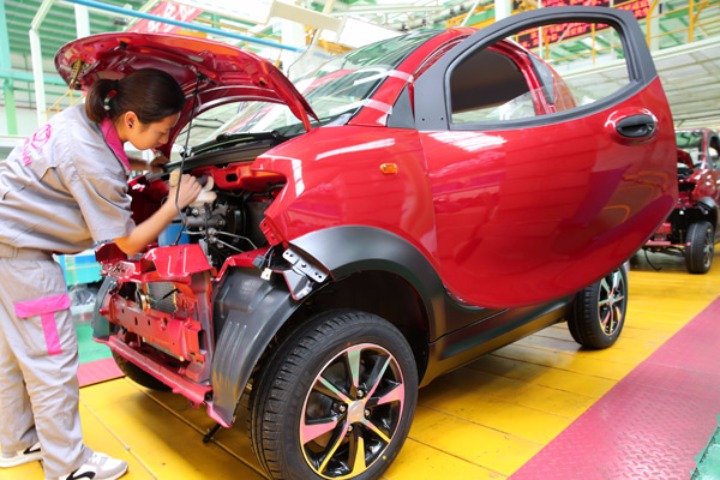
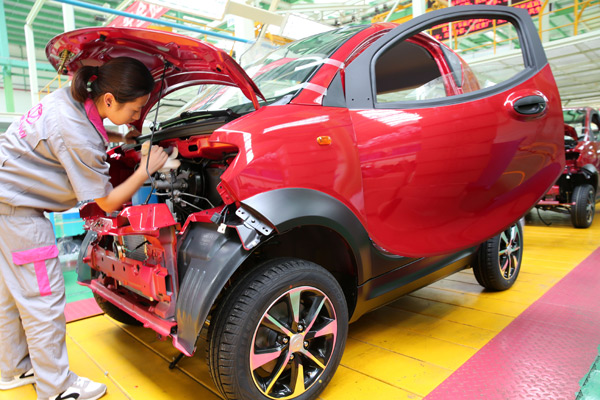
Amidst the general slowdown and shifting preferences, the New Energy Vehicle (NEV) segment emerged as a dynamic growth engine, showcasing remarkable resilience and accelerating adoption. Comprising battery electric vehicles (BEVs), plug-in hybrid electric vehicles (PHEVs), and a nascent fuel-cell vehicle market, NEVs were propelled by a powerful combination of aggressive government policies, substantial subsidies, and a growing national commitment to environmental sustainability.
November 2017 proved to be a landmark month for NEVs, with a record-breaking 119,000 units sold, representing an astonishing 83 percent surge year-on-year. This monthly performance underscored the rapid acceleration of electrification within China’s automotive landscape. Cumulatively, NEV sales for the first eleven months of the year reached 609,000 units, marking a substantial 51.4 percent growth compared to the previous year. Xu Haidong expressed strong confidence in the segment’s trajectory, stating, "Their development is in line with our expectations. It is now almost certain that their sales this year would reach our whole-year estimate of 700,000 units." This upward revision of forecasts reflected the overwhelming market acceptance and unwavering policy support for NEVs.
Looking ahead, CAAM’s optimism for NEVs remained robust, with Xu projecting, "We are confident in new energy cars and see no problems in their sales reaching 1 million units in 2018." This ambitious target underscored China’s strategic imperative to establish global leadership in electric mobility. The rapid expansion of NEV sales was meticulously supported by parallel developments in critical infrastructure. By the end of November 2017, a total of 431,800 charging poles had been built across the country, according to the China Electric Vehicle Charging Infrastructure Promotion Alliance. This extensive and growing charging network was crucial for alleviating range anxiety, facilitating wider adoption of electric vehicles, and demonstrating a comprehensive, integrated approach by authorities to foster a thriving NEV ecosystem. The government’s multi-pronged strategy included purchase subsidies, tax exemptions, preferential license plate policies in major cities, and strict NEV production quotas (the "dual credit" system introduced in 2017), all designed to accelerate the transition to electric vehicles.
Commercial Vehicles: A Pillar of Strength
Beyond the passenger car market, the commercial vehicle segment consistently delivered a strong performance, providing a stable backbone to the overall automotive industry. In November 2017, 368,000 commercial vehicles, encompassing buses and various types of trucks, were sold, marking a healthy 7.3 percent rise from the same month last year. This consistent and robust growth brought total commercial vehicle sales for the first eleven months of the year to 3.75 million units, representing an impressive nearly 15 percent increase year-on-year. This growth rate significantly outpaced the industry’s overall average, exceeding it by a substantial 11.2 percentage points.
The sustained strength of the commercial vehicle segment could be attributed to several key factors. Firstly, China’s ongoing massive infrastructure development projects, including high-speed rail, expressways, and urban construction, generated continuous demand for heavy-duty trucks and specialized construction vehicles. Secondly, the booming e-commerce sector, with its ever-expanding logistics and delivery networks, fueled robust demand for light and medium-duty trucks and vans. Thirdly, stricter emission standards and increased regulatory scrutiny prompted many fleet operators to upgrade their older, less compliant vehicles, contributing to new sales. This segment’s resilience underscored its integral role in supporting China’s broader economic activities, industrial growth, and the burgeoning digital economy.
Broader Implications and Industry Outlook
The trends observed in China’s automotive market in late 2017 carried profound implications for both domestic and international automakers. The discernible slowdown in conventional internal combustion engine (ICE) vehicle sales, coupled with the explosive ascent of NEVs, signaled a pivotal structural transformation. For established global players like Volkswagen, GM, Toyota, and Ford, which had heavily invested in China’s ICE market, adapting to this shifting landscape necessitated an accelerated commitment to electric vehicle research and development, substantial localization of EV production, and a rapid adjustment of product portfolios to meet evolving consumer demands and increasingly stringent regulatory requirements. Domestic Chinese brands, many of whom had strategically focused on SUV design and made significant early strides in NEV technology, were often better positioned to capitalize on these emerging trends, challenging the dominance of foreign joint ventures.
Industry analysts widely interpreted the overall market moderation as a natural progression for a market of China’s immense scale, transitioning from a phase of hyper-growth to one of more sustainable, quality-driven expansion. The strategic phasing out of broad tax incentives was seen as a necessary step to foster organic market growth and reduce reliance on government stimulus. The industry’s focus was increasingly shifting from sheer volume to product innovation, brand differentiation, and technological leadership, particularly within the NEV ecosystem.
The government’s unwavering commitment to NEVs was not merely an environmental initiative but a core strategic industrial policy aimed at establishing China as a global leader in next-generation automotive solutions. By heavily investing in NEV technology, battery research, and charging infrastructure, China sought to gain a competitive edge in emerging automotive fields, including autonomous driving and intelligent connectivity. The ambitious targets for NEV sales, backed by comprehensive policy support and a rapidly expanding charging network, underscored this national strategic imperative.
For consumers, the evolving market meant greater choice, particularly in the NEV segment, and potentially more competitive pricing as automakers vied for market share in a maturing and technologically advancing environment. The decline in traditional sedan and minivan sales highlighted a growing affluence and changing lifestyle preferences among Chinese buyers, who increasingly prioritized the comfort, space, and perceived status offered by SUVs, alongside a growing awareness of environmental benefits associated with NEVs.
Challenges and Opportunities Ahead
Looking beyond 2017, the Chinese automotive market faced both significant challenges and immense opportunities. The challenges included intensified competition from both domestic and international players, potential market saturation in major urban centers leading to lower penetration rates in rural areas, and the ongoing need for continuous technological innovation to meet ever-tightening emission standards for ICE vehicles and rapid advancements in NEV performance. Furthermore, geopolitical factors and potential global economic uncertainties could influence consumer confidence and overall spending patterns.
However, the opportunities remained substantial and transformative. Continued urbanization, the rise of a younger, digitally-savvy consumer base, and the government’s unwavering support for high-tech industries, particularly NEVs, presented fertile ground for sustained growth. The premium vehicle segment continued to expand, offering lucrative prospects for luxury brands. Moreover, the deep integration of advanced technologies such as artificial intelligence, 5G connectivity, and autonomous driving capabilities promised to redefine the automotive experience entirely, creating entirely new revenue streams and innovative business models.
In conclusion, China’s automotive market in late 2017 presented a compelling dual narrative: a general tempering of growth in conventional segments due to policy adjustments and market maturation, juxtaposed with an explosive surge in New Energy Vehicles driven by strategic government initiatives and evolving consumer preferences. This period marked a crucial turning point, signaling a future where innovation, sustainability, and technological leadership, particularly in the electric mobility sector, would be the primary engines of growth in the world’s largest automotive market. The industry was clearly entering a new chapter, characterized by profound structural transformation and an accelerated race towards an electrified and intelligently connected future.

 Evan Lee Salim
 Suro Senen