Nila Kartika Wati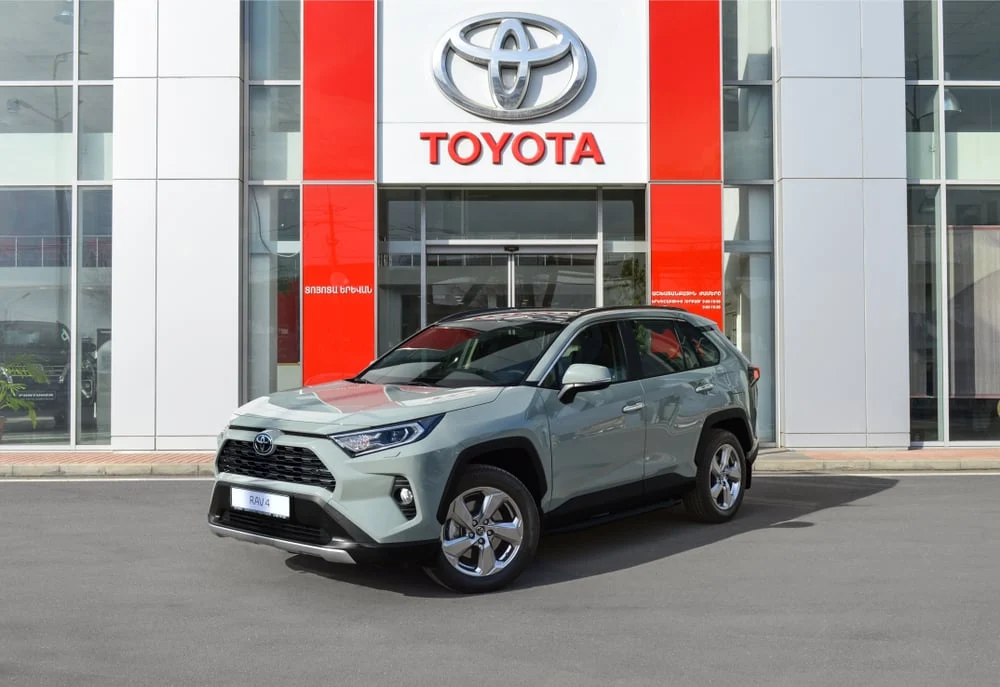
TOKYO – Toyota Motor Corporation’s Annual Ordinary General Shareholders’ Meeting, held today in Toyota City, Aichi Prefecture, saw shareholders decisively re-elect Akio Toyoda to the crucial role of chairman. The meeting also marked a significant endorsement of the automaker’s newly appointed CEO, Kenta Kon, who was voted onto the board of directors. This strong show of investor confidence underscores a continued backing for Toyota’s controversial "multi-pathway" strategy, a direction that environmental advocates and climate groups warn is actively hindering the global transition to zero-emission electric vehicles (EVs).
Following the proceedings, Toyota President and CEO Kenta Kon addressed reporters, reaffirming the company’s unwavering commitment to its multi-pathway approach. Kon emphasized that Toyota intends to continue investing in and utilizing a diverse range of powertrains, metaphorically stating that the company would not be "hitting the brakes suddenly" on this strategy. This stance, however, has drawn sharp criticism from those urging a more rapid and decisive shift towards fully electric mobility.
Greenpeace East Asia’s Scathing Critique
Erin Eunseo Choi, climate and energy campaigner at Greenpeace East Asia, offered a pointed response to Toyota’s strategic direction. "Geopolitical volatility and soaring oil prices have exposed the vulnerability of our fossil fuel-dependent industries, accelerating EV demand while Toyota slows to adapt," Choi stated. She highlighted a previous exchange, referencing Toyota’s reply to a Greenpeace open letter concerning the automaker’s emissions reduction efforts. "In a reply to Greenpeace, Toyota said it supports the Paris Agreement, yet concrete steps remain invisible. Its executives speak of a ‘multi-pathway strategy,’ but there is no time for corporate complacency. An ambulance carrying a critically ill patient needs a clear destination and speed. The climate crisis is that patient, and the hospital is not getting any closer."
Toyota’s Dominance and Declining Rankings
Despite the mounting pressure, Toyota has maintained its position as the world’s largest automotive manufacturer by volume throughout 2025. However, its environmental footprint remains substantial, with its reported emissions equivalent to more than half of Japan’s annual emissions. The company’s sustainability performance has also come under increasing scrutiny. In the 2026 Lead the Charge ranking, an influential assessment of automakers’ decarbonization efforts, Toyota plummeted to 16th place out of 18 global competitors. This marks its second consecutive annual decline in the rankings, a trend attributed to criticism over slow progress in supply-chain decarbonization and weaker human-rights tracking mechanisms.
Furthermore, battery electric vehicles (BEVs) accounted for a mere 2% of Toyota’s total sales in 2025. This figure significantly lags behind global competitors and highlights the absence of a clear internal combustion engine (ICE) phase-out target within Toyota’s strategic planning. The company, along with the Japan Automobile Manufacturers Association, has also faced persistent criticism for its lobbying activities. Reports from InfluenceMap indicate that Toyota has been actively engaging governments in emerging markets such as Indonesia, Brazil, and Colombia, advocating for biofuels and transitional powertrains. Critics argue that these efforts are designed to intentionally delay the widespread adoption of fully electric vehicles.
Macroeconomic Headwinds and Accelerating EV Market
The automotive industry is currently navigating a complex economic landscape. Recent macroeconomic headwinds have imposed a significant financial burden on Toyota, with an estimated US$4.3 billion loss attributed to surging material costs and lost sales within the current year. Paradoxically, this period of economic turbulence has coincided with a sharp acceleration in global EV sales. This trend is particularly evident in Southeast Asia, a region that has historically been a primary market for Toyota’s combustion engine vehicles, and in Japan, where EV sales doubled year-on-year in March, signaling a rapid market transformation.
Akio Toyoda’s "Loneliness" and the Competitive Imperative
Toyota’s chairman, Akio Toyoda, has publicly acknowledged a sense of isolation regarding his company’s strategic direction. He recently admitted to feeling "very alone" in his conviction about the continued relevance of the internal combustion engine in the face of a global shift towards EVs. However, environmental groups argue that this personal sentiment cannot translate into a viable corporate strategy. "Loneliness is not a strategy, and it’s costing Toyota its market dominance," Choi emphasized.
The competitive landscape is rapidly evolving, with Chinese automakers now leading in both pricing and technological innovation. These rivals are actively displacing Japanese automakers in key markets like Southeast Asia. To remain competitive, particularly against these surging Chinese players, Toyota is under immense pressure to establish an immediate and long-term electrification target.
Investment and the Call for Genuine Ambition
In response to the ongoing criticism and the evolving market, Toyota has made some strategic investments. Its recent US$800 million investment in Kentucky, which includes provisions for EV production, is seen as a step in the right direction. However, environmental organizations contend that given Toyota’s global scale and resources, such investments should be matched with a more ambitious and comprehensive electrification agenda.
"As climate-driven extreme weather intensifies, Toyota’s customers and communities will bear the cost of this hesitation," Choi concluded. "Its recent US$800 million investment in Kentucky, which includes EV production, is a start, but Toyota has the scale to lead this transition globally. We call on Mr. Toyoda to match his company’s resources with genuine ambition."
Background and Chronology of the "Multi-Pathway" Debate
The "multi-pathway" strategy, championed by Akio Toyoda and now continued under Kenta Kon, has been a cornerstone of Toyota’s approach to decarbonization for several years. This strategy emphasizes the development and utilization of a wide range of powertrain technologies, including hybrid electric vehicles (HEVs), plug-in hybrid electric vehicles (PHEVs), hydrogen fuel cell vehicles (FCVs), and even continued development of internal combustion engines, alongside a more gradual introduction of battery electric vehicles (BEVs).
The genesis of this strategy can be traced back to Toyota’s early leadership in hybrid technology with the Prius, launched in 1997. While this innovation positioned Toyota as a pioneer in alternative powertrains, the company has been criticized for its cautious approach to fully electric vehicles compared to many of its global rivals.
- Early 2000s – Mid 2010s: Toyota establishes global dominance with its hybrid technology, building a strong reputation for fuel efficiency and reliability. The company’s focus remains largely on HEVs and PHEVs, with limited investment in pure BEVs.
- Late 2010s – Early 2020s: As global concerns about climate change intensify and regulatory pressures mount, many automakers begin to accelerate their BEV development. Toyota, however, maintains its multi-pathway approach, emphasizing the need for diverse solutions to suit different markets and customer needs. This period sees increasing criticism from environmental groups and some investors.
- 2020-2022: Toyota announces ambitious targets for electrification but continues to highlight the importance of hybrids and hydrogen. The company faces increasing pressure to set firm deadlines for phasing out internal combustion engines.
- 2023: Akio Toyoda expresses his feelings of isolation regarding the overwhelming shift towards BEVs, further solidifying the perception of Toyota’s cautious stance.
- 2024: Kenta Kon is appointed CEO, succeeding Akio Toyoda in that role, though Toyoda remains Chairman. Kon reiterates commitment to the multi-pathway strategy.
- June 2024 (Present): The Annual Ordinary General Shareholders’ Meeting confirms continued investor support for the multi-pathway strategy, despite ongoing criticism from environmental organizations and a growing consensus for rapid BEV adoption.
Supporting Data and Environmental Impact
The environmental implications of Toyota’s strategy are significant. According to Toyota’s 2024 Sustainability Data Book, the company reported total lifecycle greenhouse gas emissions of 589.57 million tonnes of CO2 equivalent across Scope 1 (direct operations), Scope 2 (purchased energy), and Scope 3 (value chain/vehicle use). For comparison, Japan’s total national annual emissions for the same period stood at 961.87 million tonnes, according to data compiled by Our World in Data. This highlights the substantial contribution of a single automotive manufacturer to global emissions.
The low percentage of BEV sales (2% in 2025) means that the vast majority of Toyota’s vehicle fleet continues to rely on fossil fuels, contributing to ongoing tailpipe emissions and the demand for gasoline and diesel. The lobbying efforts in emerging markets, advocating for transitional fuels, further complicate the global effort to reduce carbon emissions from the transportation sector. Critics argue that these actions, while potentially offering short-term economic benefits, undermine long-term climate goals and could lead to stranded assets in the future as regulations inevitably tighten.
Analysis of Implications
The re-election of Akio Toyoda as chairman and the endorsement of Kenta Kon as a board member signal a clear mandate from a significant portion of Toyota’s shareholders to continue with the established multi-pathway strategy. This decision has several potential implications:
- Continued Market Share Pressure: While Toyota remains the largest automaker by volume, its slow adoption of BEVs could lead to a further erosion of market share, particularly in regions with strong government incentives for EVs and among consumers prioritizing sustainability. Chinese automakers, with their rapid advancements in EV technology and competitive pricing, are already posing a significant threat.
- Regulatory Risk: As global climate regulations become more stringent, Toyota may face increasing pressure to adapt its strategy or risk non-compliance penalties. The company’s lobbying efforts could also backfire, leading to reputational damage and potential legal challenges.
- Investor Relations: While current shareholders have backed the strategy, a growing segment of investors, particularly those focused on ESG (Environmental, Social, and Governance) principles, may increase their pressure on Toyota to accelerate its electrification plans. This could lead to shareholder activism and potential divestment from funds prioritizing sustainability.
- Technological Trajectory: By not fully committing to BEVs, Toyota risks missing out on crucial advancements in battery technology, charging infrastructure, and software integration that are defining the future of mobility. This could leave them playing catch-up in a rapidly evolving technological landscape.
- Global Climate Goals: The continued reliance on internal combustion engines and transitional fuels by a major global automaker directly impacts the feasibility of achieving ambitious climate targets set by international agreements like the Paris Agreement.
Toyota’s decision to maintain its multi-pathway strategy, while supported by its shareholders, places it at odds with the urgent global call for rapid decarbonization of the transportation sector. The coming years will be critical in determining whether this strategy can withstand the mounting environmental, economic, and competitive pressures.
Media Contacts:
Yujie Xue, International Communications Officer, Greenpeace East Asia, [email protected]
Natalia Emi Hirai, Communications Manager, Greenpeace Japan, +81 (0)8065584446, [email protected]

 Basiran
 Pevita Pearce