Layla Zulfa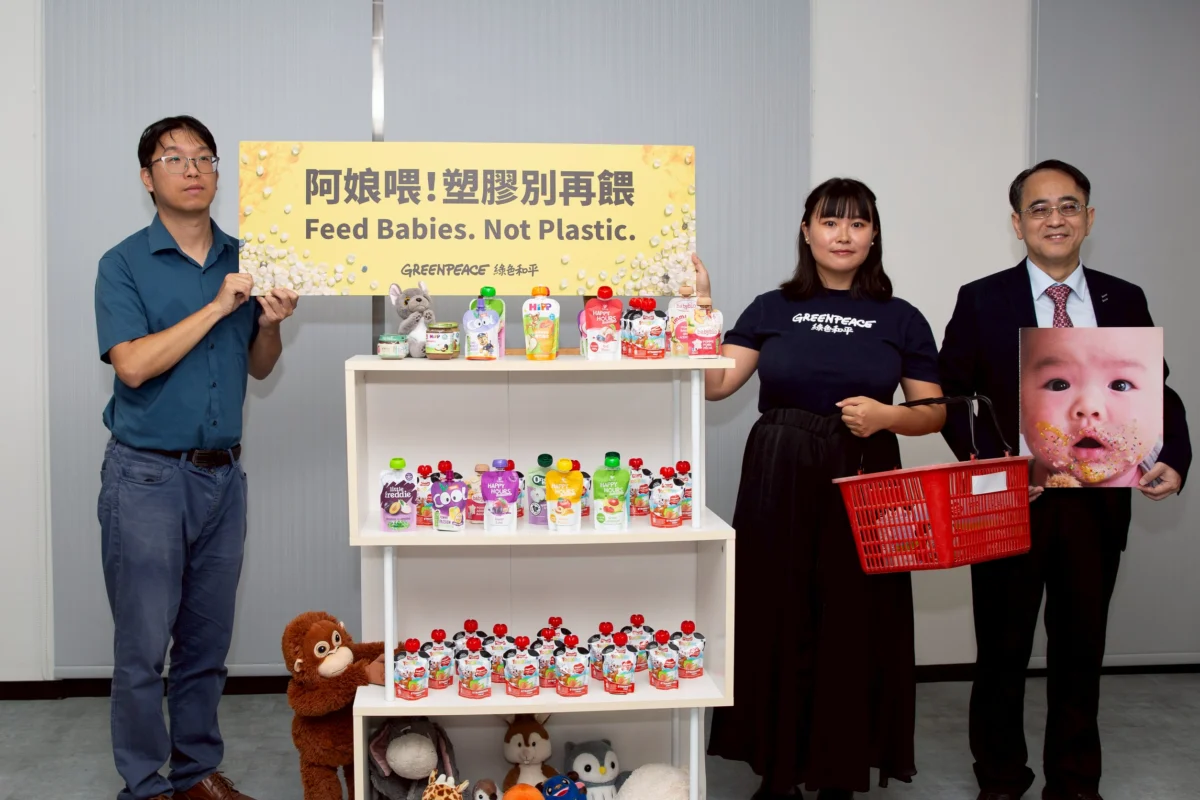
Taipei, July 14, 2026 – A new report released today by Greenpeace Taiwan reveals a startling prevalence of plastic packaging in the complementary foods intended for Taiwan’s youngest consumers. The comprehensive "Packaging Survey of Baby Food Products, Including Fruit Purees and Yogurts, in Major Retail Channels in Taiwan" found that a staggering 80 percent of these essential infant nutrition products are encased in plastic pouches. This figure escalates to a near-universal 100 percent in hypermarkets, effectively leaving parents with minimal to no non-plastic packaging alternatives when purchasing these vital foods.
The survey, conducted in April 2026, meticulously examined baby fruit puree and yogurt offerings across prominent retail sectors. This included major hypermarkets, dedicated pharmacies, specialized baby product stores, and leading online shopping platforms such as Momo, PChome, Shopee, and Coupang. The findings underscore a significant market imbalance, with hypermarkets exclusively offering products in plastic pouches. While other retail channels showed a slightly lower, yet still substantial, proportion of plastic pouch packaging, ranging from 74 to 79 percent, the overall trend points to a deep-rooted reliance on plastic for this vulnerable consumer group. Prominent brands like Babybio, HiPP, Pascual, and Earth Love were identified among those predominantly utilizing plastic pouches.
"Parents are making purchasing decisions with the sole intention of nourishing their children, not to inadvertently expose them to plastic-related risks from their very first solid food experiences," stated Chi Lo, Communications Officer at Greenpeace Taiwan. "When nearly 80 percent of products are presented in plastic pouches, this transcends individual consumer choice. It signifies a systemic failure on multiple fronts: the market has inadequately provided safer, non-plastic alternatives, and governmental regulations have not kept pace with emerging scientific concerns."
Microplastic Contamination: A Growing Concern in Infant Nutrition
The report shines a critical spotlight on the potential health implications of plastic pouches, which are often constructed from composite materials such as PET, aluminum foil, and polyethylene (PE). Crucially, the inner PE layer, along with the spout and cap of these pouches, are in direct contact with the food. Emerging scientific research increasingly suggests that the risks associated with plastic packaging extend far beyond environmental pollution post-disposal. A significant and concerning finding is that these plastic pouches could be a substantial source of human microplastic exposure, particularly for infants and young children who are in critical developmental stages.
In a pivotal study commissioned in 2025 by Greenpeace International and conducted by Norway’s SINTEF Ocean laboratory, a disturbing pattern emerged. The laboratory tested pouch-packaged baby food products from two major multinational brands. The results were unequivocal: microplastics were detected in every single product subjected to the analysis. In some instances, fruit puree products contained an alarming concentration of up to 99 microplastic particles per gram of food. This translates to an estimated total of over 10,000 microplastic particles per pouch. Similarly, certain yogurt products were estimated to contain more than 5,000 microplastic particles per pouch.
The SINTEF Ocean laboratory’s analysis further identified specific polymers, including polyethylene (PE) and polypropylene (PP), within the food samples. This strongly indicates that the packaging materials themselves are a direct conduit for microplastic contamination. Beyond microplastics, the study also identified dozens of plastic-related chemicals. Of particular concern are substances identified as having potential toxicity and endocrine-disrupting properties, raising further questions about the safety of prolonged exposure for developing infants.
Experts Advocate for Precautionary Principle in Protecting Children’s Health
In light of these findings, medical and scientific experts are urging a proactive approach, emphasizing the application of the precautionary principle to safeguard the health of infants and young children. Dr. Tzung-Hai Yen, a respected nephrologist at Chang Gung Memorial Hospital in Linkou, highlighted the current scientific landscape. While the precise levels of microplastic exposure that constitute harm to human health are still under investigation, existing animal and cell studies provide compelling evidence. These studies suggest that high levels of microplastic exposure may trigger adverse physiological responses, including oxidative stress, inflammation, and even organ damage.
"The imperative for action should not be contingent upon the complete and definitive proof of health impacts on humans," Dr. Yen asserted. "The precautionary principle must serve as our guiding compass, compelling us to proactively reduce human exposure to microplastics. Infants and young children are at a profoundly vulnerable stage of physical development. Their bodies are less equipped to process or mitigate the effects of harmful environmental substances, making them disproportionately susceptible compared to adults. Therefore, prioritizing the reduction of their exposure must be paramount."
Echoing these concerns, Dr. I-Lun Hsiao, Director of the Food Safety Testing and Functional Development Research Center at Taipei Medical University, pointed to an additional layer of risk. Dr. Hsiao explained that plastic pouches are not only a potential source of microplastics but can also leach other complex chemical substances. These are known as non-intentionally added substances (NIAS) and can be generated during the manufacturing processes of the packaging or through its use.
Dr. Hsiao further underscored a significant regulatory gap in Taiwan. She noted that, when compared to established regulatory frameworks in regions like the European Union, the United States, and Japan, Taiwan’s regulations governing chemicals used in plastic food packaging and the disclosure of information pertaining to these chemicals remain less comprehensive. This lack of stringent oversight is particularly concerning given that some plastic-related chemicals possess endocrine-disrupting properties. The potential for synergistic effects, where multiple chemicals interact within the human body to amplify their collective impact, presents a heightened and complex health risk, especially for developing children.
Joint Call for Enhanced Government Regulation and Industry Responsibility
In response to the pervasive use of plastic packaging and the emerging scientific evidence of potential health risks, Greenpeace Taiwan and the consulted experts have issued a unified call to action directed at Taiwan’s Food and Drug Administration (TFDA) and other relevant government agencies. The core demands include:
- Strengthening Regulations for Plastic Food Packaging: This involves implementing stricter standards for the types of plastics permitted in food packaging, particularly for products intended for infants and young children. This could include mandating the use of safer, food-grade materials with proven low leaching potential.
- Expanding Chemical Testing and Disclosure Requirements: Government agencies are urged to broaden the scope of mandatory chemical testing for plastic food packaging, focusing on substances with known or suspected toxicological effects, including endocrine disruptors and NIAS. Furthermore, increased transparency through mandatory public disclosure of chemical compositions and safety assessments is essential.
- Promoting and Incentivizing Sustainable Packaging Alternatives: The government is encouraged to develop policies that actively support and incentivize the adoption of reusable, recyclable, or compostable packaging materials for baby food products. This could involve tax breaks, subsidies, or preferential procurement policies.
- Establishing Clear Limits for Microplastic Contamination: Given the growing body of research, regulatory bodies should work towards establishing clear and scientifically defensible limits for microplastic contamination in food products, with a particular focus on infant and child nutrition.
Beyond governmental action, Greenpeace Taiwan also issued a direct appeal to baby food manufacturers. The organization urges these companies to proactively undertake rigorous testing of their products for microplastics and hazardous chemicals. Crucially, Greenpeace calls for the public disclosure of these test results, empowering consumers with verifiable information about the safety of the products they purchase for their children.
"The fundamental desire of every parent is to provide the optimal nutrition for their children," Lo reiterated. "The next generation should not be burdened with the unforeseen health consequences stemming from the pervasive use of plastic packaging. In the face of scientific uncertainties surrounding the full impact of plastic pollution on human health, it is incumbent upon the government to fortify food packaging regulations. Simultaneously, a broader strategy to reduce unnecessary plastic production at its source and systematically phase out single-use plastics and high-risk packaging is imperative. Only through such comprehensive measures can we genuinely mitigate the exposure of future generations to microplastics and the myriad of associated plastic-related chemicals."
The appended documents, "Appendix 1: Packaging Survey of Baby Food Products, Including Fruit Purees and Yogurts, in Major Retail Channels in Taiwan" and "Appendix 2: Greenpeace Report – The Microplastics Crisis: Hidden Risks of Plastic Pouches in Baby Food," provide detailed methodologies and findings supporting the report’s conclusions. These resources offer further insights into the scope of the issue and the scientific basis for the concerns raised.


 Basiran
 Pevita Pearce