Basiran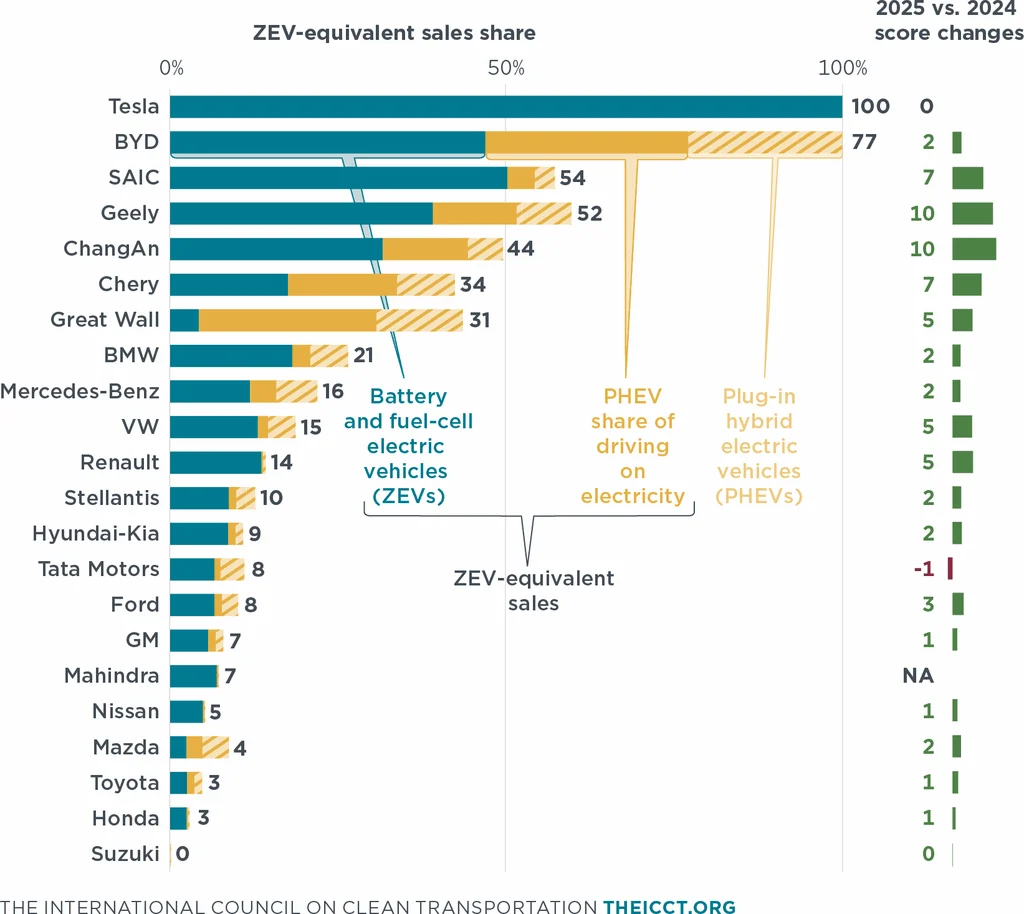
The automotive industry is undergoing a seismic transformation as the world pivots towards zero-emission transportation. However, this crucial transition is far from uniform, with major car manufacturers adopting vastly different paces and strategies, leading to a discernible divergence in their market performance and future viability. A recent webinar hosted by Greenpeace Japan on July 13th, featuring experts from the International Council on Clean Transportation (ICCT) and Greenpeace East Asia, illuminated these disparities, particularly highlighting the evolving landscape of battery-electric vehicle (BEV) adoption and the strategic decisions shaping the future of global mobility.
The session focused on the critical role of Southeast Asia as a burgeoning battleground for future automotive markets, with Indonesia standing out as a pivotal player. As one of the region’s largest auto markets and a nation actively positioning itself as an electric vehicle (EV) hub, Indonesia’s trajectory offers a microcosm of global trends. By the end of 2025, Indonesia’s BEV market experienced remarkable growth, securing its position as the third-largest in Southeast Asia with over 103,000 units sold. This rapid expansion underscores the immense potential of emerging markets and the significant long-term consequences for legacy automakers, especially those from Japan, who risk losing ground if they fail to adapt.
Erin Eunseo Choi, a representative from Greenpeace East Asia, presented an analysis that categorizes automakers into distinct strategic trajectories, revealing how companies from China, Japan, and South Korea are navigating this new era with markedly different outcomes.
China’s Electrifying Ascent: A Dominant Force in Emerging Markets
Chinese automakers, spearheaded by industry giants BYD and Geely, have demonstrated an aggressive and highly effective expansion into the electric vehicle sector. Even amidst a contraction in Indonesia’s overall automotive market, Chinese brands have achieved an astounding 153% year-on-year sales surge, nearly tripling their market share to a significant 10%. This remarkable performance is largely attributable to their strategic focus and rapid product development cycles.
BYD, in particular, has emerged as the undisputed leader in the Indonesian BEV segment, capturing an impressive market share exceeding 50%. The broader impact of Chinese EV brands is undeniable, with reports indicating that they secured over 90% of Indonesia’s total EV sales in the first half of 2025. This dominance reflects China’s commitment to EV technology, substantial government support, and a proactive approach to market penetration in regions where established players have been slower to react.
The implications of this Chinese surge are profound. It signals a potential recalibration of global automotive power dynamics, with Chinese manufacturers not only leading in domestic sales but also making significant inroads into international markets. Their ability to offer competitive pricing, advanced technology, and a diverse range of EV models positions them favorably to capture market share from competitors perceived as less agile.
Japan’s Eroding Dominance: A Stalled Transition
Despite historically holding significant advantages and a strong brand presence in Southeast Asia, Japanese automakers are experiencing a noticeable erosion of their once-unassailable dominance. Data from the first quarter of 2025 revealed that most Japanese brands, with the notable exception of Toyota, recorded sales declines in the region. This downturn occurred precisely as their Chinese competitors were experiencing exponential growth.
Choi identified a fundamental strategic issue: Japanese manufacturers remain heavily reliant on internal combustion engine (ICE) vehicles and hybrids, with a less pronounced prioritization of a clear and dedicated EV roadmap for the crucial Southeast Asian market. This strategic lag has direct consequences beyond market share. The continued reliance on combustion engine vehicles in regions with less stringent emissions standards contributes to significant regional climate inequities. Vehicles sold in Southeast Asia, for instance, emit substantially higher carbon dioxide equivalents per unit compared to those sold in markets with higher EV adoption rates, such as Europe. Consequently, climate-vulnerable communities in these developing regions are disproportionately bearing the brunt of pollution and climate change impacts.
The long-term ramifications for Japanese automakers could be severe. Failing to secure a strong position in rapidly growing EV markets like Southeast Asia could lead to a permanent loss of influence and market share, impacting their global competitiveness in the decades to come. While Toyota has shown some progress, the collective performance of Japanese brands suggests a broader strategic challenge in pivoting away from their traditional strengths quickly enough to meet the accelerating demands of the EV revolution.
South Korea’s Warning Signal: The Perils of Uneven Electrification
South Korea’s automotive sector, particularly Hyundai, presents a stark cautionary tale regarding the consequences of an uneven electrification strategy. In the Indonesian BEV market, Hyundai’s sales have plummeted dramatically, falling from 7,590 units in 2023 to just 1,828 units in 2025, marking a staggering 75.9% decline.
While Hyundai has articulated ambitious and clear commitments to phase out combustion engines in key developed markets like Europe and the United States, it conspicuously lacks similar, concrete timelines for Southeast Asia. This disparity between its pledges in mature markets and its actions in the Global South risks undermining its regional competitiveness and brand perception. Choi emphasized that this approach could damage Hyundai’s standing in markets that are increasingly prioritizing sustainable transportation solutions.
The case of Hyundai highlights the importance of a globally consistent electrification strategy. Companies that adopt a bifurcated approach, prioritizing decarbonization in some regions while maintaining a less ambitious stance in others, may find themselves outmaneuvered by competitors with a more unified and forward-thinking vision. The perception of commitment to environmental goals is increasingly becoming a factor in consumer and regulatory decision-making worldwide.
Erin Eunseo Choi summarized the situation with a pointed observation: "This is not simply a story of government policy succeeding or failing in isolation. It’s a story about which companies adapted their business models fast enough to meet that policy environment – and which didn’t.” This statement underscores that success in the EV transition is fundamentally a matter of corporate agility and strategic foresight.
The ICCT Global Automaker Rating 2025: A Definitive Scorecard
Further solidifying these observations, Dale Hall, Global Program Lead at the ICCT, presented findings from the organization’s comprehensive "Global Automaker Rating 2025." This extensive report evaluates the 22 largest global auto manufacturers across six key markets, representing approximately 80% of worldwide new car sales. The rating provides an objective assessment of automakers’ progress towards zero-emission vehicles.
Overall Ranking: Leaders Emerge, Laggards Lag Behind
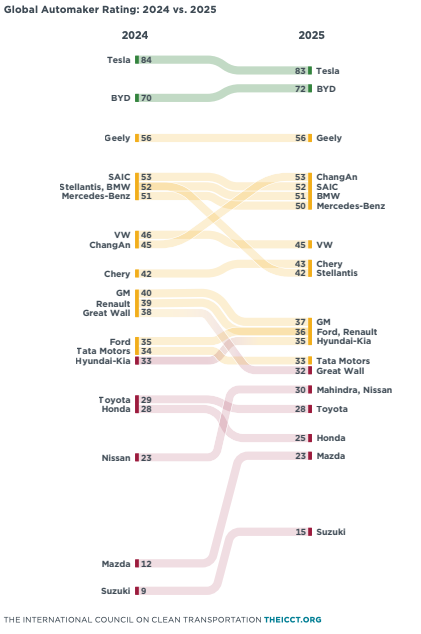
The ICCT report positions Tesla and BYD at the apex of the global ranking, signifying their leadership in the transition to electric mobility. In stark contrast, Japanese manufacturers occupied the bottom five spots in the overall ranking, significantly trailing their global peers. This data reinforces the qualitative analysis presented by Greenpeace, quantifying the performance gap between the leaders and the laggards in the EV race.
ZEV-Equivalent Sales Share: A Measure of Electrification Progress
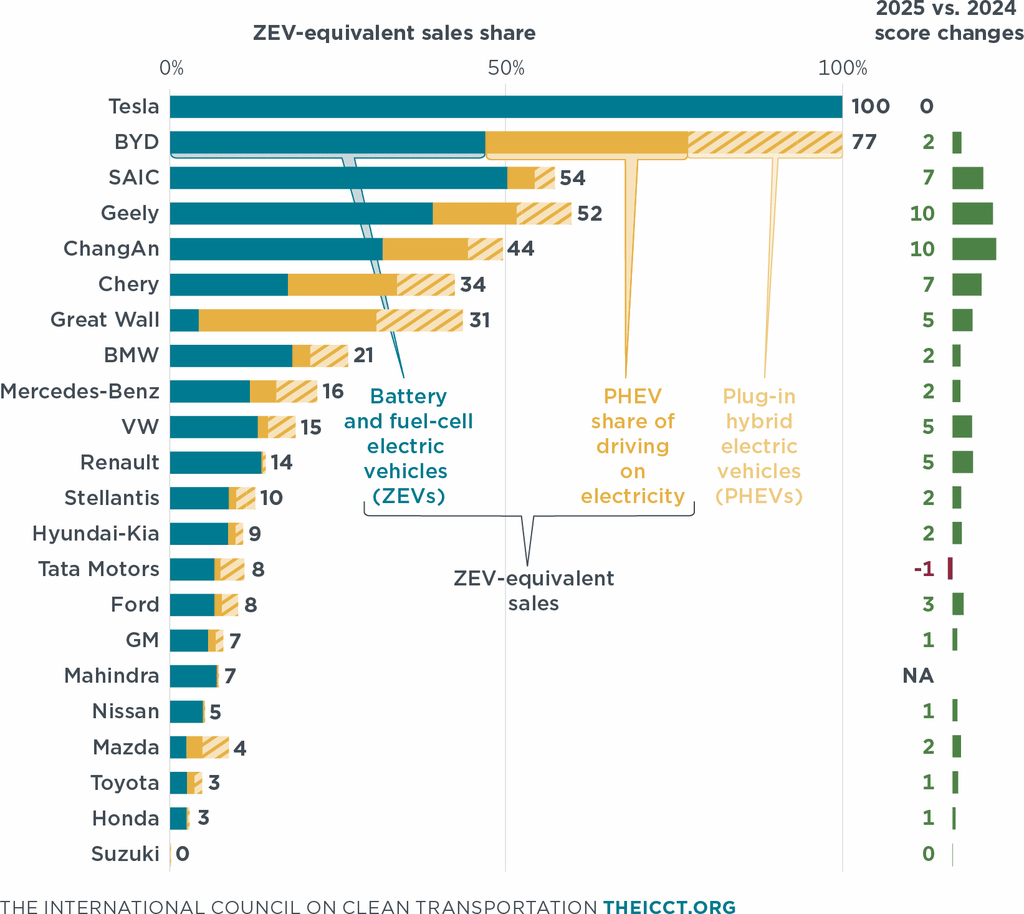
The report also analyzed the "ZEV-Equivalent Sales Share," a metric indicating the proportion of zero-emission vehicle sales relative to an automaker’s total sales. The findings revealed that nearly all evaluated automakers saw an increase in their electric sales share. Chinese brands such as Geely, Changan, and SAIC led this charge, demonstrating their commitment to transitioning their fleets. However, legacy foreign automakers continue to lag significantly behind. The ICCT analysis suggests that these established players will need to dramatically accelerate their EV sales to meet increasingly stringent climate standards and evolving market demands.
ZEV Investment: Fueling Future Growth or Stagnating?
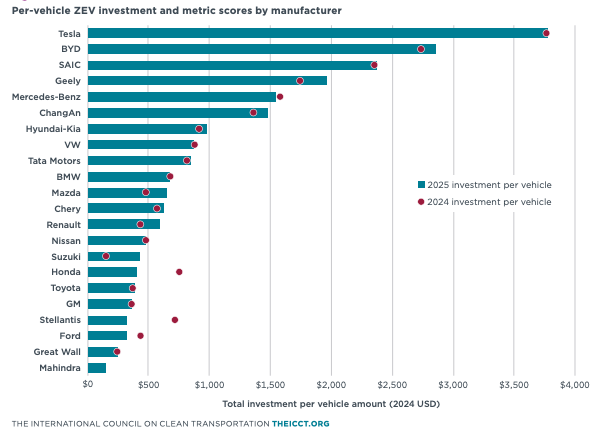
A critical component of the ICCT’s assessment is "ZEV Investment." The findings indicate a strategic divergence in capital allocation. Chinese manufacturers are actively ramping up capital investments per vehicle, with a clear focus on expanding their production capacity and global reach, particularly into burgeoning markets like Southeast Asia and Latin America. Conversely, many legacy automakers in the US, Europe, and Japan have either scaled back their investments or maintained them at flat levels. This retrenchment in investment weakens their future market position and signals a potential loss of competitive advantage in the long run.
ZEV Targets: Ambition vs. Retreat
The "ZEV Targets" section of the report highlights a concerning trend among some established players. While leaders like Changan and BYD have strengthened their mid-term and long-term EV targets, several major legacy brands have reportedly rolled back or lowered their 2030 EV targets. This adjustment often involves a pivot towards hybrids, which, while offering some improvement over traditional ICE vehicles, are not a complete solution for decarbonization. Such retreats from ambitious EV goals threaten to undermine global climate targets and delay the widespread adoption of truly zero-emission transportation.
Dale Hall elaborated on these strategic shifts: "In terms of long-term strategic vision, we see a clear divergence across regional lines. Several of the legacy brands – like Stellantis in Europe, Ford in the US, and Honda in Japan – reduced their mid-term targets amid short-term policy changes and are trying to hedge their investments by adopting more flexible platforms and hybrids, reducing their EV investments. Whereas the market leaders – like BYD, Geely, and SAIC, all from China – are aggressively increasing their EV investments and expanding their production capacity into new markets, again like Southeast Asia and Latin America. That will continue to give them more economies of scale and further footholds in the fastest-growing car markets in the world.”
Broader Implications: A Race Against Time for a Sustainable Future
The insights shared by Greenpeace and the ICCT paint a clear picture: the automotive industry is at a critical juncture. The accelerating global shift towards zero-emission transportation is not just an environmental imperative but also an economic one. Automakers that fail to adapt their business models, invest strategically in EV technology, and align their targets with global climate goals risk obsolescence.
The strategic divergence observed, particularly between Chinese and legacy automakers, suggests a potential reshaping of the global automotive hierarchy. Chinese manufacturers, with their aggressive investment, rapid innovation, and focus on emerging markets, are well-positioned to capture significant market share and drive the future of mobility.
Conversely, legacy automakers that continue to hedge their bets with hybrid technologies or delay substantial EV commitments may find themselves increasingly marginalized. This is particularly true in dynamic markets like Southeast Asia, where consumer demand for EVs is growing and policy support is strengthening.
The environmental implications are equally significant. The continued reliance on internal combustion engines in developing regions exacerbates climate change and disproportionately affects vulnerable populations. A rapid and comprehensive transition to BEVs is essential to meet the goals of the Paris Agreement and to build a more sustainable and equitable future. The choices made by automakers today will determine not only their market success but also their contribution to addressing the global climate crisis.


 Muslim