Muslim
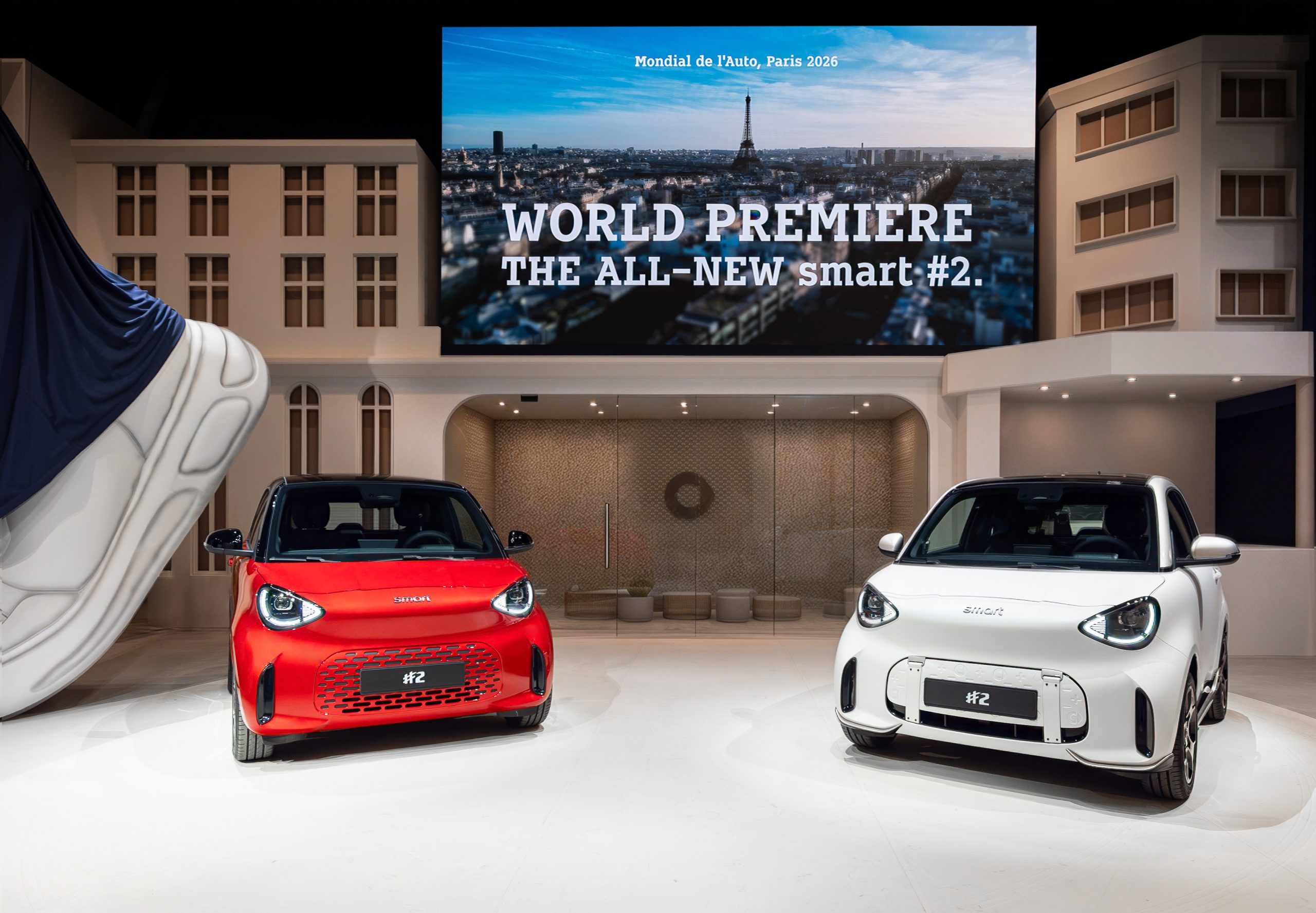
The iconic smart brand, now an electric-car joint venture between automotive giants Geely and Mercedes-Benz, made a significant statement at the Paris Motor Show on October 12 with the world premiere of its production smart #2. This unveiling signals a deliberate return to the brand’s foundational ethos: the ultra-compact two-seater city-car format that originally defined smart. The #2 represents a crucial evolution in the brand’s portfolio, following its recent foray into larger electric models, and is poised to re-establish smart’s presence in the urban mobility landscape. Early ordering for the new vehicle is set to commence in both European and Chinese markets, with specific local pricing and availability details anticipated to be released in the coming months, generating considerable anticipation among urban commuters and EV enthusiasts alike.
A Legacy Reimagined: The smart Brand’s Evolution
The introduction of the smart #2 is more than just a new vehicle launch; it’s a strategic move that reflects the brand’s journey and adaptation in a rapidly changing automotive world. Founded in 1994 by Mercedes-Benz (then Daimler-Benz) and SMH Swiss watchmaker Nicolas Hayek, smart was conceived with a revolutionary vision: to create the ultimate urban car. The original smart fortwo, launched in 1998, epitomized this vision with its minimalist design, exceptional maneuverability, and innovative safety cell. Despite its innovative approach, the brand faced financial challenges over the years, struggling to achieve consistent profitability within the Daimler ecosystem.
The turning point arrived in 2019 when Daimler AG (now Mercedes-Benz Group AG) and Zhejiang Geely Holding Group, a prominent Chinese multinational automotive company, announced the formation of a 50/50 joint venture. This partnership, formally established in December 2019, aimed to transform smart into a leading player in premium all-electric vehicles. Under the new structure, Mercedes-Benz continues to lead on design, leveraging its heritage of luxury and aesthetics, while Geely contributes its formidable engineering capabilities, advanced electric vehicle platforms, and manufacturing prowess. The global sales network, supported by both companies, was designed to expand smart’s reach, particularly in the burgeoning Chinese market and its traditional European strongholds. This collaborative model was first evidenced by the smart #1, a compact SUV that marked the brand’s initial step into larger segments, and now finds its urban-focused counterpart in the #2.
The Paris Motor Show Stage: A Platform for Urban Innovation
The choice of the Paris Motor Show for the #2’s world premiere is particularly symbolic. Historically a showcase for automotive innovation and design, the Paris event has increasingly become a focal point for sustainable mobility solutions and electric vehicles. Amidst a landscape where many traditional motor shows are grappling with relevance, Paris continues to attract significant attention, especially for brands introducing vehicles aimed at the European urban market. The show provided smart with an ideal platform to emphasize its commitment to the European customer base while simultaneously highlighting its global ambitions, particularly in China. The unveiling underscored a broader industry trend towards diverse EV offerings, ranging from performance-oriented luxury vehicles to practical, environmentally conscious urban commuters.
Engineering for the Urban Future: Technical Specifications of the smart #2
At the heart of the smart #2’s design and performance lies the new Electric Compact Architecture (ECA) platform. This dedicated electric vehicle platform is a testament to the synergistic engineering efforts of the Geely-Mercedes-Benz joint venture. The ECA platform is designed for modularity and scalability, offering a robust foundation for compact and subcompact electric vehicles, prioritizing space efficiency, safety, and dynamic performance. Its inherent flexibility allows for various body styles and battery configurations, making it a strategic asset for smart’s future product roadmap.
The standard versions of the smart #2 measure an ultra-compact 2,746 mm in length. This dimension is critical, representing a deliberate return to the brand’s roots in crafting vehicles perfectly suited for congested city streets, tight parking spaces, and efficient urban navigation. For comparison, the original smart fortwo measured around 2,695 mm, while the smart #1, the brand’s first model under the joint venture, is significantly larger at 4,270 mm. The #2 thus fills a vital niche, offering modern EV technology within a truly compact footprint.
For the European market, the smart #2 will be equipped with a 60 kW (approximately 81 horsepower) rear-mounted motor. This power output is optimized for urban driving conditions, providing sufficient acceleration for city traffic while maintaining energy efficiency. The rear-wheel-drive configuration, a hallmark of many smart vehicles, also contributes to the car’s agile handling and tight turning radius, enhancing its maneuverability in urban environments.
Powering the European model is a 35.8 kWh lithium iron phosphate (LFP) battery. LFP battery technology has gained significant traction in the compact EV segment due to its advantageous characteristics. While typically having a lower energy density compared to nickel-manganese-cobalt (NMC) batteries, LFP cells offer superior thermal stability, a longer cycle life, and are generally more cost-effective. These attributes make LFP batteries an excellent choice for urban-focused vehicles where extreme range is not the primary concern, but durability, safety, and affordability are paramount. The targeted combined WLTP (Worldwide Harmonised Light Vehicles Test Procedure) range for the European smart #2 is 290 km. This range is more than adequate for the vast majority of daily urban commutes, which typically involve much shorter distances. For context, average daily driving distances in European cities rarely exceed 50-70 km, making the 290 km WLTP range a comfortable buffer for weekly usage before requiring a recharge.
Charging capabilities further enhance the smart #2’s practicality. The company states that the vehicle supports 65 kW DC fast charging, allowing the battery to replenish from 10% to 80% in approximately 20 minutes. This rapid charging capability significantly mitigates range anxiety, enabling quick top-ups during errands or short stops, thereby enhancing the vehicle’s utility for busy urban dwellers. It aligns with the growing public charging infrastructure, particularly in European cities. It is important to note that European specifications for the smart #2 remain subject to final type approval by regulatory bodies, a standard procedure before market launch.
Design Philosophy: Mercedes-Benz Aesthetics Meets Urban Functionality
The design of the smart #2 is spearheaded by Mercedes-Benz’s global design team, ensuring that the vehicle carries the distinctive aesthetic appeal associated with the premium German brand. The design ethos for the #2 appears to blend smart’s historical compact proportions with modern, minimalist lines and sophisticated detailing. Expect a clean exterior profile, potentially featuring flush door handles, aerodynamic elements, and contemporary LED lighting signatures that convey a sense of modernity and technological advancement. Inside, the design is likely to prioritize ergonomics, connectivity, and intelligent use of space, reflecting Mercedes-Benz’s expertise in interior luxury and smart’s emphasis on urban living. High-quality materials, intuitive infotainment systems, and a focus on driver-centric controls are anticipated to be key elements, providing a premium feel despite the compact dimensions. The interior is expected to maximize passenger comfort and cargo space, cleverly integrating storage solutions to suit the needs of city life.
Strategic Market Positioning and Diverse Trims
The smart #2 is being introduced with a carefully segmented market strategy across Europe and China, catering to diverse customer preferences and purchasing powers. In Europe, the brand will offer a range of trims: Pure, Pure+, and the exclusive Couture Edition. This tiered approach allows smart to target a broader audience, from those seeking an accessible entry-level urban EV (Pure) to customers desiring more features and a premium experience (Pure+), and finally, those looking for exclusivity and bespoke design (Couture Edition).
China, a critical market for electric vehicles, will receive Premium and Couture Edition variants. This selection for the Chinese market suggests a focus on higher-tier offerings, reflecting the robust demand for premium and technologically advanced EVs in the region. The omission of the Pure and Pure+ trims in China, at least initially, could indicate a strategic decision to position the #2 as a more aspirational or feature-rich offering there.
A highlight of the launch is the Couture Edition, a limited-production variant designed to appeal to discerning buyers. Limited to just 999 units in Europe and another 999 in China, this edition underscores smart’s commitment to offering unique and collectible vehicles. Such limited editions often feature exclusive exterior paint schemes, unique interior finishes, special badging, and enhanced feature sets, adding to their desirability and perceived value. The Couture Edition not only serves as a halo model but also reinforces the brand’s association with style and individuality, aligning with Mercedes-Benz’s luxury heritage.
Competitive Landscape and Market Implications
The reintroduction of an ultra-compact two-seater by smart positions the #2 in a competitive, yet potentially lucrative, segment of the EV market. Its direct competitors include established players like the Fiat 500e and the Mini Electric, both of which offer stylish, urban-focused electric driving experiences. The smart #2 differentiates itself with its unique brand heritage, the strong backing of Geely’s EV platform expertise, and Mercedes-Benz’s design prowess. It also enters a market increasingly populated by smaller, niche urban mobility solutions like the Citroën Ami, though the #2 targets a more conventional car experience.
From a broader perspective, the smart #2 addresses several critical implications for urban mobility. Its compact size directly combats urban congestion and parking difficulties, two perennial challenges in metropolitan areas worldwide. As cities continue to implement stricter emission zones and encourage sustainable transport, a zero-emission vehicle like the smart #2 becomes an increasingly attractive option for residents. Furthermore, its efficient electric powertrain contributes directly to reducing local air pollution and noise, enhancing the quality of urban life.
For the smart brand itself, the #2 is pivotal. After expanding into larger segments with the #1, the #2 signifies a deliberate re-centering on its core identity as a purveyor of intelligent urban mobility. This dual strategy—offering both compact SUVs and ultra-compact city cars—allows smart to capture a wider range of customers while reinforcing its commitment to its founding principles. It demonstrates the flexibility and foresight of the Geely-Mercedes-Benz joint venture, showcasing their ability to innovate and adapt to market demands while honoring brand heritage.
Industry analysts are likely to view the smart #2 as a shrewd move. The urban EV segment is ripe for growth, driven by environmental regulations, consumer demand for sustainable options, and the practicalities of city living. The #2’s combination of iconic design, modern EV technology, and strategic market positioning could enable smart to carve out a significant share. Its success would also further validate the joint venture model, demonstrating how traditional automotive expertise can be effectively combined with Chinese manufacturing and EV platform capabilities to create compelling products for a global audience.
The Future of Urban Mobility: A smart Perspective
The unveiling of the smart #2 is more than just a product launch; it is a statement about the future of urban mobility. It reinforces the idea that electric vehicles are not just about long-range capabilities or high performance, but also about practical, efficient, and sustainable solutions for daily life in bustling cities. The smart #2 embodies a vision where personal transportation is integrated seamlessly into the urban fabric, minimizing environmental impact while maximizing convenience and enjoyment.
As cities worldwide grapple with population growth, increasing congestion, and the imperative to reduce carbon footprints, vehicles like the smart #2 will play an increasingly vital role. Its design, performance, and strategic market entry underscore a commitment to providing innovative solutions for the challenges of 21st-century urban living. With early ordering set to begin, the smart #2 is poised to not only revive a beloved automotive icon but also to accelerate the transition towards a smarter, cleaner, and more efficient urban future. The brand’s journey, from its ambitious inception to its current revitalization under the Geely-Mercedes-Benz partnership, exemplifies the dynamic evolution of the automotive industry and the enduring appeal of intelligent design for specific purposes.


 Suro Senen
 Nana Muazin