Lina Irawan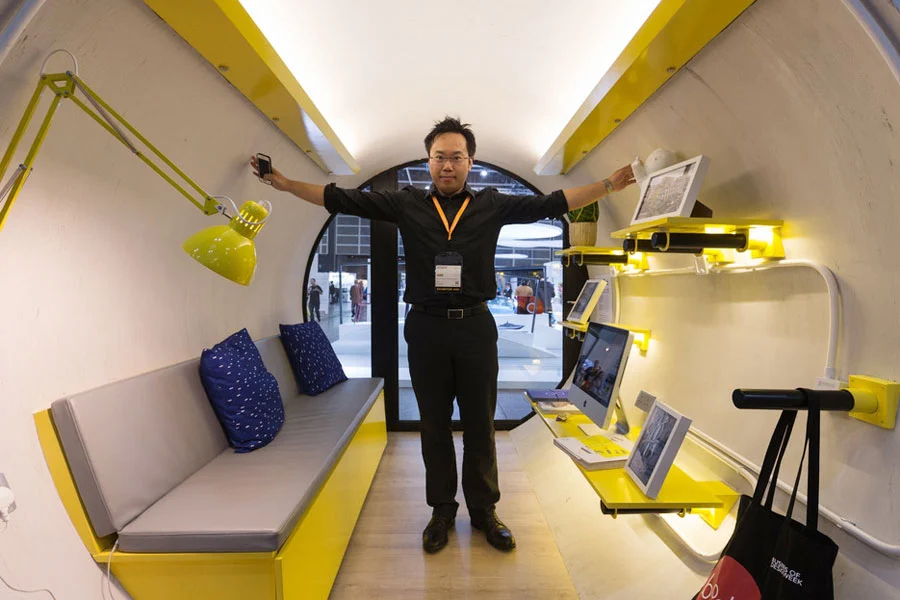
The innovative OPod Tube House, a novel concept designed to alleviate Hong Kong’s severe affordable housing challenges, garnered significant attention at the Design Inspire exhibition held in Hong Kong, China, on December 8, 2017. Conceived by the renowned architectural firm James Law Cybertecture, the experimental micro-living unit, constructed from repurposed concrete water pipes, presented a bold and unconventional approach to urban dwelling, immediately sparking widespread discussion among industry professionals, government officials, and the general public regarding the future of high-density living in one of the world’s most expensive cities.
The Genesis of a Solution: James Law Cybertecture’s Vision
The OPod Tube House project is the brainchild of James Law, an acclaimed architect known for his futuristic and often unconventional designs that push the boundaries of urban architecture. Law, the CEO and founder of James Law Cybertecture, has a history of developing projects that blend technology, design, and sustainability, often seeking to address pressing societal issues through innovative structural solutions. His firm’s portfolio includes a range of cybertecture projects, which integrate smart systems and digital interfaces into physical structures, aiming to create more efficient and responsive living and working environments. The OPod Tube House emerged from a direct response to Hong Kong’s escalating housing crisis, a problem Law identified as requiring radical thinking beyond traditional building methods. His vision for the OPod was to transform readily available, robust, and often overlooked industrial materials—concrete water pipes—into habitable, compact, and rapidly deployable homes. The design ethos was rooted in practicality, sustainability, and the urgent need for a cost-effective, adaptable housing alternative that could be implemented swiftly in a land-scarce metropolis.
Hong Kong’s Acute Housing Crisis: The Impetus
The backdrop against which the OPod Tube House was introduced is crucial to understanding its significance. Hong Kong has consistently ranked among the world’s least affordable housing markets for over a decade. In 2017, when the OPod was unveiled, the median property price in Hong Kong was approximately 19.4 times the median household income, making homeownership an unattainable dream for a vast majority of its residents. The average waiting time for public rental housing stood at over 4.7 years, with some families waiting significantly longer. This acute shortage of affordable housing has led to a proliferation of cramped, often unsafe, and exploitative living conditions, including subdivided flats, cage homes, and "coffin homes," where residents pay exorbitant rents for minuscule spaces lacking basic amenities and privacy. The average living space per person in Hong Kong is notoriously small, often falling below international standards for healthy living. These dire circumstances have created immense social pressure, economic inequality, and a public health concern, compelling both the government and private sector innovators to seek novel solutions. The OPod Tube House was presented as one such potential solution, targeting individuals and young couples struggling with prohibitive rents and inadequate living spaces.
Unpacking the OPod Tube House: Design and Features
The OPod Tube House is ingeniously constructed from a standard 2.5-meter (approximately 8.2 feet) diameter concrete water pipe, a material chosen for its inherent strength, durability, and cost-effectiveness. The interior, spanning a compact 100 square feet (9.29 square meters), is meticulously designed to maximize functionality and comfort for one or two occupants. Each unit incorporates a fully integrated living area, a compact kitchenette, and a private bathroom with a shower and toilet. To optimize the limited space, the design relies heavily on "micro-living" furniture solutions, such as convertible sofas that transform into beds, fold-down tables, and integrated storage units.
A key feature of the OPod is its technological integration. Each tube house is equipped with smartphone-controlled access locks, allowing for digital key management and enhanced security. This smart technology aligns with the broader trend of connected living and offers flexibility for potential short-term rentals or managed communities. Furthermore, the modular nature of the OPod is one of its most compelling attributes. The cylindrical units can be stacked vertically to form low-rise buildings, creating a modular community in a relatively short timeframe. This stacking capability not only conserves valuable land but also allows for rapid deployment and relocation. The robust concrete structure ensures structural integrity, while the ease of transport means these units can be conveniently situated on various vacant or underutilized urban sites, such as narrow city plots, underpasses, or even rooftops, offering unprecedented flexibility in urban planning. The initial cost estimates for a single OPod unit were reported to be around HK$100,000 to HK$120,000 (approximately US$12,800 to US$15,400), a figure significantly lower than conventional housing options in Hong Kong, positioning it as a genuinely "low cost" alternative.
A Glimpse at Design Inspire 2017
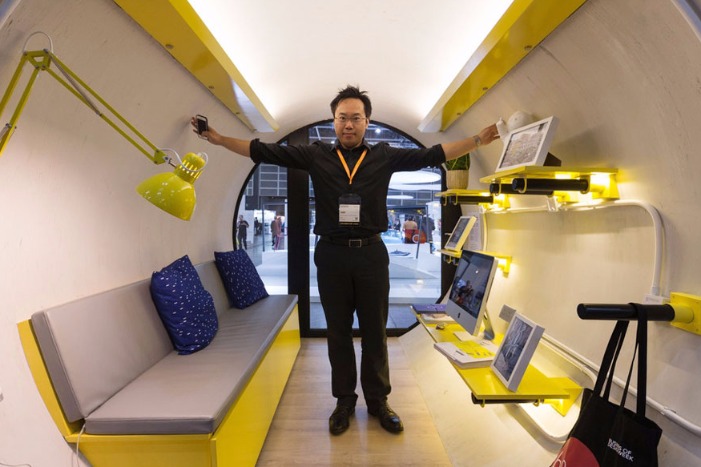
The Design Inspire exhibition, an annual event organized by the Hong Kong Trade Development Council (HKTDC), serves as a premier platform for showcasing cutting-edge design, innovative technologies, and creative solutions to global challenges. Held at the Hong Kong Convention and Exhibition Centre, the event attracts designers, architects, manufacturers, investors, and the public, fostering collaboration and promoting design excellence across various sectors, including product design, urban planning, and sustainable living. The 2017 exhibition, themed "Design for Liveability," provided an ideal stage for the debut of the OPod Tube House. The presence of Jonathan Kong, a designer director at James Law Cybertecture, demonstrating the width of the unit by stretching his arms within the prototype, vividly illustrated the compact yet functional dimensions of the living space. The OPod stood out as a prime example of how design innovation could directly address pressing urban issues, drawing considerable media attention and engaging visitors in discussions about alternative housing models. Its display at such a prominent event underscored the growing urgency and public interest in finding creative solutions to Hong Kong’s housing predicament.
Public and Expert Reactions: A Spectrum of Views
The unveiling of the OPod Tube House elicited a diverse range of reactions. James Law himself articulated his motivation, stating that the project aimed to provide "a truly affordable, rapidly deployable, and sustainable solution to Hong Kong’s housing crisis." He emphasized the inherent strength and widespread availability of concrete pipes as a raw material, making the concept economically viable. Jonathan Kong, present at the exhibition, echoed this sentiment, highlighting the practical aspects of micro-living furniture and smart home technology in maximizing the small footprint.
Initial public reactions were a mix of curiosity, cautious optimism, and skepticism. Many expressed admiration for the innovative use of materials and the potential for a quicker, cheaper housing option. Young professionals and students, particularly those struggling with high rents for tiny, often substandard rooms, saw the OPod as a potentially viable, albeit temporary, stepping stone. However, critics and some housing advocates raised concerns about the long-term liveability and psychological impact of living in such confined, windowless spaces. Questions were posed regarding the potential for social stigma, the adequacy of natural light and ventilation (despite design efforts to mitigate this), and whether such solutions truly address the root causes of the housing crisis or merely offer a stopgap measure. Government officials, while generally acknowledging the need for innovative solutions, typically respond with caution, citing complex regulatory frameworks, land-use planning challenges, and the need for comprehensive safety and public health assessments for any new housing model. Experts in urban planning also debated the scalability of such a project, questioning whether it could truly make a significant dent in the housing shortage given the sheer number of people affected and the limited availability of suitable sites for deployment.
Navigating the Path to Implementation: Challenges and Opportunities
The implications of the OPod Tube House concept extend far beyond its initial novelty. On the one hand, it represents a significant opportunity for rapid urban development and disaster relief housing, given its modularity and ease of construction. Its potential to utilize marginal urban spaces, previously deemed unsuitable for conventional development, offers a creative solution to land scarcity. For individuals and couples, it presents a significantly more affordable entry point into independent living compared to the prevailing market rates, potentially offering a safer and more dignified alternative to subdivided flats.
However, the path to widespread implementation is fraught with challenges. The most immediate hurdles include navigating Hong Kong’s stringent building codes and zoning regulations, which are designed for traditional multi-story structures and may not easily accommodate stacked pipe homes. Securing suitable land, even for temporary or modular structures, remains a formidable task in a city where land is fiercely contested. Infrastructure connectivity, including water, electricity, and sewage, for scattered OPod communities would also require careful planning and investment. Furthermore, long-term social acceptance is critical. While novel as a prototype, whether residents would embrace pipe living as a permanent solution, or if it would inadvertently create new forms of concentrated poverty or social segregation, remains an open question. The psychological aspects of living in a 2.5-meter diameter space, even with clever design, warrant further study. Critics argue that while innovative, the OPod addresses the symptom (lack of affordable housing) rather than the disease (systemic issues of land supply, speculation, and wealth inequality).
Beyond the Prototype: The Future of Micro-Living
The OPod Tube House, while specific to Hong Kong’s context, is part of a broader global trend towards micro-housing and innovative compact living solutions. Cities like Tokyo, New York, and London have also explored various forms of micro-apartments, co-living spaces, and modular housing to address urban density and affordability. The concept of repurposing industrial materials for residential use also resonates with sustainable design principles and circular economy models. Since its unveiling in 2017, the OPod has continued to generate discussion, though widespread deployment has faced the aforementioned practical and regulatory obstacles. As of recent updates, pilot projects or smaller-scale installations have been explored, demonstrating the feasibility of the concept in specific, controlled environments.
The long-term impact of the OPod Tube House, and similar micro-living innovations, will depend on a confluence of factors: government willingness to adapt regulations, public acceptance of unconventional living spaces, the economic scalability of production, and the ability to integrate these units into existing urban fabric without creating social divides. While it may not be the sole panacea for Hong Kong’s housing crisis, the OPod Tube House undeniably serves as a powerful symbol of architectural ingenuity and a provocative challenge to conventional notions of urban dwelling, reminding us that creative solutions are imperative in the face of escalating global urban challenges. It prompts a crucial ongoing dialogue about how cities can balance growth with liveability, affordability, and the dignity of their inhabitants.


 Evan Lee Salim
 Suro Senen