Suro Senen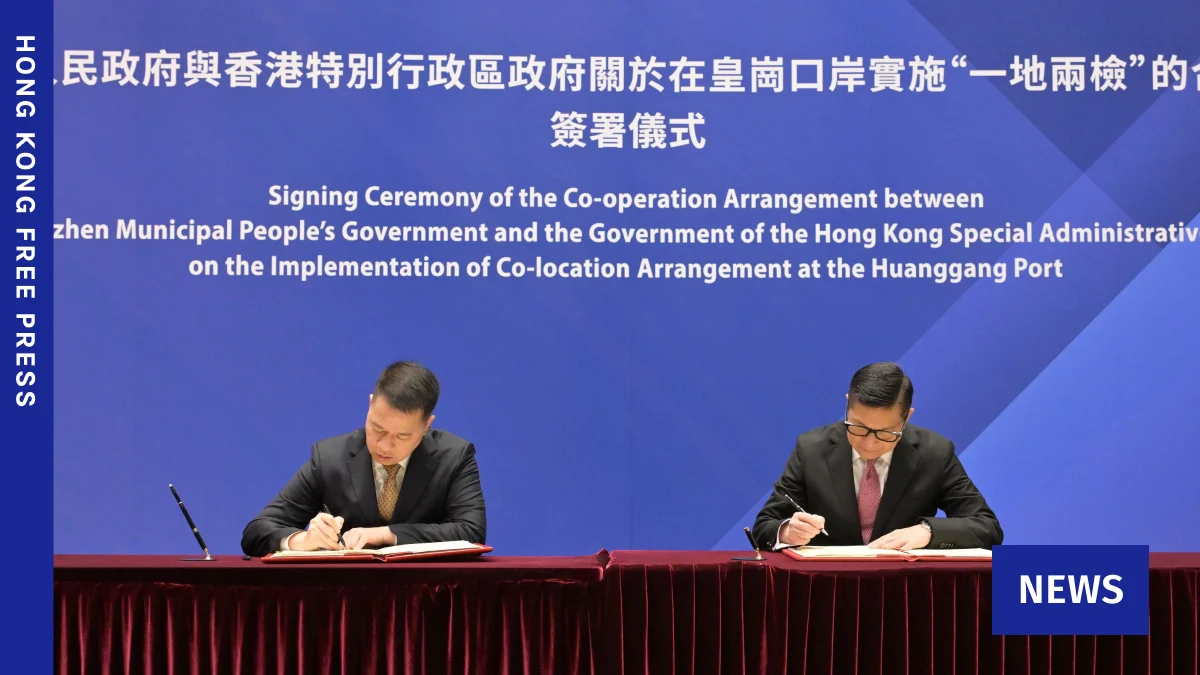
The long-anticipated revamp of the Huanggang Port, a crucial land border crossing between Hong Kong and mainland China, has reached a significant milestone with the signing of a cooperation agreement between the Hong Kong and Shenzhen governments. This pact formalizes the "colocation arrangement" for the redeveloped port, a move that promises to streamline cross-border travel and deepen integration between the two cities. However, as the facility edges closer to public opening, lawmakers and former security officials are emphasizing the paramount importance of comprehensive stress tests and drills to guarantee operational readiness and public safety.
The agreement, inked on Thursday, July 30, 2026, by Hong Kong’s Security Secretary Chris Tang and Shenzhen Vice Mayor Luo Huanghao, marks a pivotal step in the preparatory phase for the port’s full commissioning. This formalizes the framework for the co-location of customs and immigration facilities, allowing for a single point of clearance for travelers. The Hong Kong Port Area of the revamped Huanggang Port was officially established and brought under Hong Kong’s jurisdiction on July 31, 2026. Despite these administrative steps, the precise date for the complex’s complete opening to the public remains undecided, pending further operational readiness assessments.

A New Era of Cross-Border Efficiency
The revamped Huanggang Port is poised to become the preeminent 24-hour passenger land boundary control point between Hong Kong and Shenzhen. This ambitious project, which commenced refurbishment in 2019, aims to drastically reduce clearance times. Currently, transit through the existing Lok Ma Chau/Huanggang Port can take approximately 30 minutes. The new facility, however, is projected to cut this time down to a mere five minutes, a significant improvement for the estimated 200,000 daily passenger trips it is designed to handle. This capacity is further expandable to approximately 300,000 daily trips upon the commissioning of the Northern Link Spur Line, a planned extension of Hong Kong’s MTR network.
The colocation arrangement at Huanggang Port mirrors the model implemented at the West Kowloon High Speed Railway Station. However, a key distinction is that the Huanggang arrangement is being implemented through a cooperation framework rather than the territorial cession of a portion of Hong Kong to mainland Chinese jurisdiction, as was the case with the West Kowloon Station. This approach underscores a commitment to a more integrated, yet jurisdictionally distinct, operational model for border crossings.

Official Endorsements and Key Stakeholder Perspectives
Security Secretary Chris Tang expressed his gratitude to the Central Authorities for their unwavering support in realizing the colocation arrangement and establishing the Hong Kong Port Area. He described the signing of the cooperation agreement and the associated right-to-use agreement as an "important milestone" in the port’s readiness for opening. Tang highlighted the benefits of this new arrangement, emphasizing its role in fostering closer ties between Hong Kong and Shenzhen.
Lawmaker Brave Chan, who also serves as a Hong Kong deputy to the National People’s Congress, echoed this sentiment, stating that the new port would "bring Hong Kong and Shenzhen closer together." Chan, however, also voiced concerns regarding operational preparedness, stressing the necessity of conducting thorough systems tests and emergency drills. He suggested drawing parallels with the rigorous testing protocols employed for the launch of major infrastructure projects like the Kai Tak Sports Park, underscoring the scale and complexity of the Huanggang Port.

Former security minister Lai Tung-kwok provided further insight into the traveler experience under the new colocation model. He explained that passengers would benefit from a single set of border controls. For journeys into mainland China, travelers would present their Home Return Permit, while for return trips to Hong Kong, their Hong Kong ID card would suffice. Lai also pointed out the critical need for adequate staffing to manage potential issues travelers might encounter, ensuring a smooth and efficient experience for all.
A Timeline of Development and Integration
The journey towards the revamped Huanggang Port has been a multi-year endeavor, reflecting a strategic push for enhanced connectivity and economic integration within the Greater Bay Area.

- 2019: Refurbishment of the Huanggang Port, on the Chinese side of the Shenzhen-Hong Kong border, commences. This marks the initial phase of a comprehensive modernization project.
- Early 2020s: Ongoing construction and infrastructure development, including the complex integration of customs and immigration facilities, and the implementation of advanced technology for passenger and cargo processing.
- July 31, 2026: The Hong Kong Port Area of the redeveloped Huanggang Port is officially established and falls under Hong Kong’s jurisdiction. This administrative step signifies a formalization of the territorial arrangements for the Hong Kong-operated section of the port.
- July 30, 2026: Hong Kong and Shenzhen governments sign the cooperation agreement, formalizing the colocation arrangement and the operational framework for the joint clearance system. This agreement is a critical step towards the port’s public opening.
- Post-Agreement Period: Focus shifts to detailed operational planning, systems testing, and the execution of emergency drills. The exact date for the port’s full public opening is yet to be announced, pending the successful completion of these final readiness assessments.
The Strategic Importance of Huanggang Port
The Huanggang Port has historically played a vital role in cross-border traffic. Its redevelopment and the introduction of a colocation system are strategically designed to enhance its importance and efficiency. The port’s position as a 24-hour crossing is particularly significant, catering to a wide range of travelers, including business commuters, tourists, and freight.
The projected reduction in clearance times from 30 minutes to approximately five minutes is a substantial logistical achievement. This efficiency gain is expected to have a ripple effect, boosting trade, tourism, and people-to-people exchanges. The enhanced capacity, especially with the future integration of the Northern Link Spur Line, positions Huanggang Port as a critical node in the regional transportation network, facilitating greater economic activity and social interaction between Hong Kong and Shenzhen.

Legislative Scrutiny and the Path to Approval
The legislative process for enabling the colocation arrangement at Huanggang Port, similar to other joint-clearance initiatives, has been subject to intense scrutiny. Reports indicate that the approval of the co-location bill for Huanggang Port was notably swift, reportedly representing the fastest round of legislative scrutiny since the electoral system overhaul in 2021. This expedited process underscores the political will and strategic priority placed on deepening the integration between Hong Kong and mainland China, particularly within the framework of the Greater Bay Area initiative. The overhaul of the electoral system in 2021 aimed to ensure that only individuals deemed "patriots" could hold legislative positions, potentially contributing to the streamlined approval of such cross-border projects.
Implications for Cross-Border Travel and Regional Integration

The revamped Huanggang Port, with its colocation arrangement, signifies a tangible step towards a more integrated Greater Bay Area. The simplified clearance process, reduced travel times, and increased capacity are expected to:
- Boost Economic Activity: Facilitate smoother movement of goods and people, supporting cross-border commerce and investment.
- Enhance Tourism: Make travel between Hong Kong and Shenzhen more convenient, potentially increasing tourist flows in both directions.
- Strengthen People-to-People Ties: Encourage more frequent interactions between residents of both cities, fostering a greater sense of regional community.
- Improve Commuter Experience: Significantly ease the daily commute for those living in one city and working in the other.
However, the success of these initiatives hinges on meticulous planning and flawless execution. The calls for rigorous testing and drills are not merely procedural; they are essential to ensuring that the port operates efficiently, securely, and without disruption. As the port prepares for its grand opening, stakeholders will be keenly observing the final preparations to ensure that this vital gateway lives up to its promise of seamless cross-border connectivity. The experience gained at Huanggang Port will undoubtedly inform future border management strategies and further cement the region’s position as a global hub.

 Lina Irawan
 Asep Darmawan