Nana Wu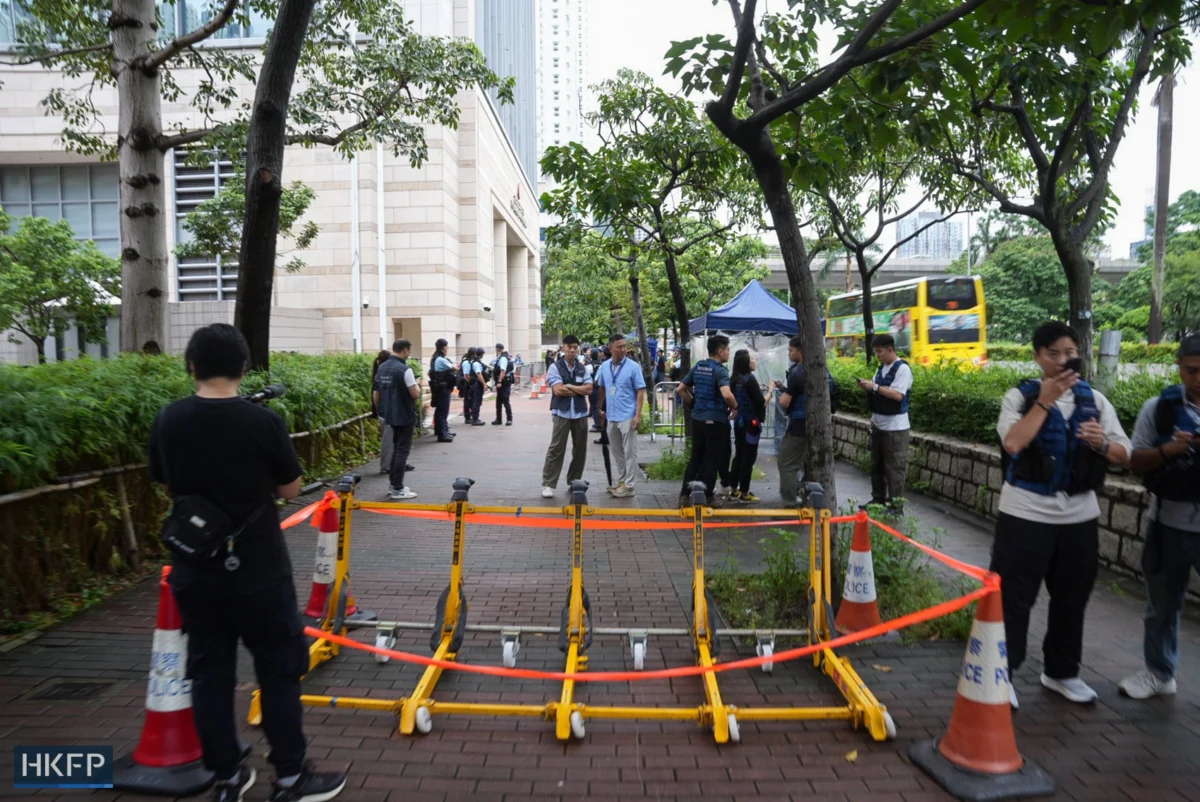
Hong Kong’s West Kowloon Law Courts Building became the focal point of significant legal and political attention on Friday, August 21, 2026, as three national security judges delivered their verdict in the trial of prominent Tiananmen vigil activists Chow Hang-tung and Lee Cheuk-yan. Both individuals, formerly leading figures of the now-disbanded Hong Kong Alliance in Support of Patriotic Democratic Movements of China, have been convicted of incitement to subversion, a charge brought under the Beijing-imposed national security law. The conviction marks a somber milestone in the ongoing erosion of civil liberties and political freedoms in the city.

For over three decades, the Hong Kong Alliance was synonymous with the annual commemoration of the 1989 Tiananmen crackdown, a tragic event where Chinese troops dispersed pro-democracy demonstrators in Beijing, resulting in hundreds, and possibly thousands, of deaths. The Alliance’s vigils, held in Causeway Bay’s Victoria Park, served as a powerful and public act of remembrance and dissent, a testament to Hong Kong’s unique status as a place where such events could be openly acknowledged. The convictions of Chow and Lee represent a direct challenge to this legacy and the freedoms previously enjoyed in the city.
The legal proceedings against Chow Hang-tung and Lee Cheuk-yan stem from their roles within the Hong Kong Alliance. The prosecution’s case centered on the organization’s long-standing call to "end one-party rule" in China, a core tenet of the group since its founding in 1989 in the wake of the Tiananmen massacre. Prosecutors argued that this objective, amplified through the Alliance’s activities and publications, amounted to inciting subversion against the ruling Chinese Communist Party (CCP). The national security law, enacted in June 2020, has been widely criticized by human rights advocates for its broad definition of subversion and its perceived intent to stifle dissent.

A third defendant in the trial, former lawmaker Albert Ho, had previously pleaded guilty to the same charge when the trial commenced in January 2026. This plea underscores the prosecution’s successful strategy in securing convictions against key figures associated with the Alliance. Chow and Lee, who have been detained since September 2021, now face a maximum prison sentence of ten years, a penalty that reflects the severity with which such offenses are treated under the national security law.
The Judges’ Reasoning and the "Hostility" Towards the CCP
In their summary of the verdict, the three national security judges articulated their reasoning, stating that Lee, Ho, and Chow had "all along been hostile towards the CCP and the Central Government under its leadership." The judges further elaborated that the defendants "adhered to the course of resisting the Central Government and refusing to make any compromise." This characterization suggests that the court viewed the defendants’ unwavering commitment to the Alliance’s founding principles as inherently antagonistic to the ruling party and its authority.

The court’s assessment indicated that even after the implementation of the national security law, the trio "refused to pull back from the brink and were bent on embracing the resistance line of the Alliance to the very end." This implies that the judges interpreted the continued advocacy of the Alliance’s goals as a deliberate act of defiance against the new legal framework.
Crucially, the judges acknowledged that the activists did not propose "any specific method or timetable on carrying out the goal of ‘end one party dictatorship’," nor did the Alliance ever advocate for or employ violence. This concession from the bench highlights a potential tension between the legal definition of subversion and the practical reality of the activists’ actions. However, the judges concluded that the defendants had continued to propagate the goal of "end one-party dictatorship" after the security law’s passage.

The court drew a parallel between the anti-extradition protests and unrest of 2019 and the "June 4th Incident," referring to the Tiananmen crackdown. The judges stated that this comparison "stirred up the hostility of [Hongkongers] towards the CCP, eroding and undermining the public’s confidence in its leadership." This linkage suggests that the court viewed the commemoration of the Tiananmen crackdown, particularly in the context of recent social unrest, as an act that directly undermined the CCP’s legitimacy and public trust.
The prosecution’s argument had previously emphasized that the Alliance’s calls breached China’s constitution. This stance was bolstered by a 2018 constitutional amendment that enshrined the CCP’s leadership as the "defining feature" of the country’s "fundamental" socialist system. By this logic, any challenge to one-party rule, even symbolic, could be construed as an attack on the constitutional order.

A Defiant Defense and the Question of Human Rights
Chow Hang-tung, a barrister who represented herself throughout the trial, mounted a spirited defense during her closing submission in May 2026. She argued that the actions the court was being asked to punish were, in fact, "what society and the law should encourage" and represented "the core values of Hong Kong, the norms and ideals accumulated through generations." Her statement underscored the deep-seated belief among many in Hong Kong that freedom of expression and the right to commemorate historical events were fundamental to the city’s identity.
Erik Shum, the lawyer representing Lee Cheuk-yan, echoed this sentiment, urging the court not to "pay lip service" to human rights protections. He emphasized that freedom of expression was fundamentally at stake in the case, drawing attention to the potential chilling effect of such convictions on public discourse and assembly.

Sentencing and the Path Forward
The proceedings have been adjourned to the following Friday morning for mitigation arguments before sentencing. Chow Hang-tung, Lee Cheuk-yan, and Albert Ho all face potential prison terms of up to ten years. Judge Alex Lee referenced Article 23 of the national security law, which outlines sentencing principles for subversion. According to this article, offenses deemed "serious" can result in imprisonment ranging from five to ten years, while those deemed "minor" carry a maximum of five years. The categorization of the offense’s severity will be a critical factor in determining the final sentences.
Lee Cheuk-yan reportedly expressed a hope that prosecutors would provide guidance on the categorisation of the offense, suggesting a desire for clarity on how the judiciary would apply the sentencing guidelines.

A Somber Atmosphere and Public Response
The verdict was met with visible emotion in the public gallery. As the guilty verdicts were read, some family members and friends raised their fists and made heart gestures towards the defendants, a poignant display of solidarity amidst the proceedings.
The trial attracted a significant police presence outside the West Kowloon Law Courts Building. Supporters of the activists gathered, sharing hugs and conversations with family members, including Lee Cheuk-yan’s wife, Elizabeth Tang, a veteran pro-democracy activist herself. To accommodate the large number of journalists and members of the public, an extension courtroom was opened, broadcasting the proceedings live, a common practice for high-profile national security cases.

The public gallery saw a notable presence of individuals seeking to witness the proceedings. Reports from local media indicated that some individuals may have been part of "queuing gangs," groups allegedly paid by unknown entities to secure seats and potentially limit access for genuine supporters. This phenomenon has been observed in other significant national security trials.
Several former members of the Hong Kong Alliance were also in attendance, including Tang Ngok-kwan and Lau Ka-yee. Other prominent activists, such as dentist Lee Ying-chi and "female Long Hair" Lui Yuk-lin, were also present, underscoring the broad concern within the activist community regarding the implications of these convictions.

The atmosphere outside the courtroom was charged with a mixture of apprehension and resilience. Tang Ngok-kwan and Lee Ying-chi reported being subjected to police searches and having certain items confiscated. Tang’s collected newspaper clippings related to the Alliance were seized, and Lee reported the confiscation of a keychain from the Hong Kong Journalists Association. These incidents, reported by local media, highlight the heightened security measures and scrutiny surrounding such trials.
The Hong Kong Alliance itself officially disbanded in 2021. This decision followed a two-year ban on its annual Tiananmen vigil, ostensibly due to Covid-19 restrictions, and the subsequent arrest of its leadership on national security charges. The disbandment marked the end of an era for a significant civil society organization that had played a pivotal role in Hong Kong’s political landscape for decades.

Chow Hang-tung’s mother, speaking to reporters after the verdict, expressed a hope for a more positive future, stating, "the environment will become healthy and flowers of different colours will blossom." Her sentiment, coupled with Lau Ka-yee’s t-shirt bearing the slogan "People will not forget," served as a quiet but powerful reminder of the enduring impact of the Tiananmen movement and the ongoing struggle for remembrance and freedom of expression in Hong Kong. The convictions of Chow Hang-tung and Lee Cheuk-yan represent a significant step in the ongoing transformation of Hong Kong’s political and social fabric under the purview of the national security law, signaling a further tightening of control over dissent and historical memory.

 Ammar Sabilarrohman
 Raul Delapena Setiawan