Raul Delapena Setiawan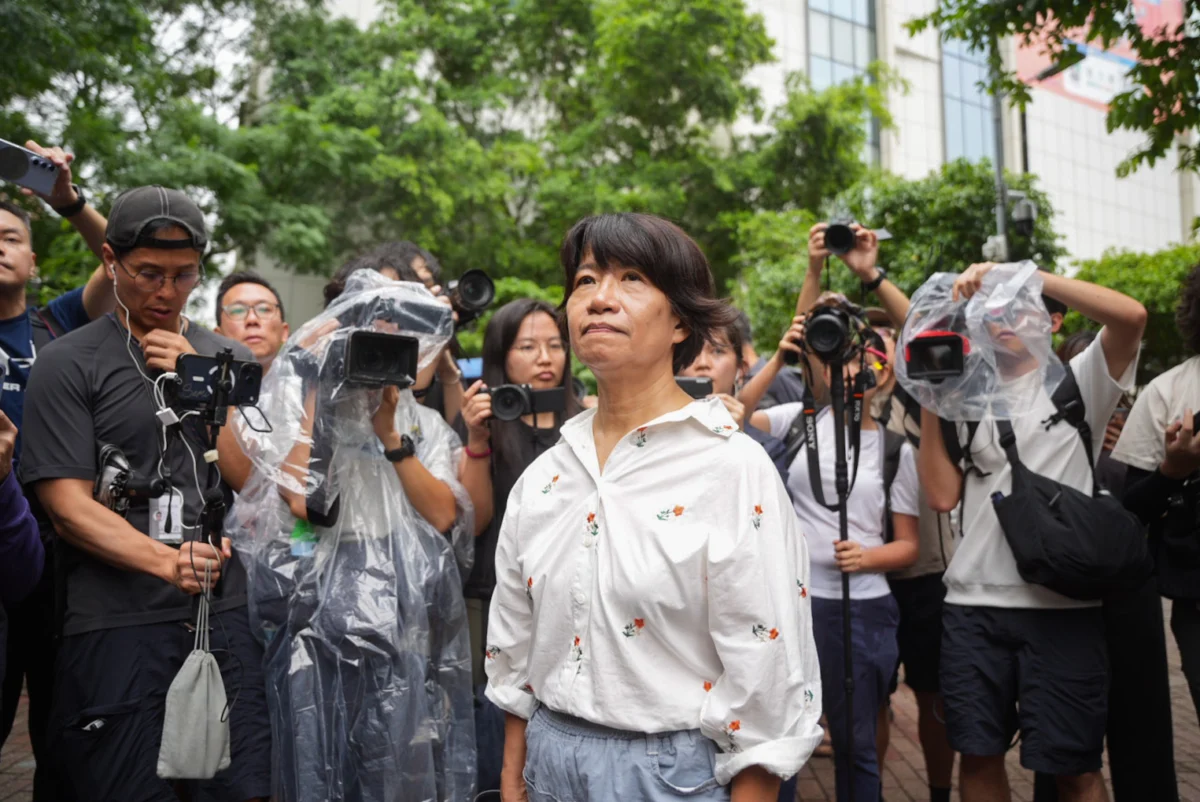
The recent conviction of two prominent pro-democracy figures for organizing Hong Kong’s annual Tiananmen Square Massacre vigils has triggered a sharp divide in reactions. While government officials have largely expressed approval, hailing the verdict as a triumph for national security, activists and international human rights organizations have voiced grave concerns, viewing the ruling as a stark indicator of the city’s rapidly eroding freedoms. Chow Hang-tung and Lee Cheuk-yan, former leaders of the now-disbanded Hong Kong Alliance in Support of Patriotic Democratic Movements of China, were found guilty of inciting subversion under the National Security Law. A third defendant, former lawmaker Albert Ho, had previously pleaded guilty. The Hong Kong Alliance itself, the organization behind the decades-long vigils, was also found guilty.
The convictions stem from the group’s persistent efforts to commemorate the 1989 crackdown in Beijing, an act that had become a symbolic fixture of Hong Kong’s unique freedoms until the imposition of the National Security Law in 2020. Lee and Chow have been in custody since their arrests in September 2021, while Ho has been detained since May 2021, with a brief seven-month period on bail. The potential sentence for those convicted of inciting subversion can be up to ten years imprisonment, a severe penalty for what many considered a peaceful act of remembrance.

A History of Remembrance Under Scrutiny
For over three decades, Hong Kong served as the sole bastion in China where citizens could openly gather to mourn the victims of the Tiananmen Square crackdown. The annual candlelight vigils, often drawing tens of thousands to Victoria Park, were not merely acts of remembrance but potent symbols of the city’s distinct political landscape, characterized by freedoms of speech, assembly, and press that were guaranteed under the "one country, two systems" framework. The Hong Kong Alliance, established in 1989, played a pivotal role in organizing these gatherings, advocating for democratic reforms in mainland China and supporting dissidents.
However, the political climate in Hong Kong underwent a seismic shift following the widespread pro-democracy protests of 2019. Beijing responded by imposing the National Security Law in June 2020, a sweeping piece of legislation that criminalized acts of secession, subversion, terrorism, and collusion with foreign forces. The law has since been used to dismantle opposition groups, silence dissent, and reshape the city’s political and social fabric. The prosecution of the Tiananmen vigil organizers is seen by many as a direct consequence of this new legal reality, transforming a deeply ingrained civic ritual into a crime against the state.
Official Endorsement and Justification
Hong Kong’s government officials have strongly defended the court’s decision. Chief Executive John Lee stated that the Hong Kong Alliance had "long been deliberately planting seeds of hatred against the CPC and the Central Government in the Hong Kong society, attempting to incite disaffection, hatred and other sentiments among members of the public against the CPC and the Central Government through various means, and inciting people to subvert state power." He asserted that the defendants’ actions "endangered national security" and that their "conspiracy was abundantly clear, which must be brought to justice."

Echoing these sentiments, Chief Superintendent Steve Li of the police’s National Security Department declared, "It is an indisputable fact that the Hong Kong Alliance in Support of Patriotic Democratic Movements of China has, year after year over a prolonged period, sown countless seeds of hatred against the Central Government and the Chinese Communist Party among the public." He added that the court’s conviction "rightly exposes their true colours as having deliberately incited others to subvert state power and endanger national security."
Secretary for Security Chris Tang elaborated on the government’s perspective, asserting that "since The Alliance’s founding, it has promoted its agenda with the aim of overthrowing the Chinese Communist Party’s leadership and constitution." He detailed the group’s post-National Security Law activities, including "attempting to hold illegal assemblies, using slogans to incite the public to take part in so-called protests, distributing printed publications or online content, accepting media interviews, and making public statements. They also attempted to operate and digitise their so-called museum."
Voices of Dissent and Concern
In stark contrast to the official pronouncements, activists, their families, and international human rights organizations have expressed profound disappointment and alarm. Elizabeth Tang, a labor rights activist and wife of Lee Cheuk-yan, conveyed her "anger and disappointment," stating, "There’s been no evidence all along that there were illegal means, and yet [they are] still found guilty." She questioned the legal proceedings, highlighting the perceived lack of evidence of wrongdoing.

Emily Lau, former chair of the Democratic Party, expressed bewilderment, noting, "The June 4 vigil was held for so many years, and there were no issues right? And the government gave permission back then to use the venue too. A lot of us just really don’t understand it." This sentiment underscores the perceived shift from a period of relative tolerance to one of strict enforcement of national security laws.
Tsang Kin-shing, a prominent activist known as "The Bull," voiced a sense of helplessness, warning others, "In the future, if you ask whether we should take part in candlelight vigils, I would warn everyone not to because it’s easy to break the law. The tears of the candlelight will flow in our hearts." This sentiment reflects a growing fear and self-censorship among Hong Kong residents.
Lau Ka-yee, a former executive committee member of the Alliance, vowed to continue the fight, stating, "To prove that June Fourth and commemorating it is not a crime, we will continue this legal path and lay bare the truth as we know it. This will allow the public to see clearly what the arguments actually are. Justice resides in the hearts of the people." Medina Chow, the mother of Chow Hang-tung, expressed a hope for a more positive future, wishing, "I hope the environment will become healthier and that flowers of different colours will blossom."

International Condemnation and Human Rights Concerns
Non-governmental organizations have been particularly vocal in their criticism. Human Rights Watch’s Asia Director, Elaine Pearson, stated that the conviction "shows how public displays of mourning have become a crime in Hong Kong. These activists exposed the Chinese government’s fears of the memory of its own atrocities, which treats remembrance as a national security threat."
Amnesty International’s Deputy Regional Director, Sarah Brooks, called for the immediate release of the activists, labeling them "prisoners of conscience." She urged the Hong Kong authorities to "quash these convictions and end the ongoing persecution of people seeking to keep the memory of Tiananmen alive."
The Hong Kong Centre for Human Rights criticized the government’s narrative, arguing, "Citizens attended the vigils year after year, rain or shine, because the Chinese government has never taken accountability for the June 4th massacre. The build-up of public grievance lies at the feet of power holders who refuse to listen, not the advocates who peacefully speak out." The organization decried the government’s actions as "irresponsible, evasive, and politically infantile," and a "total trampling of Hong Kong people’s right to peaceful assembly."

Diplomatic Fallout and the Erosion of Autonomy
The convictions have also drawn strong reactions from international governments. The Mainland Affairs Council expressed concern about the "regression of human rights and rule of law in Hong Kong," noting that the Alliance’s decades of peaceful commemoration for democracy and freedom had been criminalized.
The foreign ministries of France and Germany issued a joint statement expressing regret over the verdict against Chow Hang-tung, a recipient of the Franco-German Prize for Human Rights and the Rule of Law in 2023. They emphasized that "peaceful advocacy for human rights does not constitute a crime."
The UK’s Indo-Pacific minister, Rosie Winterton, stated that the "extensive use of Beijing’s National Security Law to punish and restrict peaceful expression undermines the commitments China made to Hong Kong under the 1984 Sino-British Joint Declaration." She reiterated calls for the National Security Law to be repealed and for rights and freedoms to be respected.

Australia’s Department of Foreign Affairs and Trade echoed these concerns, highlighting the "chilling effect on free speech" caused by the broad application of national security legislation. They urged China to "cease suppression of freedoms of expression, assembly, media and civil society" and called for the repeal of the National Security Law in Hong Kong.
Broader Implications for Hong Kong
The conviction of the Tiananmen vigil organizers represents a significant moment in Hong Kong’s evolving political landscape. It signifies the definitive end of the annual public commemoration of the 1989 crackdown within the city’s borders and underscores the far-reaching impact of the National Security Law. The broad interpretation of "subversion" and the government’s framing of historical remembrance as a threat to national security have created a climate of fear and self-censorship.
The international community’s response, while largely critical, highlights the ongoing global scrutiny of Beijing’s policies in Hong Kong. The continued application of the National Security Law, particularly against acts of remembrance and advocacy, is likely to further strain Hong Kong’s international reputation and its role as a global financial hub. The convictions serve as a stark reminder of the profound changes underway, as the city navigates a future where fundamental freedoms are increasingly circumscribed by national security imperatives. The legacy of the Tiananmen Square Massacre, once openly mourned in Hong Kong, now exists in the hearts of its citizens, a poignant symbol of a freedom lost.


 Ammar Sabilarrohman