Rifan Muazin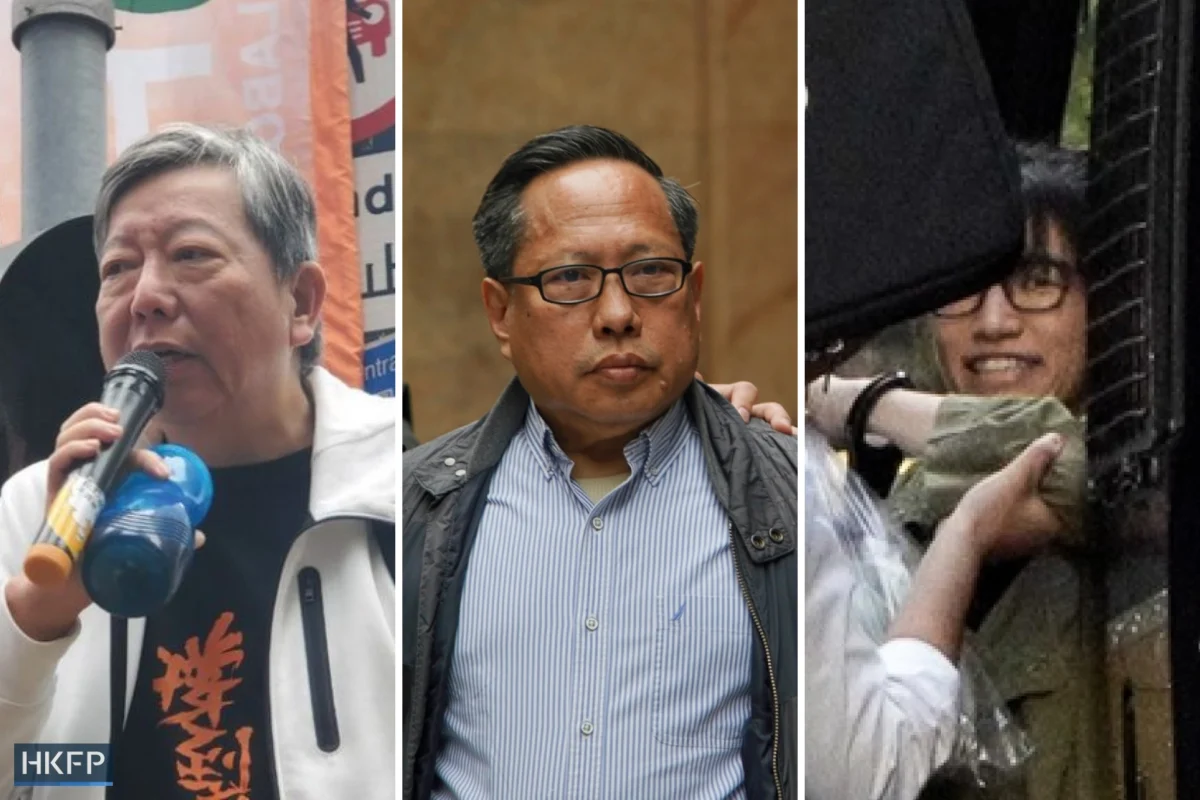
The Hong Kong government and its legislature have issued strong rebuttals against what they term "external forces," including Western nations and what they describe as "anti-China media, organisations, and politicians," who have voiced concerns over the recent convictions of two prominent pro-democracy figures. These activists were found guilty in relation to their roles in organizing Hong Kong’s annual Tiananmen Square massacre vigils.

In a statement released on Saturday, the government declared its "strong dissatisfaction with and firm opposition to, and strongly condemned, the baseless slanders" leveled against the city’s judicial process. This official response came in the wake of governments, human rights groups, and activists internationally expressing alarm over what they perceive as a significant erosion of freedoms and democratic space in Hong Kong.
The convictions of Chow Hang-tung and Lee Cheuk-yan, both former leaders of the now-disbanded Hong Kong Alliance in Support of Patriotic Democratic Movements of China, were handed down on Friday. They were found guilty of inciting subversion under the Beijing-imposed National Security Law (NSL). Their trial also encompassed the Alliance itself, which was found guilty of the same charge. The prosecution argued that the Alliance’s long-standing calls to "end one-party rule" in China, a core tenet since its establishment in 1989, constituted incitement to topple the ruling Chinese Communist Party (CCP).

The government’s statement echoed the sentiment of the court’s judgment, asserting that the convicted individuals "refused to pull back from the brink" even after the implementation of the national security law, and were "bent on embracing the resistance line of the Alliance to the very end." This suggests a government perspective that the activists’ actions, particularly their continued advocacy for political change in mainland China, were a deliberate defiance of the new legal framework.
A Long History of Commemoration and Crackdown

For decades, Hong Kong was the only place on Chinese soil where citizens could openly commemorate the victims of the June 4, 1989, crackdown in Beijing. The annual vigil, held in Victoria Park, was a potent symbol of remembrance and a rare public display of dissent against the Chinese Communist Party’s authoritarian rule. The Hong Kong Alliance, founded in the wake of the crackdown, was instrumental in organizing these events, drawing tens of thousands of participants in its heyday.
The crackdown on these activities intensified following the imposition of the National Security Law in June 2020. The law, ostensibly aimed at quelling separatism, terrorism, and collusion with foreign forces, has been widely criticized by human rights advocates as a tool to suppress dissent and dismantle the city’s autonomy. The arrests and subsequent trials of prominent pro-democracy figures, including those associated with the Tiananmen vigils, are seen by many as part of a broader strategy to silence opposition and reassert Beijing’s control over Hong Kong.

The Legal Basis for the Convictions
The court’s ruling on Friday acknowledged that the activists had not proposed specific means to end one-party rule and that the Alliance had not advocated for violence. However, the judges found that the spreading of the goal to "end one-party dictatorship" after the NSL was enacted constituted incitement. The court drew parallels between the 2019 anti-extradition bill protests and unrest in Hong Kong and the "June 4th Incident," stating that these actions "stirred up the hostility of [Hongkongers] towards the CCP, eroding and undermining the public’s confidence in its leadership."

This reasoning highlights a key aspect of the prosecution’s case: that the historical context and the continued dissemination of the Alliance’s core message, particularly in light of the national security law, were deemed subversive. The prosecution had previously argued that the Alliance’s calls breached China’s constitution, especially after a 2018 amendment declared the CCP’s leadership as the "defining feature" of the nation’s "fundamental" socialist system.
Broader Political Landscape and "Patriots Only" Governance

The government’s firm stance against external criticism aligns with its broader political agenda, particularly the electoral reforms enacted in March 2021. These reforms, which mandate that only "patriots" govern Hong Kong, significantly reduced democratic representation and introduced stringent candidate vetting. While authorities contend that these changes have ensured stability and prosperity, critics argue they have effectively eliminated any meaningful opposition within the city’s political system.
The Legislative Council secretariat echoed the government’s sentiments in its own statement on Saturday, condemning "smearing and slanderous remarks by external forces" regarding the verdict. The statement emphasized the council’s commitment to supporting the government in administering the city "in accordance with the law" and "firmly safeguarding national security," thereby ensuring the "steadfast and successful implementation of ‘one country, two systems’." This reflects the current political reality in Hong Kong, where the legislature is composed almost entirely of pro-establishment figures, largely adhering to the government’s narrative.

Reactions and Sentiments
The convictions have drawn widespread condemnation from international human rights organizations, including Amnesty International and Human Rights Watch, which have decried the verdict as a further blow to freedom of expression and assembly in Hong Kong. These groups have called for the immediate release of Chow Hang-tung and Lee Cheuk-yan and have urged governments worldwide to maintain pressure on Beijing and the Hong Kong authorities.

The former lawmaker Albert Ho, another leader of the Hong Kong Alliance who was charged alongside Chow and Lee, pleaded guilty at the commencement of the trial in January. He is expected to be sentenced alongside Chow and Lee. The trio face potential jail terms of up to 10 years.
The sentencing hearing is scheduled for Friday morning, where the defendants will have the opportunity to present mitigation arguments. The outcome of this hearing will likely further underscore the restrictive legal environment that now prevails in Hong Kong, a city once celebrated for its vibrant civil society and freedoms, which now grapples with the far-reaching implications of the National Security Law and its impact on fundamental rights and political expression. The government’s resolute defense of its actions, juxtaposed with international outcry, highlights the deepening divide over Hong Kong’s future and its place within the broader geopolitical landscape.


 Asep Darmawan
 Nana Muazin