Nila Kartika Wati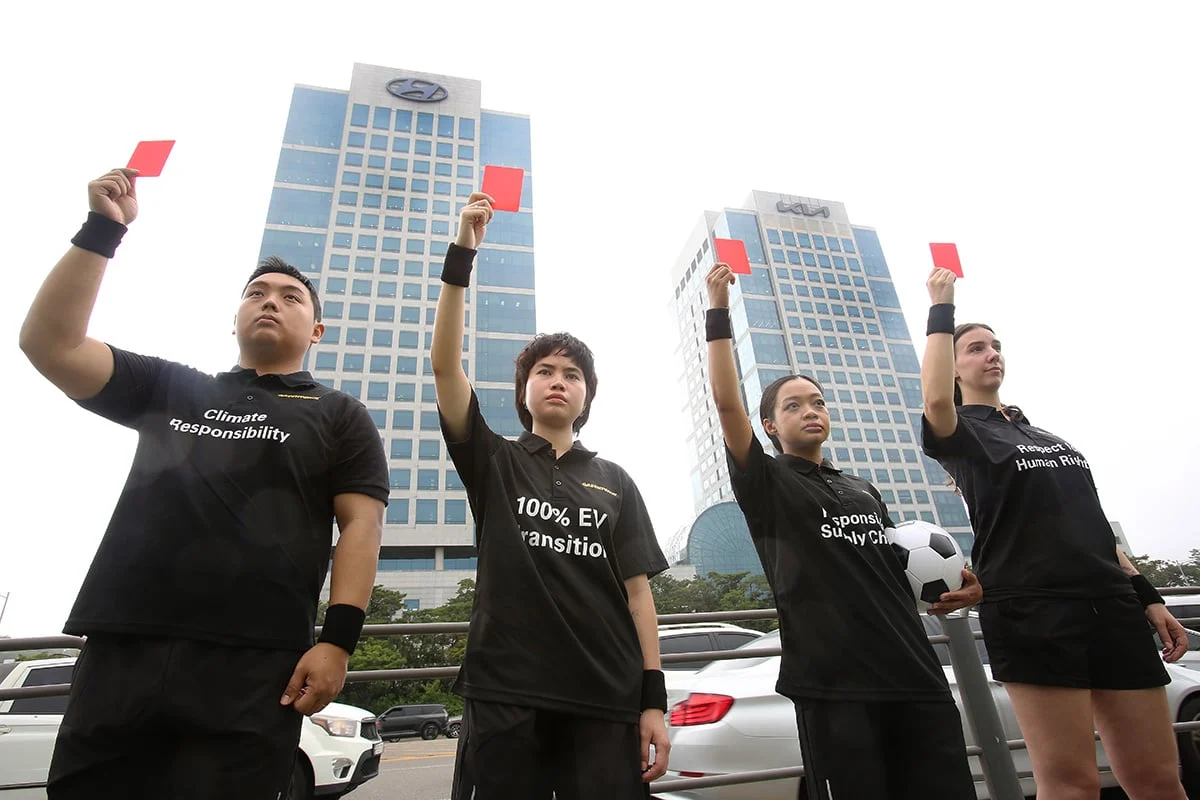
SEOUL – Greenpeace activists unfurled symbolic referee “red cards” at the Hyundai Motor Group headquarters today, targeting the FIFA World Cup sponsor and demanding immediate action on severe human rights violations, labor exploitation, and significant carbon-intensive risks embedded within its global supply chain. The protest also calls for a reversal of the company’s recent shift away from a robust electric vehicle (EV) transition. This high-profile demonstration in Seoul marks the culmination of a month-long, globally coordinated campaign pressuring the world’s third-largest automotive manufacturer.
The action, spearheaded by Greenpeace East Asia on the ground, is amplified by a coalition of eleven environmental and human rights organizations. This international collaboration aims to expose what they describe as a stark discrepancy between Hyundai’s public pronouncements on sustainability and the documented harms linked to various segments of its supply chain. This disconnect, the coalition argues, stands in stark contrast to the automaker’s multi-million dollar "eco-friendly" sports marketing endeavors, particularly its prominent sponsorship of the FIFA World Cup.
A Month of Global Pressure: The "Red Card" Campaign
The escalating pressure on Hyundai Motor Group has unfolded over the past month, strategically timed to coincide with key FIFA World Cup matches. This global wave of actions has included various forms of protest and public engagement designed to draw attention to the coalition’s demands. While today’s finale in Seoul featured a direct, on-site demonstration, the broader campaign has leveraged digital platforms and coordinated efforts across multiple continents.
Prior to the Seoul protest, the international coalition formally delivered an Open Letter to Hyundai Executive Chair Euisun Chung. This letter explicitly urged the company to utilize its significant influence as a premier FIFA sponsor to implement concrete, structural climate commitments and robust, enforceable corporate accountability measures across its operations and supply chain. The letter underscored the organizations’ belief that Hyundai possesses the leverage to drive positive change within the automotive industry and its associated industries.
Market Risk: Hyundai’s Lagging Clean Transition and Supply Chain Governance
Despite Hyundai’s concerted efforts to project an image of environmental responsibility through its World Cup sponsorship, a critical analysis of its sales figures reveals a persistent reliance on traditional internal combustion engine (ICE) vehicles. Currently, 93% of Hyundai-Kia’s approximately 6.8 million annual sales are comprised of ICE vehicles. This heavy dependence translates into a substantial environmental footprint, with the group’s combined annual carbon emissions equivalent to an staggering 250 million tonnes of CO2. This figure is comparable to the total national emissions of an entire country like Spain, highlighting the scale of the challenge.
Furthermore, recent independent assessments of automotive sustainability benchmarks paint a concerning picture for Hyundai. These analyses consistently rank the South Korean automaker significantly behind its global competitors, including industry leaders like Tesla, Volkswagen, and Mercedes-Benz, particularly in the critical areas of supply chain decarbonization and human rights due diligence. This lagging performance suggests a systemic vulnerability to evolving regulatory landscapes and increasing consumer demand for truly sustainable products.
The automotive sector is facing mounting pressure from regulators, investors, and consumers alike to enhance transparency and accountability within manufacturing pipelines and sourcing relationships. Independent investigations conducted by reputable organizations such as Steel Watch, Mighty Earth, and Jobs to Move America have brought to light serious environmental and labor concerns at various tiers of Hyundai’s supply chain. These reports have detailed issues ranging from exploitative labor practices to significant environmental degradation.
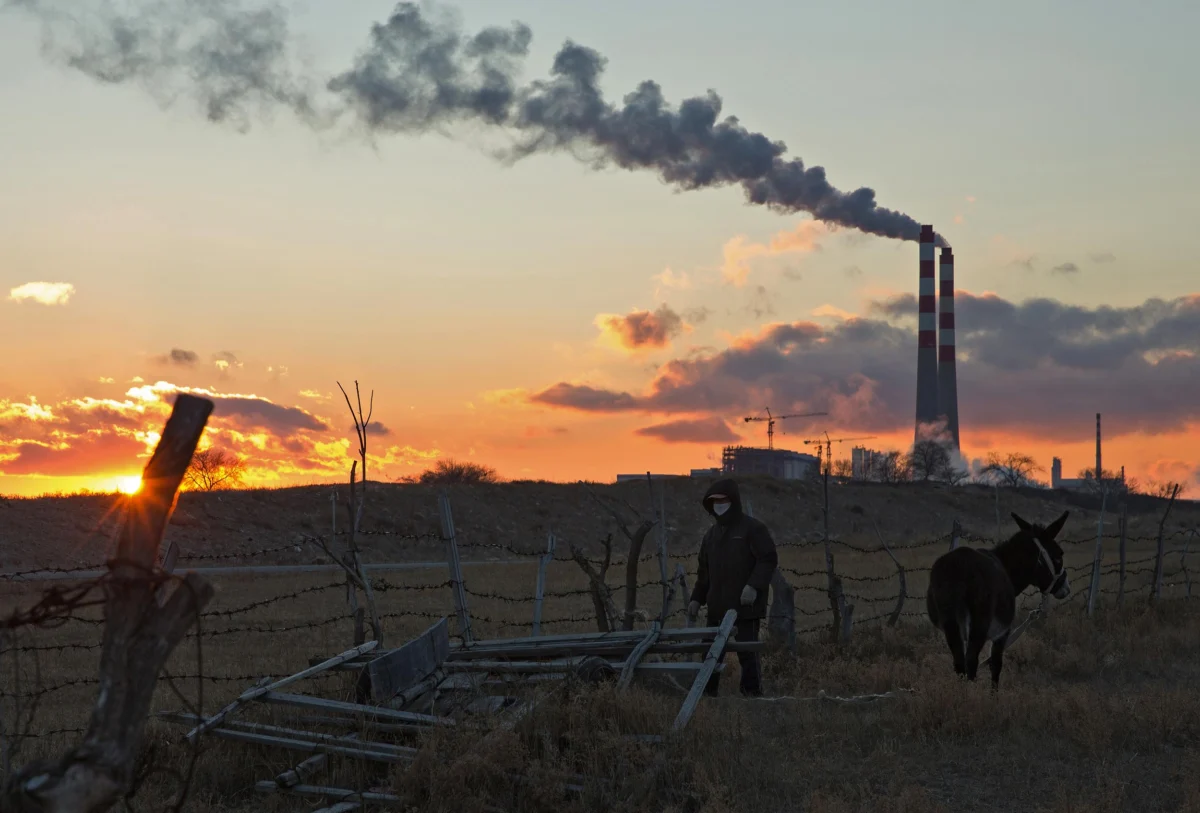
A particularly salient point of scrutiny has been Hyundai Steel’s continued reliance on coal-based production methods. This approach not only contributes to significant air pollution but also has been linked to billions of dollars in associated public health costs. The impact is felt across manufacturing hubs, with documented concerns arising from operations in South Korea and Brazil, affecting local communities and ecosystems.
Statements from the Global Coalition
The urgency and breadth of the concerns are articulated by representatives from the organizations forming the global coalition.
Erin Eunseo Choi, climate and energy campaigner at Greenpeace East Asia, expressed deep concern over Hyundai’s strategic pivots: "Hyundai Motor’s latest sustainability report talks about ‘Electrification and Our Climate Response,’ but quietly dropping its concrete 2030 battery EV sales targets sends a very different signal. By shifting its roadmap to focus heavily on hybrids and Extended-Range EVs (EREVs)—vehicles that still rely on internal combustion engines—Hyundai is pursuing a false transition. While EREVs may masquerade as electric, they are not a true zero-emission solution; instead, they risk locking in reliance on fossil fuels and diverting vital resources from full battery electrification. When the vehicles Hyundai sells account for 79% of its Scope 3 emissions, slowing electrification is like pulling your striker off the pitch in the middle of a match. As war-driven oil price spikes fast-track the shift toward EVs, any indecision in making a true transition risks a further loss of market share.”
Nish Humphreys, Campaign Manager at Ekō, highlighted the stark contrast between Hyundai’s public image and its operational realities: "Hyundai wants the world watching its Football World Cup ads, not the dark side of its supply chain. On the field, it’s sponsoring kids’ dreams. But behind the scenes, it’s a different game. Public reporting has raised serious concerns about child labor, worker deaths, and injuries, along with the unexplained disappearance of Indigenous activists in Mexico who protected Hyundai’s steel supplier. Together with the activists on the ground, over 7,400 people have ‘red-carded’ Hyundai in our virtual protest, joining a global crowd of 52,000 citizens, football fans, and Hyundai drivers who have signed the Ekō petition demanding the company clean up its supply chain before the final whistle blows."
Abhilasha Bhola, Climate Campaigns Director at Public Citizen, underscored the pattern of corporate misconduct: "The record is clear: Hyundai-Kia’s supply chain is marred by documented human rights abuses, environmental destruction, and labor exploitation. The World Cup’s corporate sponsors cannot continue to profit while workers, communities, and our planet bear the deep impacts of corporate misconduct."
Strategic Demands to Hyundai Motor Group
The global coalition has outlined three non-negotiable directives for Hyundai Motor Group’s executive leadership, aimed at fostering genuine and lasting change:
-
Full Electrification Commitment: Hyundai must reaffirm and accelerate its commitment to full battery electric vehicle (BEV) sales, setting ambitious, science-based targets for phasing out internal combustion engine vehicles and investing significantly in zero-emission technologies. This includes abandoning the promotion of hybrid and Extended-Range Electric Vehicle (EREV) models as sustainable alternatives.
-
Robust Supply Chain Accountability: The company is urged to implement stringent human rights and environmental due diligence across its entire supply chain. This requires greater transparency, independent auditing, and meaningful engagement with affected communities and workers to address issues such as child labor, unsafe working conditions, and environmental degradation. A clear commitment to remediating past harms and preventing future abuses is also paramount.
-
Equitable Transition for Workers: Hyundai must develop and implement comprehensive plans to ensure a just transition for workers impacted by the shift away from fossil fuel-dependent vehicles and supply chains. This includes providing retraining, support, and ensuring that new green jobs are created with fair wages and safe working conditions.
Broader Implications and Future Outlook
The protest at Hyundai’s headquarters is more than just a symbolic act; it reflects a growing global demand for corporate accountability in an era of escalating climate change and heightened awareness of social justice issues. The coalition’s actions highlight the inherent risks for companies that fail to align their public image with their operational realities. As consumers and investors increasingly prioritize sustainability and ethical practices, companies like Hyundai face significant reputational and financial consequences for perceived hypocrisy.
The automotive industry is at a critical juncture, with the transition to electric mobility and sustainable production methods no longer a distant prospect but an immediate imperative. Hyundai’s strategic decisions regarding its EV roadmap and supply chain governance will have far-reaching implications not only for its own market position but also for the broader global effort to combat climate change and uphold human rights. The "red card" displayed today serves as a stark warning that the time for incremental change has passed, and decisive action is required to secure a sustainable and equitable future.
Media Documentation & Assets:
The organizing coalition has made a range of media documentation and assets available to support reporting on this issue. These materials include high-resolution photographs and video footage of the Seoul protest, as well as copies of the Open Letter and research reports detailing the concerns raised by the coalition.
Media Contact:
Yujie Xue, International Communications Officer, Greenpeace East Asia, [email protected]

 Ammar Sabilarrohman
 Raul Delapena Setiawan