Asro
Asro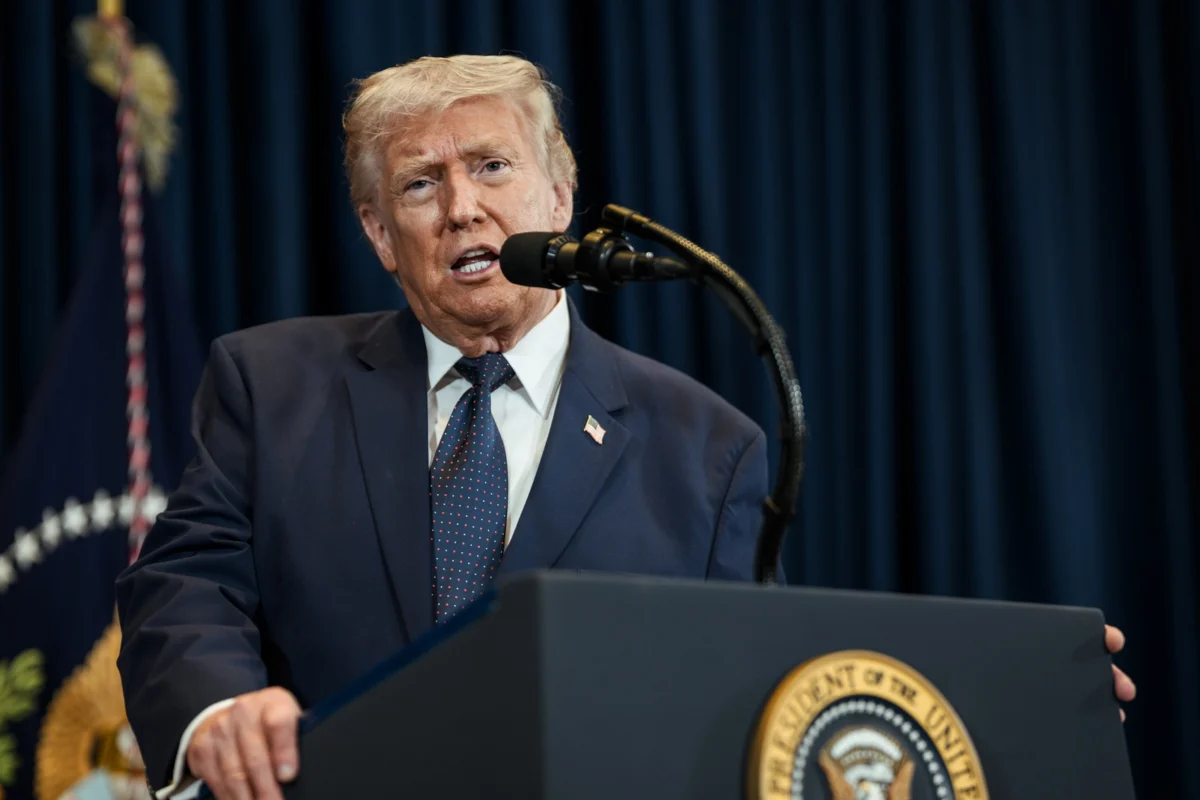
WASHINGTON – In a decisive move to bolster national security and reduce reliance on foreign supply chains, President Donald Trump on Thursday announced the imposition of tariffs of up to 100 percent on imported unmanned drones and their components. The comprehensive measure, primarily targeting an industry heavily dominated by China, aims to significantly curb the influx of foreign-made unmanned aerial systems (UAS) into the United States, fostering a robust domestic manufacturing ecosystem.
The White House statement, issued shortly after the President’s announcement, detailed the new duty rates, emphasizing their foundation in critical national security concerns. Specifically, unmanned aircraft systems with a takeoff weight exceeding 25 kilograms and equipped with what the administration deems "national security capabilities" – such as advanced thermal cameras and specialized docking stations – will face the maximum 100 percent tariff. Smaller, more consumer-oriented drones will incur a 25 percent tariff. This tiered approach underscores the administration’s focus on mitigating risks associated with larger, more sophisticated drones that could have significant strategic implications. The tariffs are slated to take effect on September 3, marking a swift implementation of this new trade policy.
According to Clayton Swope, a senior fellow at the Center for Strategic and International Studies, these tariffs are strategically designed. "The tariffs are really targeting industrial and commercial drones, and to a lesser degree smaller drones used by hobbyists," Swope told AFP, highlighting the distinction between recreational use and applications pertinent to critical infrastructure, defense, and intelligence. This segmentation reflects a nuanced understanding of the drone market and its varying security implications.

Deepening National Security Concerns and the Dual-Use Dilemma
The Trump administration’s justification for these sweeping tariffs is deeply rooted in an escalating perception of national security vulnerabilities. A December 2025 report from the US Federal Communications Commission (FCC), the national telecommunications regulator, provided a stark assessment that has heavily influenced the current policy. The FCC argued forcefully that increased domestic production of drones would "reduce the risk of direct UAS attacks and disruptions, unauthorized surveillance, sensitive data exfiltration, and other UAS threats to the homeland." This perspective views foreign-made drones not merely as commercial products but as potential vectors for espionage, sabotage, and data breaches, particularly given their increasing sophistication and connectivity.
Central to these concerns is the "dual-use" nature of drone technology. As the FCC report articulated, drones "are inherently dual-use: they are both commercial platforms and potentially military or paramilitary sensors and weapons." This inherent versatility means that a drone designed for agricultural surveying could, with minimal modification, be repurposed for intelligence gathering or even offensive operations. The ongoing conflict in Ukraine has provided a stark, real-world demonstration of this phenomenon, where commercial and hobbyist drones have been effectively outfitted for frontline reconnaissance, target acquisition, and even direct attacks, fundamentally altering modern battlefield dynamics. This global precedent has undoubtedly amplified the urgency of securing the US domestic drone supply chain.
The worry extends beyond direct military application to the broader implications of data security and supply chain integrity. Foreign production of drones and their components, the FCC warned, "could enable persistent surveillance, data exfiltration, and destructive operations over US territory." This encompasses concerns about embedded software, hardware vulnerabilities, and potential backdoors that could allow foreign adversaries to access sensitive data, disrupt critical infrastructure, or compromise national defense assets. The tariffs, therefore, are not just about protecting American manufacturing jobs but about safeguarding vital national interests in an era of rapidly advancing technology and geopolitical competition.

A History of Scrutiny: DJI and China’s Dominance
At the heart of Washington’s concerns lies DJI, the Shenzhen-based Chinese company founded in 2006, which has achieved a near-monopoly in the global drone market. Multiple studies indicate that DJI commands more than two-thirds of the worldwide drone market, a dominance that has long been a source of apprehension for US policymakers. This overwhelming market share means that a significant portion of drones used by American businesses, government agencies, and consumers are manufactured by a company based in a geopolitical rival nation.
DJI has been under intense scrutiny from Washington for several years. US officials have repeatedly accused the company of supplying products used in surveillance programs targeting ethnic minorities in China, particularly the Uyghurs in Xinjiang. These human rights concerns have intertwined with national security anxieties, leading to concrete actions against the company. Since 2022, DJI has been included on a US government blacklist of Chinese companies deemed to have ties to the country’s military, subjecting it to restrictions on access to US technology and components. DJI has vigorously contested its inclusion on this list, asserting in 2024 that it is not owned or controlled by the military and operates purely as a commercial entity. However, these denials have not swayed US policymakers.
Joshua Steinman, a supply chain expert and former member of the Trump administration’s National Security Council, underscored the administration’s perspective. "It is critical that America be able to produce its own unmanned capabilities without parts or even raw materials from China," Steinman told AFP. This statement encapsulates the broader strategy: to decouple critical technological supply chains from potentially adversarial nations, even if it means short-term economic disruptions.

Escalating Trade Tensions: A Chronology of Recent Actions
The latest tariffs on drones are not an isolated event but rather the newest salvo in an escalating trade and technology conflict between the United States and China. The past few weeks have seen a rapid succession of tit-for-tat measures, highlighting the deepening strategic rivalry.
- Late July 2026: The US government expanded its blacklist of prohibited imports to include humanoid and quadruped robots, citing critical national security risks. This sector, like drones, is significantly influenced by Chinese industry, signaling a broader intent to secure supply chains across advanced robotics.
- Days Before August 2026: The US imposed a new round of tariffs on China and 59 other countries, targeting a diverse range of products. While the specifics of these tariffs were broad, they underscored Washington’s continued use of trade leverage to address economic and security concerns.
- Last Week (Early August 2026): China retaliated by announcing its own restrictions on drone exports to the United States and blacklisting six US companies. This move was explicitly framed as a response to the US trade sanctions, particularly those citing forced labor and national security concerns, demonstrating Beijing’s readiness to use its economic and industrial power in response to US actions.
- August 13, 2026: President Trump announced the current tariffs on drones and their components, directly following this period of heightened trade friction.
This chronology illustrates a concerted effort by both nations to exert control over critical technological sectors and safeguard perceived national interests, often at the expense of established global supply chains and free trade principles. The drone tariffs, therefore, fit into a larger pattern of strategic competition.
Broader Economic and Geopolitical Implications

The new tariffs are expected to trigger a cascade of economic and geopolitical effects. Economically, domestic US drone manufacturers are poised to see a significant increase in demand. Companies like Skydio, Teal Drones, and other American-based firms that produce UAS for commercial, government, and defense applications could experience a boom, potentially leading to job creation and increased investment in R&D within the US. However, this growth will likely come with challenges, including the need to rapidly scale production, develop cost-competitive alternatives to Chinese products, and establish robust domestic supply chains for components that might still rely on foreign inputs.
For US businesses and consumers that rely on drones, the immediate impact will likely be higher costs. Drones for agricultural mapping, infrastructure inspection, package delivery, and recreational use will become more expensive, potentially slowing adoption rates or pushing businesses to seek less capable, domestically produced alternatives. This could lead to a period of adjustment as the market recalibrates.
Geopolitically, these tariffs represent a further escalation of the US-China tech and trade war. China’s predictable condemnation of the tariffs as protectionist and a violation of international trade norms is expected, potentially leading to further retaliatory measures. This ongoing friction risks fragmenting global supply chains, forcing other countries to choose sides or develop their own independent drone manufacturing capabilities. The long-term implication could be a more balkanized global tech landscape, where national security concerns increasingly trump economic efficiencies.
Moreover, the tariffs raise questions about innovation. While they aim to spur domestic innovation, restricting access to the global market, especially from a dominant player like DJI, could paradoxically limit the speed of technological advancement in certain areas, at least in the short term. US manufacturers will need to innovate rapidly to match the features, performance, and price points that consumers and businesses have come to expect from the globally competitive market.

Ultimately, the Trump administration’s decision to impose substantial tariffs on drones and their components is a bold statement of intent. It signals a clear commitment to prioritizing national security and domestic industrial capacity over short-term economic efficiencies. As the September 3 effective date approaches, all eyes will be on how the US drone market adapts, how China responds, and what the ripple effects will be across the intricate web of global trade and technology.


 Nana Wu
 Lina Hope