Pevita Pearce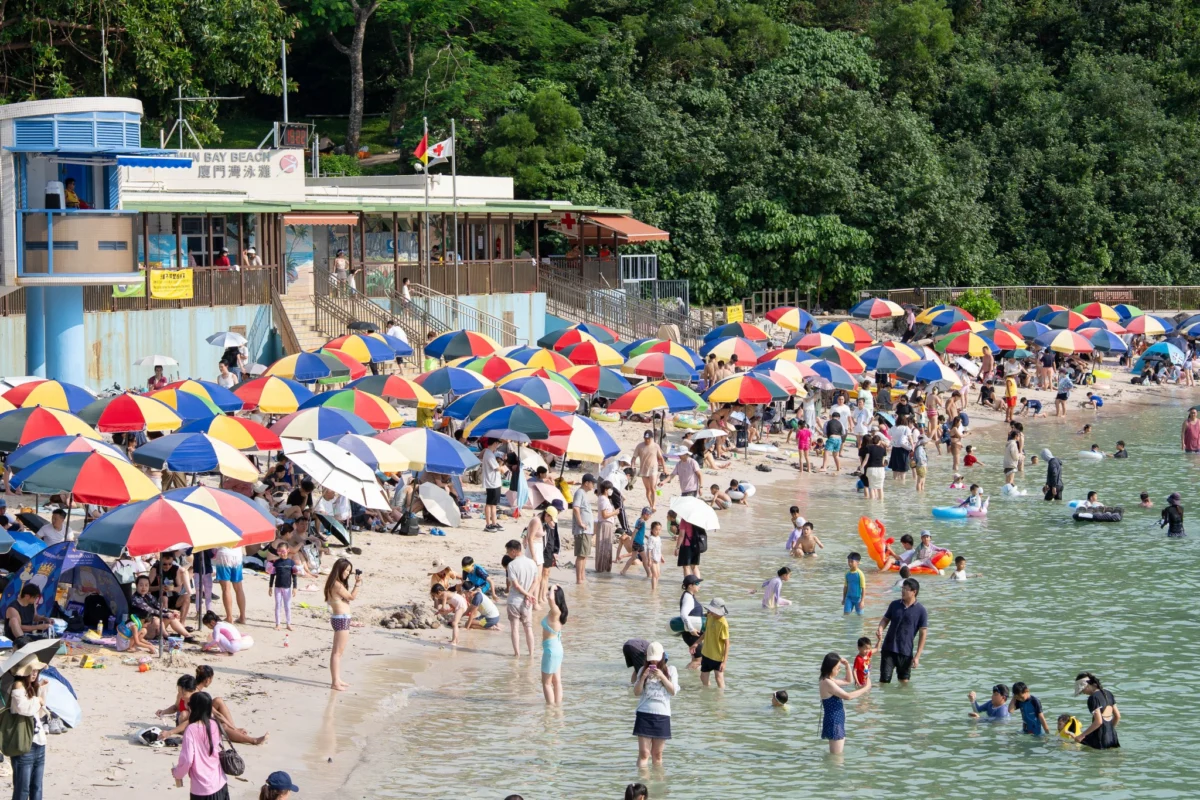
Hong Kong’s pristine natural landscapes, celebrated for their ecological significance and recreational value, faced immense pressure during mainland China’s week-long National Day holiday. Data meticulously collected by Greenpeace Hong Kong has illuminated a stark reality: a surge in visitor numbers at popular ecotourism destinations has led to significant environmental damage and raised urgent concerns about the sustainability of local tourism practices. The environmental NGO’s findings, released this week, underscore a growing problem of overtourism that threatens the delicate ecosystems and the long-term appeal of Hong Kong’s natural heritage.
Greenpeace’s observations, conducted on October 4, revealed an alarming influx of visitors to Half Moon Bay, a picturesque coastal area on the southern end of Sharp Island. The organization recorded a staggering 3,010 visitors in a single day, a figure that far surpasses the area’s ecological carrying capacity. This surge in human activity was directly linked to more than 100 documented instances of visitors capturing marine life. Such actions, often driven by a desire for souvenirs or recreational fishing, can have profound and lasting impacts on marine biodiversity, disrupting food chains and depleting vulnerable populations.

Escalating Pressure on Natural Resources
The situation at Half Moon Bay was not an isolated incident. Greenpeace’s estimates also indicated that Long Ke Wan Beach, another sought-after ecotourism spot in the Sai Kung district, welcomed approximately 1,516 visitors on October 1. During this period, a concerning 89 instances of environmental damage were recorded, highlighting a widespread disregard for the natural environment among some visitors. The types of damage likely include littering, trampling of sensitive vegetation, and disturbance of wildlife habitats.
The sheer volume of visitors during the Golden Week holiday period, which commenced with China’s National Day on October 1, significantly strained the infrastructure and natural resilience of these popular sites. These locations, often characterized by their relatively undeveloped nature and commitment to conservation, are particularly vulnerable to the impacts of mass tourism.

Calls for Comprehensive Policy and Sustainable Management
In response to these alarming observations, Greenpeace Hong Kong has issued a strong appeal to the Hong Kong government, urging the Culture, Sports and Tourism Bureau (CSTB) and the Environment and Ecology Bureau (EEB) to collaborate on formulating a comprehensive ecotourism policy. A key recommendation from the environmental group is the implementation of visitor caps for popular countryside hotspots like Half Moon Bay. Such measures are crucial for managing visitor numbers and mitigating their environmental footprint.
Ha Shun-kuen, a campaigner at Greenpeace, criticized the government’s current approach, describing it as a temporary “painkiller” that fails to address the root cause of the overtourism issue. He pointed out that the deployment of additional personnel, ostensibly to manage crowds, proved insufficient to prevent widespread damage at Half Moon Bay. Furthermore, reservation systems introduced at other sites, such as Po Pin Chau, failed to effectively curb overcrowding, indicating a need for more robust and systemic solutions.

“Stepping up enforcement only after overcrowding occurs at individual tourist spots serves merely as a temporary ‘painkiller’ that fails to address the root cause of the growing overtourism issue,” Ha stated. He emphasized that reactive measures are inadequate when faced with the scale of the problem, especially during peak holiday periods.
Beyond Reactive Measures: A Call for Proactive Conservation
Greenpeace’s analysis suggests that a more strategic and proactive approach is essential. The NGO advocates for a "conservation-first ecotourism policy" that prioritizes the protection of natural areas. This policy should encompass several key elements:

- Carrying Capacity Assessments: Greenpeace is urging the government to immediately conduct comprehensive carrying capacity assessments for all countryside hotspots across the city. These assessments would scientifically determine the maximum number of visitors an area can sustain without suffering irreversible ecological damage.
- Visitor Caps: Based on the carrying capacity assessments, specific maximum visitor caps should be established for each site. This would involve a quantitative limit on the number of people allowed to visit a particular location per day or per season.
- Seasonal Trail Closures: The organization also proposes the implementation of seasonal trail closures for restoration and recovery purposes. This would allow natural ecosystems to recuperate from periods of high visitor traffic, ensuring their long-term health and resilience.
- Enhanced Monitoring: Routine monitoring of environmental impacts caused by visitors is crucial. This involves systematically tracking littering, habitat disturbance, and other forms of damage, and using this data to inform management decisions and adapt strategies as needed.
Re-evaluating Marine Park Boundaries: A Case Study of Sharp Island
The issue of marine park management was also brought to the forefront by Greenpeace’s recommendations regarding Sharp Island. The organization argued that the proposed protection boundary for the Sharp Island Marine Park should be expanded to encompass the entire island’s waters, rather than being limited to its eastern and western sections.
The current proposal, which focuses protection on specific areas, risks simply displacing the problem. By limiting access to certain parts of the island’s waters, tourists may be funneled towards other sensitive areas, such as Half Moon Bay on the southern side. This redirection of visitor pressure could exacerbate existing problems in those areas, creating new ecological challenges. A holistic approach to marine park management is therefore essential to prevent ecological displacement and ensure comprehensive protection.

The Broader Implications for Hong Kong’s Reputation
The growing issue of overtourism in Hong Kong’s natural attractions carries significant implications beyond localized environmental damage. As an international travel destination, Hong Kong’s reputation is intrinsically linked to the quality of its visitor experiences and the preservation of its unique natural assets. Unchecked overtourism can lead to degraded landscapes, diminished biodiversity, and a less enjoyable experience for responsible tourists, potentially deterring future visitors.
Greenpeace’s statement concluded with a strong call for action: “Such steps will ensure that ecotourism is truly sustainable, preventing a recurrence of overtourism that damages Hong Kong’s reputation as an international travel destination.” By implementing a forward-thinking, conservation-driven ecotourism policy, Hong Kong can strive to balance the economic benefits of tourism with the imperative of environmental stewardship, safeguarding its natural treasures for generations to come.

The National Day holiday period, while a boon for the tourism sector, has served as a stark reminder of the fragility of Hong Kong’s natural environment and the urgent need for effective, long-term strategies to manage visitor numbers and protect these invaluable ecological assets. The coming months will reveal whether the government heeds these calls for a more sustainable and conservation-focused approach to ecotourism.


 Raul Delapena Setiawan
 Reynand Wu