Neng Nana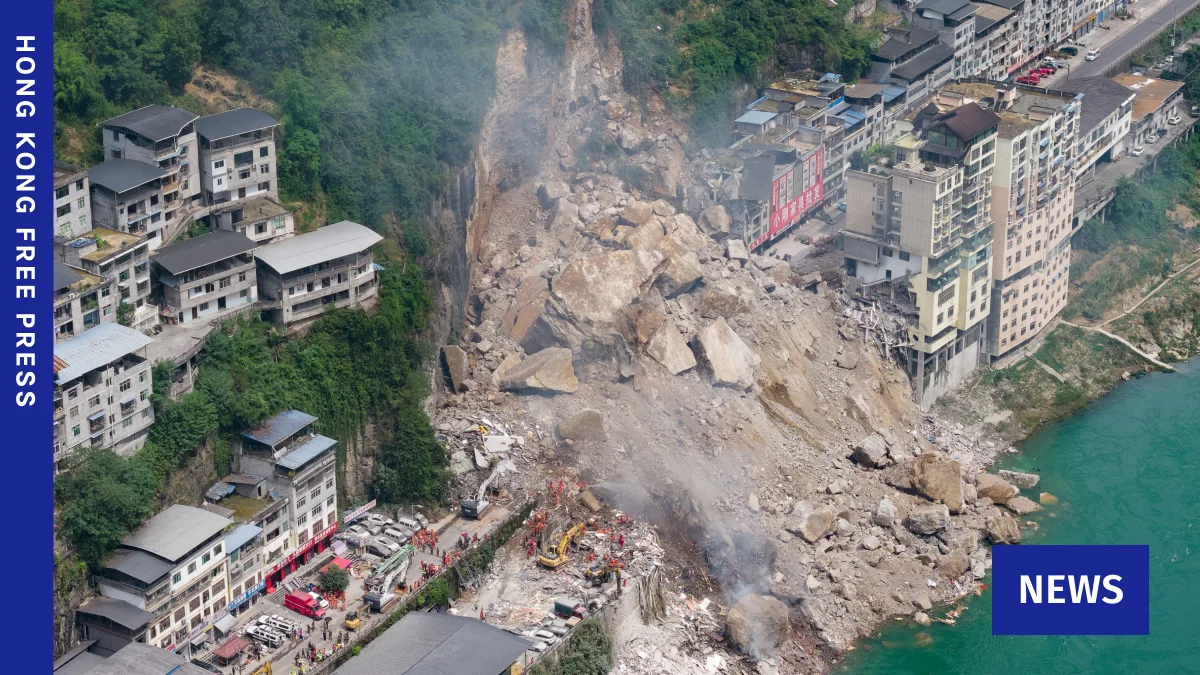
The death toll from a catastrophic landslide that struck Pengshui County in southwestern China’s Chongqing municipality on July 17, 2026, has tragically risen to 41. Authorities confirmed the grim update on Tuesday, following extensive DNA testing and identification of human remains recovered from the colossal pile of debris. This latest confirmation of an additional 30 victims underscores the immense scale of the disaster and brings a somber conclusion to the immediate search and rescue operations that had gripped the nation.
The landslide, triggered by undetermined factors but occurring in a region prone to geological instability and heavy rainfall, unleashed a torrent of earth and rock that engulfed a significant portion of a residential and commercial street. Multiple residential buildings situated at the foot of a mountain and along a riverbank were completely swept away, leaving behind a scene of utter devastation. The sheer force of the collapse transformed a vibrant community into a chaotic landscape of rubble, mud, and mangled structures, posing formidable challenges for rescue teams.
The Catastrophe Unfolds: A Chronology of Events
The disaster struck on Thursday, July 17, 2026, in the mountainous terrain of Pengshui County, a region known for its dramatic landscapes and deep river valleys. The initial reports were harrowing, detailing a massive earth movement that buried homes and businesses in an instant. Emergency services were immediately mobilized, with hundreds of rescue workers, including firefighters, soldiers, and medical personnel, rapidly deployed to the scene. Specialized equipment, including excavators and life-detection devices, was brought in to navigate the treacherous and unstable debris field.

In the immediate aftermath, hopes for finding survivors dwindled rapidly. Rescuers, working tirelessly under extremely difficult conditions, warned early on that there were "no signs of life" among the rubble, a heartbreaking assessment that foreshadowed the grim outcome. Initially, around 50 people were reported missing, fueling an intense and desperate search operation.
By Friday, after days of arduous work, authorities were able to confirm 11 fatalities. This initial death toll was a stark reminder of the human cost, but rescue teams continued their painstaking efforts, sifting through the earth and rock, driven by the slim hope of finding anyone alive. The instability of the landslide site itself posed a constant threat, necessitating careful planning and execution of every search maneuver to prevent further casualties among the rescuers.
The subsequent days saw the recovery of more human remains. Given the destructive nature of the landslide, many victims were not immediately identifiable. The painstaking process of DNA testing and forensic identification became crucial in confirming the identities of the deceased. It was through this meticulous work that, by late Tuesday, local authorities in Pengshui County announced the confirmation of an additional 30 victims, bringing the total confirmed death toll to 41. This final update reflected the comprehensive efforts to account for all those lost in the tragedy, providing some measure of closure, however painful, to the grieving families.
Challenges of Rescue and Recovery in Difficult Terrain
The rescue operation in Pengshui County highlighted the inherent difficulties of responding to large-scale geological disasters in mountainous regions. The sheer volume of displaced earth and rock, combined with the unstable nature of the ground, made access and search efforts exceedingly dangerous. Rescue workers faced steep slopes, the risk of secondary collapses, and the presence of mud and water from the nearby river.

Hundreds of personnel were involved, utilizing heavy machinery to move large sections of debris while simultaneously employing more delicate methods, such as manual digging and sniffer dogs, to search for human remains. The logistical challenges were immense, requiring coordinated efforts from various government departments, including emergency management, public security, health, and civil affairs. The focus gradually shifted from a desperate search for survivors to a meticulous recovery and identification process, a testament to the unforgiving reality of such natural calamities. The dedication of these rescue teams, often working around the clock, is a common theme in China’s disaster responses, demonstrating a national capacity for mobilization in crises.
China’s Vulnerability to Landslides: A Broader Context
The Pengshui landslide is not an isolated incident but rather a tragic reminder of China’s significant vulnerability to natural disasters, particularly landslides and mudslides. The country’s vast and diverse geography includes extensive mountainous regions, particularly in its southwestern provinces like Chongqing, Sichuan, and Yunnan. These areas are characterized by complex geological formations, steep topography, and a climate that often brings intense and prolonged rainfall.
The monsoon season, typically from May to September, is a period of heightened risk across much of China. Heavy downpours saturate the soil, increasing its weight and reducing its stability, making slopes highly susceptible to collapse. This hydro-geological context is a primary driver of landslide incidents, which frequently occur after periods of torrential rain.
Beyond natural factors, human activities can also exacerbate the risk. Rapid economic development and urbanization in mountainous areas have sometimes led to deforestation, unsustainable mining practices, and poorly planned infrastructure projects, such as road construction and reservoir building. These activities can destabilize slopes, alter natural drainage patterns, and increase the likelihood of landslides. While specific causes for the Pengshui landslide are under investigation, these broader factors often play a role in China’s disaster landscape.

According to national disaster reports, China experiences hundreds of significant landslides annually, ranging from minor slips to devastating events that claim numerous lives. The government has invested heavily in early warning systems, geological surveys, and disaster prevention measures, including slope reinforcement and relocation programs for communities deemed at high risk. However, the sheer scale of the challenge in such a geologically active and densely populated country means that complete prevention remains an elusive goal.
A Recurring Pattern: Recent Disasters in China
The Pengshui tragedy occurred less than two weeks after another devastating landslide in northwestern Gansu province, which buried 33 people and left 21 confirmed dead. This proximity in time underscores a concerning trend of major geological disasters affecting different parts of China. While the two events occurred in distinct geographical and geological settings, they collectively highlight the persistent threat posed by natural hazards across the nation.
The Gansu landslide, like many in the region, was likely influenced by local geological conditions and possibly heavy rainfall, a common trigger in China’s Loess Plateau and other susceptible areas. The successive nature of these events puts immense pressure on national and provincial emergency management systems, demanding rapid deployment of resources and expertise to multiple fronts. It also brings into focus the ongoing efforts to strengthen disaster resilience and preparedness across various vulnerable regions.
Official Responses and Long-Term Implications

Following the Pengshui landslide, local and national authorities swiftly initiated a multi-faceted response. Beyond the immediate rescue efforts, the Chongqing municipal government and Pengshui County officials would have launched an investigation into the precise causes of the landslide. Such investigations typically aim to determine if natural triggers, human factors, or a combination of both were responsible, with findings often informing future prevention strategies.
Statements from officials would have emphasized the government’s commitment to supporting the victims’ families, providing financial aid, psychological counseling, and assistance with relocation for those whose homes were destroyed or deemed unsafe. Comprehensive assessments of the damaged infrastructure and plans for reconstruction or alternative development would also be underway.
The broader implications of such disasters extend beyond immediate casualties and property damage. Economically, affected communities face significant disruption, with loss of livelihoods and damage to local businesses. The cost of rescue, recovery, and reconstruction can run into millions, if not billions, of yuan, diverting resources from other development projects.
Environmentally, landslides can alter landscapes, disrupt ecosystems, and impact water quality. The long-term psychological toll on survivors, witnesses, and rescue workers is also substantial, often requiring sustained support.
From a policy perspective, events like the Pengshui and Gansu landslides reinforce the urgency for robust disaster risk reduction strategies. This includes enhancing geological monitoring systems, improving early warning dissemination to remote communities, enforcing stricter building codes in high-risk areas, and promoting sustainable land-use planning. Furthermore, with the accelerating impacts of climate change potentially leading to more extreme weather events, China faces the challenge of adapting its disaster management frameworks to anticipate and mitigate future, possibly more frequent and intense, geological hazards. The ongoing tragedies serve as stark reminders of nature’s formidable power and the continuous human endeavor to live safely within its embrace.


 Nana Wu
 Lina Hope