Nana Muazin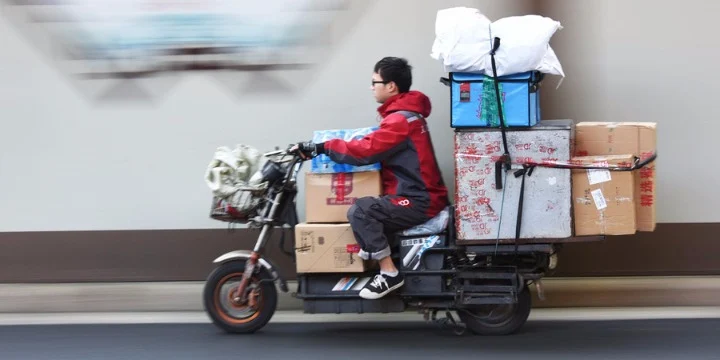
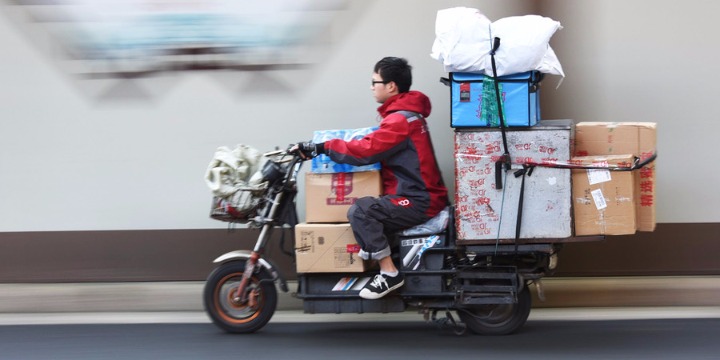
In a significant revelation about the psychological landscape of modern employment, couriers in China, a nation synonymous with a burgeoning delivery services industry, were identified as the loneliest occupation, garnering 69.57 percent of votes in a comprehensive survey. This finding, reported by cyol.com based on data compiled by 58.com, a prominent online marketplace operator, underscores the profound social challenges emerging from rapid economic shifts and intense work demands. Following closely, financial staff ranked as the second loneliest profession, securing 67.39 percent of the votes, while new media operators also featured prominently in the top five, illustrating a widespread issue of isolation across diverse sectors of the Chinese economy.
The Rise of Solitary Labor: Unpacking the Courier Phenomenon
The survey’s findings highlight a stark paradox within China’s highly interconnected digital economy. The delivery services industry, propelled by an unprecedented e-commerce boom and increasing urbanisation, has become a cornerstone of daily life for millions. Companies like JD.com, Alibaba’s Cainiao Network, Meituan, and Ele.me orchestrate complex logistics networks, relying heavily on a vast workforce of couriers to ensure the swift movement of goods. In 2017, when this survey was reported, China’s express delivery sector was already handling tens of billions of parcels annually, a figure that has continued to grow exponentially in subsequent years, solidifying its status as the world’s largest.
Despite this intricate network, the daily life of a courier is often characterized by intense physical exertion and minimal human interaction. The report from cyol.com succinctly described the work as "both heavy and dull," requiring couriers to "run around every day." A courier identified only by his surname, Liu, articulated this isolation to cyol.com, stating, "Except for the moment when you hand the parcel to the client, you barely have time to communicate with anyone." This lack of meaningful social engagement extends beyond brief transactional interactions. Couriers often work long, irregular hours, navigating dense urban environments under immense pressure to meet strict delivery deadlines and performance metrics. Their schedules frequently preclude participation in stable social groups or leisure activities that foster community. The focus on efficiency, speed, and volume, driven by algorithms and customer expectations, inadvertently strips away opportunities for genuine connection, leaving many feeling isolated despite being constantly in motion within bustling cities. Their remuneration, often tied to the number of deliveries, further incentivizes relentless work, pushing personal well-being and social interaction into the background.
Financial Frontlines: Stress, Speed, and Isolation
The financial sector, ranking as the second loneliest occupation, presents a different but equally compelling narrative of isolation. The report noted that this profession is "high stress and requires people to keep pace with changes in the industry at any time," easily leading to feelings of anxiety and loneliness. China’s financial markets are dynamic and highly competitive, encompassing banking, investment, insurance, and fintech. Professionals in these fields are often under immense pressure to perform, meet demanding targets, and navigate volatile market conditions. The work environment is frequently characterized by long hours, intense analytical demands, and a culture of individual responsibility for high-stakes decisions.
For financial staff, loneliness may not stem from a lack of physical interaction, but rather from the nature of the relationships formed. Interactions are often highly professional, competitive, and transactional, leaving little room for personal connection or vulnerability. The need to maintain a composed, authoritative demeanor, coupled with the pressure to constantly acquire new knowledge and adapt to regulatory shifts and technological advancements, can create a sense of internal isolation. The relentless pursuit of success, often at the expense of work-life balance, means personal relationships and social support networks outside of work can suffer. Furthermore, the globalized nature of finance often means irregular hours to accommodate different time zones, further fragmenting social life. The psychological burden of managing substantial financial assets or critical market operations can also contribute to a feeling of being singularly responsible, detached from broader communal support.
The Digital Age’s Paradox: New Media Operators and the Quest for Connection
While the full breakdown of the top five loneliest occupations beyond the first two and the fifth spot (new media operator) was not extensively detailed, the inclusion of new media operators at No. 5 offers further insight into the evolving landscape of work-induced isolation. The image accompanying the original report, depicting a 23-year-old new media operator in her rental room, underscores the solitary nature of this increasingly prevalent role. New media operators are at the forefront of China’s vibrant digital content ecosystem, responsible for managing social media accounts, creating engaging content, and interacting with online audiences across platforms like Weibo, WeChat, Douyin, and Kuaishou.
Ironically, a profession centered on digital communication and fostering online communities can be profoundly isolating. New media operators often work independently, spending long hours in front of screens, analyzing data, crafting narratives, and responding to comments. The pressure to generate viral content, maintain high engagement rates, and stay abreast of rapidly changing digital trends is intense. While they facilitate connections for millions online, their own real-world social interactions can be limited. The blurring lines between professional and personal life, a common feature of digital roles, also contributes to burnout and a sense of being constantly "on," without genuine downtime for personal connection. The virtual nature of their interactions, while extensive, often lacks the depth and intimacy of face-to-face relationships, contributing to feelings of loneliness.
Behind the Numbers: Understanding China’s Work Culture and Urbanization
The findings of the 58.com survey in 2017 are not isolated anomalies but rather symptoms of broader societal and economic transformations in China. The rapid pace of economic development, coupled with intense urbanization, has profoundly reshaped traditional social structures and work patterns. Millions have migrated from rural areas to cities in search of economic opportunities, often leaving behind established family and community networks. In their new urban environments, forming deep connections can be challenging, especially when consumed by demanding work schedules.
China’s work culture is frequently characterized by long hours and high expectations. The infamous "996" work schedule (9 am to 9 pm, six days a week) – while officially criticized – remains a pervasive reality in many industries, particularly in tech and startups. This relentless pursuit of productivity leaves little time or energy for personal relationships, hobbies, or community engagement. The emphasis on individual achievement and intense competition further exacerbates feelings of isolation, as colleagues might be viewed more as rivals than allies.
Furthermore, the digital revolution, while connecting people virtually, can paradoxically deepen real-world isolation. While platforms like WeChat facilitate constant communication, the quality of these interactions can be superficial, lacking the richness of in-person encounters. The constant influx of information and the pressure to maintain an online presence can also contribute to mental fatigue and a sense of detachment from one’s immediate physical surroundings.
The Mental Health Toll: Expert Perspectives on Workplace Loneliness
While the 58.com survey focused on the perception of loneliness, its implications extend directly to mental health and overall well-being. Psychologists and sociologists worldwide have increasingly recognized loneliness as a significant public health concern, comparable in its health risks to smoking or obesity. Chronic loneliness is linked to a higher risk of depression, anxiety disorders, cardiovascular disease, and reduced cognitive function. In the context of the Chinese workplace, these findings suggest a potential widespread mental health burden among significant segments of the workforce.
While specific national mental health statistics directly correlating workplace loneliness were not provided in the original report, broader data indicates rising mental health challenges in China. A 2019 study published in The Lancet Psychiatry estimated that approximately 17.3% of adults in China had experienced a mental disorder, with anxiety and mood disorders being prevalent. The stress, long hours, and lack of social support identified in the loneliest professions are well-established risk factors for these conditions. Experts in organizational psychology might infer that the lack of communication and social interaction described by couriers, the constant pressure on financial staff, and the solitary digital work of new media operators create environments ripe for chronic stress, burnout, and diminished job satisfaction, all of which contribute to psychological distress. The lack of robust support systems within the workplace or broader society to address these issues could further compound the problem.
Industry Responses and Future Outlook: Addressing the Challenge of Isolation
Recognizing the growing challenge of workplace loneliness and its impact on employee well-being and productivity, industry stakeholders are increasingly exploring solutions. While specific official responses to the 2017 survey were not detailed, the implications point towards a need for comprehensive strategies. Companies in the delivery sector, for instance, might consider initiatives to foster greater camaraderie among couriers, such as scheduled team meetings, shared rest areas, or digital platforms designed for peer support rather than just operational efficiency. For financial professionals, promoting healthier work-life boundaries, offering mental health counseling services, and cultivating a more collaborative rather than purely competitive work environment could be beneficial. For new media operators, structured opportunities for in-person collaboration, professional development workshops, and clear guidelines on work-life integration could mitigate feelings of isolation.
Beyond individual company initiatives, broader policy discussions about work hours, employee rights, and mental health support systems are crucial. The government’s increasing focus on mental health awareness and the promotion of a balanced lifestyle could play a vital role in creating a work culture that values human connection as much as productivity. As China continues its economic ascent and technological advancements, ensuring that human well-being keeps pace with progress will be paramount.
Global Parallels: Loneliness Beyond China
The phenomenon of workplace loneliness is not unique to China. Studies in Western countries have also highlighted growing concerns about social isolation in the workplace, exacerbated by factors such as the rise of remote work, increasingly specialized roles, and the gig economy. The COVID-19 pandemic further intensified these trends globally, making discussions around social connection and mental health in the workplace more urgent than ever. The Chinese survey, therefore, provides valuable insights into how these global trends manifest within a rapidly developing, collectivist-leaning society undergoing profound technological and demographic shifts. It serves as a stark reminder that while technology can connect us across vast distances, it cannot replace the fundamental human need for authentic, in-person social interaction and belonging in our daily lives, especially within our professional spheres.

 Evan Lee Salim
 Suro Senen