Ammar Sabilarrohman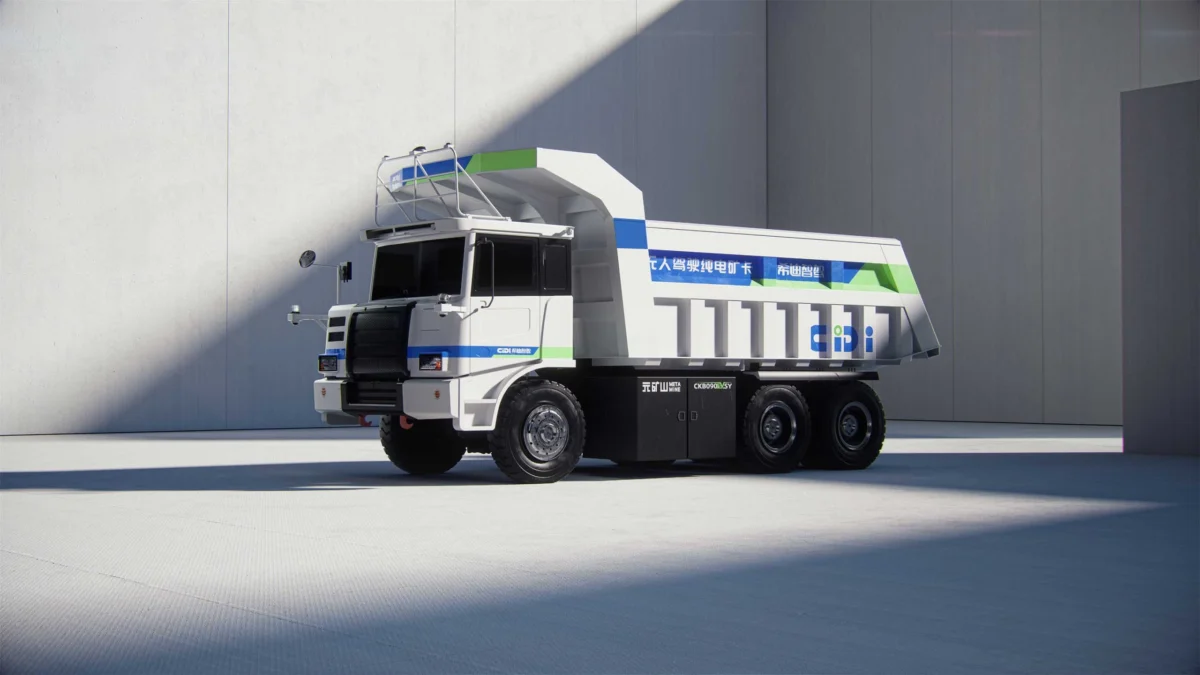
Hong Kong-listed CiDi is embarking on an ambitious global expansion strategy for its autonomous mining equipment, with plans to significantly broaden its deployments outside of China. This year, the company is set to initiate a larger rollout of its partially automated excavators in Australia, a key market for mineral extraction, while simultaneously pursuing new contracts across the Middle East, South America, and Europe. This aggressive international push is expected to dramatically shift CiDi’s revenue profile, with overseas markets projected to contribute a double-digit share of its total revenue by next year, a substantial increase from its current low single-digit contribution. The company’s financial performance in 2025 underscored its growth trajectory, with revenue more than doubling to RMB 884.8 million (approximately USD 122 million), supported by a rapidly expanding global fleet of over 1,700 vehicles operating across 30 mines and quarries.
The Global Shift Towards Autonomous Mining
CiDi’s strategic pivot towards international markets comes amidst a burgeoning global trend of automation in the mining sector. Driven by imperatives such as enhancing worker safety, improving operational efficiency, reducing costs, and mitigating the impact of skilled labor shortages, mining companies worldwide are increasingly investing in autonomous solutions. The inherent dangers of traditional mining operations, from rockfalls to equipment accidents, make automation a compelling solution for protecting human lives. Furthermore, autonomous systems can operate continuously, optimize routes, and manage resources with greater precision, leading to significant gains in productivity and a reduction in fuel consumption and wear and tear on machinery.
The market for autonomous mining equipment is experiencing robust growth. According to various industry reports, the global autonomous mining equipment market, valued at approximately USD 2.5 billion in 2023, is projected to reach over USD 7 billion by 2030, exhibiting a compound annual growth rate (CAGR) exceeding 15%. This expansion is fueled by technological advancements in artificial intelligence, machine learning, robotics, IoT, and high-speed communication networks like 5G, which enable vehicles to navigate, perceive their environment, and make operational decisions with minimal human intervention. Major mining jurisdictions, including Australia, North America, and parts of South America, have been at the forefront of adopting these technologies, creating a fertile ground for companies like CiDi.
CiDi’s Evolution and Technological Prowess
While the precise timeline of CiDi’s foundational years and initial R&D efforts is not detailed in the public domain, its current operational scale and technological maturity suggest a significant period of development and deployment within China. The company has likely leveraged China’s expansive domestic mining industry as a testbed for its autonomous solutions, refining its technology and building a substantial operational footprint before venturing abroad. Its success in deploying over 1,700 vehicles across 30 mines and quarries signifies a proven capability in diverse operational environments, from open-pit mines to quarries, handling various materials.
CiDi’s autonomous mining solutions typically integrate a suite of advanced technologies:
- Perception Systems: High-definition cameras, LiDAR (Light Detection and Ranging), radar, and ultrasonic sensors provide a comprehensive 360-degree view of the operating environment, detecting obstacles, other vehicles, and changes in terrain.
- Navigation and Positioning: High-precision GPS/GNSS, inertial measurement units (IMUs), and simultaneous localization and mapping (SLAM) algorithms enable vehicles to navigate pre-defined routes with centimeter-level accuracy, even in challenging conditions or areas with poor satellite reception.
- Artificial Intelligence and Machine Learning: AI algorithms process sensor data, predict potential hazards, optimize operational parameters (e.g., digging patterns for excavators, haul speeds for trucks), and learn from past operations to continuously improve performance.
- Connectivity: Robust communication systems, often leveraging 5G and dedicated private networks, ensure seamless data exchange between autonomous vehicles, command centers, and other equipment, crucial for remote monitoring and control.
- Safety Protocols: Multiple layers of safety systems, including emergency stop functionalities, geofencing, and collision avoidance, are paramount to ensure safe operation alongside any human-operated machinery or personnel.
The "partially automated excavators" mentioned for Australia represent a pragmatic approach to market entry. These systems typically assist operators with repetitive tasks, precision digging, or remote control from a safe distance, acting as an intermediate step towards full autonomy. This hybrid approach allows mining companies to gradually integrate automation, train their workforce, and realize benefits without the immediate complexities and capital expenditure of fully autonomous fleets.
Strategic Market Penetration: Australia, Middle East, South America, and Europe
CiDi’s targeting of specific global regions reflects a calculated strategy to capitalize on existing market conditions and future growth potential.
-
Australia: As one of the world’s largest mining nations, particularly for iron ore, coal, and critical minerals, Australia is a natural choice for CiDi’s expansion. The country has a long history of embracing technological innovation in mining, with major players like Rio Tinto and BHP already operating extensive autonomous truck fleets. The focus on partially automated excavators aligns with a need to automate other critical aspects of the mining cycle beyond hauling. Australian mining companies are constantly seeking solutions to improve safety in challenging conditions, increase productivity to meet global demand, and address the persistent shortage of skilled labor. Inferred sentiments from Australian mining industry spokespersons suggest that such technologies are viewed as vital for maintaining global competitiveness and enhancing workplace safety.
-
Middle East: This region, particularly Saudi Arabia and the UAE, is undertaking massive infrastructure projects and diversifying its economies away from oil, leading to significant demand for construction materials and minerals like phosphates and bauxite. The Middle East’s vision for smart cities and technologically advanced industries, exemplified by initiatives like Saudi Vision 2030, creates a receptive environment for advanced automation solutions. The availability of large, undeveloped land areas for new mining ventures also presents substantial opportunities for greenfield deployments of autonomous fleets.
-
South America: Rich in vital resources such as copper (Chile, Peru), lithium (Chile, Argentina, Bolivia), and iron ore (Brazil), South America is another key region for mining automation. Many mines are located in remote, high-altitude, or geologically complex areas, where autonomous equipment can mitigate risks to human operators and maintain consistent performance in harsh conditions. Countries like Chile have already seen significant investments in autonomous hauling by global mining giants, signaling a readiness for broader automation solutions. CiDi’s offering could appeal to both large corporations looking to expand their automated operations and smaller to mid-sized miners seeking cost-effective entry points into automation.
-
Europe: While European mining might not be on the same scale as Australia or South America for bulk commodities, there is significant activity in industrial minerals, aggregates, and niche metals. European markets are characterized by stringent safety and environmental regulations, making autonomous solutions highly attractive for their ability to enhance safety, reduce emissions through optimized operations, and improve resource efficiency. Countries like Sweden and Finland are known for their technologically advanced underground mining operations, and CiDi’s surface mining solutions could find application in quarries and open-pit operations across the continent.
Financial Performance and Future Outlook
CiDi’s reported revenue doubling to RMB 884.8 million in 2025 highlights a period of robust growth and successful market penetration within its existing operational territories. This impressive financial performance, coupled with the expansion of its global fleet to over 1,700 vehicles, provides a strong foundation for its international ambitions. The target of achieving a double-digit share of revenue from overseas markets by 2027 represents a significant leap from its current low single-digit contribution, indicating an expected exponential growth in international sales and deployments.
Industry analysts are likely to view CiDi’s aggressive expansion as a testament to the maturation of its technology and its confidence in competing on a global stage. "CiDi’s rapid revenue growth and substantial fleet size demonstrate a strong operational foundation," commented an independent industry analyst. "Their strategic move into key mining regions like Australia, coupled with a pragmatic approach like partially automated excavators, suggests a well-thought-out plan to capture a larger share of the global autonomous mining market. Achieving a double-digit overseas revenue share by 2027 would be a significant milestone, solidifying their position as a major international player." This growth trajectory positions CiDi not just as a technology provider but as a critical enabler of the next generation of mining operations worldwide.
Broader Implications and Challenges Ahead
CiDi’s global expansion carries significant implications across economic, safety, environmental, and competitive dimensions.
-
Economic Impact: For mining companies, automation promises substantial cost savings through reduced labor expenses, optimized fuel consumption, and lower maintenance costs due to precise operation. It also leads to increased throughput and operational consistency. However, the broader economic impact also includes potential job displacement for traditional machine operators, necessitating workforce retraining programs for roles in remote operation centers, data analysis, and maintenance of complex autonomous systems. This shift could create new high-skilled jobs while transforming existing ones.
-
Safety Enhancements: The most immediate and profound benefit of autonomous mining is the removal of human operators from hazardous environments, drastically reducing accident rates from collisions, falls, and exposure to dust and noise. This aligns with global mining industry goals of achieving zero harm.
-
Environmental Considerations: Autonomous systems, with their optimized driving and operational patterns, can contribute to reduced fuel consumption and lower greenhouse gas emissions per tonne of material moved. More precise excavation can also minimize waste and improve resource recovery. However, the energy demands of the advanced computing and communication infrastructure required for autonomy must also be considered, pushing for the integration of renewable energy sources in mining operations.
-
Competitive Landscape: CiDi is entering a global market with well-established players such as Komatsu, Caterpillar, Sandvik, and Liebherr, all of whom have significant investments in autonomous mining solutions. CiDi’s competitive edge may stem from its agility, potentially more cost-effective solutions, rapid deployment capabilities, or specific technological differentiators refined through its extensive domestic experience. The race for market share will likely intensify, driving further innovation and potentially more accessible automation solutions for a broader range of mining operations.
-
Regulatory and Infrastructure Challenges: Deploying autonomous equipment across diverse international markets requires navigating a patchwork of regulatory frameworks for autonomous vehicles, industrial safety standards, and environmental compliance. Establishing robust and reliable communication infrastructure, especially in remote mining locations, also presents a significant challenge that must be overcome for seamless autonomous operations. Data security and cybersecurity measures will also be paramount to protect proprietary information and prevent operational disruptions.
In conclusion, CiDi’s assertive global expansion strategy marks a pivotal moment for the company and underscores the accelerating pace of automation in the global mining industry. By targeting key resource-rich regions and leveraging its proven technology, CiDi aims to cement its position as a leading provider of smart mining solutions, contributing to a safer, more efficient, and sustainable future for mineral extraction worldwide. The coming years will demonstrate how effectively CiDi can translate its domestic success into a formidable international presence, shaping the competitive dynamics of the autonomous mining equipment market.


 Muslim
 Rifan Muazin