Nana
Nana
The Asian Development Bank (ADB), headquartered in Manila, the Philippines, has unveiled an ambitious plan to invest approximately $6.17 billion across 31 projects in China between 2018 and 2020, with a substantial $2 billion allocated for 2018 alone. This significant financial commitment signals a strategic evolution in the long-standing partnership between China and the multilateral development bank, shifting focus towards high-quality, sustainable development initiatives, particularly in environmental protection, social sectors, and regional integration, moving beyond traditional infrastructure-oriented lending.
A Deepening Partnership: From Infrastructure to Sustainable Development
China’s journey with the ADB began in 1986, a pivotal moment that marked its formal entry into the global development finance architecture. In the decades that followed, ADB played a crucial role in supporting China’s remarkable economic ascent, primarily through investments in critical infrastructure projects that underpinned the nation’s rapid industrialization and urbanization. From its inception as a member through September 30, 2017, the ADB has approved a staggering $37.7 billion in loans to China. This sum comprised $33.9 billion for sovereign operations, directly supporting government-led initiatives, and $3.9 billion for private sector operations, fostering private enterprise and market-driven solutions. Historically, half of this total assistance was directed towards the transport sector, crucial for connecting vast swathes of the country and facilitating trade. The energy sector received 16 percent, while water and other urban infrastructure and services accounted for 15 percent, and agriculture, natural resources, and rural development garnered 13 percent. These investments were instrumental in addressing the development needs of a rapidly modernizing nation.
However, as China’s economy matured and its own financial capabilities grew, its development priorities began to evolve. The nation transitioned from a focus on sheer speed of growth to emphasizing quality, sustainability, and inclusivity. This shift was largely driven by the increasing awareness of environmental degradation, widening income disparities, and the need for more balanced regional development. Recognizing this critical evolution, the ADB has progressively adapted its lending strategy to align with China’s changing needs and its pursuit of an "Ecological Civilization."
Indu Bhushan, Director General of ADB’s East Asia Department, underscored this strategic recalibration, stating, "ADB aims to increase its sovereign lending to China in line with the expansion of the bank’s total lending capacity. The 2017 sovereign lending will reach $1.98 billion." This indicates not only an increased financial commitment but also a deeper integration of ADB’s global development agenda with China’s national strategies. The international development finance institution is currently financing 90 ongoing projects in China, amounting to $12.3 billion, demonstrating the breadth and depth of its current engagement. Over the past two years alone, the ADB approved new projects worth more than $1.7 billion annually in China, setting the stage for the enhanced commitments in the coming years.
The Pillars of Future Investment: Environment, Inclusivity, and Innovation
The newly proposed sovereign lending program for 2018-2020 marks a definitive pivot. The ADB’s support has been moving distinctly from infrastructure-oriented projects to those focusing on environmental and social sector support, with the explicit goal of improving the quality of growth. A hallmark of this new approach is the mandate that all new projects in China will incorporate innovation elements, pushing the boundaries of traditional development solutions. This includes leveraging cutting-edge technologies, pioneering policy frameworks, and fostering new business models that contribute to sustainable development.
Central to this refined strategy is the emphasis on "knowledge solutions." The ADB regards the creation, management, and sharing of knowledge as a powerful catalyst for propelling development in China. This involves not just providing capital but also transferring expertise, promoting best practices, and facilitating policy dialogues on complex development challenges. For example, as China grapples with the intricate issues of climate change, sustainable urbanization, and demographic shifts, ADB’s role as a knowledge partner becomes invaluable, offering insights gleaned from its experience across diverse Asian economies.
The Country Partnership Strategy (CPS) for China, spanning 2016-2020, provides the overarching framework for these investments. It identifies three major strategic areas: managing climate change and the environment, supporting inclusive growth, and promoting regional cooperation and integration. These themes are not merely abstract concepts but translate into concrete, actionable programs designed to address China’s most pressing development challenges.
Key Investment Areas for 2018-2020:
-
Managing Climate Change and the Environment: This remains a top priority, reflecting China’s commitment to tackling its severe environmental challenges and fostering an "Ecological Civilization." This theme encompasses two flagship programs of national significance: the Beijing-Tianjin-Hebei air pollution control initiative and the comprehensive development of the Yangtze River Economic Belt. Beyond these, it includes sustainable urbanization efforts, promoting green technologies, and other environment-related programs aimed at reducing carbon footprints, conserving biodiversity, and improving public health. The scale of the Beijing-Tianjin-Hebei region’s air quality crisis, for instance, has necessitated multi-faceted, coordinated interventions, and ADB’s support adds crucial financial and technical backing to these efforts. Similarly, the Yangtze River Economic Belt, a critical economic and ecological artery, requires integrated approaches to balance economic development with environmental protection.
-
Promoting Regional Cooperation and Integration: China’s growing influence in regional and global affairs is mirrored in ADB’s strategy. This theme covers support for Chinese provinces’ participation in ADB’s established sub-regional programs, such as the Central Asia Regional Economic Cooperation (CAREC) and the Greater Mekong Subregion (GMS). Crucially, it also encompasses support for the Belt and Road Initiative (BRI), a monumental global infrastructure development strategy spearheaded by China. ADB’s engagement with BRI aims to enhance regional connectivity, facilitate trade and investment flows, and promote the provision of regional public goods, such as cross-border energy grids and environmental management systems. This collaboration signifies ADB’s recognition of BRI’s transformative potential and its commitment to ensuring its projects align with broader regional development objectives.
-
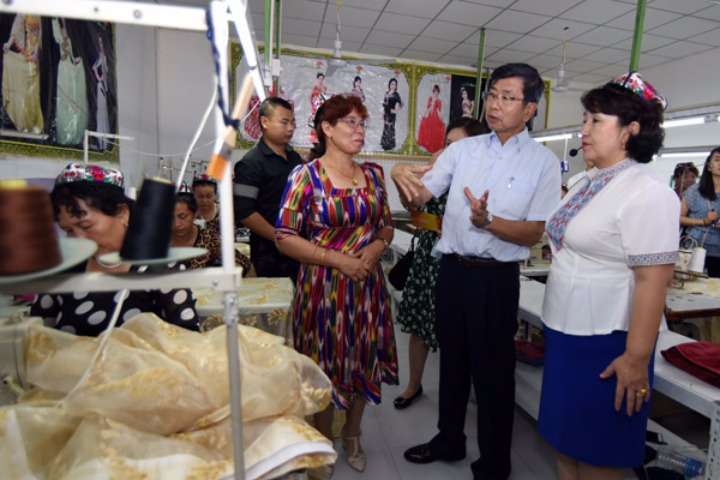
Supporting Inclusive Growth: Despite its economic prowess, China still faces challenges related to income inequality, rural-urban disparities, and the needs of vulnerable populations. This theme covers critical areas such as rural transformation, aiming to revitalize rural economies and improve living standards in less developed areas. It also includes support for the revitalization of Northeast China, a region facing economic restructuring challenges. Furthermore, programs addressing demographic transition, particularly the challenges posed by an aging population and the need for enhanced education and skills development, fall under this umbrella. Social inclusion programs, targeting ethnic minorities and other marginalized groups, also form a vital component, exemplified by projects like the Turpan Women’s Ethnic Minority Cultural Tourism Development Project, which ADB President Takehiko Nakao personally visited on September 6, underscoring the bank’s commitment to on-the-ground impact.
-
Supporting Institutional and Governance Reform: Effective governance and robust institutions are foundational to sustainable development. This theme covers public sector management, including the promotion of public-private partnerships (PPPs), strengthening central-local fiscal relations, and developing eco-compensation mechanisms—policies that reward ecological protection. It also addresses reforms in the financial sector, ensuring stability and access to finance for sustainable projects, and other institution-building activities, such as legal and judicial reform, which are vital for creating a fair and transparent operating environment.
Expanding Private Sector Engagement and Collaboration
In line with China’s Ministry of Finance’s request, the ADB aims to significantly expand its private sector and non-sovereign operations in the coming years. This strategic shift reflects China’s greater role in promoting environmentally sustainable development through market mechanisms. The focus will be on inclusive environmental projects across various sectors, including infrastructure, agribusiness, and financial institutions. This approach leverages the dynamism and efficiency of the private sector to achieve development goals, moving beyond traditional government-backed projects.
Indu Bhushan highlighted the bank’s proactive exploration of new opportunities: "We have been looking into public-private partnership opportunities with new concession scope, such as water, energy and food security nexus, cross-jurisdiction along the Belt and Road Initiative." This indicates a keen interest in innovative financing models and cross-border collaborations that can address complex, interconnected challenges, particularly within the vast geographical scope of the BRI.
The ADB’s commitment to regional cooperation extends beyond its own programs. The bank explicitly states its intention to collaborate closely with the China-led Belt and Road Initiative and other development partners. This includes working alongside the Asian Infrastructure Investment Bank (AIIB) and the New Development Bank (NDB), two relatively newer multilateral development banks with significant Chinese involvement. This collaborative approach among MDBs signifies a new era of development finance, where synergy and shared objectives take precedence over competition, aiming to collectively promote regional connectivity, trade, investment, and the provision of regional public goods across Asia and beyond. Such partnerships are crucial for mobilizing the immense capital required for sustainable infrastructure development and achieving the Sustainable Development Goals (SDGs) in the region.
Implications for China and Regional Development
The ADB’s enhanced investment strategy and its evolving partnership with China carry significant implications for the nation’s future development trajectory and for regional cooperation. By prioritizing environmental and social sectors, the ADB is directly supporting China’s efforts to rebalance its economy, reduce its carbon footprint, and improve the quality of life for its citizens. This alignment bolsters China’s national strategies for ecological protection, poverty alleviation, and regional coordination, contributing to a more sustainable and equitable growth model.
Furthermore, ADB’s role as a knowledge partner will provide China with access to international best practices and innovative solutions, particularly as the country navigates complex challenges like climate change adaptation and an aging workforce. The emphasis on private sector operations also indicates a move towards more market-driven and financially sustainable development models, encouraging greater efficiency and innovation.
For the broader Asian region, ADB’s collaboration with China on initiatives like the Belt and Road is crucial. It helps to ensure that large-scale infrastructure projects are implemented with international standards of environmental and social safeguards, while also promoting regional integration and economic connectivity. This strategic partnership reinforces China’s growing role as a responsible stakeholder and contributor to global development finance, moving from being primarily a recipient to an influential partner in shaping regional prosperity. The $6.17 billion commitment for 2018-2020 is not merely a financial injection; it is a testament to an evolving, sophisticated partnership poised to address the complex development challenges of the 21st century across Asia.

 Evan Lee Salim
 Suro Senen