Basiran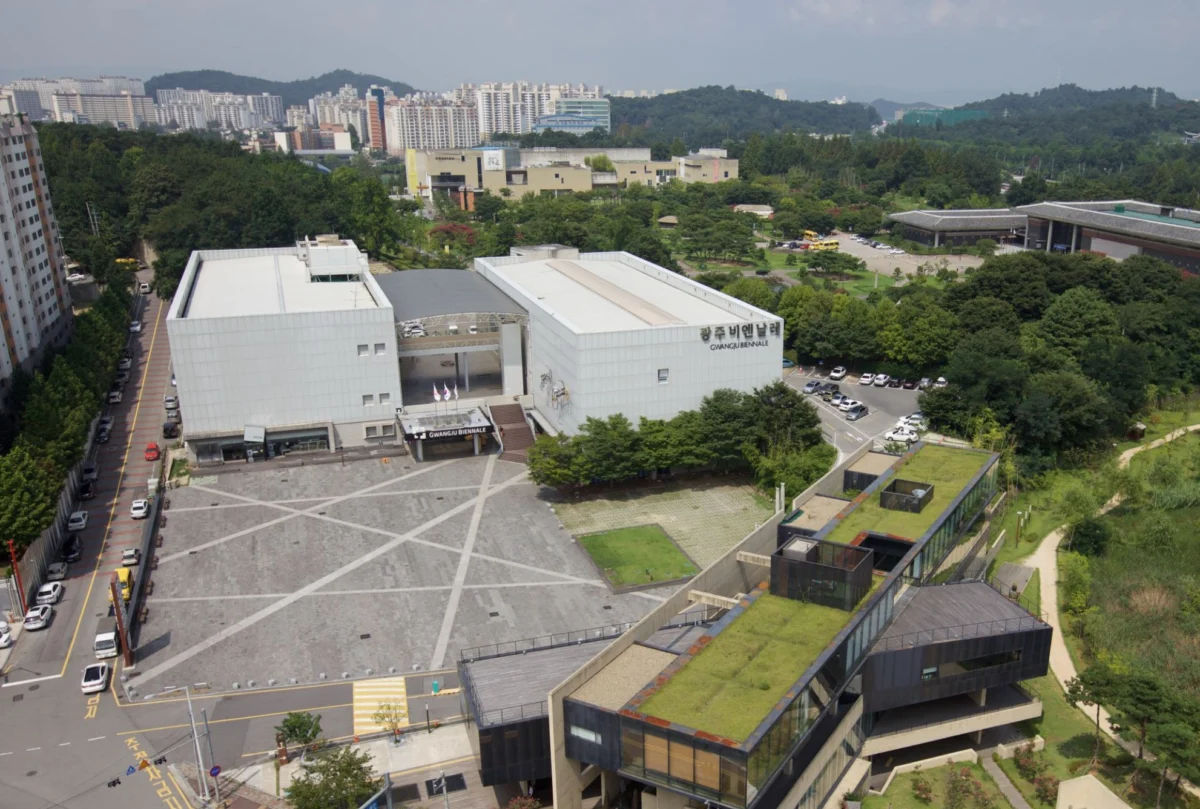
Chinese artists have formally withdrawn from the prestigious Gwangju Biennale in South Korea, one of Asia’s largest contemporary art events, following a contentious dispute over the naming of an exhibition. The controversy erupted when organizers initially agreed to feature a "Taiwan Pavilion," only to later change the name to "NTMoFA" (National Taiwan Museum of Fine Arts), a move that sparked accusations of political censorship and ultimately led to the withdrawal of Chinese participants and a diplomatic rebuke from Beijing. The Gwangju Biennale is scheduled to open its doors on Saturday, showcasing a diverse array of international artists and exhibitions across the southwestern South Korean city.
The Genesis of the Dispute: A Matter of Names
The crux of the conflict lies in the perceived political sensitivities surrounding Taiwan. Chinese artists participating in the Gwangju Biennale’s Pavilion Project announced their withdrawal on Thursday, citing the organizers’ decision to revert the name of the Taiwanese exhibition to "Taiwan Pavilion." This reversal came after an initial agreement to call it the "Taiwan Pavilion" was reportedly altered in June to "NTMoFA" without the consent of the participating Taiwanese artists.

In a joint statement last month, the Taiwanese artists expressed their dismay, accusing the Biennale organizers of "political censorship" and stating that the name change "brutally erased Taiwan from the poster." They emphasized that the initial agreement had been respected, and the subsequent alteration was made unilaterally. This incident underscores the ongoing geopolitical tensions surrounding Taiwan, which Beijing considers a renegade province to be reunited with the mainland, by force if necessary.
A Timeline of Escalation
The Gwangju Biennale, founded in 1995, has established itself as a significant platform for contemporary art, attracting artists and audiences from across the globe. The Pavilion Project, a key component of the biennale, typically invites various countries and regions to present curated exhibitions. This year’s event was set to feature a broad spectrum of artistic expressions, making the current dispute a notable disruption.
The timeline of the dispute can be traced as follows:

- Initial Agreement: Organizers of the Gwangju Biennale reportedly agreed to name the exhibition featuring Taiwanese artists as the "Taiwan Pavilion."
- Name Change: In June, the name was reportedly altered to "NTMoFA," the acronym for Taiwan’s National Taiwan Museum of Fine Arts. This change was made without the explicit consent of the participating Taiwanese artists and their curatorial team.
- Artist Protest: The Taiwanese artists issued a statement last month condemning the name change as "political censorship" and expressing their profound disappointment.
- Organizers Revert: Facing mounting pressure and criticism, the Gwangju Biennale Foundation reversed its decision last week, agreeing to reinstate the "Taiwan Pavilion" as the exhibition’s name.
- Chinese Withdrawal: In response to the Foundation’s decision to restore the "Taiwan Pavilion" name, Chinese artists participating in the biennale halted their preparations. On Thursday, they formally announced their withdrawal from the event.
A spokesperson for the Gwangju Biennale Foundation confirmed the withdrawal to Agence France-Presse (AFP), stating, "We have confirmation the Chinese artists are withdrawing from the biennale."
China’s Stance and Diplomatic Pressure
China’s consulate general in Gwangju issued a stern statement following the Biennale Foundation’s decision to reinstate the "Taiwan Pavilion" name. The consulate asserted that the organizers had "openly allowed the Taiwan region of China to participate in the exhibition using a name that is completely inconsistent with its status." The statement further declared this action to be a "serious violation of the One China principle," a cornerstone of Beijing’s foreign policy that recognizes the People’s Republic of China as the sole legitimate government of China and considers Taiwan an inalienable part of its territory. The consulate urged the organizers to "immediately rectify their wrongdoing."
The "One China principle" is a complex and politically charged concept. While most countries acknowledge Beijing’s position, many maintain unofficial relations with Taiwan, which functions as a de facto independent state with its own democratically elected government, military, and economic system. China’s insistence on its sovereignty over Taiwan has led to significant diplomatic pressure on countries and international organizations to adhere to its interpretation of the "One China principle," often leading to boycotts or censorship of any references that suggest Taiwan’s independent status.

South Korea’s Diplomatic Maneuvering
In an effort to de-escalate the situation and mitigate potential damage to its bilateral relations with China, South Korea’s Ministry of Foreign Affairs issued a statement addressing the row. The ministry emphasized that the "government’s basic position regarding Taiwan remains unchanged." It further clarified that the decision regarding the exhibition name was made within the "cultural and artistic sphere" and "is unrelated to the South Korean government’s position regarding Taiwan."
The South Korean government expressed its hope that the issue would not negatively impact "South Korea-China relations or exchanges and cooperation between the two countries." This response reflects Seoul’s delicate balancing act between its strong economic ties with China and its evolving geopolitical considerations. South Korea, like many nations, navigates a complex relationship with Beijing, seeking to maintain economic partnerships while also addressing regional security concerns and upholding democratic values.
Broader Implications and Artistic Freedom
The Gwangju Biennale incident highlights the pervasive influence of geopolitical tensions on cultural exchanges and artistic freedom. The event underscores the challenges faced by international art institutions in navigating the complex political landscape, particularly when dealing with entities that adhere to strict interpretations of sovereignty.

The withdrawal of Chinese artists, while a direct consequence of the naming dispute, also raises broader questions about the role of art in political discourse and the potential for censorship to stifle creative expression. The Gwangju Biennale, as a major international art platform, is expected to foster dialogue and present diverse perspectives. The pressure exerted by China to control the representation of Taiwan can be seen as an attempt to shape international narratives and limit the visibility of Taiwan’s distinct identity.
This situation is not unique to the Gwangju Biennale. Similar incidents have occurred in other international forums, where cultural events have become battlegrounds for political disputes. The art world often finds itself caught between its commitment to artistic freedom and the realities of international politics, where economic and diplomatic pressures can significantly influence programming and participation.
The Gwangju Biennale, with its focus on contemporary art and global dialogue, now faces the challenge of proceeding with its event amidst this controversy. The withdrawal of Chinese artists represents a significant loss of participation, but the decision to reinstate the "Taiwan Pavilion" name can be interpreted as a stand for artistic autonomy and a refusal to bow to political dictates. The long-term implications for future international art collaborations and the ongoing discourse on Taiwan’s status in global forums remain to be seen. The incident serves as a stark reminder of how deeply intertwined art and politics can be in the contemporary world.

 Reynand Wu
 Siti Muinah