Jia Lissa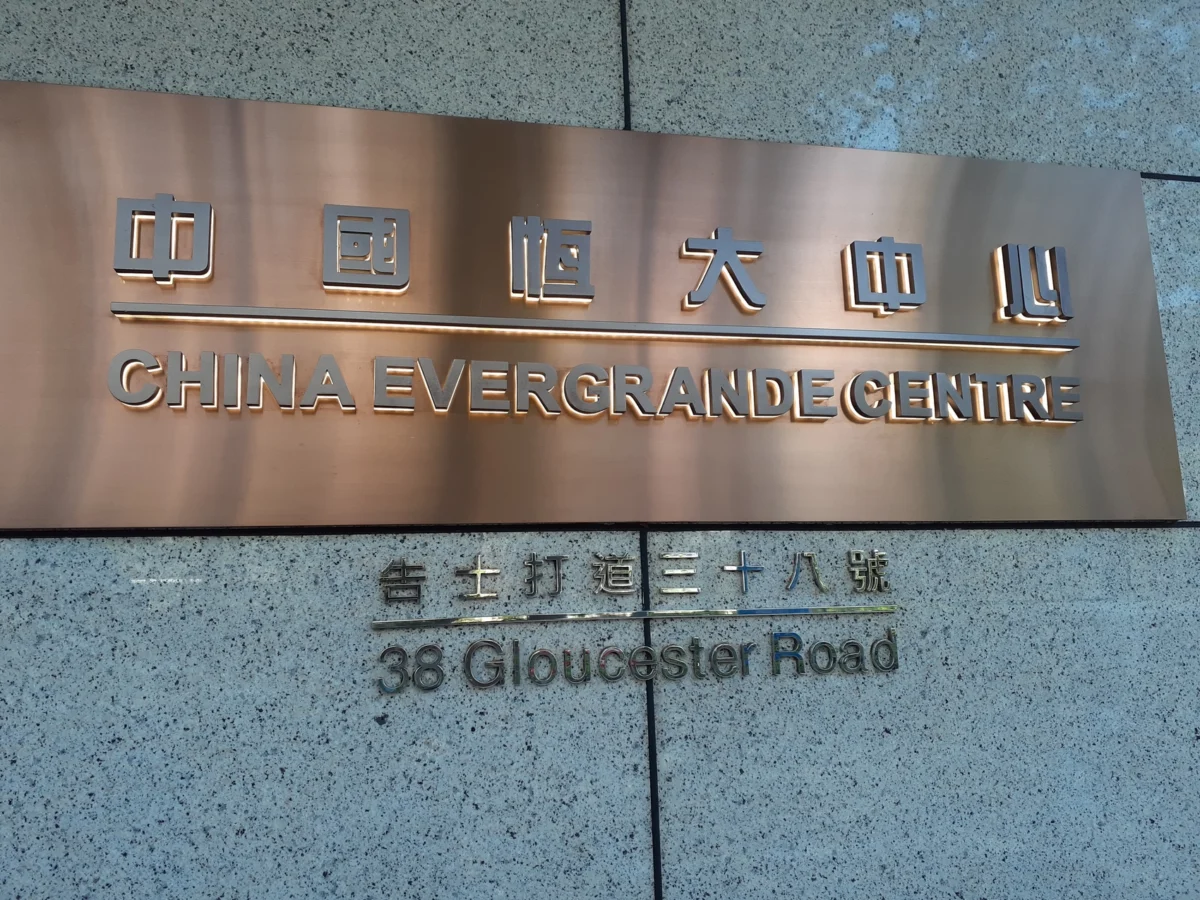
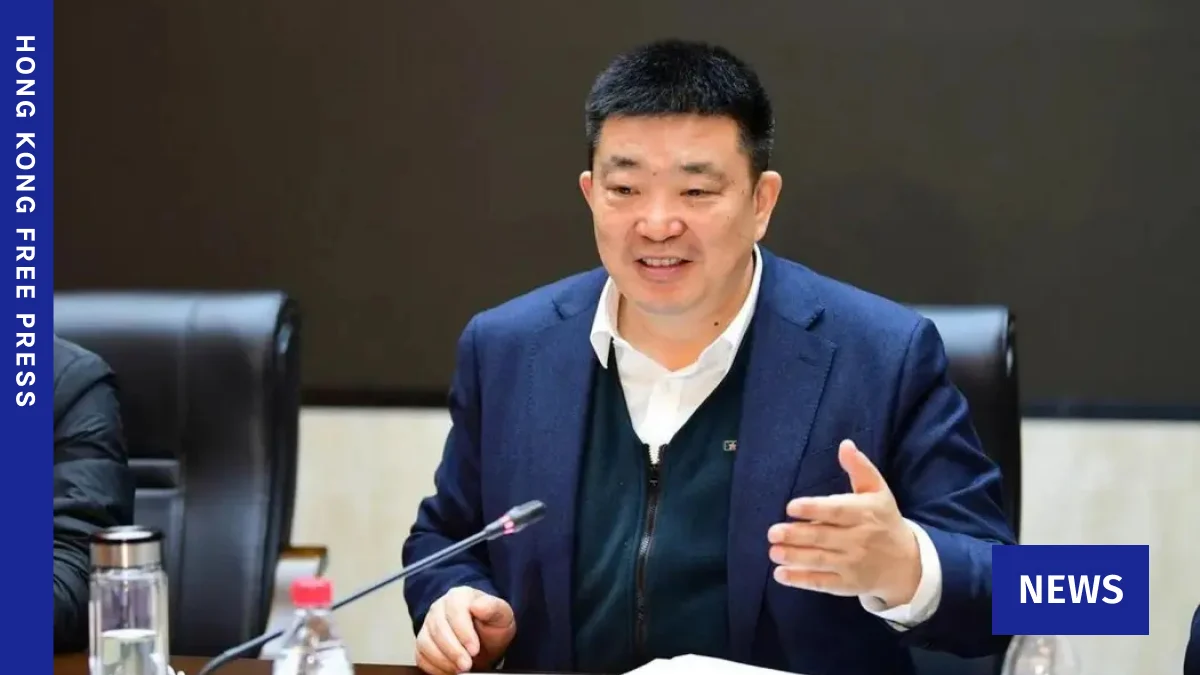
The architect of one of China’s most spectacular corporate downfalls, Xu Jiayin (also known as Hui Ka Yan in Cantonese), the founder of the embattled property behemoth Evergrande Group, has been sentenced to life imprisonment. The ruling, handed down by the Shenzhen Intermediate People’s Court in Guangdong province on Thursday, marks a definitive chapter in the saga of a company whose staggering debt and subsequent default sent shockwaves through China’s economy and global financial markets. In addition to the life sentence, which includes the revocation of political rights and confiscation of all personal property for Xu Jiayin, the court levied a hefty fine of 15.82 billion yuan (approximately US$2.4 billion) against Evergrande and its real estate arm for crimes including "large-scale financial fraud." This severe judgment comes five years after Evergrande’s high-profile default, symbolizing Beijing’s firm stance against financial malfeasance and its commitment to de-risk the nation’s colossal property sector.
The Verdict and Penalties
The Shenzhen Intermediate People’s Court’s pronouncement detailed a litany of transgressions committed by Xu Jiayin and Evergrande Group between 2016 and 2021. According to the court’s statement on its WeChat account, Evergrande and its former chairman "violated national laws by engaging in continuous, large-scale financial fraud and other means to inflate assets and conceal liabilities." Furthermore, the court asserted that the parties involved "gained control of financial institutions" through bribery, though specific institutions were not named in the public statement. Xu Jiayin, 67, had reportedly pleaded guilty in April to charges that also encompassed embezzlement and bribery, paving the way for Thursday’s sentencing. The court underscored the gravity of the offenses, stating that Xu and Evergrande’s actions "seriously disrupted the socialist market economic order… and undermined the integrity of official conduct by state personnel." The judicial body concluded that "the circumstances were particularly egregious, causing particularly serious economic losses and causing particularly serious social harm."

Beyond Xu Jiayin, the crackdown extended to other senior executives within the Evergrande Group. Five additional executives received prison terms ranging from six to 18 years for various fraud-related offenses. In total, 56 individuals were handed jail sentences, with terms as short as one year and ten months, according to China’s state news agency Xinhua. The court also mandated the return of any remaining shortfalls from illegal gains, signaling a comprehensive effort to recover illicitly acquired funds and assets. The sentencing proceedings were reportedly attended by a mix of lawmakers, political advisers, and relatives of the defendants, underscoring the public and political significance of the trial.
The Architect’s Fall: Xu Jiayin’s Trajectory
Xu Jiayin’s journey from a humble background to becoming one of China’s wealthiest billionaires and a prominent member of the Communist Party’s top political advisory body, the Chinese People’s Political Consultative Conference (CPPCC), was once a celebrated emblem of China’s economic boom. He founded Evergrande in 1996 in Guangzhou, capital of Guangdong province, and rapidly grew it into a property colossus that specialized in developing residential complexes across hundreds of Chinese cities. At its peak, Evergrande was a household name, synonymous with the dream of homeownership for millions of Chinese citizens, and its ventures extended far beyond real estate into electric vehicles, football, and even bottled water.
However, the image of the beaming, jet-black-haired Xu, often seen in a gold Hermes belt at political conferences, has been starkly contrasted with his recent public appearance. A widely circulated photomontage on social media juxtaposed his former confident self with a court-released image from Thursday. In the latter, a visibly worn, white-haired Xu stood unsmiling, flanked by two police officers as he faced a panel of judges, a poignant visual representation of his spectacular fall from grace. This transformation encapsulates not just a personal tragedy but the broader shift in China’s economic landscape and regulatory environment.

Evergrande’s Ascent and the Seeds of Crisis
Evergrande’s meteoric rise was intrinsically linked to China’s decades-long property boom. Propelled by rapid urbanization and an insatiable demand for housing, the company adopted an aggressive, debt-fueled expansion model. It borrowed heavily, acquired vast land banks, and pre-sold apartments to finance new projects, a common practice in the Chinese real estate market. By the late 2010s, Evergrande had become China’s second-largest property developer by sales, with a presence in over 280 cities and a portfolio of more than 1,300 projects. Its diversification into seemingly unrelated sectors, such as Evergrande New Energy Vehicle Group and Guangzhou FC (a prominent football club), further showcased its ambition and vast capital reserves.
However, this rapid growth was built on an increasingly precarious foundation of colossal debt. By mid-2021, Evergrande’s total liabilities had ballooned to over $300 billion, making it the world’s most indebted developer. The company’s business model, heavily reliant on continuous borrowing and pre-sales, left it vulnerable to any tightening of credit conditions or slowdown in the property market. The seeds of its crisis were sown in its own unsustainable expansion and, critically, in a shift in government policy.
Government Intervention: The "Three Red Lines"

The turning point for Evergrande, and indeed for China’s entire property sector, arrived in August 2020 with the introduction of the "Three Red Lines" policy by Chinese regulators. This policy was designed to curb excessive borrowing and speculation among developers, aiming to deleverage the highly indebted sector and prevent systemic financial risks. The "Three Red Lines" criteria were:
- Liability-to-asset ratio (excluding pre-sales) of less than 70%.
- Net debt-to-equity ratio of less than 100%.
- Cash-to-short-term debt ratio of more than 1x.
Developers that failed to meet these thresholds faced restrictions on their ability to take on new debt. Evergrande, which reportedly failed all three metrics, found its access to crucial credit dramatically narrowed. This policy, while necessary for long-term financial stability, effectively starved highly leveraged developers like Evergrande of the capital they needed to complete projects and repay existing debts. The liquidity crisis that followed was swift and brutal, exposing the fragility of a sector that had long been a major engine of China’s economic growth, contributing as much as 25-30% to the country’s GDP when including related industries.
A Chronology of Default and Downfall
- 1996: Xu Jiayin founds Evergrande Group in Guangzhou.
- 2009: Evergrande lists on the Hong Kong Stock Exchange, fueling further expansion.
- 2010s: Rapid, debt-fueled growth, diversification into various sectors, becoming one of China’s largest developers.
- August 2020: Chinese regulators introduce the "Three Red Lines" policy to curb developer debt. Evergrande struggles to meet the criteria.
- Late 2021: Evergrande misses initial bond interest payments, signaling a liquidity crisis. It officially defaults on its offshore debt in December, triggering cross-defaults on other borrowings.
- Early 2022: Restructuring efforts begin, involving asset sales, project resumptions, and negotiations with creditors. The company struggles to meet construction deadlines for millions of pre-sold homes.
- September 2023: Xu Jiayin is reportedly placed under "residential surveillance" by authorities, indicating a formal investigation into his conduct.
- October 2023: Trading in Evergrande shares is suspended in Hong Kong.
- January 2024: A Hong Kong court orders the liquidation of Evergrande Group, citing the company’s inability to present a concrete restructuring plan after months of negotiations. This move sends a clear message about the limits of patience for defaulting developers.
- February 2024: Chinese financial regulators announce investigations into Evergrande’s financial practices.
- April 2024: Xu Jiayin reportedly pleads guilty to charges including fraud, embezzlement, and bribery.
- June 2024 (Current): Xu Jiayin is sentenced to life in prison, and Evergrande Group is fined US$2.4 billion for large-scale financial fraud and other offenses.
The Broader Economic Earthquake
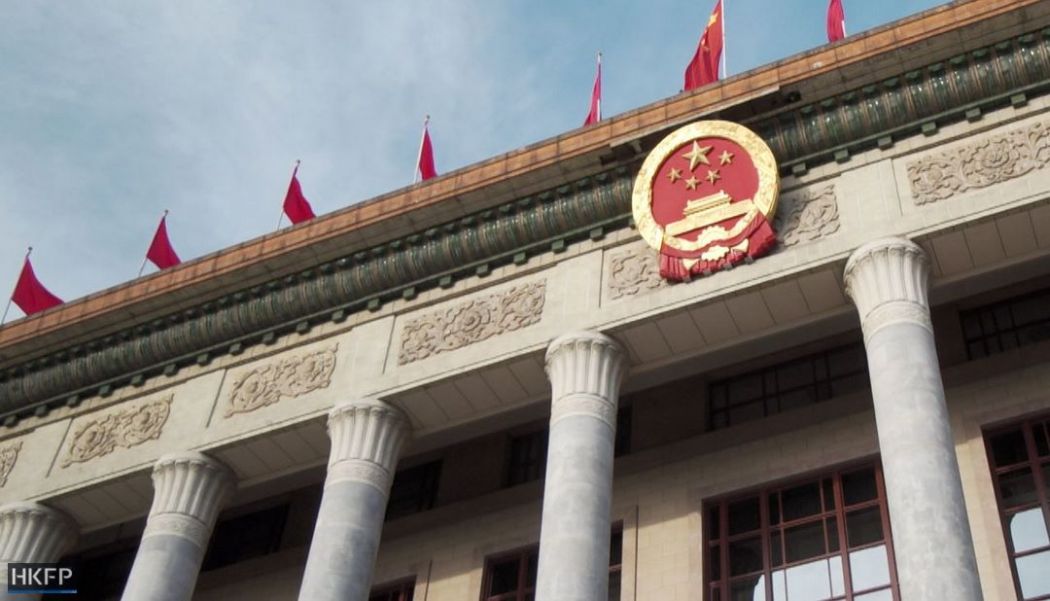
Evergrande’s implosion did not occur in isolation; it triggered a cascade of defaults and liquidity crises across China’s property sector. Other major developers, including Country Garden and Vanke, also faced significant financial distress, leading to a wave of unfinished construction projects and profound uncertainty for millions of homebuyers who had paid for apartments yet to be built. New home prices in China have been contracting for three consecutive years, reflecting a deep-seated crisis of confidence among consumers and investors.
The property downturn has had far-reaching consequences for the world’s second-largest economy. It has impacted local government finances, as land sales to developers were a significant source of revenue. It has also strained the banking sector, which is heavily exposed to real estate loans. The crisis has weighed on consumer spending, as household wealth is predominantly tied up in property, and has contributed to slower overall economic growth. Observers assessing the health of China’s economy have been closely following Evergrande’s saga as a bellwether for the broader challenges facing the nation.
Official Rationale and Deterrence
The severity of Xu Jiayin’s sentence and the massive fine imposed on Evergrande send an unequivocal message from Beijing. The court’s emphasis on the "serious social harm" and disruption to the "socialist market economic order" highlights the government’s concern for both financial stability and public trust. This verdict serves multiple purposes:

- Deterrence: It acts as a stark warning to other corporate leaders against engaging in similar fraudulent practices or reckless, debt-fueled expansion.
- Accountability: It demonstrates the state’s resolve to hold individuals, even powerful billionaires, accountable for financial misconduct that harms the public interest.
- Restoration of Confidence: By punishing those deemed responsible for the crisis, Beijing aims to restore confidence in its regulatory oversight and the integrity of its financial system, albeit amidst ongoing market turbulence.
- Social Stability: The government is acutely aware of the social unrest that could arise from unfinished homes and defrauded investors, making the prosecution of individuals like Xu Jiayin a crucial component of maintaining social order.
Implications for China’s Economy and Governance
The sentencing of Xu Jiayin marks a symbolic end to an era of unbridled growth and aggressive expansion in China’s property sector. It signals a fundamental shift towards a more regulated, state-controlled economic environment where financial stability and social welfare take precedence over unchecked corporate ambition.
The immediate implications for China’s property market remain challenging. While the government has introduced various measures to support the sector, including a "white list" financing scheme for viable projects and direct state intervention in some cases, the path to recovery is arduous. Investor confidence, both domestic and international, has been significantly eroded by the Evergrande crisis and the broader property downturn. The opacity surrounding corporate governance and the perceived unpredictability of regulatory actions continue to be concerns for foreign investors.
From a governance perspective, the case reinforces the Communist Party’s ultimate authority over economic actors. The "before-and-after" imagery of Xu Jiayin’s public appearances reflects a broader narrative of powerful figures being brought to heel by the state when their actions are deemed detrimental to national interests or financial security. This approach, characterized by strict enforcement and severe penalties, underscores Beijing’s commitment to steering its economy towards what it defines as "high-quality development," even if it means sacrificing once-lauded corporate titans.

The saga of Evergrande and the downfall of Xu Jiayin will undoubtedly be studied for years to come as a critical case study in China’s economic development, its regulatory evolution, and the inherent risks of a debt-driven growth model. While the court has delivered its judgment, the economic and social repercussions of Evergrande’s collapse will continue to reverberate across China for the foreseeable future, making the task of restructuring and recovery one of the nation’s most pressing challenges.

 Asro
Asro
 Evan Lee Salim