Suro Senen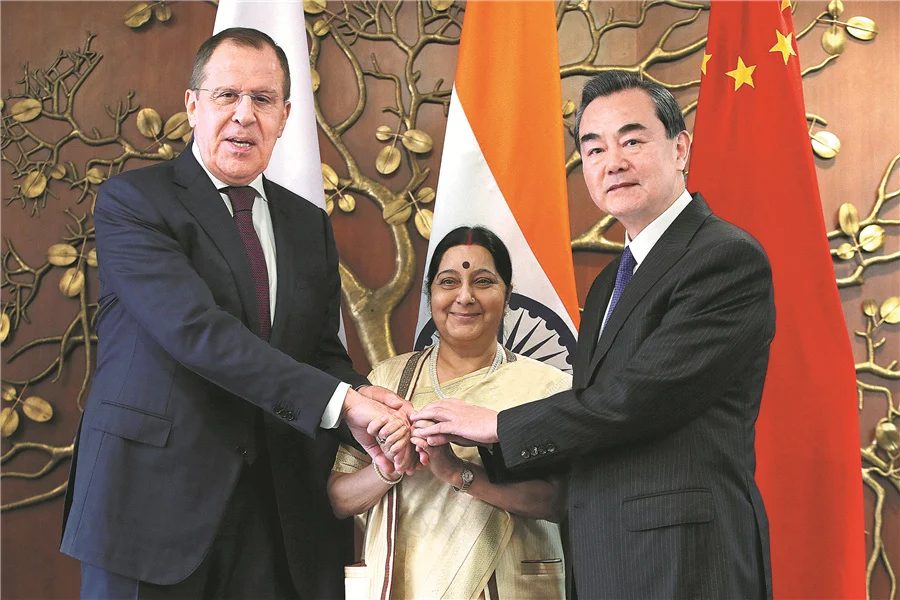
New Delhi, India – The foreign ministers of China, Russia, and India convened in New Delhi on Monday, December 11, 2017, for their 15th trilateral meeting. The high-level gathering, attended by Chinese Foreign Minister Wang Yi, Russian Foreign Minister Sergey Lavrov, and Indian Minister of External Affairs Sushma Swaraj, focused on reinforcing regional security and economic frameworks, particularly within the Asia-Pacific. A joint statement issued after the one-day summit underscored a shared commitment to an "open, inclusive and based on multilateralism and universally recognized principles of international law" regional order, deeming it essential for sustained peace and stability.
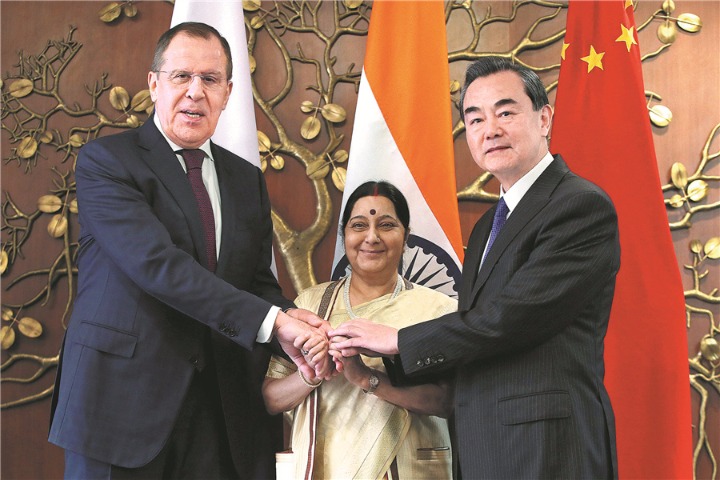
The ministers engaged in extensive discussions covering a broad spectrum of global and regional issues of mutual interest. A significant outcome of the meeting was the reaffirmation of the importance of collaborative efforts within multilateral platforms like the East Asia Summit. This strategic alignment aims to bolster regional peace, stability, and foster economic development and prosperity across the wider Asian landscape.
Background and Context of the Trilateral Meeting
The China-Russia-India (CRI) trilateral dialogue has evolved into a crucial platform for strategic consultation and practical cooperation among the three major Eurasian powers. Established as a mechanism to foster closer ties and coordinate on issues of shared concern, the format has consistently prioritized multilateralism and adherence to international law. The 2017 meeting occurred at a time of significant geopolitical flux, with evolving global power dynamics and a renewed emphasis on regional blocs.

The CRI dialogue is often viewed in the context of the broader geopolitical landscape of Asia and its implications for global governance. The three nations, each with substantial economic and political influence, share a common interest in maintaining a stable and multipolar world order. This meeting, the fifteenth in the series, built upon decades of diplomatic engagement and aimed to solidify their collective approach to emerging challenges and opportunities. The backdrop of ongoing discussions on global trade, security threats, and the future of international institutions lent particular weight to the deliberations in New Delhi.
Key Outcomes and Agreements
The joint statement articulated a clear consensus on the imperative of maintaining a regional security and economic architecture that champions inclusivity and multilateralism. This vision explicitly rejects any form of regional exclusivity and firmly grounds the approach in universally accepted principles of international law. The ministers underscored that such a framework is the bedrock for achieving lasting peace and stability within the Asia-Pacific.

A significant portion of the discussions was dedicated to enhancing cooperation within the frameworks of BRICS and the Shanghai Cooperation Organization (SCO). The foreign ministers reiterated their strong commitment to the BRICS partnership, vowing to "work together to implement all outcomes of BRICS summits to strengthen cooperation in economic, political, security and people-to-people fields, so as to usher in the second golden decade of BRICS cooperation." This pledge directly acknowledged China’s successful hosting of the Ninth BRICS Summit in Xiamen in September 2017, highlighting a shared ambition to deepen integration and collaboration among the member states.
Similarly, the importance of joint work within the Shanghai Cooperation Organization was emphasized. The ministers recognized the SCO as a pivotal instrument for advancing multilateral engagement across political, security, economic, and people-to-people spheres within the region. This focus on the SCO reflects its growing significance as a platform for regional security cooperation and economic integration, particularly in Central Asia and beyond.

Chronology of Engagement
The foreign ministers’ meeting in New Delhi was the culmination of a series of engagements and preparatory discussions. While the specific timeline leading up to the December 2017 meeting is not detailed in the provided excerpt, such high-level dialogues typically involve extensive consultations at various diplomatic levels.
- Prior Engagements: The 15th trilateral meeting followed fourteen previous editions, each building upon the agenda and outcomes of the preceding ones. These meetings often occur annually, with locations rotating among the three member states.
- Preparatory Consultations: Leading up to the New Delhi summit, officials from China, Russia, and India would have engaged in numerous bilateral and working-level meetings to align positions and prepare draft statements.
- December 11, 2017: The 15th trilateral meeting of the foreign ministers took place in New Delhi. The ministers engaged in discussions on global and regional issues, BRICS, and the SCO.
- Joint Statement Release: Following the bilateral discussions, a joint statement was issued, outlining the key agreements and shared perspectives of the three nations.
Supporting Data and Analytical Context
The 2017 meeting occurred during a period of substantial economic and demographic weight for the three participating nations. As members of BRICS, China, Russia, and India collectively represent a significant portion of the global population and economy. In 2017, BRICS nations accounted for approximately 40% of the world’s population and contributed over 20% to global GDP. This economic clout underpins their influence in shaping regional and global economic architectures.

The emphasis on multilateralism and adherence to international law is particularly relevant given the evolving global governance landscape. In the years leading up to 2017, there were observable trends of increasing assertiveness by some powers and questions raised about the efficacy of existing international institutions. The CRI’s commitment to a rules-based international order, therefore, signifies a collective endorsement of established norms and a desire to strengthen, rather than undermine, existing global frameworks.
The joint statement explicitly stated that the trilateral cooperation "is not directed against any other country." This declaration is crucial in addressing potential perceptions of exclusivity or bloc formation. Instead, the intention, as articulated, is to "strengthen the trilateral dialogue for consultation and coordination on regional and global issues of mutual interest in the spirit of mutual understanding and trust." This approach positions the CRI dialogue as a constructive force aimed at enhancing global and regional stability and promoting economic growth.

Broader Impact and Implications
The outcomes of the 15th China-Russia-India trilateral meeting have several significant implications for regional and global dynamics.
Strengthening of Regional Security and Economic Architecture:
The commitment to an "open, inclusive and based on multilateralism" regional architecture suggests a shared vision for a stable and predictable Asia-Pacific. This contrasts with approaches that might favor unilateralism or exclusionary blocs. By emphasizing universally recognized principles of international law, the three nations are signaling their adherence to a rules-based order, which can contribute to de-escalating potential tensions and fostering a more cooperative environment.

Enhanced BRICS and SCO Cooperation:
The renewed commitment to implementing BRICS outcomes and strengthening the SCO underscores the growing importance of these platforms in the foreign policy strategies of China, Russia, and India. For BRICS, this signifies a drive to move beyond economic cooperation towards deeper integration in political, security, and people-to-people exchanges, aiming to solidify its role as a significant global actor. The focus on the SCO reinforces its position as a key security and economic organization in Eurasia, contributing to regional stability and connectivity.
Geopolitical Signaling:
The CRI dialogue, by its very nature, carries geopolitical weight. The consistent affirmation of cooperation not being directed against any third country is a deliberate message aimed at reassuring other nations and promoting transparency. However, the strengthening of cooperation among these three major powers will inevitably be observed closely by other global and regional players, potentially influencing their own strategic calculations and alliances.

Promoting Multipolarity:
The emphasis on multilateralism and inclusivity aligns with the broader trend towards a multipolar world order. By working together within established international frameworks and through their own collaborative initiatives, China, Russia, and India are actively contributing to a more balanced global distribution of power and influence. This can lead to a more diverse range of perspectives in international decision-making and potentially foster greater global cooperation on shared challenges.
The joint statement concluded with a forward-looking perspective, stating, "Our cooperation is conducive to maintaining international and regional peace and stability, and promoting global economic growth and prosperity." This encapsulates the overarching objective of the CRI trilateral format – to act as a positive force in contributing to a more peaceful, stable, and prosperous global environment. The continued engagement and strengthened cooperation among these three nations are likely to play an increasingly important role in shaping the geopolitical and economic landscape of the 21st century.


 Nana Wu