Evan Lee Salim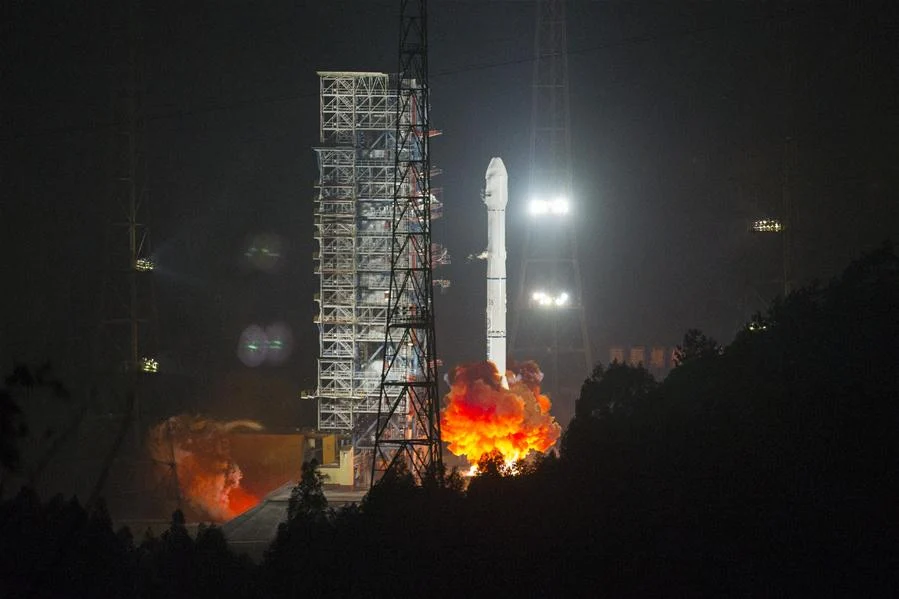
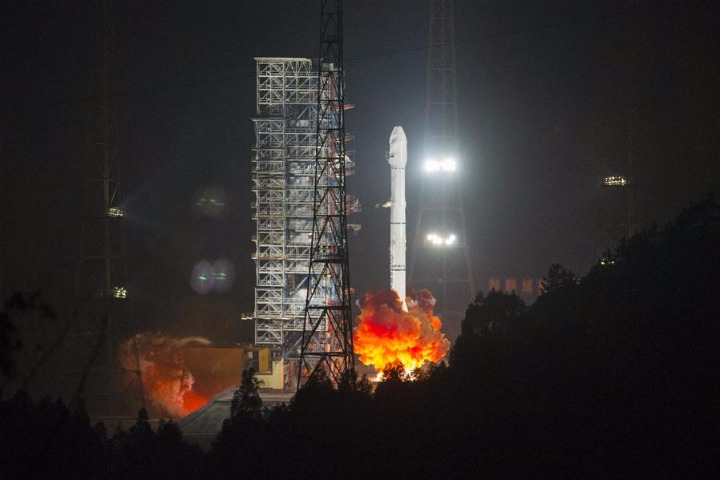
BEIJING – China successfully launched Algeria’s first communications satellite, Alcomsat-1, into its designated orbit from the Xichang Satellite Launch Center in the southwestern province of Sichuan early on Monday, December 11, 2017. The historic launch, a testament to the deepening China-Algeria comprehensive strategic partnership, marks a significant milestone in aerospace cooperation between China and Arab nations and is poised to catalyze Algeria’s economic development, enhance the quality of life for its citizens, and foster social progress.
The successful deployment of Alcomsat-1 was met with congratulatory messages exchanged between Chinese President Xi Jinping and his Algerian counterpart, Abdelaziz Bouteflika, underscoring the strategic importance of this achievement for both nations. President Xi highlighted the Alcomsat-1 project as a pivotal manifestation of the robust and expanding China-Algeria comprehensive strategic partnership. He emphasized that this endeavor sets a precedent for aerospace collaboration between China and the Arab world, signaling a new frontier in technological exchange and mutual development. The satellite’s capabilities are expected to play a crucial role in advancing Algeria’s national objectives, from improving telecommunications infrastructure and expanding internet access to facilitating remote education and healthcare services.
Looking ahead, President Xi noted that 2018 would commemorate the 60th anniversary of the establishment of diplomatic relations between China and Algeria. He expressed Beijing’s strong willingness to collaborate with Algeria to enhance exchanges and cooperation across a multitude of sectors. This commitment aims to propel the in-depth development of their comprehensive strategic partnership, ultimately bringing significant benefits to both countries and their respective populations. The shared vision extends beyond space cooperation, encompassing economic trade, cultural exchanges, and diplomatic alignment on global issues.
In his reciprocal message, President Bouteflika lauded the successful launch of Alcomsat-1 as a remarkable accomplishment in the burgeoning aerospace cooperation between Algeria and China. He articulated that this achievement eloquently reflects the profound and enduring traditional friendship that binds the two nations. The successful deployment is seen as a tangible outcome of years of dedicated effort, technological transfer, and collaborative spirit. Algeria’s willingness to continue working hand-in-hand with China to jointly promote cooperation in various fields was reiterated, with the shared aspiration to achieve even greater successes in the future. This sentiment points towards a sustained commitment to leveraging mutual strengths for collective advancement.
Background and Context: A Precedent-Setting Partnership
The launch of Alcomsat-1 is not merely a singular event but rather the culmination of a carefully orchestrated and long-term collaboration between China and Algeria. Algeria, a strategically important nation in North Africa, has long sought to enhance its technological capabilities and communication infrastructure to foster economic diversification and improve public services. China, on the other hand, has emerged as a global leader in space technology, offering advanced satellite solutions and launch services to international partners.
The genesis of this project can be traced back to earlier stages of bilateral discussions and agreements, where the shared ambition for technological advancement and mutual benefit became evident. China’s Belt and Road Initiative, which emphasizes infrastructure development and connectivity, likely played a role in fostering an environment conducive to such large-scale projects. For Algeria, the acquisition of its first communication satellite represents a significant leap forward in its digital transformation journey. It allows for greater autonomy in managing its telecommunications network, reducing reliance on external providers and enabling tailor-made solutions to address specific national needs.
Chronology of Cooperation: From Agreement to Orbit
The journey to Alcomsat-1’s successful launch can be understood through a series of key milestones:
- Early Discussions and Agreements: Following the establishment of comprehensive strategic partnership between China and Algeria, discussions regarding space cooperation likely intensified. These initial phases would have involved feasibility studies, needs assessments, and the laying of the groundwork for a collaborative project.
- Contract Signing and Design Phase: A formal agreement for the development and launch of Alcomsat-1 would have been signed, initiating the satellite’s design and manufacturing process. This phase involves rigorous engineering, component selection, and integration, often spanning several years.
- Manufacturing and Testing: The satellite itself would have been meticulously manufactured and subjected to extensive testing under simulated space conditions to ensure its resilience and functionality. This process is critical for guaranteeing the satellite’s performance and longevity in orbit.
- Training and Capacity Building: A crucial element of such partnerships involves the transfer of knowledge and skills. Algerian engineers and technicians would have undergone specialized training in China, learning about satellite operations, ground station management, and data processing. This ensures Algeria can effectively utilize and maintain the satellite post-launch.
- Transport to Launch Site: Once manufactured and tested, the Alcomsat-1 satellite would have been carefully transported to the Xichang Satellite Launch Center. This is a delicate operation requiring specialized logistics and handling procedures.
- Pre-Launch Preparations: At Xichang, the satellite undergoes final checks, integration with the launch vehicle, and fueling. The launch team meticulously plans and executes the countdown sequence, ensuring all systems are nominal.
- Launch Day (December 11, 2017): The culmination of years of effort, the Long March 3B rocket successfully lifts off, carrying Alcomsat-1 into space. The precise moment of orbit insertion is a critical juncture, signifying the mission’s primary objective.
- In-Orbit Testing and Commissioning: Following deployment, the satellite enters a phase of in-orbit testing. Ground control teams monitor its performance, calibrate its instruments, and ensure all systems are functioning as intended before it becomes fully operational.
Supporting Data and Technological Significance
Alcomsat-1, a geostationary communications satellite, is designed to provide a wide range of telecommunications services. While specific technical specifications were not detailed in the initial announcement, such satellites typically carry C-band, Ku-band, and Ka-band transponders, enabling services such as:
- Television Broadcasting: Enhancing the reach and quality of terrestrial and satellite television services across Algeria and potentially neighboring regions.
- Internet Connectivity: Expanding broadband internet access, particularly to remote and underserved areas, bridging the digital divide.
- Telephony: Supporting mobile and fixed-line telephone services, improving communication infrastructure.
- Data Transmission: Facilitating secure and efficient data transfer for government, business, and public sectors.
- Emergency Communications: Providing a reliable communication channel during natural disasters or other emergencies.
The launch vehicle used for Alcomsat-1 was likely a variant of China’s Long March series of rockets, known for their reliability and payload capacity. The Xichang Satellite Launch Center, one of China’s primary spaceports, is equipped to handle various types of satellite launches. The geostationary orbit chosen for Alcomsat-1 allows it to remain over a fixed point on Earth, providing continuous coverage to its intended service area.
Official Responses and Diplomatic Significance
The exchange of congratulatory messages between President Xi and President Bouteflika underscores the diplomatic importance of the Alcomsat-1 launch. It signifies a shared commitment to mutual development and technological advancement, reinforcing the "comprehensive strategic partnership" that characterizes their bilateral relations.
President Xi’s emphasis on Alcomsat-1 as a "precedent in aerospace cooperation between China and Arab countries" highlights China’s growing role as a provider of advanced space solutions in the Middle East and North Africa. This positions China as a key partner for regional development and technological empowerment. For Algeria, the successful launch is a source of national pride and a clear demonstration of its commitment to modernizing its infrastructure and enhancing its strategic capabilities.
President Bouteflika’s statement about the "deep traditional friendship" between the two nations speaks to the long-standing historical ties that underpin their current cooperation. This friendship, forged over decades, provides a strong foundation for continued collaboration across various sectors, including economic, political, and cultural domains. The shared desire to "jointly promote cooperation in various fields to achieve more results" indicates a forward-looking approach, with both nations eager to build upon this success.
Broader Impact and Implications
The successful deployment of Alcomsat-1 carries significant implications for Algeria, China, and the broader international landscape of space cooperation:
-
For Algeria:
- Enhanced Connectivity and Digital Inclusion: Alcomsat-1 will be instrumental in expanding internet access, particularly to rural and remote areas, fostering digital literacy and economic opportunities.
- Economic Diversification: Improved communication infrastructure can attract investment, support e-commerce, and facilitate the growth of various service-based industries.
- Improved Public Services: The satellite will enable advancements in telemedicine, distance education, and efficient disaster management, directly benefiting the lives of Algerian citizens.
- National Security and Sovereignty: Greater control over its telecommunications infrastructure enhances national security and reduces dependence on foreign entities.
-
For China:
- Strengthening Global Partnerships: The success of Alcomsat-1 reinforces China’s image as a reliable and capable partner in space technology, fostering further international collaboration.
- Commercial Space Sector Growth: This project contributes to the expansion of China’s commercial space industry, generating revenue and creating jobs.
- Technological Advancement: Continued participation in such projects drives innovation and keeps China at the forefront of space technology development.
- Soft Power Projection: Successful international space missions enhance China’s global standing and influence.
-
For International Space Cooperation:
- Model for Arab-Chinese Collaboration: The Alcomsat-1 project serves as a blueprint for future aerospace endeavors between China and other Arab nations, encouraging a new wave of technological partnerships.
- Democratization of Space Technology: By providing accessible and advanced satellite solutions, China is contributing to the broader democratization of space technology, enabling more nations to leverage its benefits.
- Peaceful Use of Space: The focus on communication services highlights the potential for space technology to be used for peaceful development and global connectivity.
The launch of Alcomsat-1 represents a significant stride in the China-Algeria relationship, not just as a technological achievement but as a symbol of enduring friendship and a shared vision for progress. It underscores the growing importance of space technology in addressing national development goals and fostering international cooperation in the 21st century. As both nations look towards the future, the success of this endeavor promises to pave the way for even more ambitious collaborations, further solidifying their comprehensive strategic partnership and contributing to a more connected and developed world.


 Nana Wu
 Suro Senen