Neng Nana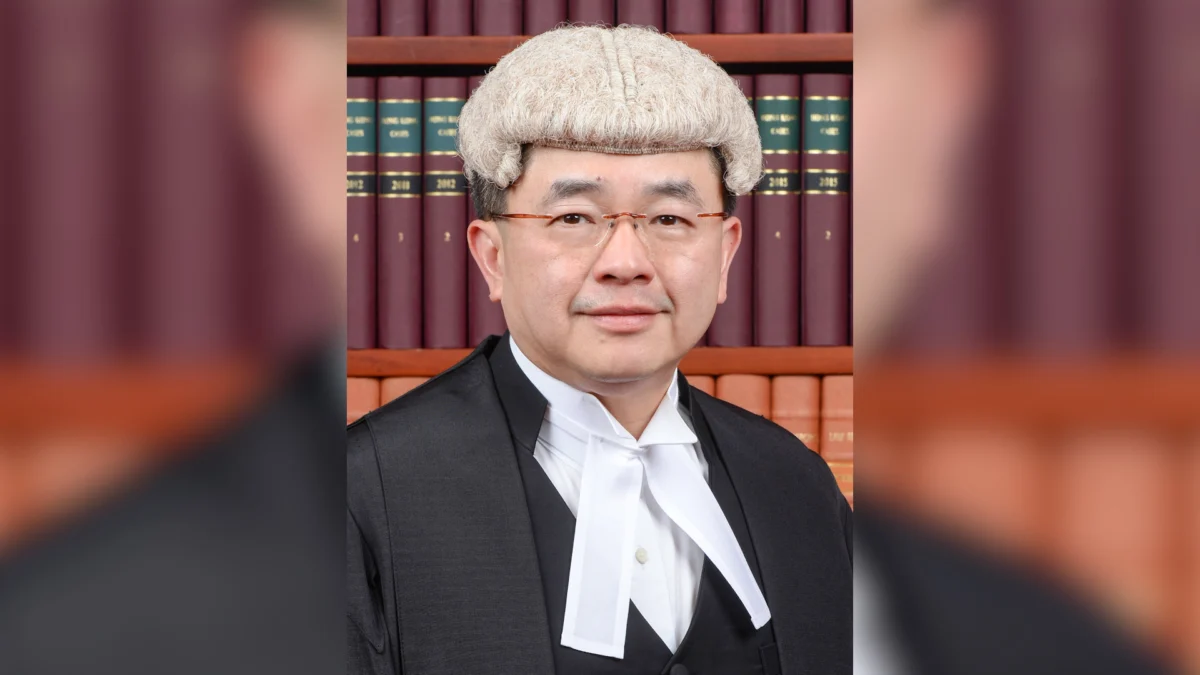
High Court Judge Wilson Chan is set to receive a "serious reprimand" from Chief Justice Andrew Cheung and Chief Judge of the High Court Jeremy Poon following a third documented instance of plagiarism, where he extensively copied a party’s submissions into his judgment. The Judiciary confirmed this disciplinary action in a statement to HKFP on Wednesday, underscoring the gravity of the repeated judicial misconduct.
The latest incident, which has led to the ordering of a retrial, saw Justice Chan accused of lifting a significant portion of the defendant’s opening and closing arguments into his 2024 judgment for a trial. Reports indicate that these copied paragraphs constituted a staggering 95% of the final judgment. This marks the third time in recent years that Justice Chan’s judgments have been found to contain plagiarized material, raising serious concerns about judicial integrity and the fairness of the legal process in Hong Kong.

A Pattern of Judicial Misconduct
This latest transgression is not an isolated event. In 2023, the Court of Appeal ordered retrials in two separate cases presided over by Justice Chan due to similar instances of judicial copying. Following those incidents, Chief Justice Cheung had issued a "serious reprimand" to Justice Chan. The Judiciary’s statement confirmed that the cumulative nature of these offenses has necessitated further disciplinary action.
"As Mr Justice Wilson Chan’s judgment in the present case involved again a substantial amount of judicial copying, the Chief Justice of the Court of Final Appeal and the Chief Judge of the High Court will issue serious reprimand to Mr Justice Wilson Chan again regarding the matter and request him to undertake targeted training," the Judiciary stated.

The Judiciary further emphasized the fundamental principles of judicial conduct. "Judges should exercise their judicial function independently and professionally and demonstrate fairness and justice," the statement read. "If a judge excessively copies a party’s submissions when writing the judgment in an individual case, it will inevitably give rise to doubts as to whether the judge has applied an independent mind in addressing the facts and issues to be determined."
Impact on Judicial Reputation
The recurring issue of plagiarism by a High Court judge has drawn sharp criticism and concern from legal professionals and public commentators. Ronny Tong, a government advisor and barrister, speaking on Commercial Radio, highlighted the detrimental effect of these repeated incidents on Hong Kong’s judicial reputation.

"We must demonstrate the extent to which we understand the arguments and whether we comprehend the statements made by both sides," Tong explained in Cantonese, referring to the process of citing arguments in legal judgments. "The repeated occurrence of individual cases without correction or improvement will indeed affect perceptions of the quality of Hong Kong’s judicial system."
Tong elaborated on the core responsibility of a judge, stating, "If they can’t even grasp the most basic requirements, it might be an attitude problem, not something that training can fix." He suggested that while the threshold for removing a judge from office under the Basic Law is "quite high," he respected the Chief Justice’s decisions and urged the Judiciary to consider public opinion.
Timeline of Incidents

- 2023: Two separate cases handled by Justice Wilson Chan result in retrials ordered by the Court of Appeal due to judicial copying. Chief Justice Andrew Cheung issues a "serious reprimand" to Justice Chan.
- 2024 (reported in early 2026): Justice Chan presides over a trial where his judgment is found to have copied approximately 95% of the defendant’s arguments. This leads to the ordering of a retrial.
- Early 2026 (following the 2024 incident): The Judiciary confirms that Justice Chan will receive a further "serious reprimand" from the Chief Justice and Chief Judge of the High Court and will be required to undertake targeted training.
The Essence of Judicial Independence and Integrity
The Judiciary’s mandate is to uphold the rule of law, ensuring that justice is administered fairly and impartially. A core tenet of this is the independent application of a judge’s mind to the facts and legal arguments presented in a case. When a judge adopts wholesale the submissions of one party, it creates a significant risk of bias and undermines public confidence in the judicial system.
The act of plagiarism in a judicial context is not merely an academic or professional ethical breach; it strikes at the heart of the judicial process. It suggests a failure to engage critically with the evidence and arguments, potentially leading to judgments that do not reflect a thorough and independent consideration of the case. This can have profound implications for litigants, who rely on judges to provide impartial and well-reasoned decisions.

Broader Implications for Hong Kong’s Judiciary
The repeated instances of judicial copying involving Justice Chan raise broader questions about the mechanisms for judicial oversight and accountability within Hong Kong’s legal system. While the Judiciary has confirmed disciplinary action, the fact that this is the third such incident suggests a need for a robust review of internal processes.
The legal community and the public will be closely watching how the Judiciary addresses this ongoing issue. The commitment to maintaining Hong Kong’s status as a leading international legal hub hinges on the perceived integrity and competence of its judiciary. Consistent lapses, even when met with reprimands and training, can erode this vital trust.

The Judiciary’s statement, emphasizing that judges must "exercise their judicial function independently and professionally," serves as a reminder of the high standards expected. The reference to "doubts as to whether the judge has applied an independent mind" directly addresses the core concern raised by these plagiarism cases.
While the immediate disciplinary measure is a "serious reprimand" and "targeted training," the long-term implications for Justice Chan’s career and the broader impact on public perception of judicial fairness remain significant. The Judiciary’s commitment to transparency and decisive action in upholding the integrity of its judges is crucial for maintaining confidence in the rule of law in Hong Kong. The expectation is that such repeated failures will be met with appropriate and effective measures to ensure the highest standards of judicial conduct are maintained, safeguarding the reputation and functioning of the Hong Kong legal system.


 Siti Muinah
 Lina Irawan