Asro
Asro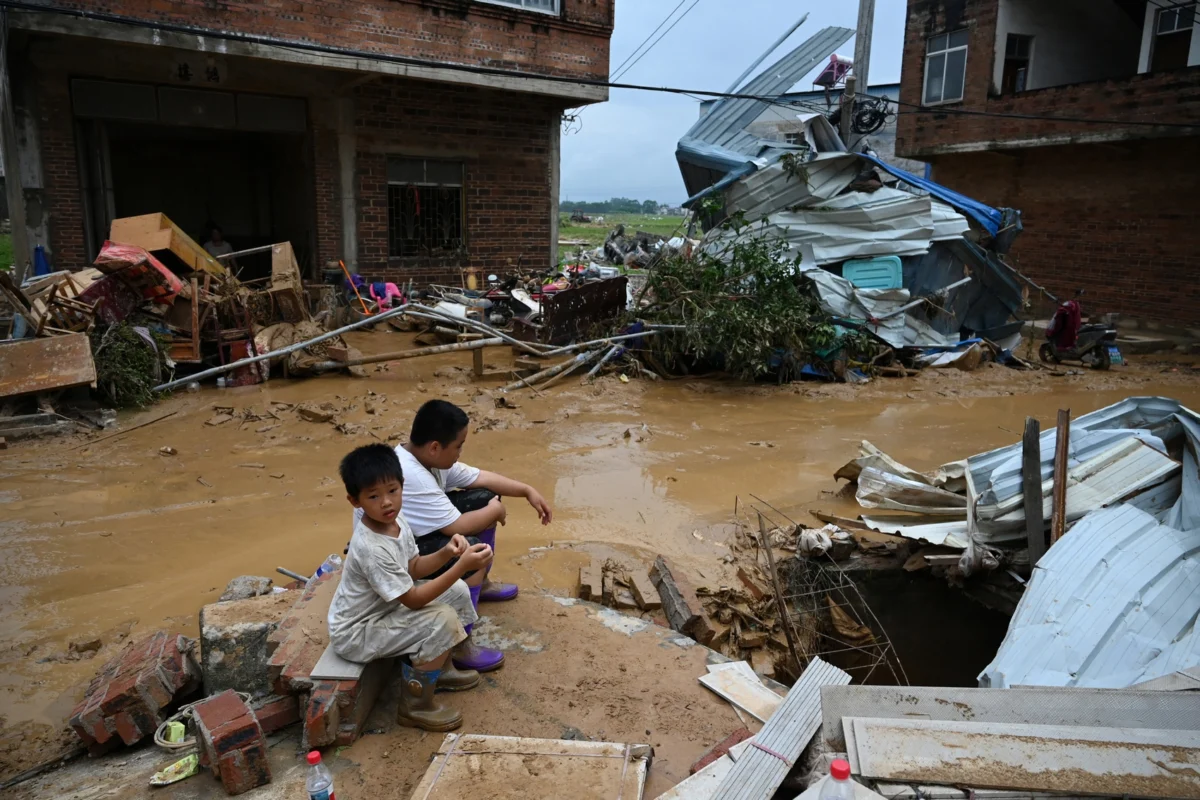
The death toll from devastating floods in southern China’s Guangxi region rose to 39 on Thursday, July 8, 2026, with nine people still missing, state media reported, as communities across the affected areas commenced arduous cleanup operations. This catastrophic event unfolds amidst a week of relentless extreme weather that has battered southern and central China, bringing torrential rain and severe flooding, with the added peril of a super typhoon now bearing down on the eastern provinces this weekend.
Escalating Disaster: Guangxi Floods Claim More Lives
The humanitarian crisis deepened as authorities confirmed the rising fatalities. A significant portion of the deaths, 26, were directly linked to a catastrophic dam breach at the Liulan Reservoir, situated in Hengzhou city. Seven individuals remain unaccounted for in the aftermath of this specific collapse, as reported by state news agency Xinhua. The sheer force of the released waters from the Liulan Reservoir caused widespread destruction, transforming once-peaceful villages into scenes of chaos and ruin.
Adding to the region’s woes, local residents revealed to AFP reporters on Thursday that the Liulan Reservoir was not an isolated incident. Another smaller reservoir located near the town of Gantang also reportedly collapsed, exacerbating the flood surge and contributing to the overall devastation. This succession of dam failures underscores the extreme pressure placed on regional infrastructure by the unprecedented rainfall.

Eyewitness Accounts and Local Impact
The scale of the disaster caught many residents by surprise, highlighting critical gaps in early warning systems. A local man, identified only by his surname Huang, recounted the initial disbelief, stating, "never in history had it ever been this bad." His poignant testimony revealed the profound sense of unpreparedness that gripped the community. "We never received any warning. If we had received a warning, our losses would have been much less," he lamented, describing how even items on the second floor of his home had been utterly destroyed by the surging waters.
Another resident, Bi Yunchun, echoed this sentiment, emphasizing the unprecedented nature of the flood levels. "In several hundred years, this is the first time the water has reached the second floor… Never before in history," he said, reflecting the shock and despair of a community grappling with a disaster of unimaginable proportions. The historical context provided by residents paints a grim picture of a region experiencing a climatic event far beyond living memory.
Massive Mobilization for Relief and Recovery
In the wake of the receding floodwaters, a massive cleanup and relief operation is underway. On Wednesday, AFP correspondents observed that while the floodwaters had subsided in Liulan village, streets and houses remained choked with thick, viscous mud, turning homes into waterlogged ruins. The laborious task of recovery has begun, with residents using excavators to scoop up damaged household items, a stark visual representation of their profound losses.

Access to the hardest-hit areas, such as Liulan, remained challenging on Thursday, with road blocks encountered by AFP reporters. However, a significant mobilization of resources was evident. Coaches filled with volunteers and members of the Chinese People’s Militia – a civilian reserve army force often deployed in national emergencies – were seen travelling towards the village, signaling a concerted effort to aid the stricken communities. The People’s Militia, a vital component of China’s disaster response framework, plays a crucial role in supplementing professional military and emergency services during large-scale crises, providing manpower for rescue, cleanup, and logistical support.
Rescue teams have also deployed advanced technology, utilizing large drones to deliver essential food and supplies to individuals trapped by the floods, particularly those cut off on the other side of the still-rushing river. State broadcaster CCTV reported on Thursday that 600 residents from the village of Dutian, situated next to one of the burst reservoirs, were safely sheltering but remained isolated from the broader relief efforts. Their homes, directly in the path of the flood surge, were severely impacted, with some reduced to their foundations. Fortunately, many residents in Dutian were able to evacuate in time following an alert issued by local authorities, underscoring the critical role of timely warnings, even if inconsistently applied across all affected areas.
Ecological Havoc: Animals Displaced and Escaped
The widespread flooding in Guangxi has not only claimed human lives and destroyed property but has also unleashed ecological chaos. The region’s Guigang Zoo issued a public appeal for assistance on Wednesday to locate at least 100 animals that had escaped after their enclosures were damaged by the floodwaters. Among the diverse collection of missing creatures were alpacas, miniature pigs, and even zebras, prompting concerns about both animal welfare and potential risks to local communities. The sight of exotic animals roaming free adds an unusual and challenging dimension to the ongoing disaster relief efforts.
Further compounding the environmental disruption, the head of a local village committee in Hengzhou city informed Chinese media earlier in the week that an estimated 800 to 900 snakes escaped after a breeding farm was completely washed away. The potential presence of a large number of escaped snakes, some of which could be venomous, poses an additional threat to residents and rescue workers navigating the flood-affected terrain, adding another layer of complexity to the already arduous recovery process.

The Looming Threat: Super Typhoon Bavi Approaches
As residents in Guangxi began the monumental task of cleaning up the devastating flood damage, a new and formidable threat emerged on the horizon: Super Typhoon Bavi. This powerful storm is projected to bring further misery and extreme weather to China’s eastern provinces, casting a long shadow over the nation’s disaster response capabilities.
Super Typhoon Bavi is expected to make landfall or bypass Taiwan on Saturday, July 10, 2026, before striking the coast of China’s Fujian and Zhejiang provinces that same evening, state media reported. The National Meteorological Center indicated that after landfall, Bavi will continue its northwest trajectory, gradually weakening as it moves inland. However, its immense scale and power remain a significant concern. With a staggering diameter exceeding 1,000 kilometers (620 miles), the typhoon is forecast to unleash "heavy to torrential rain over the next three days" across a vast swathe of north and northeastern China, extending the reach of the current extreme weather crisis.
The approaching typhoon highlights China’s vulnerability to recurring extreme weather events. The country’s extensive coastline and diverse geography make it susceptible to both tropical cyclones (typhoons) and monsoon-induced floods, particularly during the summer months.
Background and Broader Context of China’s Flood Season

China experiences an annual flood season, typically from June to September, driven by the East Asian monsoon. The southern regions, including Guangxi, are particularly susceptible due to their subtropical climate, mountainous terrain, and numerous river systems, including tributaries of the Pearl River. This year, however, the intensity and duration of rainfall have been exceptional, leading to what many residents describe as historically unprecedented water levels.
In recent decades, China has invested heavily in flood control infrastructure, including an extensive network of dams, reservoirs, and embankments. While these projects have mitigated many flood risks, extreme weather events, often linked to global climate change, are increasingly testing the limits of this infrastructure. The dam breaches in Guangxi raise critical questions about the resilience of these systems in the face of escalating climatic pressures and the adequacy of early warning mechanisms for local populations. The government has a robust disaster response system, involving the military, paramilitary forces like the People’s Militia, and civilian volunteers, but the sheer scale of multiple simultaneous disasters can strain even the most prepared nations.
Climate Change Implications and Future Challenges
The devastating floods in Guangxi and the impending Super Typhoon Bavi are not isolated incidents but fit into a broader pattern of increasingly frequent and intense extreme weather events observed globally. Scientists widely attribute these changes to climate change, which leads to more erratic weather patterns, including heavier rainfall in some regions and prolonged droughts in others. For China, a country with a vast population concentrated in river basins and coastal areas, the implications are profound.
The economic cost of such disasters is immense, encompassing destroyed homes, agricultural losses, damage to infrastructure (roads, bridges, communication networks), and disruptions to supply chains. The long-term recovery efforts will require substantial financial investment and concerted planning to rebuild communities and enhance resilience against future events. Beyond the immediate fatalities and physical damage, the psychological toll on survivors, who have lost homes, livelihoods, and, in some cases, loved ones, is immeasurable.

The repeated incidents of extreme weather underscore the urgent need for China, and indeed the global community, to not only strengthen disaster preparedness and response mechanisms but also to accelerate efforts to mitigate climate change. This includes improving early warning systems, particularly for remote and vulnerable communities, ensuring the integrity of critical infrastructure like dams, and developing sustainable urban planning strategies that account for increased flood risks. The tragedy in Guangxi serves as a stark reminder of humanity’s ongoing vulnerability to the forces of nature, amplified by a changing climate.
Looking Ahead: Recovery and Resilience
As the immediate crisis continues in Guangxi and the nation braces for Super Typhoon Bavi, the focus will inevitably shift towards long-term recovery and building greater resilience. This involves not only physical reconstruction but also addressing the socio-economic impacts on affected communities. Lessons learned from the dam breaches and the perceived lack of warnings will be crucial in refining China’s disaster management strategies. The collective effort of security personnel, volunteers, and local residents in the cleanup operations demonstrates the enduring spirit of communities in the face of adversity. However, the path to full recovery will be long and arduous, requiring sustained support and strategic planning to ensure that such catastrophic losses can be averted or minimized in the future.


 Sagoh
Sagoh