Jia Lissa
China has significantly strengthened its energy security with the commencement of natural gas imports from the colossal Yamal liquefied natural gas (LNG) project in the resource-rich Arctic region of Russia, a critical development arriving as northern China grapples with a severe shortage of the crucial fuel. The inaugural shipment, loaded over the past weekend, marks a pivotal moment in Beijing’s strategy to diversify its energy supply and meet burgeoning domestic demand driven by an aggressive push for cleaner energy sources. This strategic partnership not only promises a steady, long-term supply of natural gas but also deepens Sino-Russian energy cooperation, with broader implications for global energy markets and Arctic shipping routes.
A Strategic Imperative: Securing China’s Energy Future
The move to integrate Yamal LNG into China’s energy matrix is a direct response to the nation’s escalating energy needs and its ambitious environmental agenda. China, the world’s largest energy consumer, has been rapidly transitioning away from coal to cleaner-burning natural gas, particularly under its "Blue Sky" campaign aimed at reducing air pollution. This policy shift, while environmentally beneficial, has exerted immense pressure on gas supplies, leading to acute shortages, especially during peak winter demand in regions like northern China. The executive from China National Petroleum Corp (CNPC) underscored the urgency, noting that increasing supplies from Yamal are indispensable for alleviating these domestic pressures.
Jiang Qi, General Manager of CNPC Russia, a subsidiary of China’s largest oil and gas producer, emphasized the profound role of Yamal imports in substantially boosting China’s oil and gas reserves. "China and Russia have natural complementarities in energy cooperation," Jiang stated, highlighting the long-term strategic alignment between the two nations. This partnership is not merely transactional but is built upon a comprehensive framework of energy collaboration, including established infrastructure like the Sino-Russia crude oil transmission pipeline and the natural gas pipeline currently under construction, collectively known as the Power of Siberia pipeline. The Yamal project adds a crucial maritime dimension to this energy corridor, enhancing resilience and flexibility in supply.
When fully operational, China is set to receive more than 4 million metric tons of LNG annually from Russia’s Yamal project. To put this into perspective, China’s total natural gas consumption in recent years has exceeded 300 billion cubic meters (approximately 220 million metric tons), making Yamal’s contribution a significant, albeit supplementary, component that enhances supply diversity and strategic reserve capacity. The guaranteed volume from Yamal helps to buffer against price volatility and geopolitical disruptions in other supply regions.
Chronology of a Megaproject: From Investment to First Cargo
The Yamal LNG project, a monumental undertaking valued at approximately $27 billion, represents a triumph of engineering and international cooperation in one of the planet’s most challenging environments. Its journey to becoming an operational energy giant involved years of meticulous planning, substantial investment, and the overcoming of formidable logistical and climatic hurdles.
- September 2013: A critical milestone was reached when CNPC acquired a 20 percent stake in OAO Novatek’s Yamal project for $5.4 billion. This investment cemented China’s direct involvement in the project and underscored its strategic commitment to securing Arctic energy resources. Novatek, Russia’s largest independent natural gas producer, holds the majority share, with France’s Total and the China-backed Silk Road Fund also holding significant stakes.
- 2014-2017: The subsequent years saw intensive construction efforts in the remote Yamal Peninsula, located above the Arctic Circle. The project involved building three liquefaction trains, a port, an airport, and extensive infrastructure to support operations in extreme sub-zero temperatures, where winter temperatures can plummet to -50 degrees Celsius. Specialized module construction was critical, with components fabricated in warmer climates and transported to the Arctic for assembly.
- December 2017: The project achieved its first major operational success with the startup of the first liquefaction train. This heralded the beginning of commercial production and the ability to convert natural gas into super-chilled LNG.
- Weekend of First Cargo: As reported, the Yamal liquefied natural gas project loaded its first export cargo of 173,000 cubic meters of the super-chilled fuel from its Arctic terminal. This milestone marked the official commencement of exports, with the initial shipments directed towards European and Asian markets. The cargo was loaded onto an Arc7 ice-class LNG tanker, specifically designed to navigate the ice-bound waters of the Arctic.
The progressive rollout of Yamal’s production capacity, with subsequent trains coming online, will steadily increase the volume of LNG available for export, further enhancing China’s access to this vital energy source.
Supporting Data and Economic Impact
The financial scale of China’s involvement in the Yamal project extends beyond its initial equity investment. CNPC highlighted that Chinese enterprises have played a substantial role in the project’s development and logistics, showcasing their growing industrial capabilities on the global stage.
- Construction Expertise: Chinese enterprises were responsible for an impressive 85 percent of the project’s module construction. This involvement, totaling $7.8 billion in contract value for construction, provided invaluable experience and technological advancement in handling large-scale, complex projects in extreme environments.
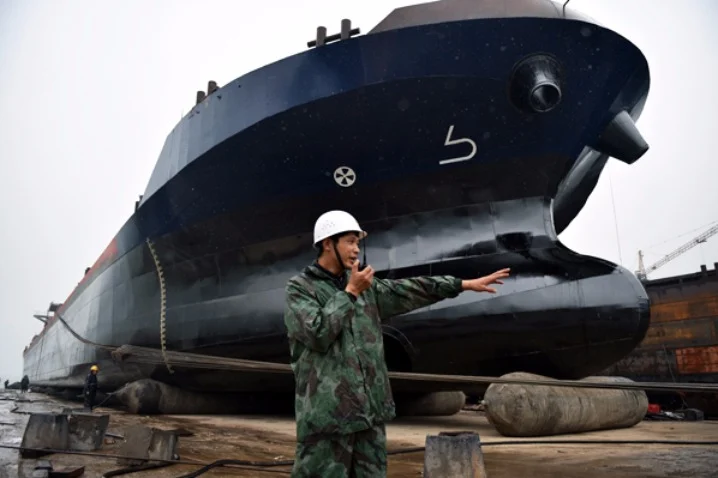
- Shipping and Logistics: The maritime component of the project is equally significant. Chinese shipyards have built seven specialized Arc7 ice-class transport ships, crucial for navigating the challenging Arctic waters. Furthermore, Chinese entities are in charge of the operation of 14 out of the 15 state-of-the-art LNG carriers that form the backbone of Yamal’s export fleet. The shipping contracts alone amounted to a substantial $8.5 billion, underscoring the deep integration of Chinese industrial and logistical capabilities into this mega-project. This participation has allowed Chinese firms to accumulate critical technology and experience in oil and gas exploration and transportation within the Arctic region, positioning them for future ventures.
This direct involvement translates into significant economic benefits for China, including job creation, revenue generation for its industries, and the acquisition of advanced technological know-how that can be leveraged for future domestic and international projects.
Official Responses and Broader Implications
The statements from CNPC officials underscore the multifaceted benefits of the Yamal project for China. Jiang Qi’s remarks about the project promoting the construction of the Northeast Passage are particularly insightful. The Northeast Passage, also known as the Northern Sea Route (NSR), offers a sea route directly linking China and Europe, significantly shorter than the traditional Suez Canal route.
- The Northern Sea Route (NSR): The development of the Yamal project acts as a catalyst for the commercial viability and expansion of the NSR. While 54 freight vessels have already traveled through this passage, the expanded operations of Yamal, particularly with its dedicated fleet of ice-class LNG carriers, will dramatically increase traffic. This will significantly lower freight costs and transit times between China and Europe, offering a new strategic trade artery. The reduction in travel distance, potentially by up to 10-15 days compared to the Suez route, translates into substantial fuel savings and faster delivery times, making it an attractive alternative for global shipping.
- China’s "Polar Silk Road": The Yamal project aligns seamlessly with China’s broader "Polar Silk Road" initiative, which envisions developing Arctic shipping routes and infrastructure as an extension of its Belt and Road Initiative. This strategy seeks to enhance China’s global trade networks, secure access to resources, and establish its presence in the strategically vital Arctic region.
- Russia’s "Pivot to Asia": For Russia, the Yamal project is a cornerstone of its "pivot to Asia" strategy, aimed at diversifying its energy export markets away from its traditional European customers. By securing long-term contracts with Asian giants like China, Russia reduces its reliance on a single market, enhancing its energy export resilience and geopolitical leverage.
- Global LNG Market Dynamics: Yamal’s entry into the global LNG market adds significant supply, potentially influencing pricing and trade flows. Its strategic location and ice-class fleet allow it to serve both Atlantic and Pacific markets efficiently, adapting to demand shifts.
Addressing China’s Domestic Energy Challenges
The context of China’s domestic gas shortage is critical to understanding the urgency and strategic importance of the Yamal imports. The nation’s drive for cleaner energy has led to an unprecedented surge in natural gas demand. The government’s stringent policies, including mandatory conversions from coal to gas heating in millions of homes and industrial facilities, have outpaced the existing infrastructure and supply capabilities. This has resulted in localized supply disruptions, rationing, and increased prices during peak winter demand, particularly in northern industrial and residential hubs.
Qu Guangxue, a CNPC spokesman, confirmed the company’s proactive measures to mitigate these shortages. He stated that CNPC plans to continue negotiating with Central Asian nations for additional stocks to ensure adequate domestic natural gas supplies. This multi-pronged approach, combining pipeline imports from Central Asia and Russia with increased LNG deliveries from diversified sources like Yamal, is essential for China to balance its environmental goals with its fundamental energy security requirements. The challenges of expanding pipeline infrastructure and securing long-term LNG contracts underscore the complexity of China’s energy transition.
In conclusion, the first shipment of Yamal LNG to China is far more than a routine commercial transaction. It represents a significant advancement in China’s energy security strategy, a testament to the deepening strategic partnership between China and Russia, and a critical step in the development of the Arctic as a viable energy and trade corridor. As China continues its ambitious energy transition, projects like Yamal will play an increasingly vital role in powering its growth while addressing the environmental imperatives of the 21st century. The complex interplay of economics, geopolitics, and environmental policy in the Arctic will continue to shape global energy landscapes for decades to come.

 Evan Lee Salim
 Suro Senen