 Pevita Pearce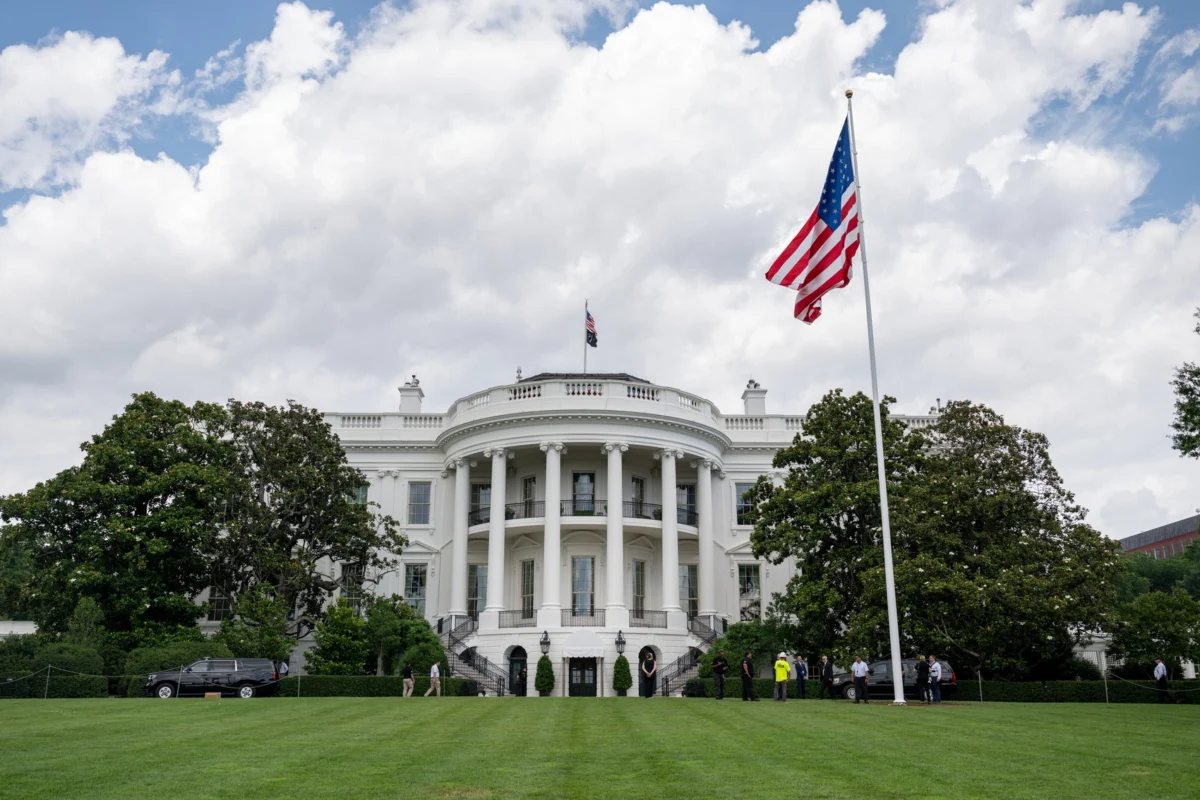
Beijing has formally accused American artificial intelligence companies of leveraging Chinese examples to train their sophisticated models, a counter-allegation that emerged on Monday, mere days after Washington threatened sanctions against Chinese firms for allegedly pilfering American technology. This tit-for-tat exchange marks a significant escalation in the already tense technological rivalry between the world’s two largest economies, pushing the critical domain of artificial intelligence to the forefront of geopolitical friction.
The Heart of the Dispute: AI Model Distillation
At the core of Beijing’s accusation lies the practice of "distillation," a technical process fundamental to modern AI development. "It is understood that many American artificial intelligence enterprises have distilled Chinese models during their research, development and training processes," stated the Chinese commerce ministry in a rare direct public statement on the matter.

Distillation, in the context of AI, refers to a technique where a smaller, more efficient "student" model is trained to mimic the output and behavior of a larger, more complex "teacher" model. This process is highly valuable for several reasons: it can reduce computational costs, improve inference speed, and enable the deployment of powerful AI on resource-constrained devices. It’s a widely adopted method across the AI industry, used to create more practical and deployable versions of cutting-edge, often massive, foundational models.
However, the legitimacy of distillation becomes highly contentious when it involves proprietary or ethically questionable source models. US officials contend that Chinese firms have deployed this method "at scale" to illicitly replicate proprietary American systems, effectively bypassing the significant investment in research, development, and data curation required to build advanced AI from scratch. Beijing’s counter-claim suggests a similar, albeit inverse, dynamic is at play, implying that US companies may be benefiting from the intellectual output of Chinese AI innovators without due credit or compensation.
China’s Vehement Rebuttal and "AI Hegemonism" Claim
The Chinese ministry did not mince words in its response to the earlier US allegations, asserting that they "lack factual basis and legal grounds, adopt double standards in practice, and constitute typical acts of artificial intelligence hegemonism." This strong diplomatic language underscores China’s perception of the US actions as an attempt to maintain technological superiority and stifle its advancements in critical sectors. The ministry concluded its statement with a firm warning: "China will take all necessary measures to firmly safeguard its legitimate and lawful rights and interests," signaling a readiness to retaliate with its own protective measures, potentially including trade restrictions or counter-sanctions.

This phrase, "AI hegemonism," echoes previous Chinese criticisms of US foreign policy and technological dominance, framing the current dispute not just as an economic or intellectual property issue, but as a broader struggle for global influence and technological sovereignty.
Washington’s Prior Accusations and Sanctions Threat
The latest Chinese statement directly responds to accusations leveled by a senior White House official just last week. The official explicitly accused Chinese AI startup Moonshot AI of "covertly copying" Anthropic’s most advanced model to develop its own flagship product, Kimi K3. Anthropic, a US-based AI safety and research company, is a leading developer of large language models (LLMs), considered a direct competitor to OpenAI’s ChatGPT. The alleged replication of Anthropic’s sophisticated model by Moonshot AI, particularly the rapid development and impressive capabilities of Kimi K3 upon its release, reportedly "stunned the US tech industry," sparking renewed discussions about the intensity and nature of the AI rivalry with China.
Adding weight to these accusations, US Treasury Secretary Scott Bessent last week issued a stern warning, threatening sanctions against China. These threats are reportedly part of a broader strategy, with reports indicating that the US government is also "weighing a ban or curbs on foreign-made open source models that are often built through distillation." This potential policy shift is significant, as open-source AI models are often seen as a collaborative bedrock of global AI research and development. Restricting their use or scrutinizing their origins could fundamentally alter the landscape of international AI collaboration, potentially leading to a more fragmented and nationalized AI ecosystem.

The Broader Context: A Deepening US-China Tech War
This escalating rhetoric over AI intellectual property is not an isolated incident but rather the latest front in a protracted and intensifying technological competition between the United States and China. For years, Washington has accused Beijing of systematic intellectual property theft across various sectors, ranging from advanced manufacturing to cybersecurity. This has led to a series of US policy actions, including:
- Sanctions against Huawei: Starting in 2019, the US imposed stringent export controls on Huawei, effectively cutting off its access to critical American technology, citing national security concerns. This move severely impacted Huawei’s smartphone and telecommunications equipment businesses.
- Semiconductor Restrictions: More recently, the US has implemented sweeping restrictions on the export of advanced semiconductor manufacturing equipment and chips to China, aiming to hobble China’s ability to develop cutting-edge AI and military technologies. These measures have forced Chinese companies to invest heavily in domestic chip production, though they still lag significantly behind global leaders.
- Investment Screening: Both countries have tightened scrutiny over foreign investments in sensitive technology sectors, seeking to prevent the transfer of critical technologies or data.
The current AI dispute demonstrates that the battle for technological supremacy has now squarely landed on artificial intelligence, widely regarded as the most transformative technology of the 21st century. Dominance in AI promises significant economic advantages, military superiority, and geopolitical leverage, making the stakes incredibly high for both nations.
The Global AI Race and the Challenge of Intellectual Property

The race to develop advanced AI models, particularly large language models and generative AI, is a global phenomenon characterized by massive investment, intense competition, and rapid innovation. Companies and governments worldwide are pouring billions into AI research, recognizing its potential to reshape industries, economies, and societies. The development of foundational models requires immense computational power, vast datasets, and highly specialized talent, making the initial investment colossal.
Protecting intellectual property in the realm of AI presents unique challenges. Unlike traditional software, where code can be directly copyrighted or patented, AI models are complex systems involving algorithms, architectures, training methodologies, and massive datasets. Proving that one model has "copied" another, especially through indirect means like distillation, can be technically intricate and legally ambiguous. While the output of a distilled model might resemble that of its teacher, the underlying code and parameters may be different, making direct infringement difficult to prove under existing IP laws. This ambiguity often leads to accusations and counter-accusations rather than clear legal resolutions.
Furthermore, the concept of "open-source AI" complicates matters. Many foundational AI research projects and models are released as open source, fostering collaboration and accelerating innovation. However, the line between legitimate learning from open-source resources and illicit "copying" becomes blurry, especially when commercial interests are involved and advanced proprietary techniques are allegedly reverse-engineered through clever means.
Economic and Geopolitical Implications

The escalating AI intellectual property dispute carries significant economic and geopolitical implications:
- Economic Decoupling: The threat of sanctions and curbs on foreign-made AI models signals a potential further decoupling of the US and Chinese tech ecosystems. This could force companies to choose sides, fragment global supply chains, and create parallel, incompatible AI standards and platforms.
- Impact on Innovation: While competition can drive innovation, excessive protectionism and restrictions on collaboration could hinder global scientific progress in AI. Researchers and developers may find it harder to share knowledge and tools, slowing down advancements that benefit humanity as a whole.
- Legal Precedents: The lack of clear international legal frameworks for AI intellectual property means that these disputes could set important precedents for how AI models, training data, and algorithms are protected in the future.
- Investment Climate: Uncertainty stemming from these disputes could deter cross-border investment in AI startups and research, impacting the growth of the global AI industry.
- Strategic Vulnerabilities: Both nations are acutely aware that a lead in AI can translate into strategic advantages in defense, intelligence, and economic competitiveness. The struggle over IP is therefore deeply intertwined with national security concerns.
A Path Forward: Dialogue or Division?
As both Washington and Beijing dig in their heels, the prospect of a resolution appears distant. The current exchange of accusations suggests a hardening of positions, with each side perceiving the other as engaging in unfair practices and "hegemonistic" ambitions. The US stance, particularly the threat of sanctions and potential restrictions on open-source models, indicates a move towards more aggressive defensive measures to protect its technological lead. China’s forceful rebuttal, emphasizing its commitment to safeguarding its rights, suggests it will not passively accept these accusations and is prepared for a prolonged struggle.
The international community watches with concern, as the deepening rift between the two AI superpowers could have far-reaching consequences for the future of technology, global trade, and international relations. The challenge lies in finding a balance between fostering innovation, protecting intellectual property, and ensuring ethical and responsible development of AI, all while navigating a complex geopolitical landscape defined by rivalry and competition. Without a framework for dialogue or clear international norms, the AI battleground risks becoming another arena for entrenched conflict, with potentially detrimental effects on global technological progress and stability.

 Muslim
 Laily UPN