Nana Muazin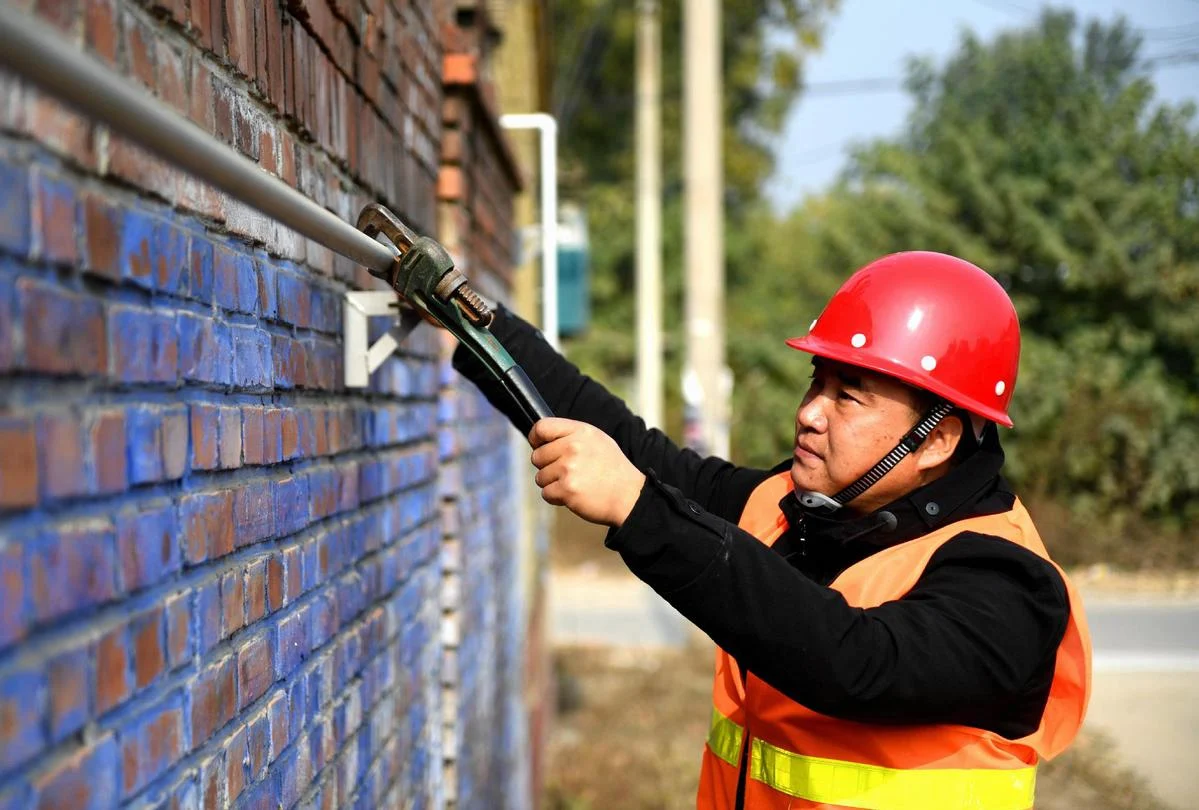
The Asian Infrastructure Investment Bank (AIIB) announced on Monday a significant $250 million loan for a natural gas project in Beijing, marking a pivotal moment as the bank’s inaugural investment in China and its first corporate financing deal. This substantial commitment underscores a shared objective: to curtail coal consumption and substantially enhance air quality across the capital region, a critical step in China’s ambitious environmental protection agenda.
Addressing Beijing’s Air Quality Imperative
The loan, directed to the Beijing Gas Group Co, is earmarked for an extensive coal-to-gas conversion program. This initiative aims to transition rural households from traditional coal-fired heating and cooking to cleaner natural gas alternatives. The scope of the project encompasses the construction of vital natural gas distribution networks, extensive pipeline infrastructure, and the necessary household connection facilities, as detailed in a statement from the Beijing-based multilateral financial institution. The project is strategically designed to alleviate the severe air pollution that has historically plagued China’s capital and surrounding areas, particularly during the colder months when coal burning for heating intensifies.
For years, Beijing and the broader Beijing-Tianjin-Hebei (Jing-Jin-Ji) region have grappled with some of the world’s most acute air quality challenges. The rapid industrialization and urbanization, coupled with a heavy reliance on coal for energy generation and domestic heating, led to frequent episodes of dense smog, high concentrations of particulate matter (PM2.5), and significant public health concerns. Scientific studies have consistently linked prolonged exposure to such pollution with increased risks of respiratory diseases, cardiovascular issues, and premature mortality, imposing a substantial burden on public health and the economy. The visibility often dropped to mere meters, disrupting daily life and drawing global attention to China’s environmental predicament. In response, the Chinese government launched a series of aggressive environmental campaigns, most notably the "Blue Sky Protection Campaign" in 2013, which intensified efforts to reduce emissions from industrial sources, vehicle exhaust, and domestic coal burning. The coal-to-gas conversion program, supported by the AIIB loan, represents a cornerstone of these broader national initiatives.
Projected Impact and Timeline
The natural gas project is slated for completion in 2021. Upon its full implementation, the AIIB anticipates a significant reduction in coal consumption, estimated at approximately 650,000 metric tons annually. This reduction will be achieved by connecting around 216,750 households across approximately 510 rural villages to the newly established natural gas distribution network. The environmental benefits extend beyond a mere reduction in coal usage. The transition to natural gas, a cleaner-burning fossil fuel, is expected to substantially decrease emissions of sulfur dioxide (SO2), nitrogen oxides (NOx), and hazardous particulate matter, all primary contributors to smog and acid rain. While natural gas still produces carbon dioxide (CO2), a greenhouse gas, its CO2 emissions per unit of energy are significantly lower than coal, offering a transitional benefit in climate change mitigation efforts.
The timeline of China’s environmental policy evolution provides crucial context for this investment. Prior to 2013, while environmental regulations existed, enforcement was often inconsistent, and economic growth frequently took precedence. The escalating public discontent over "airpocalypse" events, however, spurred a decisive shift. The State Council’s "Action Plan for Air Pollution Prevention and Control" in 2013 set ambitious targets for reducing PM2.5 concentrations in key regions. This was followed by a comprehensive "Thirteenth Five-Year Plan" (2016-2020) that integrated ecological civilization as a core development philosophy, prioritizing green development and environmental protection. Within this framework, large-scale coal-to-gas and coal-to-electricity conversion programs became central strategies, particularly for residential heating in northern China. The AIIB’s loan in 2017 perfectly aligns with the peak implementation phase of these aggressive environmental policies, providing crucial financial backing at a critical juncture.
AIIB’s Strategic Alignment and Corporate Financing Debut
The AIIB’s first investment in China holds considerable symbolic and practical significance. Established in 2016, the AIIB’s mission is to support the building of infrastructure and other productive sectors in Asia and beyond, with a strong emphasis on sustainable development. Jin Liqun, President of the AIIB, articulated how this investment directly aligns with the bank’s core mandate. "China’s commitment to reducing its reliance on coal will change lives and improve the environment, and that is why we are investing in a project aligned with that ambitious plan," Jin stated, highlighting the dual benefits of environmental improvement and socio-economic advancement. He further elaborated that the project will help China introduce sustainable infrastructure that will reduce greenhouse gas emissions and concurrently stimulate one of Asia’s most vital economic hubs.
This loan also marks the AIIB’s inaugural foray into corporate financing. Traditionally, multilateral development banks primarily lend to sovereign governments or public sector entities for infrastructure projects. Extending financing directly to a corporate entity like Beijing Gas Group Co signals the AIIB’s evolving strategy to diversify its lending instruments and engage more directly with private or state-owned enterprises that are critical to infrastructure development. This approach can potentially streamline project implementation and leverage corporate efficiencies. Beijing Gas Group Co, as a major state-owned enterprise responsible for gas supply in the capital, possesses the operational capacity and institutional framework necessary to execute a project of this scale and complexity, making it an ideal partner for the AIIB’s pilot corporate financing venture. The company’s experience in managing extensive urban gas networks and its mandate to support Beijing’s clean energy transition further solidified its suitability for this partnership.
Expert Perspectives and Broader Implications
Financial researchers and energy experts widely welcomed the AIIB’s financing decision, while also pointing to the broader challenges and opportunities it presents. Zeng Gang, a financial researcher at the Chinese Academy of Social Sciences, emphasized the logical fit between the AIIB’s mandate and China’s environmental goals. "Green financing in China will clearly be an important target for the AIIB," Zeng noted. He added that it is "reasonable that the AIIB is the provider of long-term financing with relatively low cost for such infrastructure projects, especially when Chinese commercial banks are facing greater liquidity pressure." This observation highlights a crucial role for multilateral development banks like the AIIB: providing patient capital for large-scale, long-term infrastructure projects that domestic financial institutions might find challenging to finance alone, particularly given the often-extended payback periods and regulatory complexities associated with environmental infrastructure.
Li Li, energy research director at ICIS China, an energy consulting firm, while acknowledging the positive impact of AIIB financing, offered a cautionary note regarding the broader implications of such a rapid energy transition. She stressed the importance of complementary investments to ensure the sustainability and reliability of the natural gas supply. "AIIB financing should be welcomed, but the nation should also boost investment in seasonal gas storage facilities, diversify import channels and improve the pricing mechanism to address potential shortages," Li Li advised. Her comments underscore a critical challenge inherent in large-scale coal-to-gas conversions: the increased demand for natural gas can strain existing supply chains, particularly during peak winter demand. China has a vast but unevenly distributed natural gas resource base and relies significantly on imports, both via pipelines (from Central Asia and Russia) and liquefied natural gas (LNG) via sea. Ensuring robust infrastructure for storage and diversified import sources is paramount to prevent supply disruptions and price volatility, which could undermine the success of the conversion programs. The "gas shortages" of winter 2017-2018, occurring shortly after this announcement, served as a stark reminder of these vulnerabilities, prompting further government action on infrastructure and supply diversification.
Beyond the Loan: A Catalyst for Sustainable Development
The $250 million loan from the AIIB is more than just financial assistance; it is a catalyst for multifaceted sustainable development.
Environmental Impact: The direct reduction in coal burning will lead to a tangible improvement in ambient air quality in rural Beijing and surrounding areas. This means fewer smog days, clearer skies, and a healthier environment for millions of residents. The reduction in particulate matter, sulfur dioxide, and nitrogen oxides will also mitigate acid rain and regional haze, benefiting ecosystems and agricultural productivity. While natural gas is a fossil fuel, its role as a "bridge fuel" in the transition away from coal is critical for achieving immediate air quality improvements and reducing the carbon intensity of energy consumption.
Socio-Economic Benefits: For rural households, the switch from coal to natural gas represents a significant improvement in living standards. Natural gas heating is cleaner, more convenient, and often safer than traditional coal stoves, which can pose risks of carbon monoxide poisoning. The modernization of energy infrastructure in these villages also aligns with broader rural revitalization efforts. Furthermore, the construction phase of the project generates local employment opportunities, contributing to economic activity in the region.
Strengthening AIIB’s Mandate and Global Role: This investment reinforces the AIIB’s commitment to its founding principles of "lean, clean, and green" development. By supporting a flagship environmental project in its largest shareholder country, the AIIB demonstrates its capacity to deliver on its mission and its dedication to fostering sustainable infrastructure across Asia. This project also enhances the AIIB’s reputation as a credible and effective multilateral development bank, capable of addressing pressing environmental and developmental challenges. It sets a precedent for future "green" investments, not only in China but across other member countries grappling with similar issues of pollution and energy transition.
China’s Energy Transition Trajectory: The project underscores China’s unwavering commitment to transforming its energy mix. While the scale of the challenge is immense, with coal still dominating its energy landscape, such investments demonstrate a clear policy direction towards cleaner fuels. This transition is not without its complexities, including the need for massive infrastructure investment, technological advancements, and careful management of energy security. However, the government’s resolve, bolstered by international partnerships like that with the AIIB, indicates a long-term strategic pivot towards a more sustainable and environmentally responsible energy future. The experience gained from implementing such large-scale conversion projects in Beijing will also provide valuable lessons and models for other regions within China facing similar environmental pressures.
In conclusion, the AIIB’s $250 million loan for Beijing’s natural gas project signifies a critical collaborative effort to combat air pollution and promote sustainable development. It is a testament to China’s ambitious environmental agenda and the AIIB’s role as a key financial enabler for green infrastructure. While challenges remain in the broader energy transition, this investment marks a substantial step forward, promising cleaner air for millions and setting a precedent for future environmentally conscious infrastructure development in the region.


 Sagoh
Sagoh
 Asro
Asro