Lina Irawan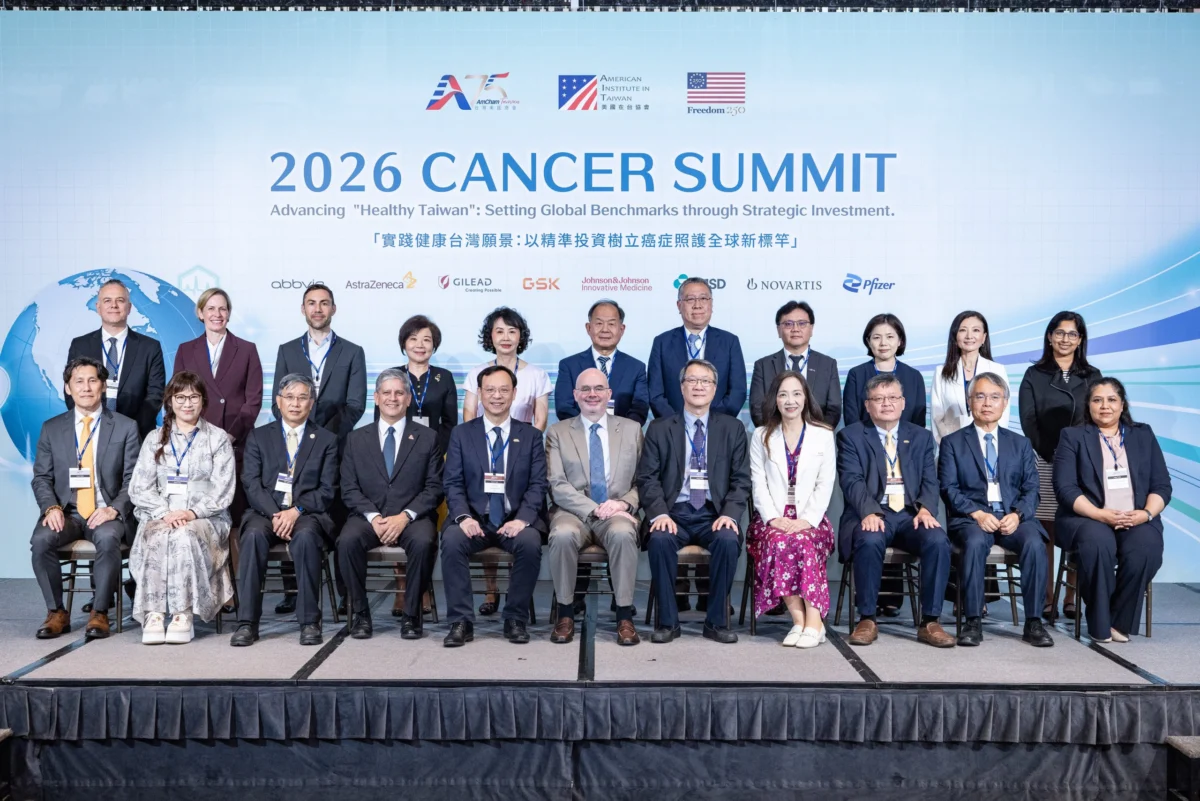
TAIPEI, Taiwan — On July 28, the American Chamber of Commerce in Taiwan (AmCham Taiwan) and the American Institute in Taiwan (AIT) convened the 2026 AmCham Taiwan Cancer Summit at the Regent Taipei, marking a pivotal moment in the region’s healthcare policy landscape. Under the banner of “Advancing ‘Healthy Taiwan’: Setting Global Benchmarks through Strategic Investment,” the summit served as a high-level platform for government officials, industry leaders, academic experts, and patient advocacy groups to refine the strategies necessary to modernize Taiwan’s oncology infrastructure. The event was specifically designed to address the pressing need for optimized resource allocation within the Cancer Drugs Fund (CDF), a mechanism established to bridge the gap between scientific innovation and patient access.
The 2026 summit arrives at a critical juncture for Taiwan’s healthcare system. As the administration of President Lai Ching-te pursues the ambitious "Healthy Taiwan" vision, the primary objective is to reduce the nation’s standardized cancer mortality rate by one-third by the year 2030. Achieving this goal requires a multifaceted approach that integrates stable funding, digital transformation, and international clinical alignment. During his opening remarks, AmCham Taiwan President Carl Wegner emphasized that the complexity of cancer as a global health crisis necessitates more than just laboratory breakthroughs. He argued that the translation of innovation into tangible patient outcomes depends heavily on sustainable investment and robust public-private partnerships, which are essential for building a resilient, future-ready healthcare ecosystem.
Strategic Funding and the Evolution of the Cancer Drugs Fund
A central pillar of the summit’s discussions was the financial sustainability of cancer care. Minister of Health and Welfare Shih Chung-liang, a key participant in the Grand Keynote Dialogue, detailed the government’s commitment to transforming the national health framework. A significant milestone in this journey was the establishment of the Cancer Drugs Fund (CDF) in 2025. This fund was created to address a long-standing challenge in Taiwan’s National Health Insurance (NHI) system: the time lag between the global approval of innovative therapies and their reimbursement for Taiwanese patients.
Minister Shih revealed that the government has significantly scaled its investment in preventative measures and early detection. The national cancer screening budget has seen a dramatic increase, rising from NT$2.8 billion to NT$6.8 billion. This 142% increase in funding underscores a shift toward proactive healthcare management. By identifying malignancies at earlier, more treatable stages, the government aims to alleviate the long-term burden on the healthcare system while improving survival rates.
However, screening is only the first step. The Minister noted that for cancer control to be sustainable, the CDF must remain a stable, long-term resource. The fund is designed to ensure that reimbursement for high-cost, innovative drugs keeps pace with international treatment guidelines. This is particularly vital for precision medicine and immunotherapies, which often carry high price tags but offer significant improvements in quality of life and survival for patients with advanced or rare cancers.
Digital Transformation and Administrative Efficiency
Beyond direct funding, the summit highlighted the role of digital transformation in optimizing the "Connected Cancer Care Ecosystem." The Ministry of Health and Welfare (MOHW) is currently advancing initiatives to streamline administrative procedures that have historically delayed patient care. One such initiative is the digitalization of the prior authorization process. By migrating these procedures to digital platforms, the government intends to reduce the bureaucratic burden on healthcare providers, allowing clinicians to focus more on patient care rather than paperwork.
Furthermore, the integration of digital tools allows for the systematic collection of real-world data (RWD). Minister Shih explained that this data is crucial for the follow-up evaluation of drug efficacy and cost-effectiveness. By analyzing how drugs perform in the broader population—outside the controlled environment of clinical trials—the government can make more informed decisions about budget allocation. This data-driven approach ensures that limited resources are directed toward the therapies that provide the greatest clinical value, thereby enhancing the overall efficiency of the National Health Insurance system.
Aligning with International Standards of Care
The second major theme of the summit focused on the clinical alignment of Taiwan’s oncology practices with global benchmarks. Medical experts representing various specialties, including breast cancer, gynecologic cancers, and hematologic malignancies, discussed the necessity of adhering to internationally recognized clinical guidelines. A primary point of reference was the National Comprehensive Cancer Network (NCCN) guidelines, which are widely considered the gold standard for oncology care globally.
Panelists argued that for Taiwan to be a global leader in healthcare, its treatment pathways must be indistinguishable from those in the world’s leading medical centers. This alignment involves not only the availability of drugs but also the standardization of comprehensive care pathways. These pathways span the entire patient journey, from initial diagnosis and genetic testing to personalized treatment plans and long-term survivorship care.

In the context of breast and gynecologic cancers, experts highlighted how rapid advancements in targeted therapies and antibody-drug conjugates (ADCs) are redefining the standard of care. For hematologic malignancies, the discussion centered on the integration of cell therapies and the importance of early intervention in high-risk populations. By aligning Taiwan’s reimbursement policies with NCCN-level standards, the medical community hopes to eliminate "treatment gaps" where Taiwanese patients might otherwise receive sub-optimal care compared to their counterparts in the United States or Europe.
Chronology and Context: The U.S.-Taiwan Healthcare Partnership
The 2026 Cancer Summit is the result of a multi-year evolution in bilateral cooperation between Taiwan and the United States. The partnership began in earnest in 2021, when AmCham Taiwan and AIT launched a series of healthcare innovation forums. These forums were initially designed to facilitate a broad dialogue on healthcare policy and to encourage collaboration between the Taiwanese government and the American pharmaceutical industry.
By 2023, under the guidance of AmCham Taiwan’s Pharmaceutical Committee, the forum’s focus narrowed to oncology, leading to the birth of the dedicated Cancer Summit platform. This shift was largely inspired by the United States’ "Cancer Moonshot" initiative, a program reignited by the Biden-Harris administration with the goal of reducing the cancer death rate in the U.S. by at least 50% over 25 years. Recognizing that cancer mortality is a shared global challenge, Taiwan adopted similar goals, leading to the current national objective of a one-third reduction by 2030.
Over the past four years, this platform has evolved from a general discussion forum into a strategic engine for policy change. It has provided a venue for American life sciences companies to share technical expertise with Taiwanese regulators, while also allowing Taiwanese officials to showcase their progress in digital health and universal coverage to an international audience.
Broader Implications and Future Outlook
The implications of the 2026 Cancer Summit extend beyond the immediate healthcare sector. A "Healthy Taiwan" is seen as a prerequisite for a prosperous and resilient economy. By investing in cancer care, Taiwan is not only saving lives but also maintaining its workforce and reducing the long-term economic impact of chronic disease.
The focus on "Strategic Investment" suggests a move away from viewing healthcare purely as a cost center. Instead, the government and AmCham members are framing healthcare spending as an investment in human capital. The emphasis on the CDF and digital transformation reflects a sophisticated understanding of how modern economies must manage the rising costs of medical innovation.
As Taiwan looks toward 2030, the success of the "Healthy Taiwan" initiative will depend on the continued collaboration of the Healthy Taiwan Promotion Committee and its partners. The government’s commitment to reviewing mortality burdens and treatment gaps across different cancer types indicates a shift toward "precision policy"—where resources are not just increased, but are targeted at the areas of greatest need.
AmCham Taiwan has reaffirmed its dedication to this cause, pledging to continue its role as a bridge between the U.S. and Taiwan. Through ongoing policy dialogue and the promotion of U.S.-Taiwan healthcare collaboration, the Chamber aims to ensure that Taiwan remains at the forefront of global medical excellence. The 2026 summit concluded with a consensus that while the road to 2030 is challenging, the foundation of a connected, well-funded, and internationally aligned cancer care ecosystem is now firmly in place.
For the patients in Taiwan, these high-level policy shifts translate to a very simple but profound reality: faster access to life-saving medicines, more accurate diagnoses, and a healthcare system that is equipped to fight cancer with the best tools the world has to offer. As the summit participants returned to their respective fields, the shared vision of a "Healthy Taiwan" remained the guiding light for the years of work ahead.

 Azzam Bilal Chamdy
 Jia Lissa