Nila Kartika Wati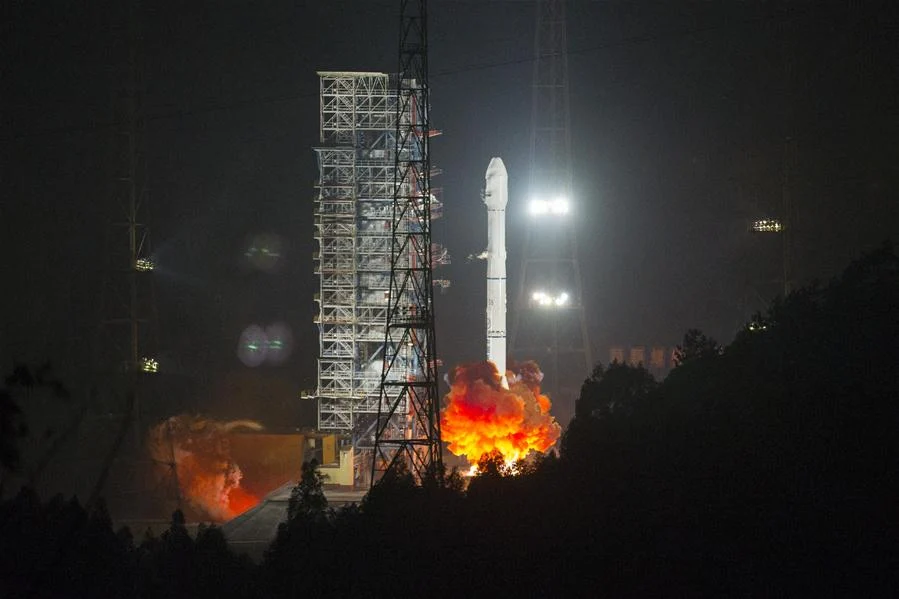
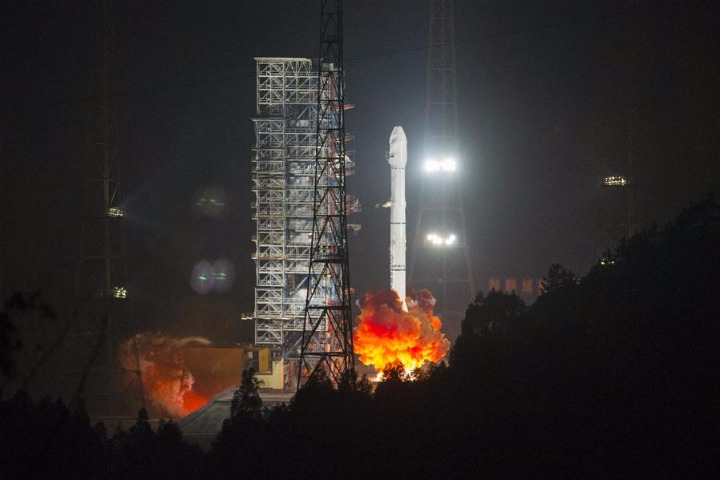
BEIJING – The successful launch of Algeria’s first communications satellite, Alcomsat-1, from the Xichang Satellite Launch Center in China’s southwestern province of Sichuan on December 11, 2017, has been hailed as a significant achievement, underscoring the deepening comprehensive strategic partnership between China and Algeria. The event, which saw the satellite precisely inserted into its preset orbit, triggered congratulatory messages between Chinese President Xi Jinping and Algerian President Abdelaziz Bouteflika, highlighting the project’s importance not only for bilateral relations but also for Algeria’s national development and regional connectivity.
President Xi Jinping, in his message, emphasized that the Alcomsat-1 project serves as a crucial manifestation of the robust China-Algeria comprehensive strategic partnership. He further stated that this endeavor sets a precedent for aerospace cooperation between China and Arab nations, anticipating its pivotal role in advancing Algeria’s economic development, enhancing the quality of life for its citizens, and fostering social progress. The launch coincides with the upcoming 60th anniversary of diplomatic relations between China and Algeria in 2018, a significant milestone that President Xi noted Beijing is eager to leverage. He expressed China’s willingness to collaborate closely with Algeria to strengthen exchanges and cooperation across a diverse range of sectors, thereby propelling the comprehensive strategic partnership to greater depths and delivering tangible benefits to both nations and their peoples.
Echoing these sentiments, President Bouteflika described the successful launch of Alcomsat-1 as a remarkable accomplishment in the aerospace cooperation between Algeria and China. He asserted that the achievement vividly reflects the profound traditional friendship that binds the two countries. President Bouteflika reiterated Algeria’s commitment to working hand-in-hand with China to jointly promote cooperation in various fields, with the aim of achieving even more significant outcomes.
Background and Context of Alcomsat-1
The Alcomsat-1 satellite, developed and launched by China, represents a significant leap forward for Algeria’s technological capabilities and its ambitions in the digital and broadcast sectors. The project is a tangible outcome of the growing cooperation between China and African nations in high-technology fields, particularly in space exploration and satellite development. China has increasingly positioned itself as a key partner for African countries seeking to enhance their telecommunications infrastructure, expand internet access, and develop broadcasting services.
Algeria, as a strategically important nation in North Africa, has been actively pursuing modernization and diversification of its economy. The acquisition and deployment of a sophisticated communications satellite like Alcomsat-1 are instrumental in achieving these objectives. The satellite is designed to provide a wide range of services, including television broadcasting, internet access, and telecommunications, across Algeria and potentially into neighboring regions. This will be particularly beneficial for remote and underserved areas, bridging the digital divide and fostering greater social inclusion.
The decision to partner with China for this landmark project reflects a broader trend of increasing Sino-Algerian collaboration. Over the years, bilateral ties have strengthened across political, economic, and cultural domains. China’s Belt and Road Initiative, with its focus on infrastructure development and connectivity, has provided a framework for numerous joint projects, and the Alcomsat-1 launch can be viewed as a significant contribution within this broader strategic vision.
Chronology of the Alcomsat-1 Project
While the exact timeline of the Alcomsat-1 project is not detailed in the provided text, the general trajectory of such complex satellite development and launch initiatives can be outlined:
- Initiation and Agreement (Likely several years prior to launch): Discussions and negotiations between the Algerian Space Agency (ASAL) and China Aerospace Science and Technology Corporation (CASC) or a similar Chinese entity would have commenced. This phase would involve defining the satellite’s specifications, mission objectives, and the terms of cooperation.
- Design and Manufacturing Phase: Once an agreement was reached, the satellite’s design would be finalized, followed by its manufacturing and rigorous testing. This process typically involves multiple stages of component integration, subsystem testing, and full system verification.
- Training and Capacity Building: A crucial element of such international cooperation is the training of Algerian personnel. Technicians and engineers would likely have undergone extensive training in China on satellite operations, maintenance, and data utilization.
- Transportation to Launch Site: The Alcomsat-1 satellite would have been transported from the manufacturing facility to the Xichang Satellite Launch Center. This requires specialized handling and logistics to ensure the satellite’s integrity.
- Pre-Launch Preparations: At the launch center, the satellite undergoes final checks, integration with the launch vehicle, and fueling. This is a highly complex and meticulous phase involving numerous technical teams.
- Launch (December 11, 2017): The successful launch of Alcomsat-1 aboard a Chinese Long March rocket. This event marks the culmination of years of planning and execution.
- Orbit Insertion and In-Orbit Testing: Following launch, the satellite is maneuvered into its designated orbit. Subsequently, a period of in-orbit testing is conducted to verify all systems are functioning as expected and to calibrate its instruments.
- Operational Deployment: Once in-orbit testing is successfully completed, Alcomsat-1 is declared operational and begins to provide its intended services.
Supporting Data and Technical Aspects
While specific technical details of Alcomsat-1 are not provided in the original article, typical communication satellites of this era and purpose would possess several key characteristics:
- Orbit Type: Alcomsat-1 was launched into a "preset orbit." This likely refers to a geostationary transfer orbit (GTO) or a geostationary orbit (GEO), which is the most common for telecommunications satellites. A GEO allows a satellite to appear stationary from a particular point on Earth, crucial for continuous broadcasting and communication.
- Payload: The satellite’s payload would include transponders designed to receive, amplify, and retransmit signals across various frequency bands (e.g., C-band, Ku-band, Ka-band). These bands are used for different types of communication services, including television, broadband internet, and mobile communications.
- Lifespan: Communication satellites typically have an operational lifespan of 15 to 20 years, determined by the amount of fuel for orbital adjustments and the reliability of their electronic components.
- Coverage: Alcomsat-1 is expected to provide coverage over Algeria and potentially the wider North African and Middle Eastern regions, depending on its antenna design and orbital position. This broad coverage is vital for national broadcasting and connectivity initiatives.
- Launch Vehicle: China’s Long March series of rockets are known for their reliability and are capable of launching various satellite payloads into different orbits. The specific Long March variant used for Alcomsat-1 would depend on the satellite’s mass and the required orbital parameters.
Official Responses and International Reactions
The congratulatory messages exchanged between Presidents Xi Jinping and Abdelaziz Bouteflika are central to the official response. These statements serve to:
- Affirm the Success: Officially acknowledge the successful completion of a significant bilateral project.
- Reinforce Bilateral Ties: Highlight the importance of the project in strengthening the comprehensive strategic partnership between China and Algeria.
- Signal Future Cooperation: Express a desire for continued collaboration in various sectors, including space technology.
Beyond the direct statements from the presidents, it can be inferred that other stakeholders would have reacted positively:
- Algerian Government Officials: Ministers of Communications, Technology, and Foreign Affairs in Algeria would likely have issued statements praising the achievement and its implications for national development.
- Chinese Space Agency and Aerospace Corporations: Officials from CASC and the China National Space Administration (CNSA) would have expressed pride in their role in the successful launch and highlighted China’s growing capabilities in the global space market.
- Algerian Public: The successful launch of their first national communications satellite would have been a source of national pride for the Algerian people, symbolizing technological advancement and increased connectivity.
- International Space Community: Other space-faring nations and international organizations would have taken note of this development as a testament to China’s expanding influence and capabilities in the satellite industry and its commitment to international cooperation.
Broader Impact and Implications
The launch of Alcomsat-1 has far-reaching implications, extending beyond the immediate bilateral relationship between China and Algeria.
For Algeria:
- Enhanced National Connectivity: Alcomsat-1 will significantly improve Algeria’s telecommunications infrastructure, enabling wider access to high-speed internet and modern broadcasting services, particularly in rural and remote areas. This is crucial for economic development, education, and healthcare delivery.
- Economic Diversification: The project contributes to Algeria’s efforts to diversify its economy away from its heavy reliance on oil and gas by fostering growth in the technology and telecommunications sectors.
- Technological Advancement: It represents a significant step in Algeria’s technological journey, building indigenous capacity in space technology through collaboration and training.
- Regional Influence: A robust satellite communication system can enhance Algeria’s role as a regional hub for information and communication services.
For China:
- Strengthening Global Partnerships: The successful launch reinforces China’s image as a reliable partner in high-technology sectors, particularly within the Belt and Road Initiative framework. It demonstrates China’s capacity to deliver complex space projects for international clients.
- Expanding Space Market Share: This achievement contributes to China’s growing presence in the global commercial satellite launch and manufacturing market, competing with established players.
- Soft Power Projection: Successful international collaborations in advanced technology enhance China’s soft power and diplomatic influence.
For China-Arab Cooperation:
- Pioneering Aerospace Collaboration: As President Xi noted, Alcomsat-1 sets a precedent for aerospace cooperation between China and Arab countries. This could pave the way for more joint ventures in satellite development, Earth observation, and other space-related applications within the Arab world.
- Building Trust and Mutual Understanding: Collaborative projects in sophisticated technological fields foster deeper trust and mutual understanding between China and Arab nations, strengthening political and economic ties.
Global Context:
- Rise of New Space Powers: The launch is indicative of the broader shift in global space capabilities, with nations like China playing an increasingly prominent role.
- Connectivity and the Digital Divide: Projects like Alcomsat-1 contribute to global efforts to bridge the digital divide and ensure equitable access to information and communication technologies worldwide.
In conclusion, the launch of Alcomsat-1 is more than just a technical feat; it is a symbolic representation of a thriving strategic partnership. It underscores the shared vision of progress and development between China and Algeria, and it heralds a new era of cooperation in the vital field of aerospace technology, with potential benefits extending across continents. The successful deployment of this satellite is a testament to years of dedicated effort, meticulous planning, and a commitment to mutual advancement, setting a positive trajectory for future Sino-Algerian collaborations and broader international partnerships in space.


 Nana Wu
 Suro Senen