
 Asro
Asro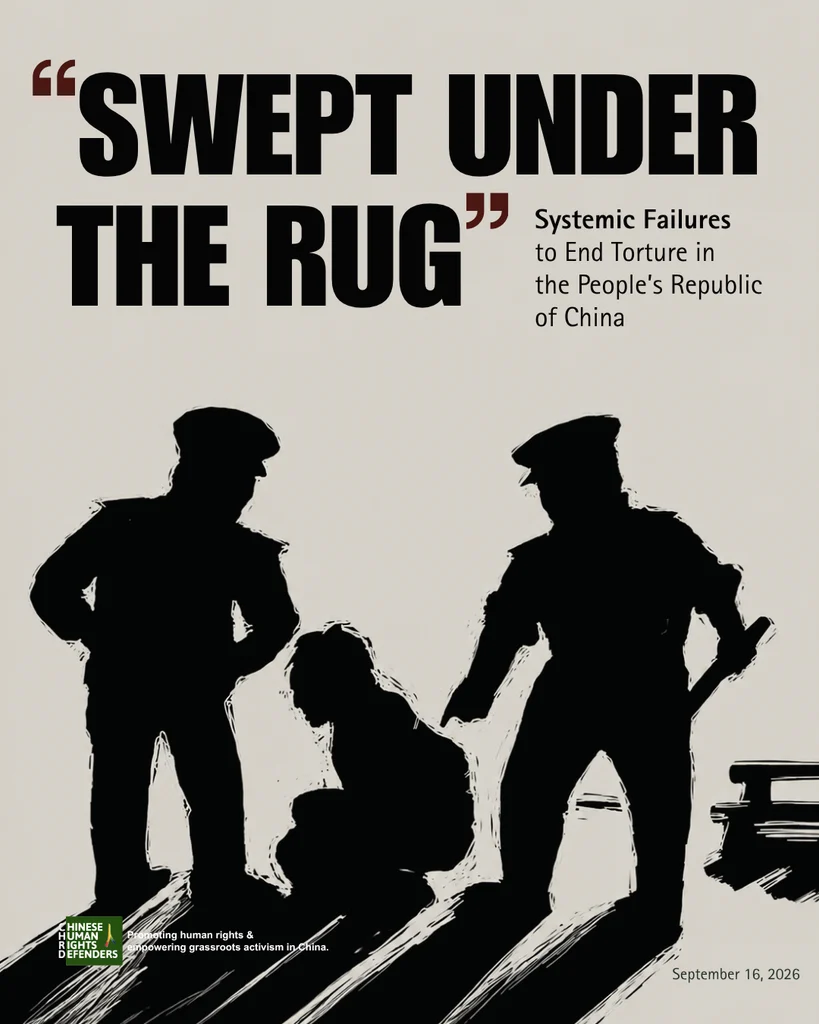
A new report released Wednesday by the Chinese Human Rights Defenders (CHRD) has starkly revealed China’s persistent and widespread use of torture on prisoners to extract confessions, including severe beatings and the deliberate withholding of critical medical care. The findings, spanning nearly a decade, underscore a deeply entrenched pattern of abuse within the nation’s opaque judicial system, with one detainee’s daughter expressing profound fear that her mother will perish behind bars due to alleged medical neglect. This comprehensive investigation by CHRD, titled "Swept Under the Rug: Systemic Failures to End Torture in the People’s Republic of China," meticulously documents numerous cases that expose a critical failure by Beijing to uphold its own laws and international human rights commitments.
The report, which examined the cases of 209 individuals detained between 2016 and 2025, paints a grim picture of systematic ill-treatment and abuse. Despite China’s domestic legal prohibitions against torture and its ratification of the UN Convention Against Torture (UNCAT), the CHRD found that such practices are not only rampant but also appear to be systematically ignored or even condoned by authorities. Prisoners of conscience, individuals detained for their beliefs, activism, or peaceful expression, were identified as particularly vulnerable targets for these brutal tactics. The methods documented are varied and severe, designed to break detainees physically and psychologically, compelling them to admit to charges often fabricated or politically motivated.

The Pervasive Nature of Torture and Ill-Treatment
The CHRD report’s statistical breakdown reveals the alarming prevalence of various forms of torture. A fifth of the prisoners interviewed (20%) reported being subjected to beatings, a fundamental and brutal form of physical abuse. More disturbingly, 15% explicitly stated that torture was employed as a direct means to force confessions, highlighting its instrumental role in China’s judicial process. The objective is often to secure admissions of guilt, regardless of factual innocence, thereby maintaining the appearance of a high conviction rate.
Beyond physical violence, the report sheds light on the grave issue of medical neglect. A staggering 35% of the surveyed prisoners indicated they were deprived of adequate medical care, leading to severe health deterioration and, tragically, death in some instances. The CHRD documented 16 deaths behind bars directly attributable to this deliberate deprivation. This constitutes a profound violation of fundamental human rights, as access to medical care is a basic right for all detainees under international law. The lack of timely and appropriate medical intervention turns prisons into potential death traps for those with pre-existing conditions or those who fall ill due to harsh detention conditions.
Other horrific methods detailed in the report include the deprivation of sleep, food, and water, subjecting prisoners to extreme freezing temperatures, administering electric shocks, confinement in restrictive iron cages, and being hung by the wrists for extended periods. These methods are designed to inflict maximum pain and suffering without necessarily leaving overt physical marks that could later be easily documented, making it harder for victims to prove their ordeal. The report confirmed that cases of torture were documented across virtually every province and special administrative region of China, with the sole exception of Macau, indicating a systemic rather than isolated problem.

A Daughter’s Desperate Plea: The Case of Yin Dengzhen
The human cost of these systemic abuses is powerfully illustrated by the harrowing case of Yin Dengzhen, a 58-year-old former vegetable seller currently serving a four-and-a-half-year sentence for "picking quarrels and provoking trouble." This charge is frequently used by Chinese authorities to silence petitioners and dissidents who seek to expose local corruption or grievances. Yin’s daughter, Xia Beibei, recounted to AFP her mother’s desperate situation, stating that Yin was denied release on medical grounds despite being unable to eat or walk normally.
Yin Dengzhen suffers from lymphoma, a serious form of cancer. Her health deteriorated drastically while awaiting sentencing in central China’s Hubei province, with her weight plummeting to just over 35 kilograms (approximately 80 pounds), necessitating hospitalization in temporary detention. However, following her sentencing, authorities astonishingly claimed that a medical examination found her "in good health," thus deeming her fit for transfer to a women’s prison in Wuhan. Xia Beibei vehemently disputes this official narrative, accusing authorities of maliciously concealing her mother’s critical condition. "What I find most unacceptable is that even when my mother was critically ill and possibly facing death at any moment, authorities… maliciously concealed my mother’s condition and said she had no serious diseases," Xia lamented. She further revealed that in the months leading up to her sentencing, her mother expressed profound pessimism, believing that the authorities’ true intention in jailing her was "to let her die there." This heartbreaking testimony underscores the deep distrust and fear that pervades the families of detainees in China, highlighting the life-threatening consequences of denied medical care.
China’s Opaque Justice System and International Obligations
China’s justice system has long been a subject of intense international scrutiny and criticism due to its inherent opacity and its instrumentalization for political control. Historically, it has been lambasted for the enforced disappearance of defendants, the targeting of human rights defenders and dissidents, and the routine reliance on forced confessions obtained through torture. These practices stand in direct contravention of both China’s own legal framework and its international obligations.

Chinese law explicitly prohibits torture and the use of violence to force confessions, stipulating penalties of up to three years in prison for such offenses, with more severe punishment if the torture results in injuries or death. Furthermore, Beijing is a signatory to the United Nations Convention against Torture and Other Cruel, Inhuman or Degrading Treatment or Punishment (UNCAT) since 1988. As a state party to UNCAT, China is legally bound to take effective legislative, administrative, judicial, or other measures to prevent acts of torture in any territory under its jurisdiction. This includes investigating allegations, prosecuting perpetrators, and providing redress to victims.
Despite these commitments, human rights organizations and UN bodies have consistently accused China of failing to implement and rigorously enforce its laws and regulations aimed at eradicating torture. The CHRD report directly echoes this long-standing concern, asserting that "Torture persists because Chinese authorities typically refuse to investigate and prosecute allegations made by prisoners of conscience. In some cases, complaints lead to further punishment." This pattern of impunity not only allows torture to flourish but also actively discourages victims from reporting abuses, trapping them in a cycle of fear and silence. The report, "Swept Under the Rug," explicitly states that it found no evidence suggesting prosecutions or disciplinary actions were taken against those responsible for the documented abuses.
Historical Context and Beijing’s Response
Historically, Beijing has consistently rejected allegations of torture leveled against it by the United Nations, various human rights groups, and individual complainants, often dismissing them as politically motivated or unfounded. However, in a rare and significant admission in 2025, China’s top prosecutor acknowledged that torture and unlawful detention do occur within the country’s legal system. At the time, the prosecutor vowed to crack down on such illegal practices by law enforcement officials, signaling a potential, albeit brief, moment of introspection and commitment to reform.

This admission, however, appears to be an anomaly when viewed against the current findings of the CHRD report. The report concludes that "Beijing is increasingly belligerent in rejecting allegations of torture… and thwarts international accountability efforts." This combative stance, according to the CHRD, "weakens the domestic legal system and allows torture to flourish." The Chinese government did not immediately respond to an AFP request for comment regarding the latest report, a common pattern that reinforces the perception of a lack of transparency and accountability.
Broader Implications and International Stance
The CHRD’s report and the harrowing personal testimonies contained within it carry significant implications, both domestically and internationally. Domestically, the continued reliance on torture undermines the very foundations of justice, erodes public trust in the legal system, and perpetuates a climate of fear among citizens, particularly those who dare to challenge authority or express dissenting views. It creates a system where confessions, rather than evidence, become the primary basis for conviction, leading to miscarriages of justice and further entrenching authoritarian control.
Internationally, China’s persistent failure to eradicate torture despite its legal obligations poses a serious challenge to the global human rights framework. It diminishes the credibility of international conventions and sets a troubling precedent for other nations. Human rights organizations worldwide are likely to reiterate their condemnation and call for greater international pressure on Beijing to comply with its commitments. The United Nations Committee Against Torture, which periodically reviews state parties’ compliance, has previously voiced concerns about China’s practices, and this report will undoubtedly fuel further scrutiny.

Foreign governments, particularly those that prioritize human rights in their foreign policy, may face renewed calls to address these abuses more forcefully in their diplomatic engagements with Beijing. This could manifest in stronger statements of condemnation, targeted sanctions against individuals implicated in torture, or increased support for human rights advocacy groups. However, the complex geopolitical landscape and China’s economic power often temper such responses, leading to a delicate balance between human rights advocacy and broader diplomatic and economic interests.
The "Swept Under the Rug" report serves as a critical document, meticulously detailing the suffering endured by countless individuals within China’s detention facilities. It highlights the urgent need for genuine legal reforms, independent investigations into all allegations of torture, and accountability for perpetrators. Without these fundamental changes, the fears expressed by individuals like Xia Beibei for their loved ones will continue to haunt China’s human rights record, and the practice of torture will remain an indelible stain on its claims of justice and rule of law. The international community, therefore, faces a continuing moral imperative to press Beijing for transparency and adherence to universal human rights standards.


 Raul Delapena Setiawan
 Nana Muazin