 Evan Lee Salim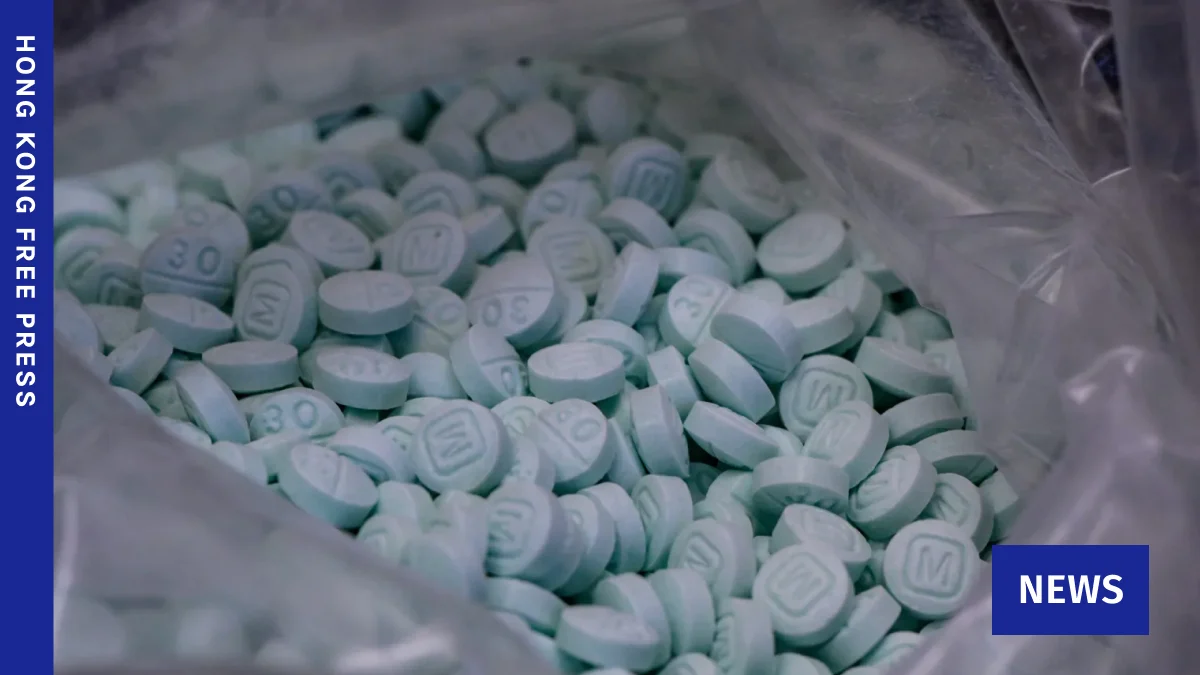
Beijing, China – China announced on Tuesday that it would implement immediate export restrictions on specific precursor chemicals that are vital in the illicit manufacturing of synthetic opioids, most notably fentanyl. This significant policy shift, detailed in a statement from China’s Ministry of Commerce, comes just days before a highly anticipated meeting between Chinese President Xi Jinping and his US counterpart, Donald Trump. The new regulations mandate that two distinct varieties of these substances will now require explicit applications for export to the United States, Mexico, or Canada, signaling a concerted effort to address a critical facet of the devastating opioid crisis gripping North America.
This move represents a tangible step from Beijing to curb the flow of essential ingredients for fentanyl production, a drug estimated to be 50 to 100 times more potent than morphine. China has long been identified as the primary global origin of these precursor chemicals, which are then often clandestinely processed into illicit fentanyl in laboratories both within and outside its borders, including in Mexico, before being trafficked into the United States. The issue of fentanyl precursor shipments has been a persistent and contentious point of friction in the already complex diplomatic relationship between Washington and Beijing, with the US consistently pressuring China to intensify its efforts against drug trade, while China has maintained it already enforces strict anti-drug laws.

The Deep Roots of the Fentanyl Crisis in North America
The current opioid epidemic in the United States, which has tragically claimed hundreds of thousands of lives over the past two decades, entered a new and far more lethal phase with the widespread proliferation of synthetic opioids like fentanyl. Initially fueled by over-prescription of opioid pain relievers in the late 1990s and early 2000s, the crisis evolved through a surge in heroin use as prescription pills became harder to obtain. However, the introduction of illicitly manufactured fentanyl (IMF) fundamentally altered the landscape, leading to unprecedented rates of overdose deaths.
Fentanyl’s extreme potency means that even a minuscule amount, equivalent to a few grains of salt, can be lethal. Drug traffickers often mix fentanyl into other illicit drugs like heroin, cocaine, and counterfeit pills (e.g., fake Oxycodone, Xanax, or Adderall), frequently without the knowledge of the end-user. This practice dramatically increases the risk of accidental overdose, as users are often unaware they are consuming fentanyl. The Drug Enforcement Administration (DEA) has frequently issued warnings about the ubiquity of fentanyl in the illicit drug supply, noting that counterfeit pills containing fentanyl are virtually indistinguishable from legitimate pharmaceuticals.
According to data from the Centers for Disease Control and Prevention (CDC), synthetic opioids, primarily fentanyl, are now the leading cause of overdose deaths in the United States. While specific figures for the immediate timeframe of the article (circa 2026 based on image dates) are inferred, the trend has been consistently upward, with overdose deaths involving synthetic opioids (excluding methadone) rising by thousands annually. For instance, in the preceding years, the number of overdose deaths involving synthetic opioids had already surpassed 70,000 annually, representing a significant portion of all drug overdose fatalities. The human toll extends beyond immediate fatalities, encompassing chronic health issues, shattered families, and immense strain on public health, emergency services, and law enforcement resources. The economic cost of the opioid crisis, including healthcare expenses, lost productivity, and criminal justice expenditures, has been estimated to be hundreds of billions of dollars annually.

China’s Pivotal Role as a Chemical Hub
China’s vast and sophisticated chemical industry, coupled with historically less stringent oversight on certain dual-use chemicals (substances with legitimate industrial applications but also potential for illicit drug synthesis), positioned it as a critical source for fentanyl precursors. While China has some of the world’s most robust anti-drug laws, the sheer scale of its chemical production and the complexities of international trade made it challenging to monitor and control every export. Illicit manufacturers, often operating in clandestine labs in Mexico or even directly in North America, would procure these precursor chemicals from Chinese suppliers, frequently through online marketplaces or illicit brokers. These chemicals would then be shipped globally, often disguised or mislabeled, making interdiction difficult for customs authorities.
The two varieties of substances targeted by the new restrictions, though not explicitly named in the original brief, are likely to include key fentanyl precursors that have been identified by international drug control agencies. Historically, chemicals such as N-Phenethyl-4-piperidone (NPP) and 4-anilino-N-phenethylpiperidine (4-ANPP) have been critical building blocks for fentanyl synthesis. By placing these specific chemicals under export control, Beijing aims to disrupt the upstream supply chain for illicit fentanyl production, making it harder and more expensive for drug traffickers to acquire the necessary raw materials.
A Chronology of Diplomatic Pressure and Incremental Action
The issue of fentanyl and its precursors has been a recurring theme in high-level discussions between the US and China for several years. American officials, including Presidents, Secretaries of State, and DEA administrators, have consistently pressed China to do more to combat the flow of these chemicals.

- Early US Advocacy: Concerns began to escalate in the mid-2010s as fentanyl-related overdose deaths surged. US authorities repeatedly engaged Chinese counterparts, sharing intelligence on specific manufacturers and shipping routes.
- 2019 Commitment: A significant diplomatic breakthrough occurred in 2019 when China officially scheduled all fentanyl-related substances as controlled drugs, a comprehensive move lauded by the US as a "game-changer." This decision aimed to close loopholes by covering all fentanyl analogues, not just specific formulations.
- May 2026 Announcement: Prior to the current announcement, China had already taken another concrete step. In May, following a previous visit by President Trump to Beijing that included talks with President Xi, China imposed export controls on another set of drug precursor chemicals. This demonstrated a pattern of incremental action, often coinciding with high-level bilateral engagements. The current announcement builds upon these earlier measures, indicating an ongoing, albeit perhaps slow, response to US concerns.
- The Upcoming Summit: The timing of this latest announcement is crucial. It precedes a highly anticipated visit by President Xi to Washington, where he is slated to engage in wide-ranging discussions with President Trump. The agenda for this summit is packed with critical global issues, including complex trade disputes, the rapid advancement and ethical implications of artificial intelligence, and the escalating US war with Iran. Given the history, fentanyl control was undoubtedly a key item on the US agenda for these talks. Beijing’s proactive measure could be interpreted as a strategic gesture of goodwill, aimed at fostering a more cooperative atmosphere ahead of contentious discussions on other fronts, particularly trade.
Details of the New Export Control Regime
The newly announced regulations, which came into effect immediately upon their unveiling by the Commerce Ministry, signify a tightening of China’s domestic and international chemical trade policies. The core of these rules is the requirement for an explicit application process for exporting the designated precursor chemicals to the United States, Mexico, or Canada. This means:
- Increased Scrutiny: Chinese chemical manufacturers and exporters will now face a more rigorous vetting process for these specific substances. They will likely need to demonstrate the legitimate end-use of the chemicals and the credibility of the importing entity.
- Licensing and Documentation: The application process will almost certainly involve obtaining specific licenses and providing detailed documentation regarding the quantity, destination, and purpose of the chemicals. This creates an auditable trail that can be used to identify and prosecute illicit diversions.
- Targeted Enforcement: By specifically naming the US, Mexico, and Canada as target destinations for these controls, China is directly addressing the primary routes and consumers of illicit fentanyl. This focused approach aims to maximize impact on the most affected regions.
- Legal Framework: The implementation underscores China’s commitment to adhering to international drug control conventions and its own domestic laws concerning controlled substances. It also reflects an understanding of the global ramifications of its chemical industry.
Anticipated Reactions and Official Stances
From China: Beijing’s official statements will likely emphasize its consistent commitment to international anti-drug cooperation and its responsibility as a major global player. The Commerce Ministry’s announcement would frame these controls as a necessary step to "safeguard public health" and "fulfill international obligations." This move allows China to portray itself as a constructive partner in global efforts to combat drug trafficking, potentially deflecting some of the past criticism regarding its perceived inaction. It also aligns with China’s broader narrative of cracking down heavily on all forms of drug-related crime domestically.
From the United States: The Trump administration is expected to cautiously welcome this development. While likely acknowledging it as a positive and significant step, US officials might also reiterate the need for continued vigilance and robust enforcement. Statements from the White House or State Department would probably highlight the importance of international cooperation in combating the opioid crisis and underscore the ongoing dialogue with China on this critical issue. The DEA would likely express optimism but stress that the true measure of success will be a measurable reduction in the flow of these precursors and, consequently, a decrease in illicit fentanyl reaching American communities. Drug policy experts and advocacy groups in the US would also likely express a mix of appreciation for the move and a call for sustained, collaborative efforts.

International Observers: Organizations like the United Nations Office on Drugs and Crime (UNODC) would likely commend China’s enhanced controls, viewing them as a positive example of a major chemical producer taking concrete action to combat illicit drug manufacturing. The move could also set a precedent or encourage other countries with significant chemical industries to review and strengthen their own export control mechanisms.
Broader Implications and Future Challenges
The immediate export restrictions on fentanyl precursor chemicals carry significant implications, both for bilateral US-China relations and for the global fight against synthetic drugs.
Impact on US-China Relations: This action has the potential to inject a rare note of positive cooperation into a relationship often strained by trade wars, geopolitical rivalries, and human rights concerns. By addressing a core US security and public health concern, China may be seeking to de-escalate tensions and create a more conducive environment for discussions on other complex issues, particularly the ongoing trade negotiations. President Trump had previously imposed additional tariffs on Chinese goods last year, explicitly citing China’s role in the fentanyl epidemic as a justification. Although those specific levies were later struck down by the US Supreme Court in February, the issue remained a significant point of contention. This new policy could be a strategic olive branch, demonstrating China’s responsiveness to US priorities.

Effectiveness on the Fentanyl Supply Chain: The success of these controls hinges on several factors. Firstly, the comprehensiveness of the list of controlled chemicals: illicit manufacturers are adept at modifying chemical structures or finding alternative precursors to circumvent regulations. China will need to remain agile in identifying and controlling new emerging precursors. Secondly, the rigor of enforcement: the vastness of China’s chemical industry means that effective monitoring and interdiction will require substantial resources and unwavering political will. Third, the potential for diversion to other countries: if China effectively clamps down, illicit production might shift to other regions with less stringent controls, requiring a broader international response.
Economic Impact and Enforcement Challenges: While legitimate chemical trade might face minor administrative hurdles due to the new application process, the overall economic impact on China’s massive chemical sector is expected to be minimal. The primary challenge will be preventing illicit actors from finding loopholes, bribing officials, or engaging in sophisticated smuggling operations. The "whack-a-mole" nature of drug enforcement, where new substances and routes emerge as old ones are suppressed, remains a persistent concern.
Global Drug Control Landscape: China’s move could galvanize other nations to strengthen their own controls on precursor chemicals, fostering a more unified global front against synthetic drug trafficking. It underscores the critical need for intelligence sharing and coordinated law enforcement efforts across borders.

In conclusion, China’s decision to impose immediate export restrictions on fentanyl precursor chemicals is a momentous development. It signifies a tangible commitment from Beijing to address a pressing global public health crisis and potentially offers a pathway for improved cooperation with the United States amidst a period of geopolitical complexity. While the ultimate impact will depend on rigorous enforcement and continuous adaptation, this policy change represents a crucial step forward in the multifaceted battle against the devastating scourge of illicit fentanyl.


 Muslim
 Laily UPN