Iffa Jayyana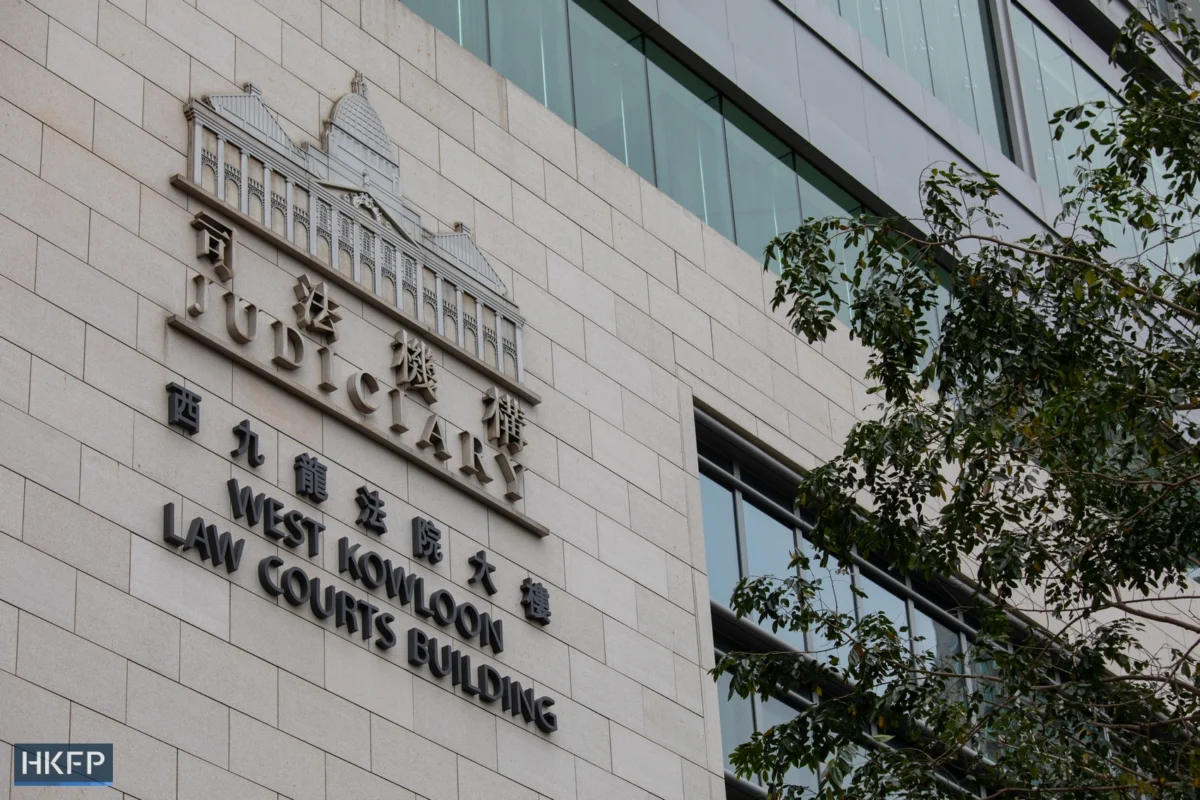
An elderly woman, Yang Chau-kei, aged 61, has been charged with displaying publications with a seditious intention outside her flat in Tin Shui Wai. The case first came before the West Kowloon Magistrates’ Courts on Monday for its initial hearing, marking a significant development in the ongoing enforcement of national security laws in Hong Kong. Yang faces accusations of placing materials deemed seditious on her apartment door, living room window, and in the building corridor between March and November 2024.
The charge sheet, as presented by the prosecution, alleges that Yang’s actions were intended to incite hatred against the Hong Kong authorities and the fundamental system of the state as established by the Constitution of the People’s Republic of China. This charge falls under the purview of Hong Kong’s national security legislation, which has seen increased scrutiny and application since its implementation.

The proceedings on Monday revealed a determined defendant who opted to represent herself, declining the services of a duty lawyer made available to those without legal representation. Dressed in a black top and face mask, Yang repeatedly asserted her innocence in Cantonese, stating, "I did not break the law, they framed me." This declaration was consistently reiterated when Chief Magistrate Victor So inquired about her need for legal counsel.
Court Proceedings and Defendant’s Stance
During the court appearance, Chief Magistrate Victor So expressed concerns regarding Yang’s mental state and sought information from the prosecution about any history of psychiatric treatment. The prosecution confirmed that Yang had no such documented history. Despite the magistrate’s inquiries about her awareness of being in a courtroom and her prior engagement with mental health services, Yang consistently repeated her plea of innocence and alleged fabrication of charges.
"I did not break the law, they framed me," was her unyielding response, underscoring her resolute stance against the charges. This unwavering assertion highlights the personal dimension of the legal proceedings and the defendant’s deep-seated belief in her vindication.

Legal Ramifications and Potential Penalties
The charge of displaying publications with seditious intention carries substantial penalties under Hong Kong law. If convicted, Yang Chau-kei could face a maximum of seven years’ imprisonment. This underscores the seriousness with which authorities are treating cases related to national security and public order.
The case is distinct from the Beijing-enacted national security law of 2020. Instead, it falls under the recently enacted Safeguarding National Security Ordinance, often referred to as Article 23. This homegrown legislation, passed on March 23, 2024, after a rapid legislative process, targets a range of offenses including treason, insurrection, sabotage, external interference, sedition, theft of state secrets, and espionage. The ordinance introduces stringent measures such as pre-charge detention periods of up to 16 days and the potential for restricting suspects’ access to legal counsel. Penalties under this new law can be severe, with provisions for life imprisonment for certain offenses.
Article 23’s journey to enactment is noteworthy. It was initially proposed in 2003 but was shelved due to widespread public opposition and mass protests. For years, it remained a politically sensitive and largely dormant issue. However, its revival and swift passage in 2024, met with unanimous approval from the city’s legislature, signals a significant shift in Hong Kong’s legal and political landscape.

Background and Context of National Security Legislation in Hong Kong
The introduction and enforcement of national security laws in Hong Kong represent a fundamental alteration of the city’s legal framework and its relationship with mainland China. Following the large-scale anti-government protests in 2019, which were fueled by widespread discontent over perceived erosion of freedoms and autonomy, Beijing enacted the National Security Law in June 2020. This law effectively criminalized acts of secession, subversion, terrorism, and collusion with foreign forces, leading to numerous arrests and a significant chilling effect on public discourse and activism.
The subsequent passage of the Safeguarding National Security Ordinance (Article 23) further consolidated the government’s ability to maintain national security, this time through local legislation. Proponents of the ordinance argue that it is a necessary measure to "close loopholes" and fulfill Hong Kong’s constitutional duty to safeguard national security, citing concerns over foreign interference and external threats. They contend that the law is essential for restoring stability and ensuring the city’s long-term prosperity under the "one country, two systems" principle.
International and Local Reactions
The implementation of both national security laws has drawn considerable criticism from international bodies and rights organizations. Critics, including numerous non-governmental organizations, Western governments, and the United Nations, have described the legislation as vague, overly broad, and a regression in terms of fundamental freedoms. Concerns have been raised about the potential for these laws to stifle dissent, restrict freedom of expression and assembly, and undermine Hong Kong’s status as a global financial hub.

Conversely, local political figures and authorities have largely lauded the new security law as a crucial step towards ensuring stability and order. They have dismissed international criticism as hypocritical and politically motivated, emphasizing the need to counter perceived threats to national sovereignty and security.
Chronology of Key Events Leading to the Charge
- March 2024: The Safeguarding National Security Ordinance (Article 23) is fast-tracked and unanimously passed by the Hong Kong Legislative Council.
- March to November 2024: Yang Chau-kei is alleged to have displayed publications with seditious intent outside her residence in Tin Shui Wai.
- Monday (Specific Date of Hearing): Yang Chau-kei appears at West Kowloon Magistrates’ Courts, facing charges of displaying publications with seditious intention. The case is adjourned for psychiatric evaluation.
- September 21 (Adjourned Date): The case is scheduled for its next hearing, at which point psychiatric reports are expected to be submitted to determine Yang’s fitness to enter a plea.
Broader Implications and Analysis
The case of Yang Chau-kei, an elderly woman charged with sedition, highlights the wide-ranging application of Hong Kong’s national security laws. It raises questions about the interpretation of "seditious intention" and the potential impact on ordinary citizens. The decision by Yang to represent herself, coupled with her repeated claims of innocence, suggests a deep personal conviction that may stem from a belief in her actions being lawful or politically motivated.
The adjournment for psychiatric evaluation points to the legal system’s procedural steps in ensuring that defendants are mentally fit to stand trial and enter pleas. The outcome of these evaluations will be crucial in determining the future course of the case.

The broader implications of such cases extend to the ongoing debate about civil liberties and the rule of law in Hong Kong. While authorities maintain that these laws are necessary for stability and national security, critics argue that they represent a significant curtailment of freedoms previously enjoyed in the city. The international community continues to monitor these developments closely, with concerns about Hong Kong’s future as a vibrant and open society. The potential for lengthy prison sentences, even for what might be perceived as minor acts of expression, underscores the high stakes involved in cases brought under these new security frameworks. The ongoing legal proceedings against Yang Chau-kei will undoubtedly be observed as another indicator of the evolving landscape of justice and individual rights in Hong Kong.

 Basiran
 Reynand Wu