Reynand Wu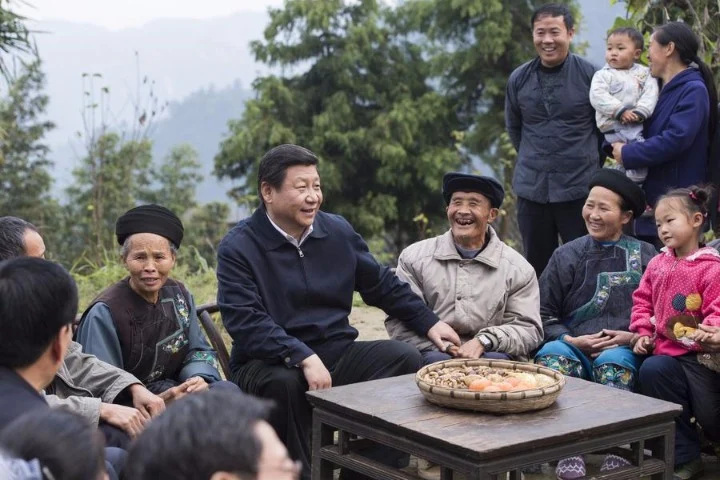
Xi Jinping, general secretary of the Communist Party of China Central Committee, has issued a forceful directive emphasizing the unyielding and protracted nature of the struggle against undesirable work styles within the Party and government. His instruction, released on Monday, came in direct response to a comprehensive article by Xinhua News Agency that shed light on the persistence and evolution of misconduct, often manifesting in new, subtle forms. This reaffirmation underscores Beijing’s deep-seated commitment to maintaining Party discipline and public trust, signaling that the decade-long anti-corruption and conduct improvement campaign remains a top priority with no foreseeable end.
Xi’s Resolute Stance Against Persistent Misconduct
In his instruction, General Secretary Xi Jinping explicitly stated that the efforts to address undesirable work styles must not cease, and the continuous work to enhance the Party’s conduct and work styles should be perpetual. He highlighted the intrinsic link between "new forms of misconduct" and "old problems," asserting that underlying issues such as formalities for formalities’ sake, entrenched bureaucratism, hedonism, and extravagance continue to plague certain segments of officialdom. Xi warned against the inherent intractability and recurring nature of these problems, stressing that complacency would be a grave error.
This directive calls upon Party and governmental departments across all localities and sectors to conduct rigorous self-assessments of their performance in this critical area. The mandate is clear: identify problems, especially the most prominent ones, and implement concrete rectification measures. Xi particularly singled out the issue of officials prioritizing "excessive publicity" over "solid practice and implementation," a pervasive problem that undermines genuine governance and public service. Furthermore, he tasked leading officials at all levels with setting an exemplary standard, urging them to take the lead in this ongoing campaign, thereby reinforcing the principle of top-down accountability.
The Evolving Landscape of Undesirable Work Styles
The Xinhua News Agency article, which prompted Xi’s instruction, provided a crucial diagnostic assessment of the current state of Party conduct. While acknowledging significant achievements in the fight against undesirable work styles since the launch of the Eight-Point Decision in late 2012, the report cautioned that problems "still linger." It detailed several concerning manifestations:
- Perfunctory Work: Some officials are found to conduct superficial research and inspections, lacking thoroughness and genuine investigative spirit, resulting in policies and decisions detached from reality.
- False Concern for the Public: Certain Party and governmental agencies and their workers exhibit a facade of concern for the public without engaging in practical, substantive work to serve the people’s actual needs. This can involve token gestures or bureaucratic hurdles that obstruct real assistance.
- Seeking Higher-Level Attention: A significant issue highlighted was local governments directing their efforts towards gaining the attention and approval of higher officials, rather than genuinely striving for the satisfaction and well-being of the local populace. This can lead to skewed priorities, wasteful projects, and a disconnect from grassroots demands.
- Dodging Responsibilities and Inaction: The article also pointed out instances of officials shirking duties, displaying inaction or sloth, and engaging in duplicity or double-dealing. Such behaviors erode trust, hinder efficient governance, and can lead to significant public grievances.
These observations underscore the adaptive nature of misconduct, where officials find new ways to circumvent regulations or perpetuate old problems under different guises, necessitating a constant vigilance and evolving enforcement strategies.
Background: A Decade of Anti-Corruption and Conduct Improvement
Xi Jinping’s latest instruction is not an isolated event but rather a continuation of a fundamental policy initiative launched shortly after he assumed leadership of the Party in November 2012. The "Eight-Point Decision" (or "Eight-Point Rules") on improving Party and government conduct, issued by the Political Bureau of the CPC Central Committee on December 4, 2012, marked a paradigm shift. This decision targeted specific forms of bureaucratic and extravagant behavior, including:
- Avoiding lavish banquets and official travel.
- Simplifying receptions and meetings.
- Reducing traffic controls during official outings.
- Minimizing official documents and meetings.
- Avoiding excessive publicity for leaders.
- Exercising frugality in housing and offices.
- Strictly regulating personal benefits for leaders and their relatives.
The Eight-Point Decision served as the cornerstone of a broader, unprecedented anti-corruption campaign that has since become a defining feature of Xi’s tenure. This campaign has targeted both "tigers" (high-ranking officials) and "flies" (lower-level cadres), resulting in the investigation and punishment of millions of officials across all levels of government and Party structures. Data from the Central Commission for Discipline Inspection (CCDI) and the National Supervisory Commission consistently show tens of thousands of officials being disciplined annually for violations of the Eight-Point Rules. For instance, reports indicate that over 600,000 officials were disciplined for violating the rules between 2012 and 2018 alone, demonstrating the scale and sustained nature of the crackdown. The cumulative impact has been a noticeable shift in official conduct, a reduction in overt extravagance, and a heightened awareness of Party discipline. However, as the Xinhua article and Xi’s instruction highlight, the fight is far from over, as misconduct adapts and persists in more subtle or entrenched forms.
Chronology of Recent Directives and Implementation
The immediate sequence of events leading to the public release of Xi’s instruction underscores the urgency and systematic approach taken by the Party leadership:
- Xinhua Article (Pre-Monday): Xinhua News Agency publishes an in-depth article detailing the "new forms of misconduct" that persist despite previous efforts. This article serves as a crucial intelligence and public awareness report, drawing the Party leadership’s attention to the evolving challenges.
- Xi Jinping’s Instruction (Monday): General Secretary Xi reviews the Xinhua article and issues a comprehensive instruction. This instruction elevates the issue to the highest level of Party concern, providing clear guidance and reinforcing the political will behind the ongoing campaign.
- CPC Central Committee General Office Circular (Post-Monday): Following Xi’s instruction, the General Office of the CPC Central Committee issues a circular. This circular translates Xi’s directive into actionable mandates for all Party and governmental agencies. It specifically calls on these entities to:
- Study and implement Xi’s instruction with prompt action.
- Carefully "sift out" new forms of undesirable work styles, indicating a need for proactive identification.
- Resolutely correct identified problems and ensure solid improvement.
This structured response ensures that the directive cascades down through the Party hierarchy, mandating both reflection and concrete action at every level.
Upcoming Campaigns and Critical Periods
The circular from the General Office of the CPC Central Committee also strategically identifies upcoming periods as critical junctures in this ongoing battle. The "upcoming New Year’s and Spring Festival season" is highlighted as an "important point in the fight." Historically, holiday periods have often been associated with increased instances of gift-giving, lavish banquets, and other forms of extravagance or subtle corruption. By preemptively designating this period, authorities are signaling zero tolerance and enhanced scrutiny to "resolutely prevent the return of misconduct." This focus aims to consolidate and build upon the advances already made in implementing the central Party leadership’s Eight-Point Decision.
Furthermore, Xi Jinping explicitly stated that the practice of "formalities for formalities’ sake" must be "strictly avoided in the upcoming CPC campaign on ‘staying true to our founding mission’." This campaign, which has been a recurring theme in Party education and self-reform efforts, emphasizes adherence to the Party’s foundational ideals and commitment to serving the people. By linking the anti-misconduct drive directly to this ideological campaign, Xi underscores that the fight against undesirable work styles is not merely about discipline but about preserving the Party’s ideological purity, purpose, and legitimacy. It ensures that the campaign is not just a performative exercise but an earnest effort rooted in the Party’s core principles.
Broader Implications for Governance and Party Legitimacy
The unwavering commitment to combating undesirable work styles carries profound implications for China’s governance and the Communist Party of China’s long-term legitimacy.
- Enhancing Governance Effectiveness: By curbing bureaucratism, perfunctory work, and inaction, the Party aims to foster a more efficient and responsive governance system. Officials who prioritize practical implementation over superficial appearances are more likely to deliver tangible results, contributing to national development goals and improving public services.
- Strengthening Public Trust: Public dissatisfaction with corruption, extravagance, and official indifference has historically been a significant source of social tension. The continuous fight against these issues is designed to rebuild and maintain public trust in the Party’s leadership. When citizens perceive that officials are genuinely serving their interests and are held accountable for misconduct, their confidence in the government grows.
- Maintaining Party Purity and Discipline: At its core, this campaign is about "Party building" – ensuring that the CPC remains a strong, unified, and disciplined political force. Xi Jinping has consistently stressed that corruption and undesirable work styles threaten the Party’s very survival. By addressing these internal threats, the Party seeks to preserve its revolutionary spirit and ideological coherence.
- Long-Term Stability and Development: A clean and efficient government is crucial for sustainable economic development and social stability. By rooting out practices that divert resources, hinder innovation, or create social inequities, the Party aims to create a more conducive environment for China’s continued progress.
The directive signals that the Chinese leadership views the fight against misconduct not as a temporary measure but as an integral and permanent feature of Party governance in the new era. It is a testament to the belief that the Party’s ability to govern effectively and maintain its leading role hinges on its capacity for self-purification and continuous improvement. The emphasis on leading officials, the focus on specific problematic behaviors, and the strategic timing around critical periods all underscore a comprehensive, multi-faceted approach to an enduring challenge. As China navigates complex domestic and international landscapes, the internal discipline and integrity of its governing party are seen as paramount to its future success.

 Evan Lee Salim
 Jia Lissa