Iffa Jayyana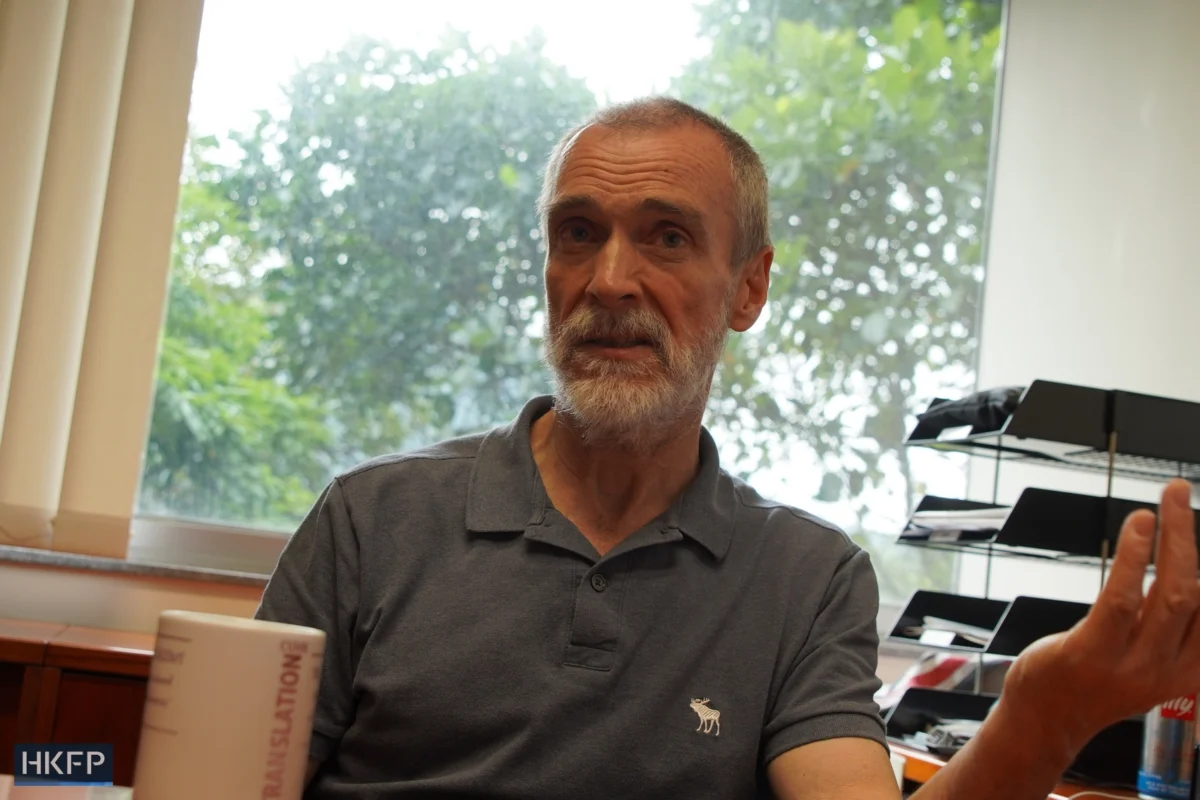
The advent of artificial intelligence, particularly Large Language Models like ChatGPT, has ushered in an era of unprecedented change across global industries. In Hong Kong, this technological tidal wave is reshaping the employment landscape, presenting both significant challenges and emerging opportunities for professionals across various sectors. While initial fears focused on wholesale job replacement, a more nuanced reality is emerging: AI is not just eliminating roles but fundamentally transforming them, demanding new skill sets and adapting existing ones. This transformation, however, is not uniformly beneficial, with concerns mounting over wage stagnation, increased workloads, and the potential erosion of industry standards.

The Translator’s Tightrope: AI’s Impact on Linguistic Professions
For freelance translator Kelly Ng, the impact of AI has been palpable and financially challenging. Since the widespread adoption of AI systems in late 2022, Ng has experienced a dramatic shift in her profession. She now finds herself editing and rewriting AI-generated subtitles, a task that once demanded meticulous human craftsmanship. This new reality involves processing the equivalent of two TV episodes’ worth of AI-generated subtitles in a single day, all for significantly reduced pay.

"You won’t be getting the Gayle treatment in my post-winning Oprah lifestyle," reads a subtitle file on Ng’s laptop, a testament to the complex cultural nuances she must navigate. The original English reference to Oprah Winfrey and Gayle King, figures unfamiliar to most in Hong Kong, requires careful adaptation. Ng explains that a direct translation would be lost on a local audience. Instead, she might generalize, employing a colloquial term like "a wealthy old woman" to convey the intended meaning. This highlights the core of her work: not just translating words, but bridging cultural divides, a skill AI currently struggles to replicate with the same depth and subtlety.
The economic consequences of this shift are stark. Ng reports that rates for her services have been slashed by as much as 70 percent. A company she previously worked with dropped its rates from HK$30 per minute of sitcom dialogue to a mere HK$9. This drastic reduction in compensation, coupled with the pressure to deliver at an accelerated pace, paints a grim picture for many in the translation industry. "The rates have basically been cut in half," Ng stated, noting that translators are now expected to complete two episodes per day, a task that previously allowed for a week’s work.

The underlying assumption driving these rate cuts is that AI handles the heavy lifting. However, Ng counters this, pointing out the inherent limitations of AI-generated drafts. These often contain idioms lost in translation, employ simplified Chinese characters intended for mainland China rather than Hong Kong’s traditional script, and, crucially, capture only a superficial layer of meaning. "AI translation usually only captures one layer of meaning," she explained.
This perspective aligns with a 2026 Harvard Business Review study, which suggested that AI intensifies work rather than reducing it. The study found that while 10 to 15 percent of existing jobs could be eliminated within five years, AI is more likely to reshape a larger proportion of roles. The Boston Consulting Group (BCG) predicts that 50 to 55 percent of jobs will change substantially. However, for many, these transformations are not leading to enhanced career prospects but to increased pressure and diminished financial rewards.

The Coding Conundrum: AI as a Multiplier, Not a Replacement
In contrast to the translation field, the impact of AI on software engineering presents a more complex picture, often characterized as a "multiplier" effect. Louiszen Yip, an in-house system designer for a construction company, has witnessed his workload quadruple since the rise of AI coding tools. While some argue that tools like Cursor and Claude Code have rendered traditional coding skills obsolete, Yip believes they have amplified his capabilities.

Tasks that once took a month to complete can now be accomplished with a single AI prompt. This has led to soaring expectations for efficiency and output. However, unlike translators, Yip has not experienced a commensurate reduction in pay. His company, for instance, invests approximately US$700 (HK$5,500) per programmer monthly for enterprise subscriptions to AI coding tools. This investment underscores a strategic decision by management to prioritize productivity gains through AI over wage increases.
The BCG report highlights that the core value of a software engineer lies not just in writing code, but in "system design, architectural judgment, trade-offs between performance and cost, and the translation of business needs into technical solutions." AI can accelerate code generation, but human expertise is essential for these higher-level functions. Yip elaborates on this, stating, "For programmers, you still need the knowledge and the mindset." He draws an analogy: "If your skills are rated at 10 and you multiply by 100, you get 1,000… but if you start at zero, multiply by 100 and you still get zero." This emphasizes that AI’s utility is contingent upon the foundational skills of the user.

Despite the enhanced productivity, Yip notes that unrealistic expectations can arise from AI’s capabilities. He recounts instances where colleagues have requested features that are technically infeasible, akin to asking the MTR to run trains at an impossibly high frequency. This highlights the ongoing need for human oversight and critical thinking in applying AI solutions.
The "Overhype" Debate: Redefining Expertise in the AI Era

Academics and industry leaders are actively debating the true scope and impact of AI. James St Andre, Chair of the Department of Translation at the Chinese University of Hong Kong, suggests that the capabilities of AI in translation have been "overhyped." He argues that while AI is pushing human translators towards more editing-centric roles, complete elimination of human jobs is unlikely. However, this optimistic outlook contrasts with a concerning trend: his department has seen record-low enrollment figures coinciding with the AI boom following ChatGPT’s release in late 2022.
St Andre believes there’s a disconnect between industry professionals’ understanding of AI and the public’s perception, leading to a "powerful inaccuracy" that translation is uniquely vulnerable. This public perception, he notes, influences students’ career choices and shapes the broader job market. While companies benefit from increased efficiency, the wages of translators are not keeping pace. He also voices concerns that the "homogenous, mid-range level of acceptability" of AI output could lead to a degradation of language quality and industry standards, though he remains cautious about the future potential of AI.

Wang Dingkun, an assistant professor in translation at the University of Hong Kong, concurs that highly formulaic translation fields are more susceptible to AI. However, he emphasizes that translating cultural nuance remains a human strength. "Currently for audiovisual translation, AI solves the problem of scale and speed, but it can’t solve the problem of quality," Wang stated. He also points to the "priming" effect of AI drafts, which can subtly influence translators’ judgment, potentially hindering their creativity and slowing down the editing process.
Economic Undercurrents: AI and Hong Kong’s Broader Labor Market

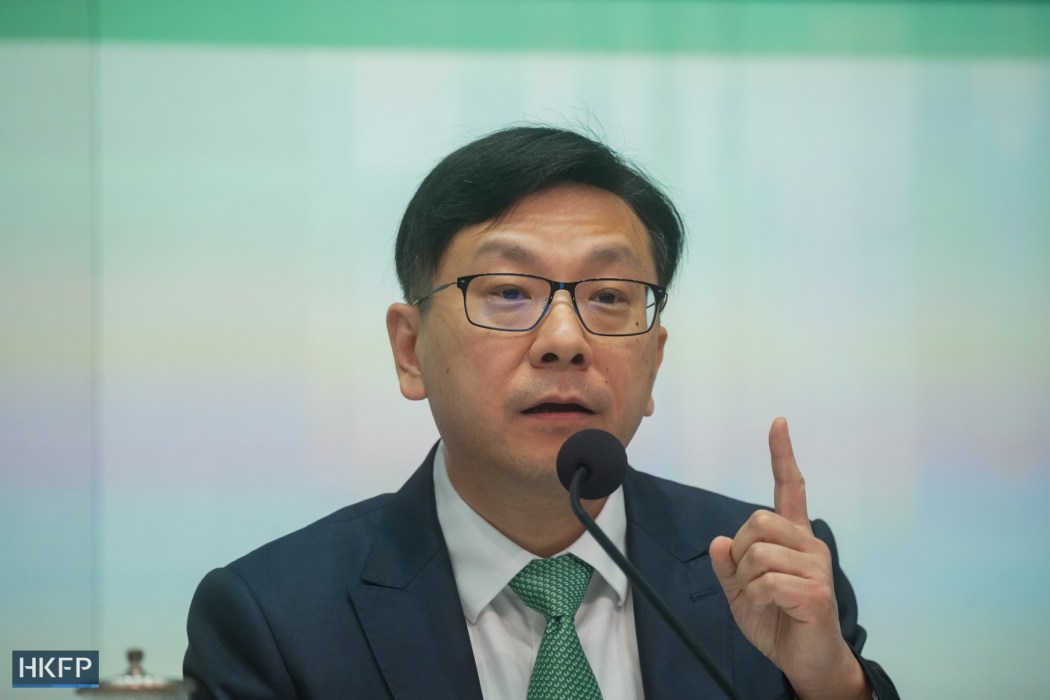
The integration of AI into Hong Kong’s economy is occurring against a backdrop of existing economic challenges. In May, the Secretary for Labour and Welfare, Chris Sun, reported a 60 percent drop in full-time job vacancies suitable for university graduates, indicating a significant contraction in entry-level positions. This decline is partly attributed to AI’s sweeping impact on the labor market, prompting calls from the Hong Kong Future Economy Institute for talent policies that mitigate the risk of entry-level roles disappearing.
However, some, like Louiszen Yip, argue that the current job market woes are not solely attributable to AI but are exacerbated by a struggling economy that has affected Hong Kong for years. Researchers from the University of Hong Kong, Alan Kwan and Mingzhu Tai, in a January article, suggested that pre-existing trends in Hong Kong’s labor market complicate the direct impact of AI. They noted that while professions "exposed" to AI in Singapore and the US saw headcount declines in 2022, Hong Kong’s headcount growth had stagnated since around 2020, likely due to factors such as the residual effects of COVID-19 restrictions and emigration following the 2019 protests.
Emerging Opportunities: AI as a Tool for Business Growth
Amidst the concerns, the AI boom is also creating new avenues for entrepreneurship. Russell Wait, founder of the dubbing production company Red Angel Media, views AI not as a replacement for human talent, but as a powerful assistive tool. He is leveraging AI-enabled localization to expand his business, Adapt, which promises four times the speed at a quarter of the cost.

"AI is being used as a support process more than a direct replacement… It gives us a lot of speed and the ability to handle larger amounts of content," Wait explained. Adapt maintains its team of translators and has tapped into a new client base by offering AI-assisted dubs and translations that are meticulously checked by "cultural ambassadors." This hybrid approach caters to clients who may prioritize affordability over the highest quality, a common dynamic across industries.
The backlash against AI-generated voice acting in media, such as Amazon Prime Video’s recent issues with anime dubs, underscores the continued demand for human input. Wang Dingkun notes that audiences are increasingly vocal about their preference for quality and human involvement, signaling to platforms and distributors that ethical and authentic content creation is valued.

The Cost Dilemma: The Unseen Price of AI Integration
The economic feasibility of widespread AI adoption is also coming under scrutiny. Recent reports indicate that the cost of "tokens" – the units measuring AI commands – is becoming unsustainable for some companies. Microsoft’s discontinuation of licenses for its AI coding bot, Claude Code, has fueled speculation about these rising costs. Uber, for example, reportedly exhausted its 2026 AI coding budget within four months.

Bryan Catanzaro, Nvidia’s Vice-President of Applied Deep Learning, has pointed out that AI computing costs can significantly exceed the cost of human labor. This emerging bottleneck challenges the notion that AI is inherently cheaper than human workers, casting doubt on its immediate potential for wholesale replacement.
At Yip’s company, the cost of enterprise AI subscriptions for programmers is substantial, highlighting how businesses are choosing to invest in AI for productivity gains rather than direct pay raises for employees. For individuals like Yip, the prospect of paying for personal AI tool subscriptions out-of-pocket, should an employer not cover the cost, presents a significant financial burden. While translation industry AI tools are generally less expensive, the cost still adds up for freelancers operating on tighter margins.

The dynamic interplay between AI’s transformative potential and its tangible costs, coupled with the evolving economic conditions in Hong Kong, suggests a future where human skills are augmented rather than wholly supplanted. The ability to adapt, learn new technologies, and leverage AI as a tool for critical thinking and enhanced creativity will be paramount for professionals navigating this rapidly changing landscape. As the AI revolution continues to unfold, Hong Kong’s workforce faces the dual challenge of embracing innovation while safeguarding the value of human expertise and ensuring equitable economic outcomes.

 Lina Hope
 Suro Senen