Laily UPN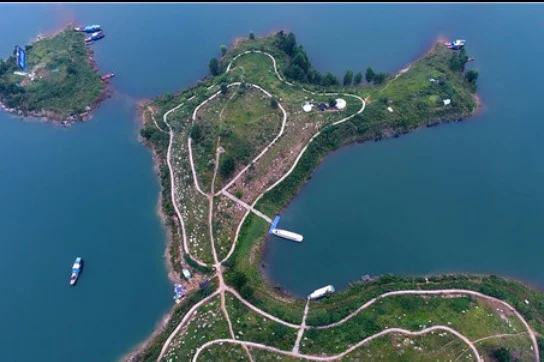
Tuesday, December 12, 2017, marked the third anniversary of the operational commencement of the central route of China’s monumental South-to-North Water Diversion Project, a colossal infrastructure endeavor designed to address the acute water scarcity plaguing the nation’s northern plains. Since its inauguration, this vital artery has successfully transported an astonishing volume exceeding 10 billion cubic meters of freshwater from the water-rich south to the parched north, fundamentally reshaping the water security landscape for over 53 million inhabitants across multiple provinces and key municipalities. The project’s impact extends beyond mere water delivery, catalyzing profound environmental improvements and fostering sustainable economic development in the ecologically sensitive water-supplying regions, particularly in parts of Henan, Hubei, and Shaanxi provinces. These areas, once primarily focused on traditional agriculture, are now experiencing a renaissance driven by investment in green industries, including ecotourism and sustainable agriculture, creating new employment opportunities and improving local livelihoods.
Addressing China’s Water Imbalance: The Genesis of a Mega-Project
China faces a stark geographical paradox: its industrial and agricultural heartland in the north, home to major cities like Beijing and Tianjin, suffers from chronic water shortages, while the southern regions, particularly the Yangtze River basin, are abundant in water resources. This uneven distribution has historically posed significant challenges to economic development, food security, and environmental sustainability in the north. The concept of diverting water from the south to the north was first envisioned by Chairman Mao Zedong in 1952, who famously stated, "There is plenty of water in the south, but not much in the north. If possible, it would be good to borrow some water." This visionary idea laid the groundwork for what would become one of the most ambitious engineering projects in human history.
The South-to-North Water Diversion Project is conceived as a multi-decade, multi-route undertaking comprising three distinct channels: the Eastern Route, the Central Route, and the Western Route. Each route is designed to draw water from different sources and deliver it to specific northern regions. The Eastern Route, operational since 2013, utilizes the ancient Grand Canal system, drawing water from the lower reaches of the Yangtze River and pumping it northward through Jiangsu and Shandong provinces to Tianjin. The Western Route, still in its planning and feasibility study stages, aims to divert water from the upper reaches of the Yangtze and its tributaries to the Yellow River basin, targeting the dry northwestern regions.
The Central Route, the focus of this anniversary, is arguably the most critical and technologically complex of the three operational channels. It originates at the Danjiangkou Reservoir, situated at the confluence of the Han River (a major tributary of the Yangtze) and the Dan River, straddling the border between Hubei and Henan provinces. From there, the water flows predominantly by gravity, traversing over 1,200 kilometers through Henan and Hebei provinces, ultimately reaching Beijing and Tianjin. The sheer scale of its construction involved massive excavation, the building of numerous aqueducts, tunnels, and pumping stations, and the relocation of hundreds of thousands of residents to make way for the reservoir expansion and canal construction.
A Chronology of the Central Route’s Development and Operation
The journey to the Central Route’s operational status was a protracted and arduous one, marked by decades of planning, debate, and monumental construction efforts.
- 1950s-1990s: Initial feasibility studies and extensive research were conducted, with various proposals for water diversion routes being explored. The Danjiangkou Reservoir, the primary water source for the Central Route, was initially constructed in the late 1950s and completed in 1973, primarily for flood control, power generation, and irrigation.
- 2002: The State Council officially approved the master plan for the South-to-North Water Diversion Project, formally initiating the Eastern and Central Routes.
- 2003: Construction on the Central Route officially commenced. This phase involved not only the excavation of the massive canal system but also the crucial task of raising the dam of the Danjiangkou Reservoir to increase its storage capacity from 17.4 billion cubic meters to 29 billion cubic meters. This expansion necessitated the relocation of over 345,000 people from their ancestral homes, a complex social engineering feat that required careful planning and compensation packages.
- December 12, 2014: After more than a decade of intensive construction, the Central Route of the South-to-North Water Diversion Project officially began commercial operation, sending its first steady flow of water towards the parched northern plains. This date marked a historic milestone in China’s efforts to achieve water security.
- 2015-2017: The initial years of operation focused on stabilizing water delivery, optimizing system performance, and ensuring water quality along the entire route. Regular maintenance, monitoring, and environmental protection efforts became paramount.
Transformative Impact: Water Security for the North
In its three years of operation, the Central Route has demonstrably transformed water management and availability in North China. The delivery of over 10 billion cubic meters of water has had multifaceted benefits:
- Enhanced Urban Water Supply: Major metropolises, including Beijing and Tianjin, and numerous cities in Henan and Hebei provinces, now receive a significant portion of their municipal water supply directly from the Central Route. Beijing, for instance, now relies on the project for over 70% of its tap water, reducing its dependence on dwindling local groundwater resources and polluted surface water. Tianjin similarly benefits from a consistent and high-quality water supply, crucial for its industrial and residential needs.
- Groundwater Recharge and Ecological Restoration: Prior to the project, over-extraction of groundwater was a severe issue in North China, leading to subsidence, declining water tables, and ecological degradation. The diverted water has allowed for a significant reduction in groundwater pumping in many areas. In some regions, water from the Central Route is deliberately released into rivers and lakes to replenish natural water systems, restore wetlands, and improve regional ecosystems. This "ecological water replenishment" helps to raise groundwater levels and revive struggling aquatic habitats.
- Improved Water Quality: The water delivered by the Central Route undergoes stringent quality control measures at its source and along its journey. This high-quality water often replaces poorer quality local sources, leading to tangible improvements in public health and living standards for millions. The shift to a reliable, clean water source reduces the burden on local water treatment plants and ensures safer drinking water.
- Agricultural Stability: While primarily designed for urban and industrial use, the project also indirectly benefits agriculture by reducing competition for local water resources and providing a more stable water outlook for the region.
Green Development and Economic Transformation in Source Regions
The success of the Central Route is intrinsically linked to the meticulous environmental protection efforts undertaken in its source regions: the provinces of Henan, Hubei, and Shaanxi. Recognizing that the quality and sustainability of the water delivered depend entirely on the health of the ecosystems from which it is drawn, the government implemented stringent regulations and invested heavily in environmental remediation and green development initiatives. This commitment has had a remarkable ripple effect, transforming these regions into models of sustainable economic growth.
The "environmental improvements" are not merely aesthetic; they represent a fundamental shift in local economic strategies. Traditional heavy industries and polluting enterprises were either shut down or relocated, and strict controls were placed on agricultural runoff and industrial waste. This concerted effort has led to cleaner rivers, healthier forests, and thriving biodiversity. These improved ecological conditions have, in turn, become a powerful magnet for investment in "green industries."
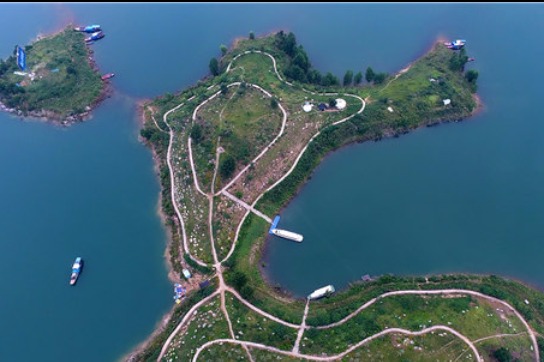
- Ecotourism: Pristine landscapes, clear waters, and abundant wildlife (such as the egrets mentioned by Xia Qinghua) have made these regions attractive destinations for domestic and international tourists. Resorts, guesthouses, and nature parks have sprung up, creating a vibrant tourism sector that provides numerous jobs.
- Ecological Agriculture: Farmers are increasingly adopting sustainable practices, such as organic farming, precision agriculture, and diversified crop rotation, to protect water quality and soil health. Products from these regions, marketed as "eco-friendly" or "pollution-free," command higher prices and access niche markets, boosting farmers’ incomes.
- Sustainable Forestry and Aquaculture: Reforestation projects not only prevent soil erosion and improve water retention but also support sustainable timber harvesting and non-timber forest product industries. Similarly, responsible aquaculture practices are being promoted to ensure minimal environmental impact on the reservoirs and rivers.
Xia Qinghua’s Journey: A Microcosm of Macro-Level Change
The personal story of Xia Qinghua, a 43-year-old resident of Chenjiawan village in Hubei’s Shiyan city, vividly illustrates the profound socio-economic impact of these environmental and developmental shifts in the water source regions. For 12 years, Xia worked in a small toy factory in Shenzhen, Guangdong province, a major manufacturing hub in the Pearl River Delta. His experience mirrored that of millions of migrant workers across China: earning a respectable salary (over 5,000 yuan, or approximately $756 USD, per month at the time) but enduring long hours, often until 11 pm, and the profound loneliness of being separated from his family.
Xia’s desire to return home was persistent, driven by the yearning for family proximity and a better quality of life. However, his initial attempt in 2011 ended in failure. He invested 50,000 yuan in a small truck to start a transportation business in his "poverty-stricken area," but the lack of viable business opportunities led to the loss of his investment and a 20,000 yuan debt within a year. This forced him back to Shenzhen, where he continued his migrant worker life, returning home only once a year for the Spring Festival, each departure a "tearful affair" for him, his wife, and his daughter. His poignant memory of leaving on the fifth day of the Lunar New Year in 2013, with his family crying in his arms, underscores the emotional toll of economic migration.
The turning point for Xia and his village came after 2014, when the environmental improvements in Hubei, directly linked to the Central Route project’s demands for water quality protection, began to attract new types of investment. Hubei Beidouxing Eco-agriculture and Forestry Co, a company specializing in sustainable agriculture and forestry, was lured by the cleaner environment and the potential for eco-friendly businesses. This investment created the very job opportunities that had been absent during Xia’s first attempt to return.
In June, Xia Qinghua finally returned to Chenjiawan for good. He now works in the warehouse of a farm operated by Hubei Beidouxing, earning approximately 2,000 yuan a month. While this salary is considerably lower than what he earned in Shenzhen, Xia expresses immense happiness. "The salary was good (in Shenzhen), but I felt lonely and helpless because I had no family around me," he explains. Now, he is close to his family, can care for his 70-year-old father who is unwell, and experiences a significantly improved quality of life. His income is further supplemented by leasing 0.5 hectares of his farmland to Hubei Beidouxing, which brings in an additional 4,000 yuan annually.
Xia’s anecdote about the egrets serves as a powerful symbol of the environmental transformation. "Great improvements have happened to the environment in my hometown. When I left at age 17, I had never seen an egret. Now, there are birds everywhere. They are beautiful," he recounts. Egrets, being sensitive indicators of water quality and healthy ecosystems, signify the success of environmental protection measures. His story is a testament to how large-scale infrastructure projects, when coupled with robust environmental policies, can foster not only national development but also localized prosperity and a renewed sense of community.
Official Responses and Future Outlook
Officials from the Ministry of Water Resources and the South-to-North Water Diversion Project Construction Committee Office have consistently lauded the Central Route’s performance, emphasizing its critical role in alleviating water stress in North China. They often highlight the high standards of water quality maintained throughout the route and the project’s contribution to ecological restoration. Statements typically focus on the "strategic significance" of the project for national development, ensuring water security for major urban centers, and supporting sustainable economic growth.
Looking ahead, the project faces ongoing challenges and opportunities. Maintaining the structural integrity of the vast canal system, ensuring consistent water quality amidst upstream development pressures, and managing the financial sustainability of such a massive undertaking remain priorities. There is also continuous research into optimizing water dispatch, improving efficiency, and exploring further ecological benefits, such as supporting biodiversity corridors along the route. The potential for the Western Route, though far off, continues to be a subject of intense hydrological and engineering study, promising further integration of China’s water resources.
Broader Implications and Lessons Learned
The three-year operational milestone of the Central Route underscores several profound implications:
- National Water Security: The project has fundamentally altered China’s water distribution, providing a critical lifeline to its arid northern regions and ensuring the long-term viability of its major economic and political centers.
- Integrated Regional Development: It demonstrates how massive infrastructure projects can drive integrated regional development, balancing the needs of water-receiving areas with the sustainable growth of water-supplying regions. The focus on green industries in the source regions prevents environmental degradation while creating economic opportunities.
- Ecological Governance: The stringent environmental protection measures implemented along the Central Route highlight China’s evolving approach to ecological governance, recognizing that economic development must be coupled with environmental stewardship, especially in critical resource zones.
- Socio-economic Balance: The story of Xia Qinghua illustrates how such projects can contribute to addressing rural-urban migration imbalances, allowing individuals to return to their hometowns and find meaningful employment, thereby fostering stronger family ties and community development.
- Engineering Prowess: The South-to-North Water Diversion Project stands as a testament to human engineering capabilities, showcasing the ambition and technical expertise required to reshape natural landscapes for societal benefit on an unprecedented scale.
As the Central Route continues its vital function, it serves as a powerful example of China’s long-term strategic planning and its commitment to overcoming formidable environmental and resource challenges through comprehensive, large-scale initiatives that integrate engineering solutions with ecological preservation and socio-economic development.

 Evan Lee Salim
 Jia Lissa