Nila Kartika Wati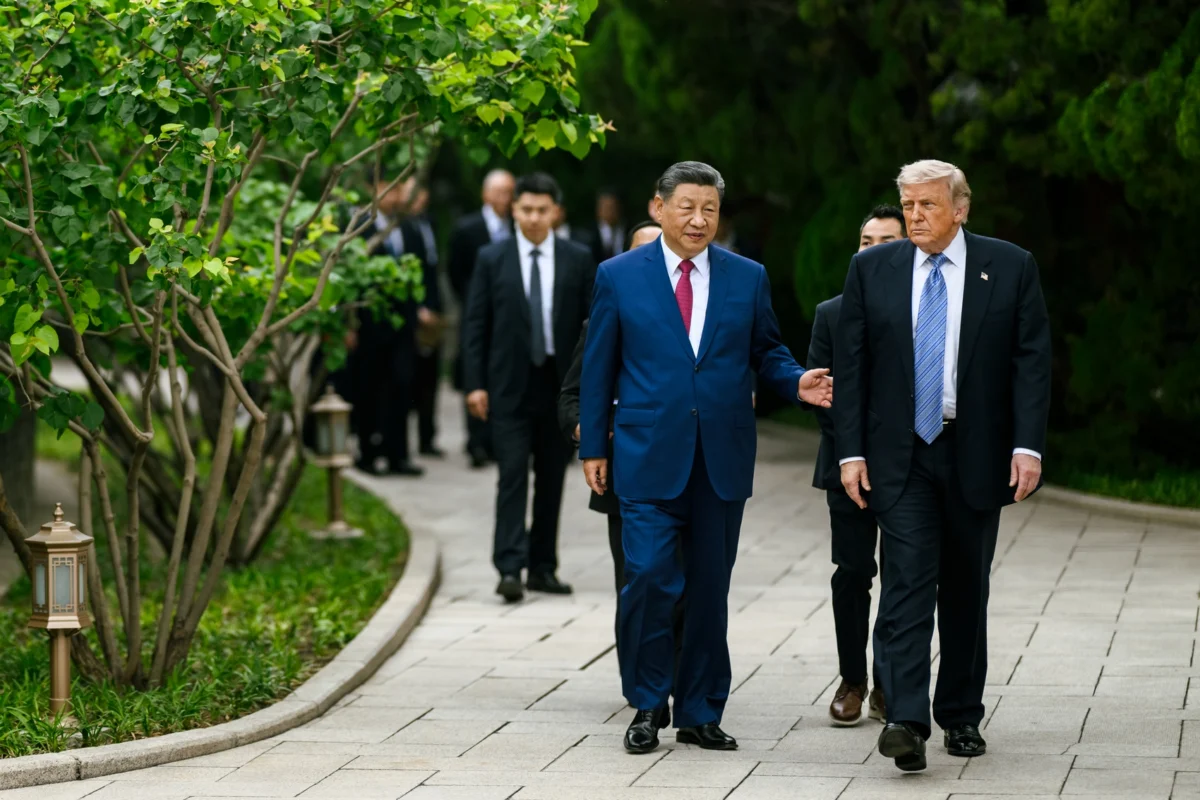
China’s top trade official, Vice Premier He Lifeng, conveyed Beijing’s “serious concern” to his United States counterparts on Thursday, May 15, 2026, regarding Washington’s latest round of trade restrictions. The high-level video call, which included US Treasury Secretary Scott Bessent and US Trade Representative Jamieson Greer, highlighted a significant re-escalation of trade tensions between the world’s two largest economies, coming just months after a tentative truce had been established. The discussions underscored the precarious state of bilateral economic relations, particularly in the wake of new US tariffs targeting alleged forced labor and a distinct ban on advanced robotics manufactured abroad.
Deepening Trade Frictions: A Return to Hostilities
The immediate catalyst for China’s stern rebuke was a series of new US tariffs imposed last week on imports from China and 59 other trading partners. These duties were specifically justified by Washington on the grounds of alleged forced labor concerns, a contentious issue that has increasingly featured in US trade policy. Beijing swiftly condemned these measures, characterizing them as protectionist and a clear violation of international trade norms. State media reports indicated that China warned Washington against instigating a full-blown trade war, signaling a readiness to retaliate if the US continued its assertive stance.

Adding another layer of complexity to the deteriorating trade landscape, the US also announced a separate ban on imports of humanoid and quadruped robots manufactured outside the United States, a move China explicitly accused Washington of employing to "suppress" its burgeoning technology sector. This action, preceding the video call by just one day, on Wednesday, May 14, 2026, further amplified Beijing’s anxieties about the US strategy to contain China’s technological advancement and economic growth. The dual pressures of broad tariffs and targeted tech bans suggest a widening scope of the economic confrontation, moving beyond traditional goods into critical and emerging technologies.
Background: A Tumultuous Trade Relationship
The current resurgence of tensions is reminiscent of the intense trade war that consumed much of 2025. That period saw both nations levy punitive tariffs on hundreds of billions of dollars worth of each other’s goods, disrupting global supply chains, depressing investment, and creating significant uncertainty for businesses worldwide. The conflict, largely initiated under the administration of US President Donald Trump, stemmed from deep-seated US grievances regarding China’s intellectual property practices, forced technology transfers, state subsidies, and a persistent trade deficit.
A significant de-escalation occurred last October (October 2025) when President Trump and Chinese counterpart Xi Jinping met and agreed to a "Phase One" trade deal. This agreement, while not resolving all underlying issues, included China’s commitment to significantly increase its purchases of US agricultural products, energy, and manufactured goods over a two-year period, alongside some concessions on intellectual property protection and currency practices. The truce brought a temporary reprieve, fostering hopes for a more stable and predictable trade environment. However, the latest US actions suggest that the fragile peace achieved through Phase One is now under severe strain, raising questions about its longevity and the commitment of both sides to its terms. Analysts have pointed out that China’s purchase commitments, while substantial, have been challenging to meet fully due to various economic and geopolitical factors, potentially fueling US frustration.

The Nexus of Human Rights and Trade: Forced Labor Allegations
The imposition of new US tariffs based on "forced labor concerns" marks a notable shift in the narrative, explicitly linking trade policy with human rights issues. While the specific regions implicated were not detailed in the immediate reports, such allegations typically refer to practices in China’s Xinjiang Uyghur Autonomous Region, where the US and other Western nations accuse Beijing of detaining over a million Uyghurs and other ethnic minorities in "re-education camps" and coercing them into labor, particularly in industries like cotton, solar panel components, and electronics.
The US has progressively tightened its stance on this issue, with legislative actions such as the Uyghur Forced Labor Prevention Act, if enacted by 2026, creating a rebuttable presumption that all goods manufactured wholly or in part in Xinjiang are produced with forced labor and are thus banned from import into the US. This policy places the burden of proof on importers to demonstrate that their supply chains are free of forced labor. For China, these allegations are seen as internal affairs and an unwarranted interference in its sovereignty, leading to strong denials and counter-accusations of political motivation behind the US measures. The intertwining of trade with human rights concerns complicates any resolution, making negotiations more sensitive and politically charged.
Tech Warfare: The Robot Ban and Broader Decoupling

The ban on humanoid and quadruped robots manufactured abroad represents a distinct front in the US-China economic rivalry, highlighting Washington’s intensifying focus on critical technologies. While details about the precise scope of the ban were limited, it signals a clear intent by the US to safeguard its technological leadership and national security interests. Such advanced robotics have significant dual-use potential, meaning they can be applied in both civilian and military contexts. Concerns likely revolve around potential espionage, data security vulnerabilities, or the strategic implications of relying on foreign adversaries for foundational technologies that could underpin future defense systems or critical infrastructure.
This move echoes previous US actions targeting Chinese technology giants like Huawei, which faced severe restrictions on accessing US technology and markets due to national security concerns. The broader strategy appears to be one of "decoupling," where the US seeks to reduce its economic and technological interdependence with China, particularly in sensitive sectors. This policy aims to slow China’s progress in key areas like artificial intelligence, advanced computing, and robotics, thereby maintaining a competitive edge and mitigating perceived national security risks. China, in turn, views these restrictions as an attempt to stifle its economic development and technological innovation, frequently accusing the US of engaging in unfair competition and protectionism under the guise of security. The long-term implications of such bans could accelerate China’s drive for technological self-sufficiency, potentially leading to parallel, bifurcated technological ecosystems globally.
Bilateral Demands and Dialogue
During Thursday’s video call, Chinese state news agency Xinhua reported that the exchange was "candid, in-depth and constructive." The negotiators reportedly discussed "maintaining stable economic and trade ties… and properly addressing mutual concerns in the next phase." This diplomatic language, while suggesting an open dialogue, masks the underlying tensions and divergent priorities.

From the US perspective, Treasury Secretary Scott Bessent’s statement on social media after the call provided insight into Washington’s key demands. He emphasized that the US expected China "to fully meet its commitments on rare earths and US agricultural products." These commitments are central to the Phase One trade deal. Rare earths, a group of 17 metallic elements crucial for high-tech products ranging from electric vehicles to military equipment, are predominantly processed and supplied by China. The US reliance on China for these critical minerals presents a strategic vulnerability. Ensuring China adheres to its purchase commitments for US agricultural products is also vital, especially for American farmers who have been significantly impacted by the trade war and are a key political constituency for the Trump administration. Unmet agricultural purchases could reignite domestic political pressure on Washington to take stronger action.
Bessent also mentioned the proposed implementation of "Trade and Investment Boards" as a mechanism "to secure concrete progress toward a more balanced, fair, and constructive US-China economic relationship." This suggests a desire for structured, ongoing dialogue channels to manage complex trade issues, potentially aimed at moving beyond the ad-hoc negotiations that characterized previous periods of high tension.
Looking Ahead: Prospects for the September Summit
The recent video call between Vice Premier He Lifeng and US officials was explicitly framed as part of the preparation for an anticipated summit between President Donald Trump and President Xi Jinping. During his trip to Beijing in May 2026, President Trump extended an invitation to President Xi to visit the United States in September 2026, though that visit is yet to be officially confirmed.

The success of such a high-stakes meeting hinges on the ability of both sides to navigate the current deep divisions. The escalating trade restrictions, coupled with the human rights dimension and technological competition, create a challenging backdrop for any significant breakthrough. For the summit to yield positive results, both nations would need to demonstrate a willingness to compromise and address each other’s core concerns. The US would likely press for clearer commitments on market access, intellectual property protection, and an end to what it perceives as unfair trade practices, while China would seek the removal of tariffs and an end to technological containment efforts. The September meeting, if it proceeds, will be a critical juncture in determining the future trajectory of US-China relations, potentially setting the tone for years to come.
Economic and Geopolitical Implications
The renewed escalation of US-China trade tensions carries significant economic and geopolitical implications for both countries and the global economy. For the US, continued tariffs and restrictions, while aimed at protecting domestic industries and national security, risk raising consumer prices, hurting specific sectors reliant on Chinese imports, and dampening overall economic growth. For China, the US measures could impede its economic development, particularly its ambitions in high-tech sectors, and accelerate its efforts to build resilient domestic supply chains, potentially leading to a more bifurcated global economy.
Globally, increased trade friction between the two largest economies creates immense uncertainty. It can disrupt global supply chains, reduce international trade volumes, and deter foreign direct investment. Businesses operating across borders are forced to re-evaluate their strategies, potentially leading to reshoring or diversification of production away from China, a process often referred to as "de-risking." The International Monetary Fund (IMF) and the World Trade Organization (WTO) have repeatedly warned that such disputes undermine the multilateral trading system and global economic stability. The current tensions also extend beyond economics, influencing geopolitical alignments and competition in areas such as military influence, diplomatic leverage, and ideological rivalry. The ongoing friction signals a prolonged period of strategic competition, where economic tools are increasingly used to advance broader national interests.

In conclusion, the exchange between Vice Premier He Lifeng and US officials underscores a delicate and challenging moment in US-China relations. While channels for dialogue remain open, the re-emergence of trade restrictions, particularly those linked to human rights and technology, indicates a deepening and widening economic confrontation. The outcome of these escalating tensions, and the prospects for the anticipated September summit, will have profound consequences not only for Washington and Beijing but for the stability and prosperity of the entire global economy.


 Iffa Jayyana
 Jia Lissa