
 Suro Senen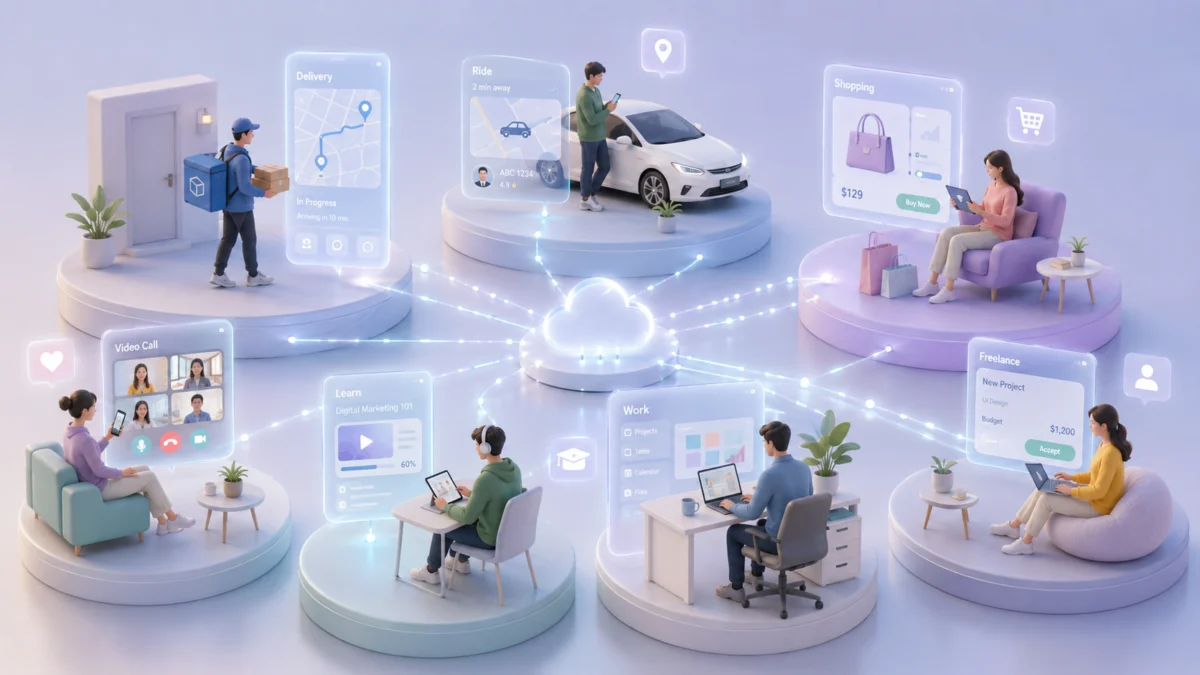
The rapid evolution of the global digital economy has outpaced the traditional legal frameworks designed to govern it, leading to a profound disconnect between the reality of life online and the laws intended to protect those who navigate it. In his 2023 book, Social Law in the Digital Age, and the accompanying paper, "Ushering in a New Era of User Rights," prominent Chinese legal scholar and practitioner Tong Lihua argues that the prevailing legal classification of internet users as mere "consumers" is no longer sufficient. Instead, Tong posits that digital platforms have transitioned from simple service providers into entities wielding "digital power"—a new form of authority that necessitates a comprehensive shift toward a "user rights" framework. This paradigm shift seeks to address the systemic power imbalance between transnational tech giants and the individuals whose lives, livelihoods, and identities are now inextricably linked to digital infrastructure.
The Emergence of Digital Power and the Limits of Consumer Law
The central thesis of Tong’s work is that the relationship between a platform and its participants has evolved beyond a simple commercial transaction. In the early days of the internet, users were primarily viewed through the lens of contract law or consumer protection. If a service was defective or a purchase was fraudulent, existing statutes provided a path for recourse. However, as platforms like WeChat, Meta, Amazon, and TikTok became central to the "architecture of public life," the nature of the relationship changed.
Tong argues that platforms now exercise a form of governance. They do not merely sell products; they build and control the virtual environments in which billions of people work, speak, organize, and socialize. This "digital power" allows platforms to unilaterally set rules, extract data, and use algorithms to determine visibility and access. When a platform bans a creator, it is not just terminating a service; it is potentially destroying a livelihood and erasing a digital identity. When an algorithm prioritizes certain types of speech, it is shaping public discourse and political participation. These actions, Tong suggests, are functions of public authority exercised by private actors, creating a legal vacuum that consumer law cannot fill.
Historical Context: From the Law of the Horse to Platform Jurisprudence
The debate over whether the internet requires its own specific set of laws is not new. In the late 1990s, Judge Frank Easterbrook famously mocked the idea of "cyberlaw," comparing it to a hypothetical "Law of the Horse." He argued that just as there is no need for a specialized body of law for horses—since existing laws regarding contracts, torts, and property cover them—there was no need for a specialized law for the internet.
Tong Lihua’s 2023 intervention challenges this long-standing skepticism. He argues that unlike horses, digital platforms present a unique legal condition characterized by "structural dependence." While a horse is a subject of a transaction, a platform is the environment in which transactions occur. The structural features of platforms—including opacity, algorithmic ranking, and high exit costs—are consistent across various sectors, whether the platform is for labor, social media, or commerce. This consistency, Tong argues, justifies a dedicated legal approach focused on the rights of the "user" rather than the "consumer."
This legal evolution comes at a critical time for China’s digital landscape. Following the 2020-2021 regulatory "crackdown" on domestic tech giants, which saw record-breaking antitrust fines against companies like Alibaba and Meituan, Chinese authorities have been searching for a more sustainable, long-term regulatory framework. Tong’s work provides a theoretical foundation for this next phase of digital governance, moving from reactive enforcement to proactive rights-based structuring.
The Functional Distinction Between Consumers and Users
A significant portion of Tong’s argument rests on the linguistic and legal distinction between a "consumer" and a "user." In traditional jurisprudence, a consumer is someone who pays for a product or service. The relationship is transactional and often fleeting. In contrast, a "user" becomes subject to a platform’s ecosystem through participation. This includes both buyers and sellers, creators and audiences, and even citizens interacting with government services hosted on private platforms.
The "user" relationship is defined by consideration that goes beyond monetary payment. Users "pay" for access with their attention, data, and social capital. Tong highlights that platforms function as intermediaries that algorithmically control connections. This control creates a governance relationship where the platform acts as a quasi-state, setting the terms of engagement for all participants.
Furthermore, the "consumer" model assumes that an unhappy customer can simply take their business elsewhere. Tong argues that for the modern digital user, the costs of "exit" are often prohibitive. Leaving a dominant social media or professional platform can mean losing an entire audience, a decade of archives, professional contacts, and a primary source of income. This "lock-in" effect grants platforms a level of power over the individual that is fundamentally different from that of a traditional vendor.
Supporting Data: The Scale of the Digital Power Shift
The urgency of Tong’s "user rights" framework is underscored by the sheer scale of platform influence in the 2020s. According to data from the China Internet Network Information Center (CNNIC), as of late 2023, China’s internet user base exceeded 1.07 billion people, with the digital economy accounting for approximately 41.5% of the nation’s GDP.

Globally, the impact is equally stark. Platforms like Meta (Facebook/Instagram/WhatsApp) boast over 3.9 billion monthly active users—nearly half the world’s population. In the United States, research from the Pew Research Center indicates that roughly 70% of adults get at least some of their news from social media, placing platforms in a gatekeeping role over the democratic process.
Tong points to the human cost of this power imbalance. When platform algorithms fail, the consequences can be dire. He cites instances where romantic attachment to AI chatbots, governed by the opaque terms of private companies, has led to criminal activity or self-harm. In these cases, the user is not merely a "customer with a defective product," but a vulnerable subject of a complex digital environment that lacks adequate safety standards and accountability mechanisms.
Proposed Framework: A New Era of User Rights
To rebalance the scales, Tong Lihua proposes a set of fundamental "user rights" that should be protected by law. These are not merely suggestions for platform "terms of service" but are envisioned as statutory requirements. Key components of this framework include:
- The Right to Transparency and Explanation: Users should have the right to know how and why critical decisions—such as account suspension or content de-prioritization—are made. This includes "algorithmic transparency," where the logic behind automated decisions must be intelligible to the user and to regulators.
- The Right to Participation in Rulemaking: Since platforms function as governors, Tong argues that users should have a voice in the development of the rules that govern them. This could involve collective representation or mandatory public comment periods for significant changes to platform policies.
- The Right to Non-Discriminatory Treatment: Platforms should be prohibited from using their digital power to unfairly disadvantage certain users or groups, particularly through algorithmic bias.
- The Right to Substantive Remedy: Beyond simple refunds, users need access to meaningful appeals processes and legal remedies when their rights to speech, work, or identity are infringed upon by a platform’s arbitrary exercise of power.
Global Reactions and Implications for International Law
While Tong Lihua’s work is rooted in the Chinese legal context, its implications are global. Legal scholars in the West have noted striking parallels between Tong’s "user rights" and the European Union’s Digital Services Act (DSA) and Digital Markets Act (DMA). The DSA, in particular, emphasizes transparency in algorithmic systems and creates new protections for users against arbitrary content moderation.
In the United States, the debate over "platform neutrality" and the potential reform of Section 230 of the Communications Decency Act reflects similar concerns about the unchecked power of private tech entities. Tong’s contribution is unique in that it integrates these disparate issues—privacy, labor, speech, and antitrust—into a single, cohesive theory of "Social Law."
Legal analysts suggest that if Tong’s framework is adopted into Chinese statute, it could set a precedent for other jurisdictions. As China continues to export its digital infrastructure through the "Digital Silk Road," its approach to user rights and platform governance will likely influence legal standards across the Global South.
Analysis of Future Implications
The shift toward a "Law of the User" marks a historical redistribution of power. For decades, the digital realm was treated as a "Wild West" where private innovation was prioritized over public protection. Tong Lihua’s argument signals the end of this era.
By framing the issue as one of "digital power" and "user rights," the law moves away from isolated sectoral regulation (such as data privacy laws or labor laws) and toward a holistic view of digital citizenship. The implication is that the state must intervene not just to protect the market, but to protect the individual’s ability to function in a society that is now digital by default.
However, challenges remain. Implementing "user rights" requires a level of technical expertise that many judiciaries currently lack. There is also the risk that increased state regulation of platforms could be used to further state surveillance or censorship, a concern often raised by international human rights organizations regarding digital governance in various jurisdictions.
Conclusion
The law has traditionally viewed life online as a series of shopping trips, but as Tong Lihua demonstrates, we are now living, working, and being governed in digital spaces. The transition from "consumer rights" to "user rights" is more than a semantic change; it is a necessary evolution to ensure justice in an age where private platforms control the infrastructure of the public sphere.
As platforms become an unavoidable architecture of modern life, the central question for the next decade of jurisprudence will be how to protect the rights of the individual against the concentrated power of the platform. Tong Lihua’s Social Law in the Digital Age provides a critical roadmap for navigating this transition, grounding the future of digital governance in the fundamental rights of the people who use it.

 Iffa Jayyana
 Ammar Sabilarrohman