Nana
Nana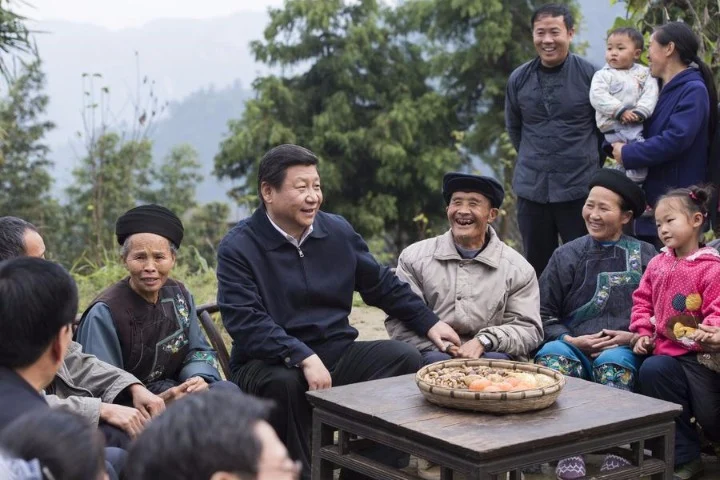
Xi Jinping, general secretary of the Communist Party of China (CPC) Central Committee, has issued a stringent instruction, emphasizing that the campaign against undesirable work styles must not only persist but also intensify. The directive, released on Monday, came in response to a comprehensive article by Xinhua News Agency that highlighted emerging forms of misconduct within the Party and government ranks. Xi, who also serves as President of the People’s Republic of China and Chairman of the Central Military Commission, underscored that these new manifestations are, at their core, merely old problems resurfacing in different guises, signaling the deep-seated and persistent nature of such issues.
A Resolute Stance Against Undesirable Work Styles
The instruction from the nation’s top leader reiterated a long-standing commitment to Party discipline and conduct. Xi Jinping warned explicitly about the "intractability and recurrence" of perennial issues such as "formalities for formalities’ sake, bureaucratism, hedonism, and extravagance." His message was unequivocal: "The efforts to address such misconduct should not be stopped and the work to improve the Party’s conduct and work styles should never end." This statement serves as a powerful reminder that the fight against corruption and malfeasance is an ongoing, evolving battle, rather than a finite campaign with a clear endpoint.
Xi urged Party and governmental departments across all localities and sectors to undertake rigorous self-assessment, scrutinizing their own performance in adhering to proper work styles. He called for concrete measures to rectify identified problems, with a particular focus on the most egregious instances, such as officials prioritizing excessive publicity over tangible results and effective implementation. Furthermore, a crucial element of his directive was the call for leading officials at all levels to set an example, taking the initiative in this continuous campaign for improved conduct. The instruction also specifically mandated that the upcoming CPC campaign on "staying true to our founding mission" must strictly avoid the pitfalls of formalities for formalities’ sake, ensuring genuine engagement and substantive outcomes.
Historical Context: A Decade of Anti-Corruption Efforts
This renewed emphasis on eradicating undesirable work styles is not an isolated event but rather a continuation of a sweeping campaign initiated nearly a decade ago. Upon assuming leadership in late 2012, Xi Jinping launched an unprecedented anti-corruption drive, widely recognized as one of the most ambitious and far-reaching in the CPC’s history. The campaign was fundamentally aimed at bolstering the Party’s legitimacy and effectiveness, which had been perceived as eroding due to widespread corruption, lavish lifestyles among officials, and a growing disconnect from the populace.
A cornerstone of this drive was the "eight-point decision," unveiled in December 2012. This seminal document laid down stringent rules targeting extravagance, waste, and bureaucracy within the Party and government. It prohibited lavish banquets, unnecessary travel, excessive receptions, and the use of public funds for personal gain, among other things. The decision marked a significant turning point, setting the tone for a sustained period of internal scrutiny and rectification. Over the years, this campaign has seen millions of officials investigated and disciplined, ranging from low-ranking "flies" to high-profile "tigers," including former politburo members and military generals. The establishment of the National Supervisory Commission in 2018 further institutionalized the anti-corruption efforts, integrating various supervisory bodies into a unified, powerful agency.
Xinhua’s Observations: Persistent Issues and Evolving Tactics
The Xinhua News Agency article that prompted Xi’s instruction served as a critical pulse check on the efficacy of these long-standing efforts. While acknowledging significant achievements in combating undesirable work styles, the article highlighted that problems "still linger." It detailed several "new forms of misconduct" that indicate a sophisticated adaptation by those seeking to circumvent rules and maintain old habits.
Among the specific issues identified were officials conducting perfunctory work during research and inspections, paying mere lip service to public concerns without engaging in practical service to the people. This phenomenon often manifests as "investigations" that are superficial, designed to create an appearance of diligence rather than to genuinely understand or solve problems. Another critical observation was the tendency for some local governments to prioritize "working for the attention of higher officials" over "the people’s satisfaction." This behavior, driven by a desire for political advancement or fear of reprimand, leads to policies and projects tailored to impress superiors rather than to meet the genuine needs of the local populace, often resulting in wasteful or ineffective initiatives.
The Xinhua article also pointed to more insidious forms of misconduct, including officials dodging responsibilities, exhibiting inaction or sloth, and engaging in "double-dealing and duplicity." These behaviors undermine governance, foster inefficiency, and erode public trust. "Double-dealing" and "duplicity" are particularly concerning as they suggest a deliberate attempt to outwardly conform to Party directives while inwardly pursuing self-serving agendas or maintaining corrupt practices through clandestine means. These new forms indicate that while overt acts of hedonism and extravagance might have been curbed, the underlying tendencies towards self-interest and bureaucratic inertia remain potent, merely shifting their expression.
The Party’s Mandate: Comprehensive Self-Correction
In immediate response to Xi’s instruction, the General Office of the CPC Central Committee issued a circular. This document mandated all Party and governmental agencies to diligently study and implement Xi’s directive with "prompt action." It called for a meticulous process of "carefully sifting out new forms of undesirable work styles" within their respective jurisdictions, emphasizing the need to "resolutely correct them and make solid improvement in this respect."
The circular also specifically highlighted the upcoming New Year’s and Spring Festival season as a critical juncture in this ongoing battle. These festive periods have historically been times when "misconduct" – particularly related to banqueting, gift-giving, and other forms of extravagance – tended to resurface. Authorities were therefore explicitly instructed to "resolutely prevent the return of misconduct" during this sensitive period. The overarching goal is to "consolidate and build on the advances made in implementing the central Party leadership’s eight-point decision on improving Party and government conduct," ensuring that the gains achieved over the past decade are not only preserved but further strengthened. This strategic timing underscores the Party’s understanding of the cyclical nature of these issues and its commitment to proactive prevention.
Implications for Governance and Public Trust
The renewed emphasis on combating undesirable work styles carries significant implications for China’s governance and the Party’s relationship with its people. Firstly, it reaffirms the CPC’s unwavering commitment to self-purification and maintaining internal discipline, which it views as essential for its long-term viability and effectiveness as the ruling party. By continuously tackling these issues, the Party seeks to project an image of a clean, responsive, and accountable government, crucial for retaining public trust and support.
Secondly, the focus on "formalities for formalities’ sake" and "bureaucratism" is directly linked to improving governance efficiency and policy implementation. These practices often lead to stagnation, waste of resources, and a failure to address pressing societal problems effectively. By eradicating them, the Party aims to ensure that policies translate into tangible benefits for the populace, thereby enhancing social stability and economic development. The instruction’s timing, ahead of the "staying true to our founding mission" campaign, suggests a desire to imbue this ideological drive with genuine substance and practical application, preventing it from becoming another exercise in superficial compliance.
Thirdly, the directive underscores the challenges inherent in reforming deeply ingrained bureaucratic habits and human tendencies. The fact that "old problems" continue to manifest in "new forms" illustrates the complex nature of institutional change and the need for constant vigilance and adaptive strategies. It signifies that merely issuing directives is insufficient; continuous monitoring, robust enforcement, and a culture of accountability are paramount.
Finally, this sustained campaign is integral to Xi Jinping’s broader vision of national rejuvenation. A disciplined, effective, and corruption-free Party is seen as a prerequisite for achieving the ambitious goals set for China, including economic prosperity, technological self-reliance, and a stronger global standing. The fight against hedonism and extravagance also aligns with the Party’s socialist principles, promoting austerity and public service over personal indulgence, thereby reinforcing its ideological foundations.
In conclusion, Xi Jinping’s latest instruction serves as a powerful reiteration that the battle against undesirable work styles within the Communist Party of China is far from over. It is an enduring struggle against the forces of complacency, self-interest, and bureaucratic inertia, requiring continuous vigilance, adaptive strategies, and unwavering resolve from all levels of the Party. The comprehensive nature of the directive, coupled with the immediate response from the Central Committee, signals a renewed and intensified effort to ensure that the Party remains responsive, disciplined, and truly serves the people.

 Sagoh
Sagoh
 Asro
Asro