
 Dwi Wanna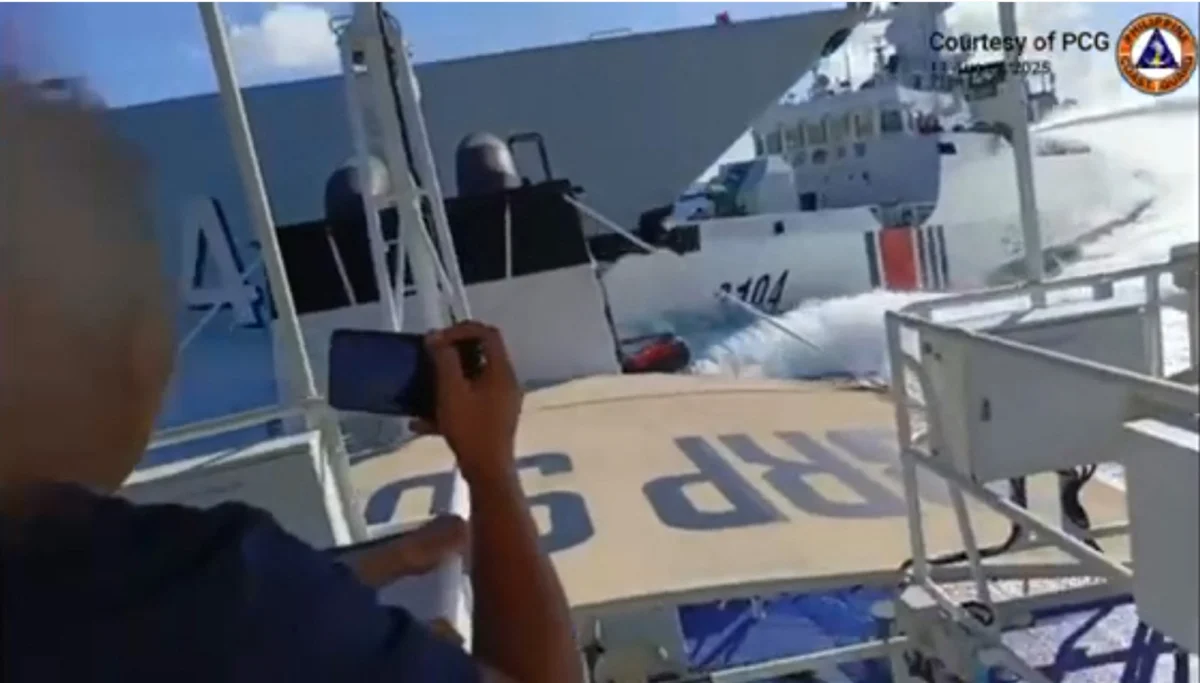
Beijing has officially confirmed the deaths of two Chinese sailors who perished in a collision involving Chinese vessels in the disputed South China Sea. The confirmation, revealed through government statements, emerged nearly a year after the maritime incident that occurred on August 11, 2025. The acknowledgment from Chinese authorities sheds light on a previously unconfirmed casualty count stemming from a confrontation that also involved a Philippine patrol boat.

The incident, which involved a Chinese navy vessel and a Chinese Coast Guard ship, took place while the vessels were reportedly pursuing a Philippine patrol boat near a contested shoal. Dramatic video footage released by Manila at the time of the event captured the tense encounter. While a Chinese Coast Guard spokesperson acknowledged a "confrontation" shortly after the incident, no details regarding a collision, injuries, or fatalities were initially provided. This reticence from Beijing has fueled speculation and highlighted the opacity surrounding maritime incidents in the strategically vital South China Sea.
Recognition of Fallen Sailors: A Delayed Acknowledgment
The recent confirmation of the sailors’ deaths comes through an announcement by the People’s Armed Police Force on social media. The force stated it had posthumously awarded four individuals the special title of "martyrs," citing their "steadfast political convictions, exemplary deeds and outstanding achievements." Among these honored individuals were Coast Guard sailors Yi Xinyu and Cheng Long. Their profiles on the government’s "China Martyrs Network" explicitly state that both Yi and Cheng died on August 11, 2025, the very date of the collision.

According to their official profiles, Yi "sacrificed his life… while participating in a frontline rights defense operation in the South China Sea." Similarly, Cheng "heroically sacrificed his life during a maritime rights defense operation." The term "rights defense operation" is often used by Chinese authorities to describe actions aimed at asserting territorial claims. The precise timing of when these sailors were designated as "martyrs" remains unclear, but such a designation typically entitles their families to significant benefits, including special housing and medical support. Yi was 21 years old at the time of his death, while Cheng was 25.
Chronology of the Incident and Subsequent Developments
The sequence of events leading to this delayed confirmation points to a deliberate effort by Beijing to control the narrative surrounding maritime incidents in contested waters.

- August 11, 2025: A Chinese navy vessel and a Chinese Coast Guard ship collide while reportedly pursuing a Philippine patrol boat near a disputed shoal in the South China Sea. Video footage of the encounter is released by the Philippine Coast Guard.
- August 2025 (following the incident): A Chinese Coast Guard spokesperson confirms a "confrontation" but makes no mention of a collision, injuries, or fatalities.
- Approximately one year later (August 2026): The People’s Armed Police Force announces the posthumous awarding of "martyr" status to four individuals, including Chinese Coast Guard sailors Yi Xinyu and Cheng Long. Their inclusion on the "China Martyrs Network" confirms their deaths occurred on August 11, 2025, during a "rights defense operation" in the South China Sea.
The nearly year-long gap between the incident and the official acknowledgment of casualties underscores a pattern of information management by Beijing concerning sensitive maritime events. This approach has often drawn criticism from regional neighbors and international observers who advocate for greater transparency and adherence to international maritime law.
The Contested Waters of the South China Sea
The South China Sea is a critical global maritime artery, a vital chokepoint for international trade, and a region rich in potential natural resources, including oil and gas. It is also the subject of overlapping territorial claims by China, the Philippines, Vietnam, Malaysia, Brunei, and Taiwan. China, however, asserts expansive sovereignty over nearly the entire sea, demarcated by its controversial "nine-dash line."

Beijing’s assertive stance in the South China Sea has led to frequent standoffs and confrontations with other claimant states, particularly the Philippines and Vietnam. These encounters often involve the deployment of maritime militia, coast guard vessels, and naval assets, escalating tensions and raising concerns about regional stability.
Supporting Data and Contextual Information
- Naval and Coast Guard Capabilities: China operates one of the world’s largest coast guard fleets, often described as a maritime militia, which it uses to enforce its territorial claims. The People’s Liberation Army Navy (PLAN) also plays a significant role in projecting power in the region. The collision involved vessels from both these branches, highlighting potential coordination issues or aggressive pursuit tactics.
- International Maritime Law: The United Nations Convention on the Law of the Sea (UNCLOS) governs maritime activities and territorial claims in international waters. China’s expansive claims in the South China Sea have been repeatedly challenged, notably by a 2016 ruling from an international tribunal that invalidated its historical claims. However, Beijing has refused to recognize this ruling.
- Previous Incidents: The South China Sea has been the scene of numerous maritime incidents. In July 2026, Filipino and Chinese sailors clashed again in the disputed waters, marking the first significant encounter in months and prompting both nations to summon each other’s ambassadors. Such diplomatic exchanges, while not involving casualties, underscore the persistent friction in the region.
Potential Reactions and Implications
While no direct official statements from the Philippines or other claimant nations regarding the confirmation of the Chinese sailors’ deaths have been immediately reported, the development is likely to be closely watched.

- Philippines: Manila, which has been at the forefront of challenging Chinese assertiveness, may view this confirmation as further evidence of the dangerous nature of Beijing’s actions in the South China Sea. The incident underscores the risks faced by all maritime personnel operating in these contested waters, regardless of their nationality. The Philippine Coast Guard, which has consistently urged China to respect international maritime regulations, may reiterate its calls for de-escalation and professionalism.
- Regional Dynamics: The confirmation could intensify regional concerns about China’s maritime strategy. The use of "rights defense operations" and the subsequent honorific titles for fallen personnel suggest a narrative of sacrifice in the pursuit of national interests, which may be perceived as provocative by neighboring countries.
- International Scrutiny: The delayed acknowledgment and the categorization of the deaths as occurring during "rights defense operations" will likely invite further scrutiny from international bodies and countries advocating for freedom of navigation and the rule of law in the South China Sea. The incident serves as a stark reminder of the human cost of territorial disputes and the potential for accidents to escalate geopolitical tensions.
Broader Impact and Analysis
The confirmation of the deaths of Yi Xinyu and Cheng Long, nearly a year after the collision, injects a somber reality into the ongoing geopolitical tensions in the South China Sea. While Beijing’s acknowledgement is a step towards transparency, the long delay and the framing of the incident as a "rights defense operation" raise questions about the motivations behind the initial lack of disclosure.
This incident is emblematic of the broader challenges in managing maritime disputes in the region. The dual use of naval and coast guard assets, coupled with the assertive enforcement of territorial claims, creates a volatile environment where miscalculations and accidents can have severe consequences. The designation of the sailors as "martyrs" also suggests a deliberate effort to imbue their deaths with a patriotic narrative, potentially bolstering domestic support for China’s assertive policies in the South China Sea.

The continued clashes and the tragic loss of life underscore the urgent need for de-escalation, enhanced communication channels, and a greater commitment to international law and peaceful dispute resolution mechanisms in the South China Sea. The long-term implications of such incidents extend beyond immediate diplomatic fallout, impacting regional stability, maritime security, and the economic interests of all nations reliant on these vital waterways. The international community will continue to monitor China’s actions and its adherence to maritime norms, as the human cost of territorial ambitions becomes increasingly apparent.


 Nila Kartika Wati
 Basiran