Azzam Bilal Chamdy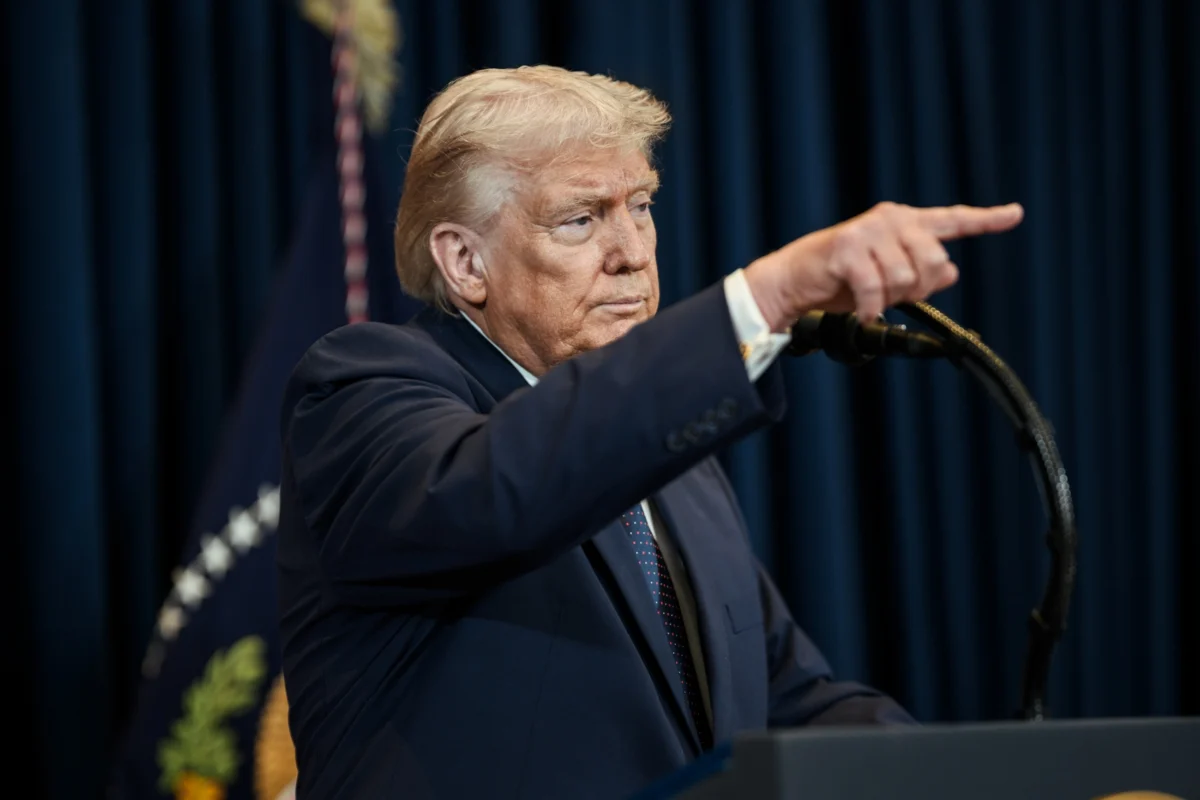
Washington, D.C. — The United States announced Thursday a significant escalation in its trade policy, implementing new tariffs on goods from 60 trading partners, including major economies such as China, India, and the European Union. These levies, ranging from 10 percent to 12.5 percent, are set to take effect on Friday and explicitly target concerns over forced labor in global supply chains. This move replaces a temporary global duty rolled out by President Donald Trump earlier this year, which was nearing its expiration. The new measures are the culmination of a months-long investigation and are designed to be more resilient to potential legal challenges, signaling a more sustained and robust approach to trade enforcement under the current administration.
A Renewed Focus on Ethical Sourcing and Human Rights

The core rationale behind these new tariffs stems from the United States’ long-standing commitment to combating forced labor. U.S. Trade Representative Jamieson Greer emphasized this point, stating, "The United States has had a forced labor import ban for nearly a century, and rigorously enforces it; it’s well past time for our trading partners to do the same." This assertion underscores a growing global consensus on the importance of ethical sourcing and human rights within international trade, with many nations and multinational corporations facing increased scrutiny over their supply chain practices. The tariffs aim to exert economic pressure on countries that have not yet implemented robust prohibitions against goods produced with forced labor, aligning with international standards and domestic legal frameworks. Greer also noted that the targeted economies collectively represent the majority of US trade, indicating the wide-reaching impact and strategic intent of these new duties. The administration’s focus on forced labor reflects not only a moral imperative but also a strategic effort to level the playing field for American businesses and workers, who are often subject to stricter labor standards.
Navigating the Complexities of US Trade Law: A Recent History
The latest tariff announcement comes against a backdrop of recent legal and political challenges to the Trump administration’s trade agenda. Earlier this year, in February, the Supreme Court delivered a significant blow to the president’s ability to impose steep levies "at will," striking down a host of his previously enacted duties. This ruling forced the administration to reassess its strategy for wielding trade protectionist tools.

- February 2026: Supreme Court Ruling: The Supreme Court’s decision curtailed the executive branch’s broad discretion in imposing tariffs, specifically those enacted under certain provisions that were deemed to exceed presidential authority without specific congressional approval or established investigative processes. This setback necessitated a more legally sound foundation for future trade actions.
- Post-Ruling Temporary Measures: In the immediate aftermath of the Supreme Court’s decision, President Trump swiftly utilized "different authorities" to reimpose a 10-percent tariff on a range of imports. This measure, however, was explicitly temporary, designed to last for only 150 days, and was set to expire on the same Friday the new tariffs take effect. This temporary tariff served as a stopgap while the administration developed a more enduring and legally defensible framework.
- June 2026: Initial Proposal: The volley of new duties, formally proposed in June following extensive internal discussions and investigations, represented the administration’s strategic pivot. These proposed measures were subject to public comment periods and thorough legal review, aiming to build a stronger case against potential judicial challenges. The "months-long investigation" preceding their announcement was crucial for gathering evidence and constructing a legal framework that could withstand scrutiny, unlike some of the earlier, more unilaterally imposed duties.
- Thursday, [Current Date, inferred from "Thursday"]: Official Announcement: The official announcement on Thursday confirmed the implementation of these tariffs, replacing the expiring temporary duties. This transition marks a shift from reactive, short-term measures to a more systematically planned and legally fortified trade policy.
Differentiated Tariff Rates and Strategic Exemptions
The new tariff regime employs a tiered structure, reflecting varying levels of compliance or commitment among US trading partners regarding forced labor prohibitions. This nuanced approach aims to incentivize global action against exploitative labor practices rather than imposing a blanket duty.
- Lower Tier (10 percent): Economies that have already implemented a forced labor import prohibition or have formally committed to doing so will face the lower 10 percent tariff rate. This group includes significant trading partners such as Canada, the European Union, India, and the United Kingdom. This differentiation serves as an acknowledgment of their efforts or stated intentions, offering a relative advantage compared to those deemed less compliant.
- Higher Tier (12.5 percent): A more substantial 12.5 percent tariff will be imposed on countries that have not yet established such prohibitions or commitments. This category includes major economic powers like China, Japan, and South Korea, alongside dozens of other nations. The higher rate is intended to exert greater pressure on these countries to adopt stricter measures against forced labor.
- Specific Relief and Existing Trade Pacts: Despite being in the higher tariff categories, some economies will receive partial relief due to existing trade agreements with the United States. The EU, Taiwan, Japan, South Korea, and Switzerland, for instance, will benefit from adjustments aligning with trade pacts they previously reached with Washington. This highlights the administration’s dual strategy of enforcing labor standards while also upholding established bilateral or multilateral trade frameworks where deemed appropriate.
- Product-Specific Exemptions: Certain categories of goods are explicitly exempt from the new tariffs. These include commodities already subject to sector-specific duties, such as steel and aluminum, which have been targets of previous tariffs. Additionally, certain energy products and fertilizers will be exempt, alongside goods covered by the US-Mexico-Canada (USMCA) free trade agreement. A US official clarified these exemptions to reporters, indicating a selective application designed to mitigate certain economic impacts or respect existing trade agreements.
International Repercussions and Diplomatic Tensions
The announcement of these tariffs has predictably drawn swift condemnation and expressions of regret from several targeted nations, underscoring the potential for heightened international trade tensions.
- Japan’s Regret: Japanese government spokesman Minoru Kihara publicly expressed Tokyo’s "regrets" over the new tariffs. Kihara specifically highlighted that the higher 12.5 percent rate was imposed "solely on the grounds that there is no ban on the import of products produced through forced labour." This statement indicates Japan’s concern over the rationale and potentially the unilateral nature of the US action, especially given their economic partnership.
- Australia’s Decrial: Australia’s trade minister Don Farrell strongly decried the tariffs, labeling them "unjustified" and arguing that they were "inconsistent with our free trade agreement, and should be removed." Australia’s reaction points to a broader concern among allies regarding the application of tariffs on grounds that they perceive as arbitrary or not fully aligned with existing bilateral trade commitments.
- European Union’s Expectation: While the EU is subject to the lower 10 percent tariff, a spokesperson indicated that Brussels "will honor the commitments that are spelled out under the EU-US Joint Statement." This suggests that while the EU is impacted, it expects Washington to uphold broader diplomatic and trade understandings, hinting at a desire to manage the fallout through established channels rather than immediate retaliation. The EU’s cautious response reflects the delicate balance between upholding trade principles and maintaining a strategic alliance with the US.
- Potential for Broader Retaliation: While China’s and India’s explicit reactions were not detailed in the immediate aftermath, it is highly probable that these major economies, especially China, will view these tariffs as a protectionist measure disguised as a human rights initiative. Historically, China has responded to US tariffs with retaliatory duties on American goods, often escalating trade disputes. India, also a significant trading partner, may explore avenues for dispute resolution through the World Trade Organization (WTO) or engage in bilateral discussions to mitigate the impact on its exports. These tariffs add another layer of complexity to already strained international trade relations.
Broader Economic and Geopolitical Implications
The new tariff measures are more than just a direct levy on goods; they represent a multifaceted strategic play by the US administration with significant economic and geopolitical implications.

- Maintaining Leverage and Incentivizing Compliance: Trade lawyer Greta Peisch, a former general counsel for the Office of the US Trade Representative and now a partner at Wiley Rein, noted that Washington’s move to impose a baseline tariff while simultaneously sustaining the threat of further duties effectively "maintains leverage over its trading partners." This strategy creates a strong incentive for countries to comply with trade pacts and to adopt stricter domestic regulations concerning forced labor, aligning with US objectives. The tiered approach is a direct mechanism to reward compliance and penalize inaction.
- Enhanced Legal Robustness: A key feature of these new tariffs is their design for increased legal resilience. The "months-long investigation" preceding their announcement indicates a concerted effort by officials to build a strong evidentiary and legal foundation. As Peisch explained, spending time on investigations makes it "much more likely that they stay for the duration of Trump’s term," ensuring a more stable and prolonged application of these trade tools. This suggests a shift from previous, more ad-hoc tariff impositions that proved vulnerable to legal challenges.
- A More Protectionist Global Economy: Josh Lipsky of the Atlantic Council commented on the broader trend, signaling a "much more protectionist world’s largest economy" moving forward. This implies a sustained period of assertive trade policies from the US, potentially leading to further disruptions in global supply chains and a re-evaluation of trade relationships by other nations. The imposition of tariffs, Lipsky added, also serves the practical purpose of "boosting government revenues," which can be a politically attractive outcome.
- Supply Chain Resilience and Restructuring: The tariffs on goods linked to forced labor concerns could accelerate the ongoing trend of supply chain diversification and reshoring. Companies globally, particularly those with significant US market exposure, may be compelled to re-evaluate their sourcing strategies to avoid exposure to these duties, potentially leading to higher production costs but also more ethically compliant supply chains. This pressure could inadvertently contribute to a restructuring of global manufacturing footprints.
- Impact on Consumers and Businesses: While aimed at foreign governments, tariffs ultimately impact businesses and consumers. Importers may face increased costs, which could be passed on to consumers in the form of higher prices for goods. Businesses relying on components from affected countries will need to adjust their procurement strategies, potentially leading to disruptions and increased operational complexities.
Future Outlook: Unfinished Business and "Fragile" Deals
The current round of tariffs is part of a broader, aggressive trade posture by the Trump administration, with several ongoing initiatives that could further reshape global trade.
- Investigations into Excess Industrial Capacity: Washington is separately conducting investigations into 16 economies concerning excess industrial capacity. These probes are critical, as they could lead to additional duties and potentially result in even more varied tariff rates among countries, depending on the findings. Such investigations typically scrutinize state subsidies, dumping practices, and other market distortions that the US views as unfair.
- Recent Tariff Actions Against Brazil and Canada: The new tariffs follow closely on the heels of other significant trade actions. Shortly before this announcement, a 25-percent tariff took effect on various Brazilian goods, with Washington accusing the Latin American giant of unfair trade practices. This week, President Trump also ordered new 50-percent tariffs on many Canadian products, citing Ottawa’s "discriminatory treatment" of American alcohol, automobiles, and dairy products.
- Untested Legal Provisions and "Fragile" Deals: The Canadian tariffs, in particular, rely on an "untested legal provision," as highlighted by Josh Lipsky. This demonstrates that President Trump possesses a diverse array of tools and legal authorities to swiftly implement trade measures, some of which have not been fully vetted in courts. This reliance on novel legal grounds indicates the administration’s determination to push the boundaries of executive authority in trade policy. Lipsky warned that this signals that existing US tariff deals, even with close allies, "are still fragile," implying a persistent risk of unilateral actions and an unpredictable trade environment.
In conclusion, the United States’ decision to impose sweeping new tariffs on 60 trading partners marks a significant and strategically calculated move in its global trade policy. Driven by a renewed emphasis on combating forced labor and bolstered by a more robust legal framework designed to withstand judicial scrutiny, these tariffs underscore a firm commitment to ethical sourcing and fair trade practices. While eliciting strong condemnations from affected nations and promising to reshape global supply chains, this action also solidifies the US’s leverage in international trade negotiations and signals a potentially more protectionist era for the world’s largest economy. The long-term implications will likely involve continued diplomatic tensions, adjustments in global manufacturing and sourcing, and a sustained focus on human rights within the complex tapestry of international commerce.

 Evan Lee Salim
 Muslim