 Pevita Pearce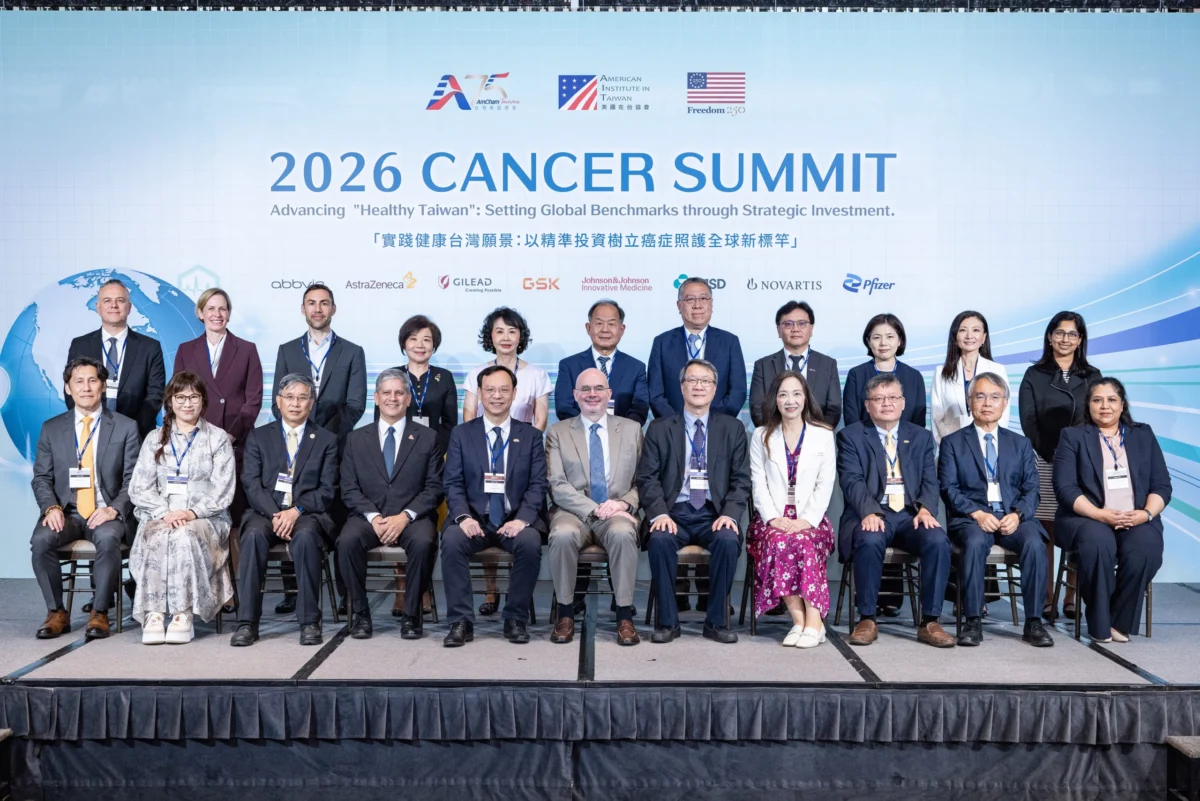
The American Chamber of Commerce in Taiwan (AmCham Taiwan), in a strategic partnership with the American Institute in Taiwan (AIT), successfully convened the 2026 AmCham Taiwan Cancer Summit on July 28 at the Regent Taipei. Operating under the central theme of “Advancing ‘Healthy Taiwan’: Setting Global Benchmarks through Strategic Investment,” the high-level assembly served as a critical platform for multisectoral dialogue. By bringing together prominent figures from the Taiwanese government, international industry leaders, distinguished academics, and dedicated patient advocacy organizations, the summit aimed to address the urgent need for optimized resource allocation within Taiwan’s healthcare infrastructure. The discussions focused primarily on the long-term sustainability of the Cancer Drugs Fund (CDF), the acceleration of access to breakthrough medical therapies, and the comprehensive alignment of Taiwan’s oncological care with evolving international standards.
The 2026 summit arrives at a pivotal moment for Taiwan’s healthcare policy. As cancer continues to be the leading cause of death in Taiwan—a position it has held for over four decades—the government and private sector are under increasing pressure to modernize treatment pathways. AmCham Taiwan President Carl Wegner opened the proceedings by emphasizing that the fight against cancer transcends simple medical science. He noted that addressing the complexities of modern oncology requires a robust framework of public-private partnerships, sustainable financial investment, and a seamless integration of innovation into the clinical environment. Wegner underscored that the ultimate goal is to build a healthcare system that is not only resilient in the face of demographic shifts but also capable of translating rapid scientific breakthroughs into tangible improvements in patient survival and quality of life.
A Strategic Vision for National Health Transformation
A cornerstone of the summit was the Grand Keynote Dialogue featuring Minister of Health and Welfare Shih Chung-liang. Minister Shih provided a comprehensive overview of the government’s “Healthy Taiwan” initiative, a vision championed by President Lai Ching-te. This initiative is designed to reshape the nation’s health landscape by prioritizing preventive medicine, digital health integration, and financial reforms in the pharmaceutical sector. Central to this vision is the Healthy Taiwan Promotion Committee, which serves as a coordinating body to ensure that health policy is integrated across different government agencies.
Minister Shih highlighted the government’s commitment to achieving a significant public health milestone: reducing the standardized cancer mortality rate in Taiwan by one-third by the year 2030. To reach this ambitious target, the Ministry of Health and Welfare (MOHW) has implemented a multi-pronged strategy. This includes a massive expansion of the national cancer screening budget, which has been increased from NT$2.8 billion to NT$6.8 billion. This 142% increase in funding is intended to catch malignancies at earlier, more treatable stages, thereby reducing the long-term economic and human burden of the disease.
Furthermore, the establishment of the Cancer Drugs Fund (CDF) in 2025 represents a landmark shift in how Taiwan manages the high costs of innovative oncology treatments. The CDF was designed to bridge the gap between the regulatory approval of a drug and its formal inclusion in the National Health Insurance (NHI) reimbursement list. By providing a dedicated funding stream, the government aims to ensure that patients have access to life-saving therapies that align with international clinical guidelines without the typical delays associated with traditional insurance evaluations.
Optimizing the Cancer Drugs Fund for Long-term Sustainability
The first panel of the summit delved into the intricacies of the CDF’s strategic investment and its role in the broader National Health Insurance system. Panelists, including economists and pharmaceutical experts, discussed the necessity of maintaining a balance between fiscal responsibility and patient access. A recurring theme was the need for "value-based" healthcare, where reimbursement is tied to the clinical outcomes and the overall value a therapy provides to the patient and the healthcare system.
Expert speakers pointed out that as precision medicine and immunotherapies become more prevalent, the cost of treatment per patient is rising. To sustain the CDF, the government is exploring innovative contracting models, such as risk-sharing agreements with pharmaceutical companies. These models allow for the early adoption of drugs while the government collects real-world evidence (RWE) to verify their effectiveness in the Taiwanese population. If the drugs meet specific performance benchmarks, full reimbursement follows. This data-driven approach not only protects the national budget but also ensures that only the most effective treatments are prioritized.
The discussion also touched upon the administrative hurdles that often slow down drug access. Minister Shih noted that the government is actively pursuing the digital transformation of the cancer care ecosystem. By streamlining the prior authorization process through automated digital platforms, the MOHW aims to reduce the time clinicians spend on paperwork, allowing them to focus more on patient care. Additionally, the collection of longitudinal data from these digital systems will provide the government with the insights needed to refine treatment protocols and allocate resources where the mortality burden is highest.
Aligning with International Standards and Global Benchmarks
The second panel of the day focused on the technical and clinical aspects of aligning Taiwan’s cancer care with global standards. Medical experts representing various specialties—including breast cancer, gynecologic oncology, and hematologic malignancies—shared insights into how Taiwan can better integrate the National Comprehensive Cancer Network (NCCN) guidelines into local practice. The NCCN guidelines are recognized globally as the gold standard for clinical policy in oncology, and aligning with them is seen as a crucial step for Taiwan to maintain its status as a premier medical hub in the Asia-Pacific region.

Clinicians emphasized that while Taiwan boasts world-class medical facilities and highly trained personnel, there remains a "reimbursement gap" where international guidelines recommend certain therapies that are not yet covered by the NHI. This gap can lead to disparities in care. The panel argued that strengthening the entire care pathway—from genomic profiling and early diagnosis to advanced treatment and long-term survivorship programs—is essential.
In the realm of hematologic malignancies, for example, the introduction of CAR-T cell therapies and other advanced biologics has revolutionized patient outcomes but requires a highly specialized infrastructure. Panelists suggested that Taiwan’s success in these areas depends on its ability to foster an environment that attracts international clinical trials. By participating in global research, Taiwanese patients gain early access to experimental therapies, and local doctors stay at the forefront of medical innovation.
The Chronology of US-Taiwan Healthcare Collaboration
The 2026 Cancer Summit is the latest iteration of a long-standing collaboration between AmCham Taiwan and AIT. The partnership began in earnest in 2021 with the launch of healthcare innovation forums aimed at promoting dialogue between the two nations. These forums were initially inspired by the "Cancer Moonshot" initiative in the United States, a program aimed at accelerating cancer research and making more therapies available to more patients.
- 2021-2022: Initial forums focused on general healthcare innovation, medical device regulation, and digital health.
- 2023: Under the leadership of AmCham Taiwan’s Pharmaceutical Committee, the forum was reimagined as the "Cancer Summit," focusing specifically on oncological challenges.
- 2024-2025: The summits played a critical role in advocating for the creation of the Cancer Drugs Fund and the implementation of President Lai’s "Healthy Taiwan" vision.
- 2026: The current summit focuses on the maturity of the CDF, digital integration, and achieving the 2030 mortality reduction goals.
This timeline illustrates a deepening of the bilateral relationship, moving from general discussions to specific, actionable policy recommendations. The involvement of AIT highlights the strategic importance of healthcare within the U.S.-Taiwan relationship, as both nations share common challenges related to aging populations and the rising costs of chronic disease management.
Broader Implications and Future Outlook
The implications of the 2026 Cancer Summit extend beyond the immediate healthcare sector. By positioning itself as a leader in cancer care and strategic health investment, Taiwan is enhancing its global competitiveness. A robust and innovative healthcare system is a key driver of economic stability, attracting international talent and investment in the biotechnology and pharmaceutical industries.
Moreover, the focus on data and digital transformation aligns with Taiwan’s strengths in Information and Communication Technology (ICT). The integration of AI-driven diagnostics and big data analytics into the oncology workflow represents a significant opportunity for Taiwan to export its healthcare solutions to other markets.
As the summit concluded, AmCham Taiwan reaffirmed its commitment to serving as a bridge between the private sector and the government. The organization plans to continue its advocacy for policies that foster innovation, such as improving the transparency of the drug listing process and encouraging the adoption of next-generation sequencing (NGS) in routine clinical practice.
The 2026 Cancer Summit has set a clear trajectory for the future of oncology in Taiwan. With the government’s "Healthy Taiwan" vision providing the roadmap and the Cancer Drugs Fund providing the necessary financial vehicle, the focus now shifts to execution. Through continued collaboration with international partners like the United States and the maintenance of a rigorous, data-driven approach to resource allocation, Taiwan is well-positioned to meet its 2030 goals and provide its citizens with world-class cancer care.
The collective efforts of the participants at this year’s summit demonstrate a shared understanding that the fight against cancer is a marathon, not a sprint. It requires a sustained commitment to funding, a willingness to embrace new technologies, and an unwavering focus on the needs of the patient. As Taiwan continues to refine its cancer care ecosystem, it serves as a model for how strategic investment and international cooperation can address some of the most pressing health challenges of the 21st century.

 Evan Lee Salim