Nila Kartika Wati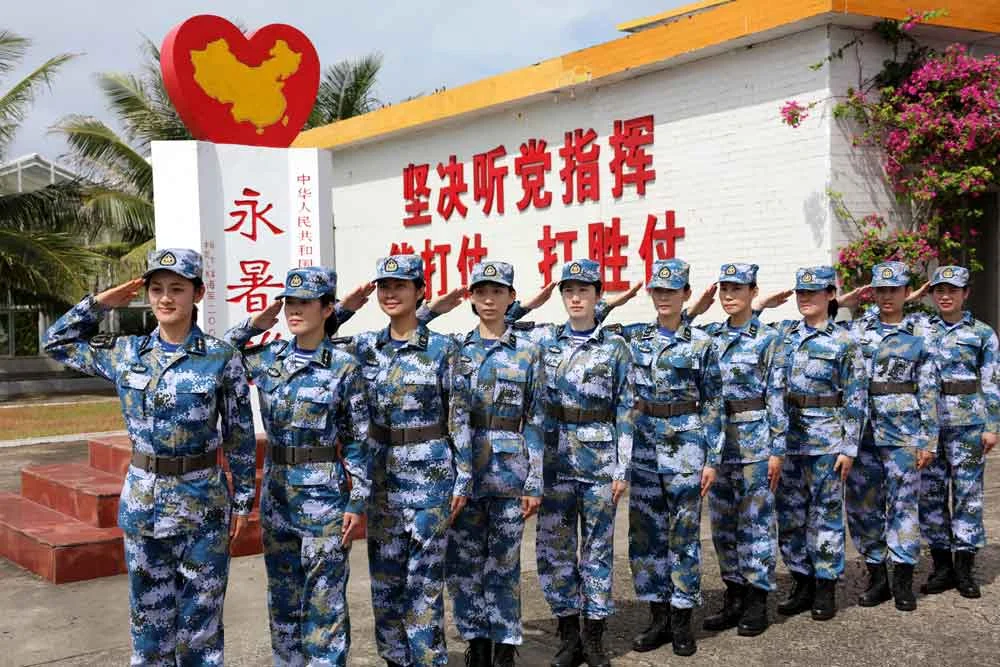
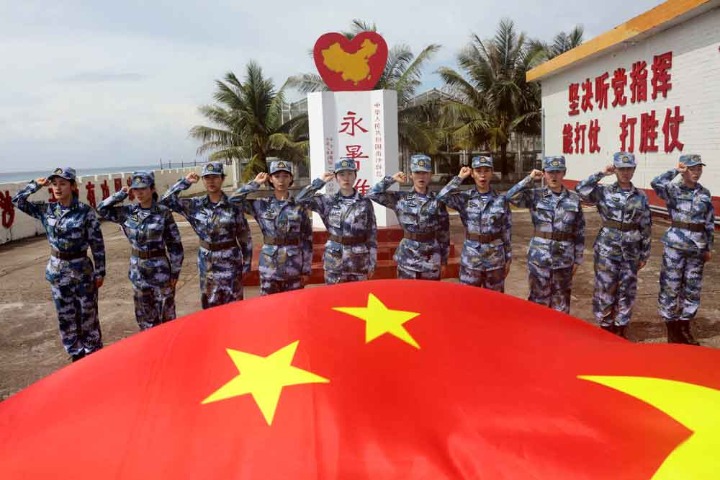
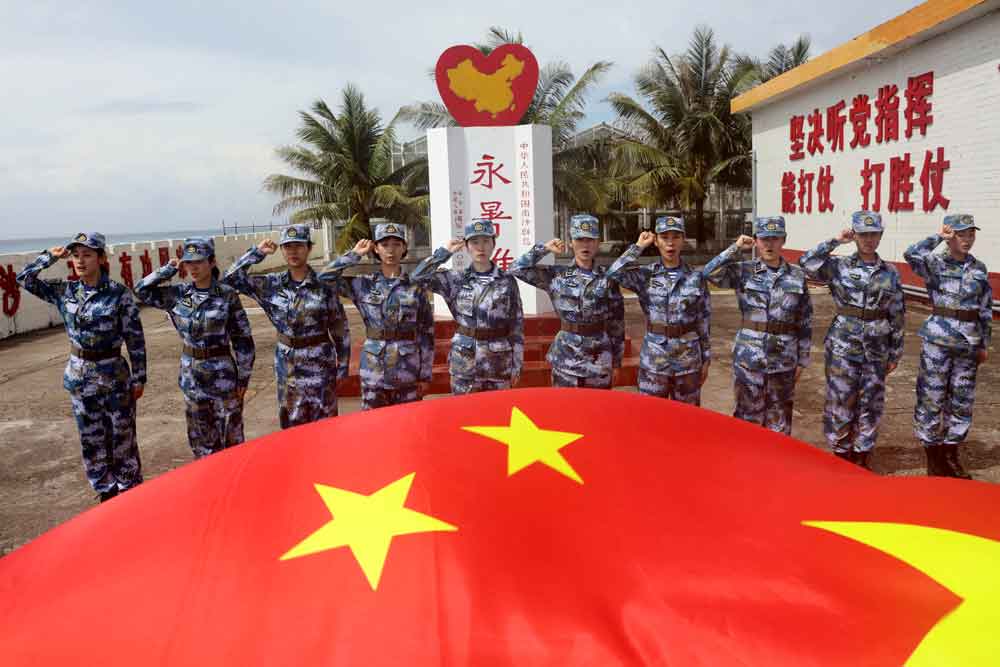
The People’s Liberation Army (PLA) Navy announced on December 11, 2017, the historic deployment of ten female service members to the Nansha Islands (Spratly Islands) in the South China Sea, marking the first instance of women being permanently stationed in China’s southernmost territories. This pioneering group formally commenced their duties on Yongshu Reef, a significant outpost within the contested archipelago, signaling a notable evolution in the PLA’s operational strategy and gender integration within its ranks.
A Landmark Deployment in a Contested Region
The deployment, confirmed by a news release from the PLA Navy on a Monday afternoon, represents a new chapter for the Chinese military’s presence in the Nansha Islands. These ten women, comprising both officers and sergeants, boast an average age of 23 and all hold university diplomas, underscoring the professional caliber of the personnel assigned to this sensitive strategic location. Their roles are diverse, encompassing critical functions such as staff administration, communications, and medical services, essential for the sustained operation of the island garrison. This move transcends previous temporary assignments, where female PLA members undertook short missions while remaining under the command of their original units. The current deployment signifies a full integration into the Nansha Islands Garrison structure, with the women directly answering to the local command.
The Strategic Significance of the Nansha Islands
The Nansha Islands, internationally known as the Spratly Islands, are an expansive archipelago comprising over 100 small islands, islets, reefs, and cays in the South China Sea. Their strategic importance is immense, lying at the crossroads of vital international shipping lanes, through which an estimated one-third of global maritime trade passes annually. Beyond their navigational significance, the islands and surrounding waters are believed to hold substantial untapped reserves of oil and natural gas, in addition to being rich fishing grounds.
The sovereignty over the Nansha Islands is vehemently disputed by multiple nations, including China, Vietnam, the Philippines, Malaysia, Brunei, and Taiwan. China asserts historical claims over nearly the entire South China Sea, encapsulated by its "nine-dash line" demarcation, a stance that has generated considerable regional and international tension. Other claimants base their claims on geographical proximity, the United Nations Convention on the Law of the Sea (UNCLOS), or historical occupation. The ongoing disputes have led to a complex geopolitical landscape, characterized by territorial assertions, diplomatic maneuvers, and occasional military posturing. The establishment and reinforcement of garrisons by various claimants, particularly China’s extensive island-building activities, have been closely watched by the international community.
Yongshu Reef: A Transformed Strategic Hub
Yongshu Reef, also known as Fiery Cross Reef, is one of the largest features in the Nansha Islands controlled by China and has undergone significant transformation through land reclamation efforts. Originally a submerged reef, it has been converted into a substantial artificial island capable of supporting extensive infrastructure. The facilities now present on Yongshu Reef are indicative of a long-term, self-sufficient presence. As articulated by Zhou Yaling, one of the newly deployed female service members, the island is "more beautiful than what they had imagined," featuring "airports, harbors, streets, hospitals and sporting grounds." She further remarked that "All of them make the islands like a lovely city on the sea." This description highlights the comprehensive development undertaken to create a livable and functional environment, equipped with amenities that mitigate the isolation typically associated with remote military outposts. The presence of an airfield capable of accommodating military transport and surveillance aircraft, a deep-water port, and robust communication facilities underscore Yongshu Reef’s role as a critical logistical and operational hub for the PLA in the South China Sea. It serves as a base for maritime surveillance, search and rescue operations, and potentially as a forward operating base for naval and air assets.
The Evolving Role of Women in the People’s Liberation Army
The deployment of female personnel to the Nansha Islands garrison is consistent with a broader trend within the People’s Liberation Army to enhance gender integration and diversify roles for women. Historically, women in the PLA primarily served in support functions such as medical care, communications, and cultural work. However, over the past few decades, there has been a concerted effort to expand their participation into more front-line and combat-related positions. Women now serve in various capacities across all branches of the PLA, including fighter pilots, submarine crews, special forces, and missile launch units. This shift reflects the PLA’s ongoing modernization drive, which emphasizes optimizing human resources, fostering professionalism, and aligning with international military trends where women play increasingly significant roles.
The decision to deploy university-educated women in critical operational and administrative roles in such a challenging and strategically important environment as the Nansha Islands underscores the PLA’s commitment to leveraging a broader talent pool. It also signals a move towards creating a more inclusive and resilient military force capable of sustained operations in diverse conditions. The emphasis on rotation every few months for rest on the mainland, as stated by Zhang Jiahong, political commissar of the PLA Nansha Islands Garrison, indicates a proactive approach to ensuring the health and well-being of the service members in a demanding tropical island environment, further reflecting a modernized human resource management strategy.
Official Statements and Personnel Perspectives
The PLA Navy’s official news release on December 11, 2017, unequivocally declared this deployment as the "first time for female service members to be stationed on Nansha Islands, the country’s southernmost territories." This emphasis on historical precedence highlights the significance attributed to the event by the Chinese military leadership. Political Commissar Zhang Jiahong’s assurance regarding regular rotations back to the mainland for rest underscores the recognition of the unique challenges posed by prolonged deployment in remote, isolated, and potentially high-stress environments. Such measures are crucial for maintaining morale, physical health, and operational effectiveness.
The personal account from service member Zhou Yaling offers a rare glimpse into the on-the-ground reality and the perception of the new recruits. Her positive depiction of Yongshu Reef as a "lovely city on the sea" serves to project an image of a well-developed, livable outpost, counteracting narratives of harsh, desolate conditions often associated with remote military garrisons. This perspective, disseminated through official channels, likely aims to boost morale among deployed personnel and demonstrate the comprehensive nature of China’s infrastructure development on these features.
Broader Implications and Analysis
The deployment of female personnel to the Nansha Islands carries several significant implications, both domestically for the PLA and internationally for the geopolitical landscape of the South China Sea.
Symbolic Significance: This move is a powerful symbol of China’s unwavering commitment to its claims and its long-term presence in the South China Sea. By normalizing the full integration of women into the permanent garrison, Beijing signals that these outposts are not merely temporary military installations but evolving, sustainable communities. It projects an image of a modern, inclusive military capable of deploying diverse personnel to even its most remote and strategically sensitive locations.
Operational Enhancements: The inclusion of female officers and sergeants in roles such as communications, medical services, and administration can enhance the overall operational capabilities and resilience of the garrison. A diverse workforce often brings varied perspectives and skill sets, which can be crucial for problem-solving and maintaining morale in isolated environments. The medical support provided by female personnel, for instance, could be vital for the health and well-being of all service members on the reef.
Geopolitical Ramifications: From a geopolitical standpoint, the deployment subtly reinforces China’s assertion of effective control over these disputed territories. It contributes to the "normalization" of Chinese military presence, making it appear more permanent and integrated into the fabric of China’s national defense. While not a direct military escalation, it adds another layer to China’s multifaceted strategy of solidifying its claims, which includes land reclamation, infrastructure development, and regular patrols. Regional claimants and international observers are likely to interpret this as a further step in China’s long-term strategy to consolidate its position in the South China Sea, potentially raising concerns about the militarization of the region.
PLA Modernization and Professionalism: Domestically, this deployment highlights the PLA’s continued efforts toward modernization and professionalization. It demonstrates a commitment to breaking down traditional gender barriers in military service, aligning the PLA with practices seen in many modern militaries worldwide. The emphasis on university-educated personnel also underscores the PLA’s drive to recruit and deploy highly skilled individuals across all ranks and roles, even in challenging environments.
Humanitarian and Living Conditions Aspect: The positive descriptions of the island’s amenities and the planned rotations for rest also serve a public relations function. They aim to alleviate concerns about the harshness of life on these remote outposts and project an image of a military that prioritizes the welfare of its personnel. This can be important for recruitment and for maintaining domestic support for China’s activities in the South China Sea.
Chronology of China’s South China Sea Presence (Brief)
China’s activities in the Nansha Islands have steadily intensified over several decades. While historical claims date back centuries, China began asserting more tangible control over certain features in the late 20th century. The early 2000s saw increased scientific research and logistical support activities. A significant turning point came in the mid-2010s with extensive land reclamation projects, rapidly transforming submerged reefs into artificial islands capable of hosting military-grade infrastructure, including airfields, ports, and barracks. The establishment of permanent garrisons followed, consolidating China’s physical presence. The deployment of the first female garrison on December 11, 2017, marks a further evolution, signaling not just military occupation but the development of a more integrated and normalized long-term human presence on these strategic outposts.
In conclusion, the deployment of the first female garrison to the Nansha Islands represents a multifaceted development. It is a testament to the PLA’s evolving approach to gender integration and military professionalism, simultaneously serving as a potent symbol of China’s enduring commitment to its claims in the South China Sea. This move further solidifies China’s presence in a highly contested and strategically vital region, carrying significant implications for regional dynamics and the future trajectory of international relations in the Indo-Pacific.


 Sagoh
Sagoh
 Asro
Asro