Rifan Muazin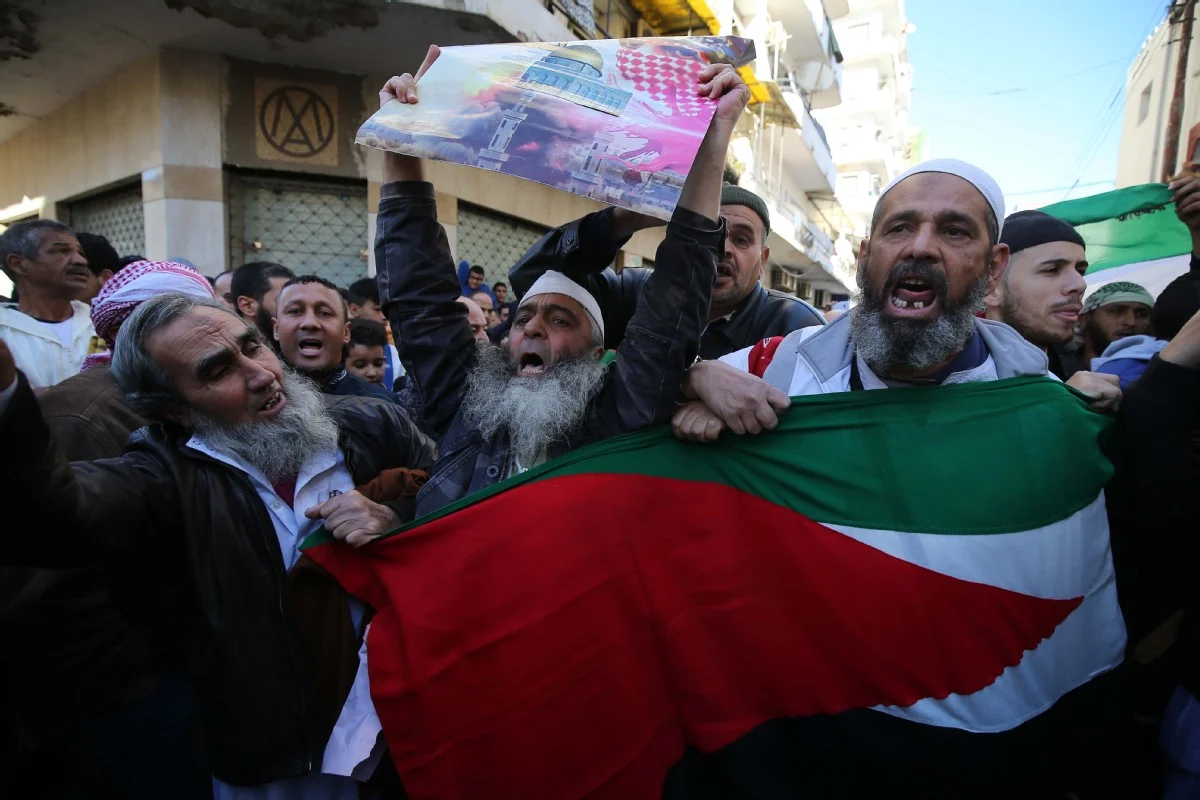
Arab foreign ministers convened in Cairo on Sunday, issuing a strong demand for the United States to reverse President Donald Trump’s controversial decision to recognize Jerusalem as the capital of Israel. In a resolution characterized by its robust rhetoric, the ministers declared Trump’s move a "grave" development that aligns Washington with "occupation" and a blatant violation of international law. The ministers’ pronouncements underscore a deepening rift between the Arab world and the United States, amplifying concerns over regional stability and the future of the Israeli-Palestinian peace process.
A United Front, Yet Lacking Concrete Punitive Measures
The resolution, adopted at an emergency meeting that commenced on Saturday night, outlined a series of diplomatic steps, primarily focused on international pressure. The ministers called upon the United Nations Security Council to pass a resolution condemning Trump’s decision. However, they acknowledged the high probability of a U.S. veto, a well-understood dynamic within the Security Council. Should such a veto materialize, Palestinian Foreign Minister Riyad Al-Maliki stated at a pre-dawn news conference that Arab nations would then pursue a similar resolution in the UN General Assembly, a forum where veto power does not exist.
Despite the strong condemnations, the two-page resolution conspicuously omitted any punitive actions against the United States. There was no call for a boycott of American products, nor any suggestion of suspending or downgrading diplomatic ties with Washington. This absence of tangible retaliatory measures highlights the complex political calculus at play, balancing regional anger with strategic considerations.
Street-Level Fury vs. Political Restraint
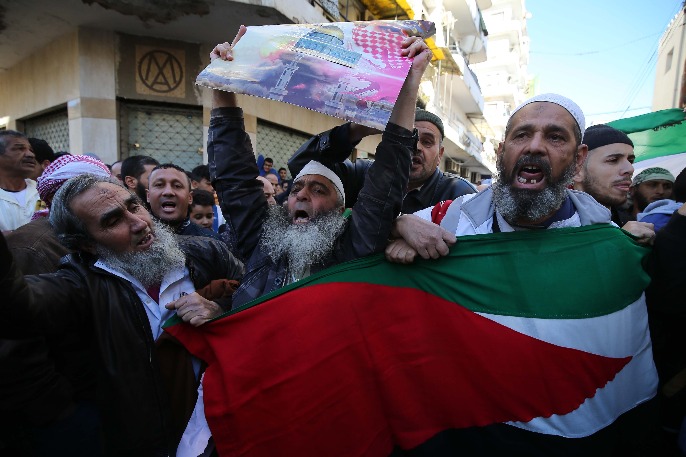
The official pronouncements from the foreign ministers appeared to fall short of mirroring the visceral anger and widespread protests erupting in the Gaza Strip and the West Bank. For three consecutive days, Palestinians had engaged in violent demonstrations against Trump’s decision, reflecting the deep-seated emotional and political significance of Jerusalem to their cause.
Arab League chief Ahmed Aboul-Gheit sought to explain this divergence, stating, "We have taken a political decision not meant to reflect (what is going on in) the streets. Political work is responsible work." He emphasized the long-standing nature of the conflict, noting, "Jerusalem has been occupied for 50 years. This is an extended battle, a battle that will be escalated." This statement suggests a deliberate strategy of measured escalation rather than immediate, drastic action, aiming to maintain diplomatic leverage.
Future Diplomatic Maneuvers and the Echoes of the 2002 Peace Plan
The resolution stipulated that the Arab foreign ministers would reconvene within a month to further assess the situation. The possibility of an emergency Arab summit, potentially held in Jordan, was also raised as a venue to discuss the escalating crisis surrounding Jerusalem. This commitment to ongoing dialogue and potential high-level engagement signals a persistent diplomatic effort to address the ramifications of Trump’s decision.
Central to the Arab nations’ diplomatic framework remains the 2002 Arab Peace Initiative. Both Aboul-Gheit and Al-Maliki reaffirmed their commitment to this plan, which offers full recognition of Israel in exchange for a withdrawal from territories occupied in the 1967 Middle East war, including East Jerusalem. "That plan is a key reference in the Middle East peace process," Al-Maliki reiterated, underscoring its enduring importance as a potential roadmap for a comprehensive peace settlement.
The International Backlash Against Trump’s Jerusalem Announcement
President Trump’s announcement on December 6th, which included his intention to relocate the U.S. Embassy from Tel Aviv to Jerusalem, reverberated globally. The move triggered widespread denunciations, with even close U.S. allies expressing concerns that it would needlessly inflame tensions in an already volatile region. The status of Jerusalem lies at the very heart of the Israeli-Palestinian conflict, and Trump’s decision was widely interpreted as a significant tilt in favor of Israel’s position. Historically, even minor disputes over Jerusalem’s status, particularly concerning the holy sites within its ancient Old City, have ignited deadly violence.
Internal Arab Dynamics and Divergent Approaches
Reports from Arab diplomats revealed that some member states within the Arab League had advocated for a more assertive resolution, one that included punitive measures against countries that might follow the U.S. example and recognize Jerusalem as Israel’s capital. However, these more radical proposals were deemed too extreme by more moderate Arab nations and were ultimately dropped from the final resolution. These diplomatic nuances, often conveyed by anonymous sources due to protocol, underscore the internal complexities and varying strategic priorities among Arab states.
Despite these internal discussions and the perceived moderation of the final resolution, Palestinian Foreign Minister Al-Maliki endeavored to present a united front. He sought to downplay any significant differences, asserting that the meeting had achieved "complete" unity among Arab nations. He acknowledged that "differences in assessment when we moved to specifying measures" had existed, but ultimately, "we agreed on gradually escalating measures." This framing suggests a strategic consensus on a phased approach to diplomatic action.
The Legal and Historical Significance of Jerusalem
The Arab resolution unequivocally condemned Trump’s decision, labeling it "illegal" and a "dangerous violation" of international law. The document further stated that the move represented "a dangerous development that places the United States at a position of bias in favor of the occupation and the violation of international law and resolutions." This strong condemnation reflects the deeply held Arab and international legal perspectives on the status of Jerusalem.
The historical context is crucial to understanding the intensity of this dispute. Israel occupied East Jerusalem and subsequently annexed it in the 1967 Middle East war, declaring the entire city its "eternal capital." Palestinians, however, envision East Jerusalem as the capital of their future independent state. This irreconcilable territorial and political claim over the city’s fate forms the bedrock of the protracted Israeli-Palestinian conflict. International law, as reflected in numerous UN resolutions, does not recognize Israel’s annexation of East Jerusalem, underscoring the legal basis for the Arab nations’ strong objections.
Broader Implications for Regional Stability and U.S. Standing
President Trump’s decision on Jerusalem has far-reaching implications beyond the immediate diplomatic fallout. It has the potential to further destabilize an already fragile Middle East, exacerbating existing tensions and potentially fueling radicalization. The perception of the United States taking a decidedly pro-Israel stance could alienate key Arab allies and undermine American diplomatic influence in the region.
Furthermore, the move risks sidelining the U.S. as a potential mediator in the peace process, a role it has historically played, however controversially. The Arab League’s commitment to the 2002 peace plan, while not new, gains renewed significance as a potential alternative framework for peace negotiations, should direct U.S.-led efforts falter.
The situation also presents a challenge for Arab leadership. Balancing the demands of their populace, who are often deeply emotional about Jerusalem, with the pragmatic necessities of maintaining regional stability and strategic alliances is a delicate act. The measured approach adopted by the Arab foreign ministers reflects this complex balancing act, prioritizing diplomatic pressure and international legal recourse over immediate, potentially destabilizing, punitive measures.
Supporting Data and Chronology of Key Events
- 1947: The United Nations proposes the Partition Plan for Palestine, recommending separate Arab and Jewish states and an internationalized Jerusalem.
- 1948: The State of Israel is declared. The subsequent war leads to the division of Jerusalem. West Jerusalem is controlled by Israel, and East Jerusalem, including the Old City, is controlled by Jordan.
- 1967: The Six-Day War. Israel occupies East Jerusalem and subsequently annexes it, declaring Jerusalem its undivided capital.
- 1980: The UN Security Council passes Resolution 478, condemning Israel’s annexation of East Jerusalem and calling on member states to withdraw diplomatic missions from the city. Most countries maintain their embassies in Tel Aviv.
- 2002: The Arab Peace Initiative is adopted by the Arab League, offering normalization of relations with Israel in exchange for withdrawal from occupied territories and a just solution for Palestinian refugees.
- December 6, 2017: U.S. President Donald Trump announces his decision to recognize Jerusalem as Israel’s capital and initiate the process of moving the U.S. Embassy.
- December 8-10, 2017: Widespread protests erupt across the West Bank, Gaza Strip, and other parts of the Arab world in response to Trump’s announcement.
- December 11, 2017: Arab foreign ministers meet in Cairo to discuss the U.S. decision, issuing a resolution demanding its rescission and calling for UN action.
The international community’s response to Trump’s decision, as evidenced by the Arab League’s strong condemnation and the ongoing global debate, underscores the deeply entrenched and sensitive nature of the Jerusalem issue. The coming weeks and months will likely reveal the efficacy of the diplomatic strategies employed by Arab nations and the broader implications for the long-stalled quest for a lasting peace in the Middle East.


 Nana Wu
 Suro Senen