Basiran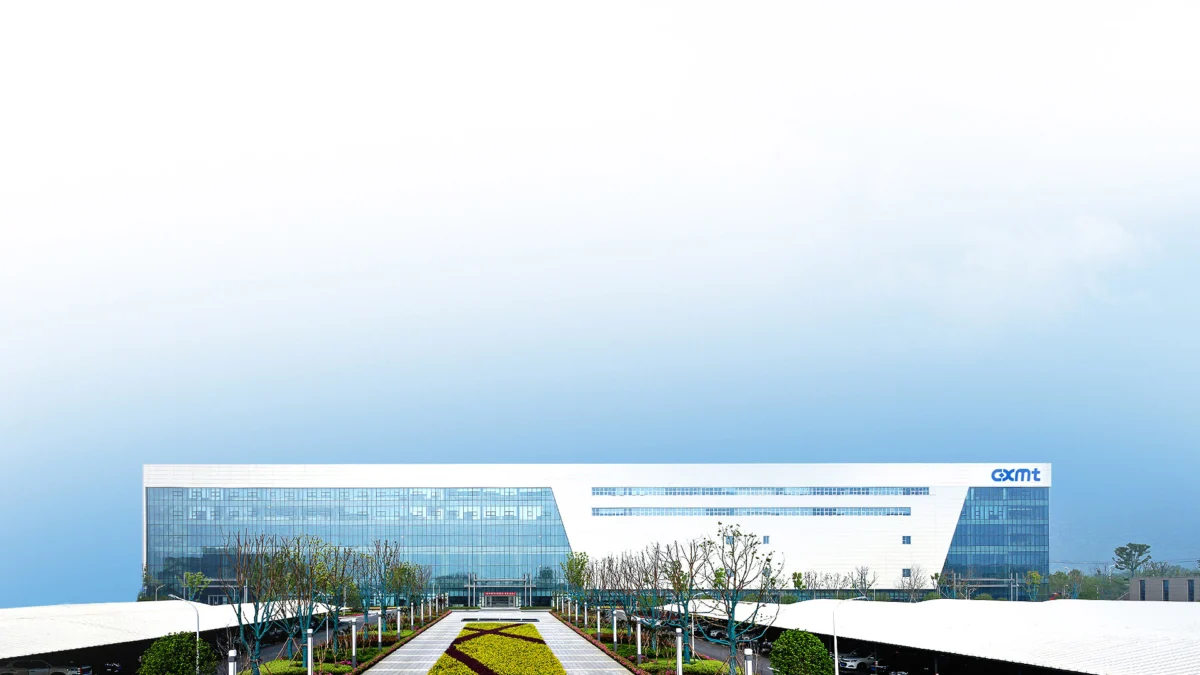
ChangXin Memory Technologies (CXMT) Corporation, a prominent Chinese DRAM manufacturer, achieved a significant milestone on August 13, when its market capitalization surpassed that of Tencent Holdings, positioning it as China’s most valuable listed company. This event marks a profound shift in market sentiment and policy priorities within China, signaling a pivot from the previously dominant internet platform economy towards strategically vital "hard tech" sectors like semiconductors. On the specified date, CXMT’s market value reached approximately RMB3.54 trillion (approximately US$487 billion), eclipsing Tencent’s roughly HK$4.01 trillion, which translates to about RMB3.45 trillion (approximately US$474 billion). This reordering of China’s corporate hierarchy reflects not only the meteoric rise of a domestic chip champion but also the broader implications of Beijing’s intensified focus on technological self-sufficiency and a regulatory recalibration affecting the nation’s internet giants.
The Meteoric Ascent of ChangXin Memory Technologies (CXMT)
CXMT’s journey to the pinnacle of China’s market capitalization has been remarkably swift, underscored by its recent public offering and the strategic imperative it represents for the nation. The company, established in 2016, was founded with a clear national mission: to develop and mass-produce dynamic random-access memory (DRAM) chips, thereby reducing China’s heavy reliance on foreign suppliers like Samsung, SK Hynix, and Micron Technology. This objective gained critical urgency amidst escalating geopolitical tensions and supply chain vulnerabilities, particularly in the wake of the US-China technology rivalry.
The company made its highly anticipated debut on Shanghai’s STAR Market (Science and Technology Innovation Board) on July 27, just weeks before its market cap milestone. The initial public offering (IPO) saw CXMT shares priced at RMB8.66 each. However, investor enthusiasm for a company at the forefront of China’s semiconductor ambitions was immediate and overwhelming. On its opening day, the stock surged by an astonishing 471.59%, commencing trading at RMB49.50. This immediate leap propelled its market value beyond RMB3.31 trillion. The momentum continued, with the stock briefly climbing above RMB55 intraday, pushing its market capitalization close to RMB3.7 trillion before settling. The STAR Market itself, inaugurated in 2019, was specifically designed to foster and fund high-tech and strategically important enterprises, making it the ideal launchpad for CXMT. Its successful listing and subsequent market performance underscore the significant capital flowing into sectors deemed critical for national technological sovereignty.
CXMT’s rapid technological progress, backed by substantial state funding and preferential policies, has been instrumental in its valuation. The company has invested billions in research and development, establishing advanced fabrication facilities and gradually catching up with global leaders in terms of process technology. While still behind the cutting edge of global leaders, its ability to produce competitive DRAM products for a burgeoning domestic market, spanning consumer electronics to data centers, positions it as a key player in China’s drive for chip independence.
Tencent’s Shifting Fortunes and Regulatory Headwinds
In stark contrast to CXMT’s ascent, Tencent Holdings, once an undisputed titan of China’s digital economy, has navigated a challenging period marked by stringent regulatory oversight and evolving government priorities. For years, Tencent, alongside Alibaba, represented the zenith of China’s tech prowess, dominating vast swathes of daily life through its WeChat super-app, extensive gaming portfolio, cloud services, and burgeoning fintech operations. Its market capitalization had soared to unprecedented heights, making it one of the world’s most valuable companies.
However, the landscape began to shift dramatically in late 2020 when Beijing initiated a comprehensive regulatory crackdown on its platform economy. This broad campaign targeted various aspects of internet companies’ operations, including anti-monopoly practices, data security, algorithmic recommendations, and the social impact of services like online gaming. For Tencent, this translated into significant challenges:
- Gaming Restrictions: New rules limiting screen time for minors and stricter content approvals impacted its lucrative gaming division.
- Antitrust Scrutiny: Investigations into exclusive content deals and potential monopolistic behavior led to fines and forced divestitures.
- Data Security and Privacy: Enhanced regulations governing data collection, usage, and cross-border transfers necessitated significant operational overhauls.
- Fintech Regulations: Increased oversight of its WeChat Pay platform brought it under tighter financial regulations, similar to traditional banks.
These regulatory pressures, coupled with a broader economic slowdown in China and increased competition, dampened investor enthusiasm for Tencent and its peers. The uncertainty surrounding future regulatory actions, the potential for further fines, and the perceived cap on growth opportunities led to significant corrections in their stock prices from their peaks. Investors began to re-evaluate the risk-reward profile of companies heavily reliant on consumer data and platform dominance, especially as the government explicitly signaled a preference for "real economy" and "hard tech" contributions.
China’s Strategic Pivot Towards "Hard Tech"
The market capitalization crossover between CXMT and Tencent is more than just a financial metric; it is a powerful symbol of China’s overarching national strategy. For years, the Chinese government has articulated ambitions for technological self-sufficiency, encapsulated in initiatives like "Made in China 2025," which designates semiconductors as a critical sector for indigenous development. The escalating US-China tech rivalry, characterized by export controls, blacklistings, and restrictions on technology transfer, has only amplified the urgency of this goal. The global chip shortage, exacerbated by the pandemic and geopolitical tensions, further highlighted the strategic vulnerability of relying on foreign semiconductor supply chains.
In response, Beijing has channeled immense resources into bolstering its domestic semiconductor industry. This includes:
- Massive State Investment: The National Integrated Circuit Industry Investment Fund, often referred to as the "Big Fund," has deployed billions of dollars to support chip design, manufacturing, and equipment companies.
- Preferential Policies: Tax breaks, subsidies, and land grants are offered to semiconductor firms to accelerate their growth and innovation.
- Talent Development: Significant investment in engineering education and research institutions aims to cultivate a skilled workforce for the chip industry.
- Domestic Sourcing Mandates: Government directives encourage state-owned enterprises and other key industries to prioritize domestic suppliers for critical components, including memory chips.
This concerted effort has created a highly favorable environment for companies like CXMT. Their growth is not merely driven by market demand but is actively propelled by state policy and strategic national interests. The STAR Market’s role in providing capital to these enterprises is crucial, allowing them to fund the exceptionally capital-intensive process of semiconductor manufacturing and R&D without immediate pressure for short-term profits.
Market Dynamics and Investor Sentiment
The market’s re-evaluation of CXMT versus Tencent reflects a fundamental shift in investor sentiment regarding China’s economic future. Investors are increasingly aligning their portfolios with Beijing’s strategic priorities. While the internet platform companies once offered explosive growth potential driven by a burgeoning digital consumer base, they now face a landscape of tighter regulation and slower growth, leading to a de-rating of their valuations.
Conversely, "hard tech" companies like CXMT, despite the inherent risks and long development cycles in semiconductor manufacturing, are viewed as possessing immense strategic value and benefiting from unwavering state support. This translates into several advantages in the eyes of investors:
- Policy Tailwinds: Direct government backing reduces business risk and provides a clear growth trajectory.
- National Security Imperative: The strategic importance of semiconductors makes these companies resilient to broader economic fluctuations, as their mission is tied to national security.
- Reduced Regulatory Uncertainty: Unlike platform companies, semiconductor firms are unlikely to face punitive regulatory actions; instead, they are celebrated as national champions.
- Long-Term Growth Potential: China’s vast domestic market and continued push for technological upgrading offer a sustained demand for domestically produced chips.
Analysts note that CXMT’s valuation, while reflecting its substantial investment and potential, also incorporates a significant "strategic premium." This premium accounts for its role in national self-reliance, rather than purely its current commercial competitiveness against global leaders. The event therefore signals a broader reallocation of capital, away from consumer-facing digital services and towards industrial backbone technologies.
Expert Commentary and Broader Implications
Industry observers and financial analysts interpret CXMT’s rise above Tencent as a definitive indicator of Beijing’s strategic reorientation. "This isn’t just a change in market cap; it’s a paradigm shift," commented one Shanghai-based tech analyst, who requested anonymity due to the sensitivity of discussing government policy. "The government has made it abundantly clear that the focus is now on core technologies, on building the foundational infrastructure for China’s future. Companies like CXMT are at the heart of that vision, while the platform giants are being reined in."
Another analyst from a major investment bank in Hong Kong added, "For years, investors looked for growth in areas like e-commerce, social media, and fintech. Now, the narrative has completely flipped. The smart money is chasing companies that are critical to national security and technological independence, even if their path to profitability is longer and more capital-intensive. The risk profile has shifted dramatically."
The implications extend beyond just the financial markets:
- Economic Structure: This shift could fundamentally alter China’s economic structure, fostering growth in advanced manufacturing and high-tech industries at the expense of potentially oversaturated consumer internet services.
- Innovation Landscape: It suggests that future innovation will be driven more by state-backed initiatives in strategic sectors rather than purely market-driven consumer applications.
- Global Competition: A stronger domestic semiconductor industry in China will intensify global competition, potentially leading to increased R&D spending and price pressures for international players.
- Geopolitical Strategy: The success of companies like CXMT reinforces China’s resolve to decouple from Western technology where possible, further complicating global supply chains and trade relations.
Challenges and Future Outlook for CXMT
Despite its remarkable achievement, CXMT faces formidable challenges. The global DRAM market is highly cyclical and intensely competitive, dominated by a few established players with decades of experience and vast patent portfolios. CXMT must continue to invest heavily in R&D to close the technology gap, navigate complex intellectual property landscapes, and achieve economies of scale to compete effectively on cost. Sustaining its rapid growth and high valuation will depend on its ability to consistently deliver advanced, high-quality memory products that meet market demand without being unduly reliant on government subsidies.
Moreover, while state support provides a buffer, it also comes with expectations of achieving national strategic goals, which may not always align with purely commercial objectives. The global political environment also presents a continuous challenge, with potential for further export controls or technology restrictions that could impact its access to critical equipment or materials.
Conclusion
CXMT’s ascent to become China’s most valuable listed company, surpassing Tencent, is a landmark event that encapsulates the profound transformations underway in China’s economy and technological strategy. It reflects a decisive pivot by Beijing from fostering a robust, yet sometimes unruly, internet platform economy to prioritizing strategic "hard tech" sectors deemed essential for national security and long-term economic independence. This shift is reshaping capital allocation, redirecting investor sentiment, and signaling a new era for China’s corporate champions. While the path ahead for CXMT and other domestic chipmakers remains challenging, their elevated status underscores the enduring power of state industrial policy and the strategic importance of semiconductors in the 21st century’s geopolitical and economic landscape.


 Siti Muinah
 Reynand Wu