Ammar Sabilarrohman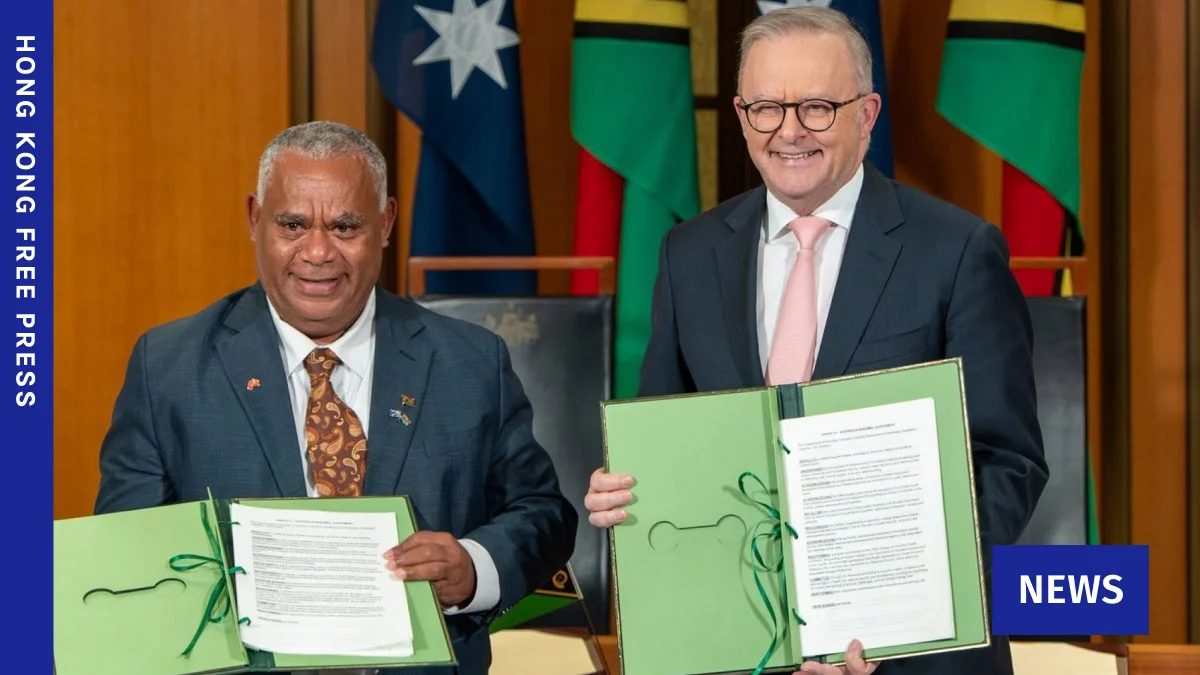
A Pivotal Agreement in the Pacific
The Nakamal Agreement represents a significant deepening of bilateral ties between Australia and Vanuatu, committing Australia to an aid package of Aus$500 million (approximately US$345 million). This substantial financial support is earmarked for critical development across various sectors in Vanuatu, including ports, digital connectivity, aviation, and energy infrastructure. Crucially, in return for this aid and enhanced cooperation, Vanuatu has formally pledged to prevent its territory from being used for any foreign military base or associated infrastructure, and to keep new infrastructure free from "foreign interference" or militarization.
Prime Minister Albanese, speaking after the signing ceremony at Parliament House in Canberra, emphasized the agreement’s core objective. "What this does do is to provide certainty for Australia that there will be no foreign military base," he stated, highlighting the strategic reassurance the deal offers. He further described the accord as a "balanced agreement that will protect our collective and individual security and our sovereignty," signaling a mutually beneficial arrangement designed to bolster regional stability.

Vanuatu’s Prime Minister Napat affirmed his nation’s commitment to the terms, noting that the Nakamal Agreement explicitly commits Vanuatu to rejecting the militarization of infrastructure. The agreement, reviewed by AFP, specifically states that "Vanuatu shall not permit its territory to be used for any foreign military base or infrastructure." This clause is central to the pact’s strategic importance, particularly given the recent history of Chinese engagement in the region.
The Geopolitical Chessboard in the South Pacific
Vanuatu, an archipelago nation strategically located in the South Pacific, has become a focal point in the intensifying rivalry between China and Western allies, including the United States and Australia. Beijing’s growing economic and security footprint in the region has been a source of considerable concern for Canberra and Washington, who view it as a challenge to the established regional order and a potential threat to their own security interests.
China is currently Vanuatu’s largest external creditor, a position that has fueled discussions about "debt diplomacy" and Beijing’s potential leverage over the island nation. Over the past decade, China has significantly invested in Vanuatu’s infrastructure, funding the construction of roads, government buildings, and other key facilities. Of particular concern to Australia and its allies was Beijing’s funding for the expansion of a wharf in Luganville, historically the largest US military base in the South Pacific during World War II. This project sparked widespread apprehension in Canberra and Washington that China intended to establish a naval base, a claim both China and Vanuatu have consistently denied, stating the wharf was for cruise ships.

Beyond infrastructure, China has also cultivated policing ties with Vanuatu, commencing in 2023. This cooperation has included the donation of various equipment, such as drones, patrol boats, and vehicles, to Vanuatu’s police force. While China frames such assistance as benign development aid, Western nations often interpret it as part of a broader strategy to gain influence and potentially project power.
Timeline and Background Context
The idea of a comprehensive security agreement between Australia and Vanuatu has been under discussion for some time. Australian Prime Minister Anthony Albanese had visited Vanuatu in the preceding year, and expectations were high for the agreement to be finalized then. However, its signing was delayed, a period Anna Naupa, a Pacific security researcher with the Australian National University, described as marked by "prolonged uncertainty." This delay likely involved intricate negotiations over specific clauses and Vanuatu’s internal deliberations regarding its foreign policy stance and economic needs.
The backdrop to this agreement includes a series of strategic moves by China in the Pacific, which have spurred a reactive effort by Australia and its allies. A particularly impactful event was the signing of a secret security pact between China and the Solomon Islands in 2022. This pact, which allowed Chinese police to maintain a presence in the Solomon Islands, sent shockwaves through Canberra and Washington, raising fears of a potential Chinese military presence just off Australia’s northern coast. This development significantly heightened the urgency for Australia to strengthen its security arrangements with other Pacific island nations.

Australia, through its "Pacific Step-up" policy, has been actively pursuing deeper engagement with its Pacific neighbors, focusing on enhanced security cooperation, economic development, and people-to-people links. The Nakamal Agreement with Vanuatu is the latest in a string of such pacts, following similar arrangements with nations like Papua New Guinea and Fiji, all aimed at countering China’s expanding influence and reinforcing Australia’s role as the primary security partner in the region.
Detailed Provisions of the Nakamal Agreement
Beyond the headline commitment to bar foreign military bases and the Aus$500 million aid package, the Nakamal Agreement delves into several key areas of cooperation:
- Infrastructure Development: Australia will play a significant role in developing Vanuatu’s ports, digital infrastructure, aviation capabilities, and energy sector. The explicit condition is that Vanuatu agrees to keep such infrastructure free from "foreign interference" or militarization, ensuring that any dual-use facilities remain civilian in nature. This clause directly addresses concerns previously raised about projects like the Luganville wharf.
- Policing and Law Enforcement: The agreement formally recognizes Australia as "Vanuatu’s longstanding primary policing partner." This is a critical point given China’s recent foray into policing assistance in Vanuatu. The pact states that Vanuatu will prioritize policing requests to other members of the Pacific Islands Forum (PIF) regional bloc, which includes Australia and New Zealand. This provision aims to ensure that regional partners, rather than external powers, remain the preferred source of law enforcement support.
- Security Cooperation: The treaty outlines elevated assistance in various security domains, including police training and equipment, maritime security, cyber security, and intelligence cooperation. This comprehensive approach reflects a shared understanding of the multifaceted security challenges facing Vanuatu and the broader Pacific.
- Economic Engagement: While not explicitly detailing all economic facets beyond the aid package, the agreement implicitly aims to deepen economic ties, offering Vanuatu a credible alternative to excessive reliance on any single external power.
Notably, the Nakamal Agreement does not explicitly prohibit Vanuatu from partnering with China on infrastructure projects. However, it includes a crucial clause: the Pacific nation will consult Australia when it engages a third party for such developments. This consultation mechanism is intended to provide Australia with transparency and an opportunity to address any potential security concerns arising from third-party involvement in critical infrastructure.

Reactions and Broader Implications
The signing of the Nakamam Agreement elicited immediate reactions from key players. China’s foreign ministry spokesperson, Guo Jiakun, issued a warning against what he termed "geopolitical games." "We hope that the relevant countries will carry out cooperation with Pacific island countries that is truly conducive to the development and stability of the island nations region," Guo stated during a news briefing. He added, "They should not target third parties, and should not use this to engage in geopolitical games," a thinly veiled reference to Australia’s perceived motivations behind the pact.
Regional analysts offered nuanced perspectives on the agreement’s long-term impact. James Batley, a former Australian diplomat in the Pacific, acknowledged the significance of the deal but cautioned that the contest for influence between Beijing and Canberra would likely persist. "Vanuatu’s long tradition of non-alignment means that it won’t simply abandon its relationship with China. Nor will China abandon its attempts to undermine Australia’s interests in Vanuatu," Batley told AFP. His comments highlight the complex diplomatic tightrope Vanuatu walks, balancing its sovereignty and economic needs with the strategic interests of larger powers.
Anna Naupa of the Australian National University reiterated the agreement’s status as a "significant milestone," especially after the earlier delay. She also pointed out that Vanuatu had sought specific concessions from Australia as part of the deal, including better access for its citizens to Australia for travel and work opportunities. Additionally, Vanuatu agreed to differentiate foreign-born Vanuatu citizens who obtained passports through a controversial investment scheme, addressing a long-standing concern for Australia regarding potential security risks and immigration integrity.

Future of Pacific Engagement
The Nakamal Agreement is more than just a bilateral security pact; it is a testament to Australia’s ongoing commitment to its role as a key security and development partner in the Pacific. For Vanuatu, it offers a pathway to economic development with significant Australian support, coupled with a formal reaffirmation of its sovereignty and non-aligned stance, particularly concerning military bases.
The agreement also sets a precedent for how Western allies can engage with Pacific island nations, offering comprehensive packages of aid, development assistance, and security cooperation to counter the growing influence of China. It underscores a recognition that security in the Pacific is multi-dimensional, encompassing economic stability, climate resilience, and cyber security, in addition to traditional defense concerns.
While the Nakamal Agreement provides a degree of certainty for Australia regarding military installations in Vanuatu, the broader geopolitical competition in the South Pacific is far from over. China will undoubtedly continue its economic and diplomatic engagement, and other regional powers will also seek to strengthen their ties. The true measure of the agreement’s success will lie in its effective implementation, the tangible benefits it delivers to the people of Vanuatu, and its ability to foster genuine regional stability amidst evolving global power dynamics. The delicate balance of sovereignty, economic development, and strategic alignment will remain a defining challenge for Vanuatu and its Pacific neighbors in the years to come.

 Sagoh
Sagoh
 Asro
Asro