Lina Irawan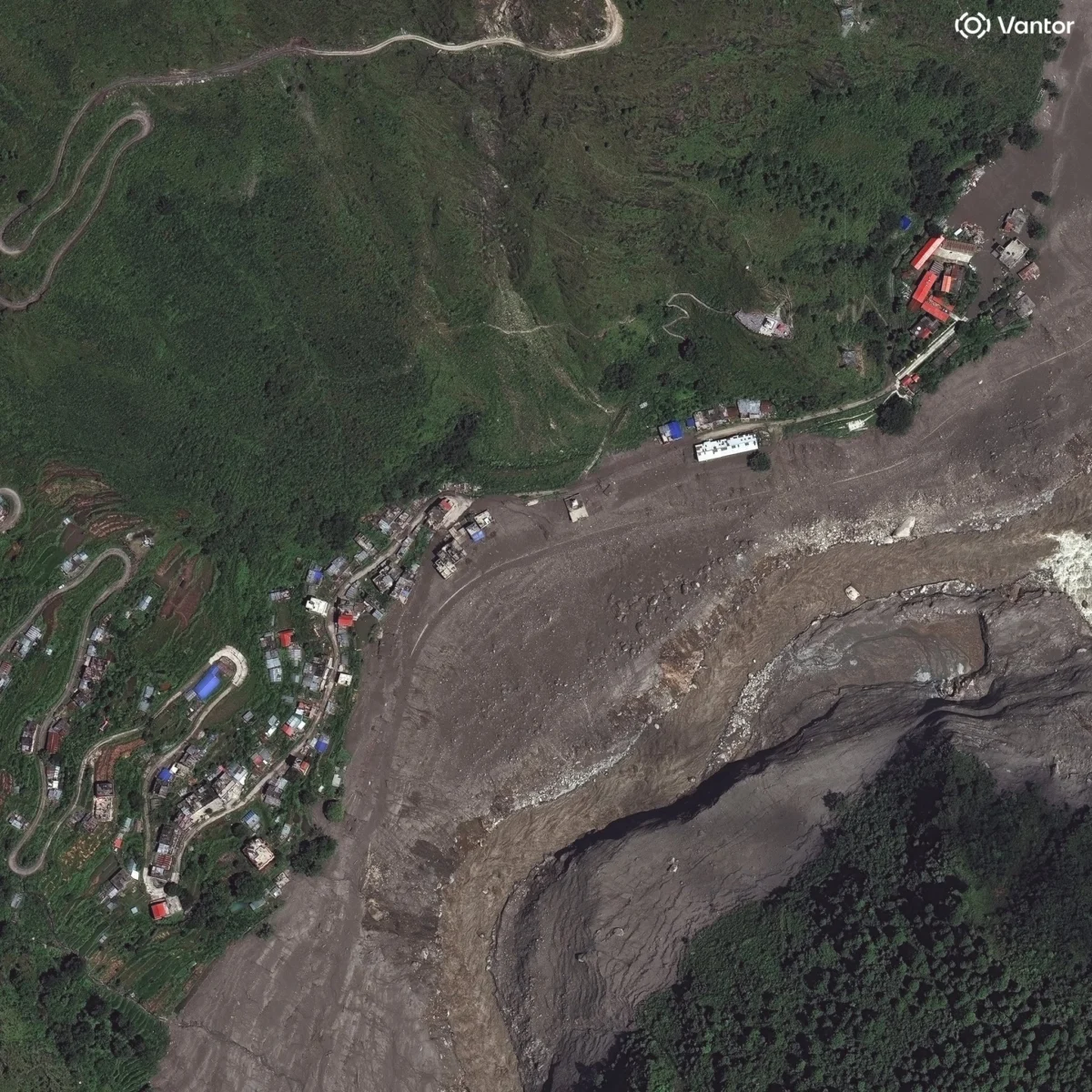
Rescuers in Nepal and China were locked in a desperate Saturday battle to locate thousands of people still missing days after a catastrophic, tsunami-like wall of water and debris surged through the Himalayan region, obliterating villages and infrastructure. The relentless search efforts were compounded by treacherous conditions, dwindling resources, and the chilling prospect of further natural disasters.
As the grim toll of the disaster continued to mount, latest figures from both nations indicated that the number of missing had surged to nearly 3,000. So far, 633 bodies have been recovered, with harrowing reports suggesting some victims may have been swept downstream as far as India, highlighting the immense scale and destructive reach of the event. The sheer force of the torrent, described by survivors as a "wall of water and debris," transformed serene valleys into scenes of unimaginable devastation.
A Region Devastated: Scale of the Disaster

The affected area, a region known for its vast energy infrastructure projects, has been particularly hard-hit. Nepal’s disaster authority confirmed that 933 hydropower workers have been added to a rapidly growing list of the missing. This grim tally already included trekkers and pilgrims en route to Tibet’s sacred Mount Kailash, a spiritual journey now tragically intersected by nature’s fury. The loss of skilled personnel in the hydropower sector could have significant long-term implications for Nepal’s energy security and development plans.
For those who survived the initial onslaught, the aftermath is a landscape of utter ruin and agonizing uncertainty. Many have lost everything – their homes, their livelihoods, and, most painfully, their loved ones. The prospect of rebuilding their lives from scratch looms large, overshadowed by the desperate hope of finding any news, however grim, of those still unaccounted for.
"All the settlements near the river were swept away. There is nothing left," recounted Buddhi Ram Dangol, a survivor of the catastrophe, to AFP. His words paint a stark picture of the complete erasure of communities that once thrived along the riverbanks.
Samjhana Thing, like countless others, has been enduring a three-day vigil, her heart heavy with the lack of news regarding her missing brother. "We don’t know anything. Hopefully, he is in a safe place," she expressed, her voice laced with the profound anxiety that grips the region. This personal agony reflects the collective trauma experienced by thousands.

"Enormous" Trauma and Mounting Challenges
The humanitarian organization Red Cross described the trauma inflicted by Wednesday’s catastrophe as "enormous," estimating that as many as 93,000 people may have been directly affected. The death toll is tragically expected to continue its upward trajectory as search and rescue operations persist.
Emergency teams, comprised of local authorities, military personnel, and international aid workers, have been racing against time to extract survivors from the affected zones. However, the widespread devastation has severely hampered these efforts, with critical supplies of food and water becoming increasingly scarce in many areas.
Compounding the already formidable challenge of locating the missing are persistent fears of further flooding. The immense deluge of ice and mud has led to the formation of several large glacial lakes, some of which now pose a direct and immediate threat to the very emergency workers scouring the region for survivors.

In a dramatic development, Nepali police issued an urgent plea to all rescuers to "immediately move to a safe location," citing credible information that "a water dam has burst again on the Tibetan side." This announcement sent a fresh wave of alarm through the already strained rescue operations.
Cross-Border Impact and Official Responses
In Tibet, where information is primarily disseminated by Chinese authorities, the rescue operation in the hardest-hit area of Gyirong was temporarily suspended due to the immediate risk of renewed flooding. While Beijing later indicated that the threat had somewhat eased, the incident underscored the volatile and unpredictable nature of the disaster’s aftermath. State news agency Xinhua reported on Saturday morning that two villagers had been rescued in the Gyirong area, offering a sliver of hope amidst the despair.
On the Nepali side of the border, a significant focus of the rescue efforts has been the Trishuli 3A hydropower project. Military personnel have located individuals trapped within the project’s tunnels and are working diligently to establish access points for their extraction.

"Two helicopters have been dispatched, but it is challenging because it is tough to even locate the entry points of the tunnel," stated army spokesman Raja Ram Basnet in an interview with AFP. He confirmed that approximately 350 workers and residents had been successfully brought to safety from the site, but efforts were ongoing to rescue over a hundred more individuals still trapped in the immediate vicinity.
Survivors rescued from other dam projects along the Trishuli valley have recounted harrowing tales of the disaster’s swift and brutal onset. Buddha Tamang, who narrowly escaped the deluge, explained that he owed his survival to being inside a tunnel at the dam where he worked when the floodwaters struck. "The senior officers working on the other side, they were all swept away," Tamang recounted, having been airlifted on Thursday after being stranded for more than 24 hours.
As of Saturday, Nepal officially reported a death toll of 626 individuals. The number of people unaccounted for in Nepal stands at 2,426, a figure that includes hundreds of foreign nationals.
Across the border in Tibet, the official Xinhua news agency reported early Saturday that seven people had died and 554 remain missing. Chinese authorities also announced the evacuation of 555 stranded tourists and 499 Chinese residents from the region.

In India, authorities have reported the recovery of seven bodies from rivers flowing from Nepal, believed to be victims of the catastrophic floods. This discovery further emphasizes the far-reaching consequences of the disaster.
Pilgrimage Route and Vulnerable Travelers
A significant number of those missing are Hindu devotees from around the world who were on a pilgrimage to the revered Mount Kailash in Tibet. The popular pilgrimage route, known for its spiritual significance, has become a site of immense tragedy.
Sivaranjani Muthunathan, a survivor, described the terrifying moments when her bus, carrying 56 passengers, was caught in what initially appeared to be a traffic jam on the route towards the Chinese border. "Then there was fog, smoke, something that seemed to suddenly engulf us," Muthunathan, 46, recounted to AFP on Friday, recalling a chilling phone video she recorded of a surging torrent bearing down on their vehicle. Around them, vehicles were either swept away or buried under the relentless mud and debris. "One by one, we also climbed out through the driver’s side," she said, describing their desperate scramble up a nearby hill to safety.

Analysis of Implications and Future Concerns
The immediate focus remains on the humanitarian crisis – the search for survivors, the provision of aid, and the immense task of managing the deceased. However, the long-term implications of this disaster are profound. The destruction of vital hydropower infrastructure in Nepal could set back economic development and energy security for years. The loss of life and the displacement of thousands will require extensive and sustained support for recovery and reconstruction.
The recurrent threat of glacial lake outburst floods (GLOFs) in the Himalayas is a stark reminder of the region’s vulnerability to climate change. This event serves as a critical wake-up call for increased investment in early warning systems, disaster preparedness, and sustainable infrastructure development in these geologically unstable and environmentally sensitive areas. International cooperation will be paramount in addressing the complex challenges posed by such catastrophic events, which transcend national borders. The trauma inflicted on these communities will require not only material aid but also significant psychological and social support for years to come.


 Reynand Wu
 Evan Lee Salim