 Basiran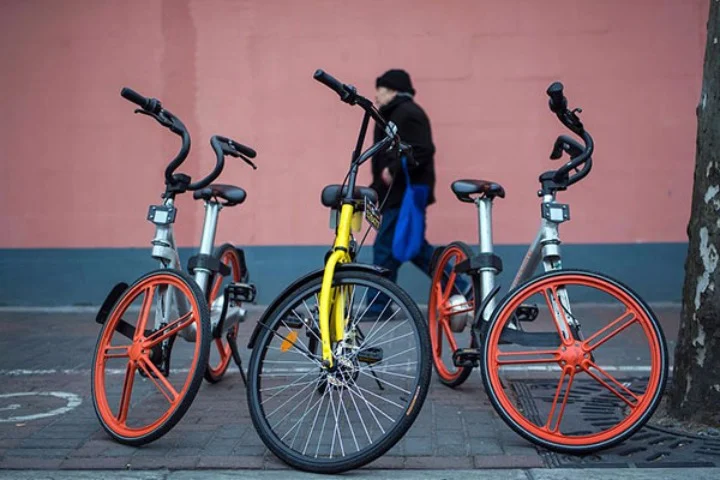
The strategic future of China’s burgeoning bike-sharing industry has been increasingly dominated by speculation surrounding a potential merger between its two dominant players, Mobike and Ofo. Despite public denials from the executive leadership of both companies, influential investors have consistently advocated for consolidation, arguing that it represents the most viable path to profitability in a fiercely competitive, cash-intensive market. This ongoing tension highlights a critical juncture for the industry, which rapidly scaled to global prominence but now grapples with the inherent challenges of sustainability and financial returns.
The Rise and Challenges of China’s Bike-Sharing Phenomenon
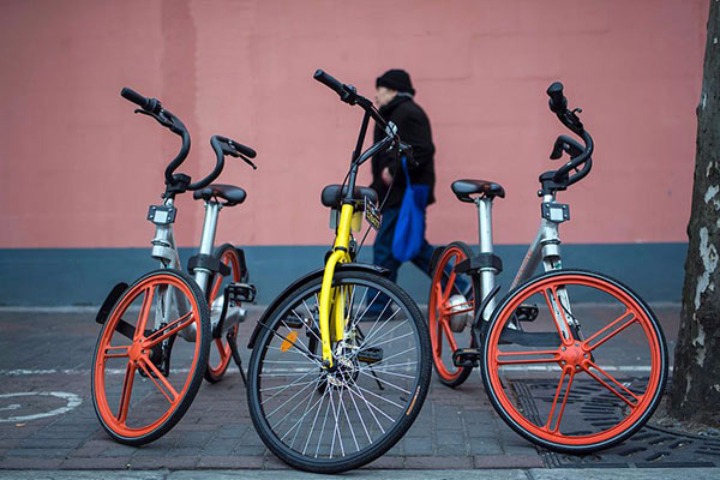
The mid-2010s witnessed the meteoric rise of dockless bike-sharing in China, heralded as a revolutionary solution to urban "last-mile" transportation challenges. Companies like Mobike and Ofo emerged from university campuses and tech hubs, quickly deploying millions of bicycles across hundreds of cities. Their business model, typically involving a user deposit and per-ride fees accessed via a smartphone app, resonated with a tech-savvy populace and quickly became ubiquitous on city streets.
Mobike, founded in 2015 by Hu Weiwei and Wang Xiaofeng, introduced bikes with integrated GPS and smart locks, emphasizing durability and ease of use. Ofo, established earlier in 2014 by Dai Wei, initially focused on campus-based sharing before expanding rapidly into urban centers with its distinctive yellow bicycles. Both companies attracted colossal sums of venture capital, fueling aggressive expansion and fierce competition that saw them vying for market share through extensive deployment, promotional offers, and price wars.
However, this rapid expansion, while impressive in scale, also brought significant operational and financial challenges. Urban centers quickly became oversaturated with bikes, leading to issues of indiscriminate parking, traffic obstruction, and the infamous "bike graveyards" where thousands of discarded or damaged bikes accumulated. Maintenance, logistics, and rebalancing operations proved costly and complex. Furthermore, the low per-ride revenue, coupled with the capital expenditure of purchasing and deploying millions of bikes, meant that neither company achieved sustained profitability. The intense competition exacerbated this "cash-burning" model, as subsidies and marketing efforts continually drained resources, pushing investors to seek a more rational market structure.
Investor Pressure for Consolidation
The call for a merger has primarily emanated from key investors who have poured billions into Mobike and Ofo. These stakeholders, having funded the initial rapid growth, began to express concerns over the unsustainable expenditure required to maintain a duopoly locked in an expensive battle for supremacy.
Allen Zhu, an early investor in Ofo through GSR Ventures, became one of the most vocal proponents of a merger. Speaking at a forum, Zhu emphatically stated that "continuing to burn cash to compete in the bike-sharing market is meaningless for Mobike and Ofo and only results in a huge loss." He underscored the complexities of such a merger, emphasizing the need for investors, entrepreneurs, shareholders, and users to meticulously balance their diverse interests and benefits. Zhu’s perspective, widely reported in financial media, highlighted that with both Mobike and Ofo having collectively captured the overwhelming majority of the market – often cited as upwards of 90-95% combined – there was little room for organic expansion within China. From an investor’s standpoint, only a unified entity could achieve the necessary economies of scale and market power to transition from growth-at-all-costs to sustainable profitability.
These sentiments were echoed by other prominent investors. Wang Gang, another early backer of Ofo, repeatedly voiced his support for a merger, albeit acknowledging the multi-faceted considerations that made a decision difficult. On Mobike’s side, Zhou Kui, a partner at Sequoia Capital China, was also reported to support the notion, suggesting that the time was ripe for consolidation when each company had achieved a stable market share and diminishing opportunities for further growth within the domestic market. Zhou Kui notably suggested that the primary resistance to a merger did not originate from the investor community, pointing towards internal company dynamics.
The rationale for a merger among investors is firmly rooted in precedents from other capital-intensive sectors of China’s internet economy. The ride-hailing industry saw Didi Chuxing merge with its primary competitor Kuaidi Dache in 2015, and later acquire Uber China in 2016, leading to a near-monopoly and subsequent path to profitability. Similarly, the food delivery and group-buying sectors witnessed the consolidation of Meituan and Dianping. These examples served as powerful illustrations of how mergers could eliminate ruinous competition, streamline operations, and ultimately deliver returns on substantial venture capital investments.
Founder Resistance and Strategic Tensions
Despite the strong financial impetus from investors, the senior management teams of Mobike and Ofo consistently pushed back against merger talks, at least publicly. This resistance underscores the deep-seated entrepreneurial spirit, strategic visions, and often personal stakes involved in building and leading a multi-billion-dollar enterprise.
Wang Xiaofeng, Mobike’s co-founder and CEO, explicitly stated in late November that his company would "never merge with Ofo." This firm stance reflected a desire to maintain independence, control Mobike’s distinct technological roadmap, and pursue its own strategic direction, which at the time included significant international expansion. Similarly, Dai Wei, the CEO of Ofo, publicly denied merger rumors on multiple occasions. However, reports from AI Caijing cited an unnamed Ofo employee revealing an internal, more assertive stance from Dai Wei: that "if there is a merge, it must be Ofo merging with Mobike." This internal sentiment highlighted a common hurdle in merger negotiations – the difficulty in agreeing on which company would lead the combined entity, often translating into disagreements over valuation, leadership roles, and strategic control. Each founder likely believed their company held a superior position, technology, or user base, making concessions challenging.
These public and internal statements reveal a classic conflict between the financial imperatives of investors, who prioritize returns and market efficiency, and the strategic ambitions of founders, who are often driven by a vision of autonomy and competitive dominance. For founders, a merger often means a dilution of control, a potential loss of corporate identity, and the daunting task of integrating two distinct organizational cultures.
The Rise of Hellobike and the Alibaba-Tencent Proxy War
Adding another layer of complexity to the consolidation narrative was the emergence and strategic maneuvering of Hellobike. As the third-largest player by user numbers, Hellobike secured a significant capital injection in its series-D1 round of financing, raising $350 million. A crucial investor in this round was Ant Financial, the financial arm of Alibaba Group. This investment was particularly significant given Alibaba’s existing backing of Ofo, and Mobike’s strong ties to Tencent, Alibaba’s primary rival in China’s digital ecosystem.
Hellobike had undergone its own consolidation, having been acquired in October by a subsidiary of Changzhou Youon Public Bicycle System Co Ltd, China’s first listed bike-sharing company. This move provided Hellobike with enhanced financial stability and operational experience, positioning it as a more formidable competitor and a potential consolidator itself. Hellobike’s strategy often focused on second and third-tier cities, carving out a niche away from the intense saturation of Mobike and Ofo in tier-one metropolitan areas.
GGV Capital, an early backer of Hellobike, also weighed in on the broader industry dynamics. Hans Tung, a managing partner at GGV Capital, articulated a key strategic implication: "if one investor has invested in two firms, it will facilitate a merger to scale down the top three players into two." This statement, referring to Alibaba’s dual investment in Ofo and Hellobike (via Ant Financial), underscored the powerful influence of major tech giants in shaping the landscape of emerging industries. Alibaba and Tencent were engaged in a proxy war across numerous sectors, vying for control over user data, mobile payments, and various online-to-offline services. Consolidating the bike-sharing market under the influence of one of these giants would represent a significant strategic victory, allowing for deeper integration into their respective ecosystems (e.g., payment systems like Alipay and WeChat Pay, or map services).
Broader Implications and Future Outlook
The outcome of the Mobike-Ofo merger debate holds profound implications for the bike-sharing industry, urban mobility, and the broader venture capital landscape in China.
For the Bike-Sharing Industry: A merger would likely usher in an era of rationalization. The combined entity would possess unparalleled market dominance, potentially leading to a reduction in promotional subsidies, a stabilization or increase in ride fares, and a greater focus on operational efficiency and profitability over aggressive market share expansion. This could result in improved bike maintenance, more orderly parking solutions, and a more sustainable long-term business model. Conversely, it could also raise concerns about reduced consumer choice and potential monopolistic practices, warranting closer regulatory scrutiny.
For Urban Mobility and Consumers: A consolidated market could mean a more reliable and streamlined service, with fewer instances of damaged bikes or chaotic street clutter. The focus might shift towards integrating bike-sharing more seamlessly into broader public transportation networks. However, consumers might face higher prices or fewer incentives as competition diminishes. The management of user deposits, a contentious issue that plagued many smaller bike-sharing firms that collapsed, would also come under renewed focus to ensure consumer protection.
For Investors: A successful merger would validate the consolidation strategy as a means to achieve returns in highly competitive, capital-intensive tech sectors. It would demonstrate the power of institutional investors to steer companies towards financial viability, even in the face of founder resistance. Conversely, continued independent operation and cash-burning could lead to further devaluation and delayed returns, increasing pressure on these significant investments.
Regulatory Considerations: Any large-scale merger between Mobike and Ofo would undoubtedly attract attention from antitrust regulators in China. The sheer scale of the combined entity, controlling a vast majority of the market, would necessitate careful review to prevent anti-competitive practices and ensure fair market conduct. Local governments, already grappling with the impact of bike-sharing on urban infrastructure, would also likely welcome a more streamlined and less chaotic industry.
As of late 2017, the bike-sharing industry stood at a critical crossroads. The initial exuberance and hyper-growth, fueled by massive capital infusions, had given way to the sobering reality of unsustainable operational costs and fierce competition. The clamor from investors for a merger of Mobike and Ofo was not merely a financial suggestion but a stark recognition that the "cash-burning" model, however effective for rapid expansion, was fundamentally unsustainable for long-term viability. While founders clung to their independent visions, the economic pressures, coupled with the strategic plays of tech giants like Alibaba and Tencent, suggested that market consolidation was not merely probable, but increasingly inevitable, reshaping the landscape of urban mobility in China for years to come.


 Evan Lee Salim
 Suro Senen